
What Tools Are Suitable for Cutting Gr1 Titanium Wire?
- Gr1 Titanium Wire
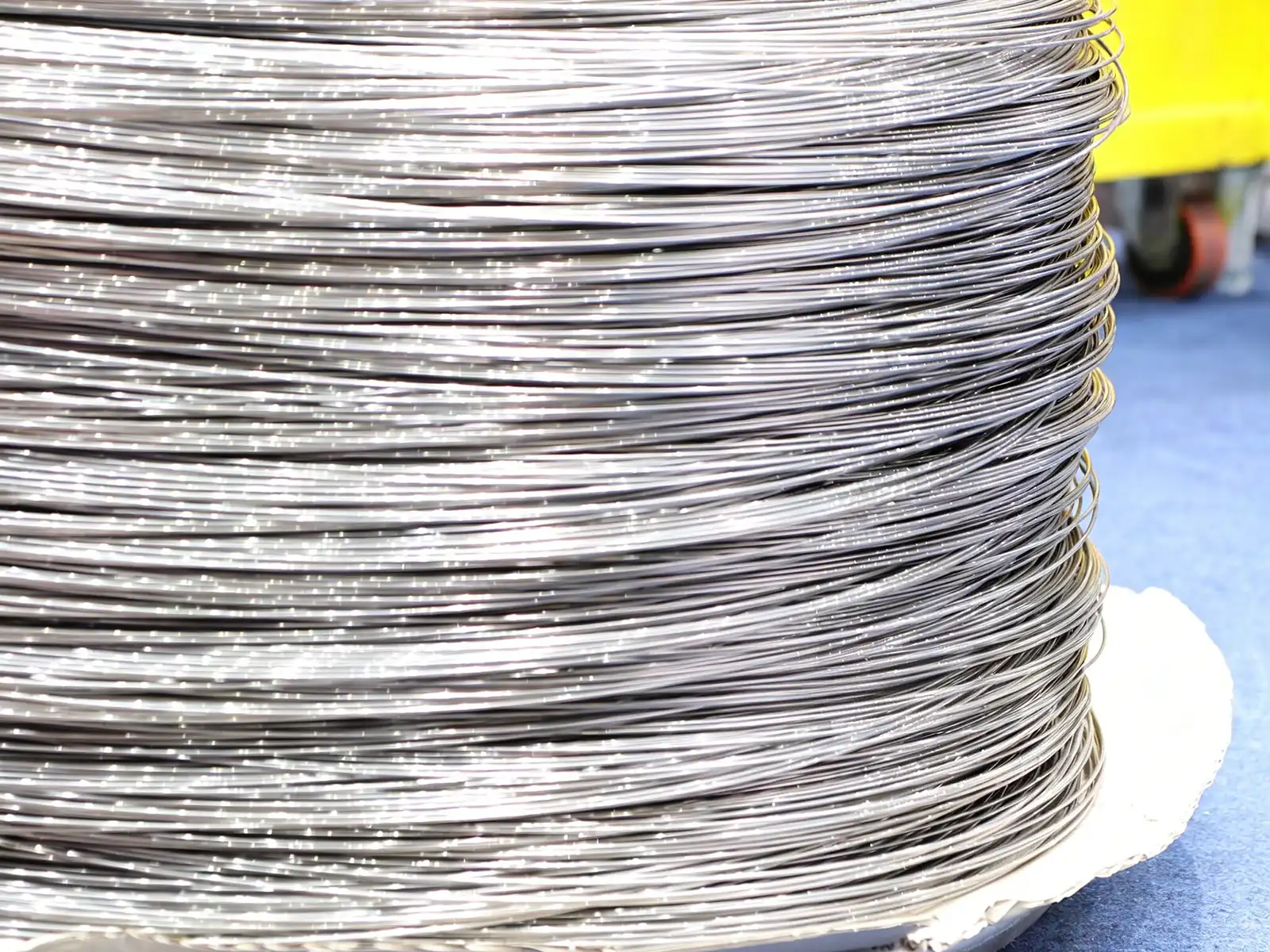
Cutting Gr1 titanium wire requires selecting the appropriate tools according to the wire diameter, precision requirements, and application scenarios. For conventional specifications from φ0.06mm to φ6.5mm, fine titanium wires (≤ 1mm) are recommended to be cut with precision scissors, wire cutters, or laser cutting machines to avoid deformation and burrs; medium wire diameters (1-3mm) are suitable for diagonal pliers, specialized titanium wire cutters, or high-speed grinding wheel cutting machines; thicker wire diameters (≥ 3mm) require metal hacksaws, wire cutting machines, or plasma cutting equipment. Since Gr1 pure titanium has high ductility and low hardness characteristics (annealed hardness is only 140-180HV), dull or high-temperature tools should be avoided during cutting to prevent material from sticking to the blade, tearing, or excessive heat-affected zones. Choosing the right tools not only improves cutting efficiency but also ensures flat titanium wire ends, precise dimensions, reduces subsequent processing losses, and maintains quality stability in applications such as welding, weaving, and medical device manufacturing.
1. What Should You Know About Material Properties and Cutting Challenges of Gr1 Titanium Wire?
(1) What Should You Know About Physical Properties of Pure Titanium Materials?
The density of Gr1 titanium wire is only 4.51 g/cm³, which is equivalent to 60% of stainless steel, but its tensile strength can reach over 340 MPa. This lightweight and high-strength characteristic makes it highly favored in the fields of aerospace and medical implants. Titanium has a melting point as high as 1668℃, but its thermal conductivity is only 15.2 W/(m·K), much lower than that of copper and aluminum. This means that heat is difficult to dissipate quickly during cutting, easily forming local high temperatures in the cutting area, causing material softening or oxidation discoloration.
(2) What Should You Know About Cutting Challenges Brought by High Ductility?
The elongation of annealed Gr1 titanium wire can exceed 20%, demonstrating excellent plasticity. This characteristic is an advantage in forming processes, but it becomes a challenge during cutting. Using dull blades or inappropriate tools can cause the titanium wire to stretch rather than cut, resulting in burrs or torn-looking fracture surfaces. In marine engineering and chemical equipment manufacturing, such irregular cuts can become stress concentration points, severely affecting subsequent welding quality and component reliability.
(3) How Should Chemical Reactivity and Tool Selection?
Titanium is highly chemically reactive at high temperatures and easily reacts with oxygen and nitrogen to form a hard and brittle surface layer. If the high temperature generated during cutting is not properly controlled, an oxide layer can form on the cut surface, with hardness reaching over 260 HV. This not only affects dimensional accuracy but also leads to rapid wear of subsequent machining tools. In the manufacturing of electronic components and precision springs, surface cleanliness requirements are extremely high, and any oxidative contamination can result in product scrap.
2. How Should Selection of Professional Cutting Tools for Different Wire Diameters?
(1) What Should You Know About Precision Cutting of Ultra-fine Wire Diameter (φ0.06-0.5mm)?
This type of specification is mainly used for medical sutures, sensor leads, and microelectronic connections. Ceramic-edged precision scissors are the preferred tool, with blade hardness reaching above HRC65, allowing deformation-free cutting. Laser cutting machines are suitable for mass production, using a 1064nm wavelength fiber laser, with power controlled between 50-200W, cutting speeds reaching several meters per minute, and a heat-affected zone on the cross-section of less than 0.1mm.
Tool Type | Applicable wire diameter | Cutting accuracy | Cross-sectional quality | Efficiency |
|---|---|---|---|---|
Ceramic Edge Scissors | φ0.06-0.3mm | ± 0.02mm | Burr-free | Low |
Fiber laser cutting | φ0.1-0.5mm | ± 0.01mm | Heat-affected zone <0.1mm | Tall |
Ultrasonic cutting | φ0.2-0.5mm | ± 0.03mm | Cold cutting without oxidation | middle |
(2) What Should You Know About Efficient Cutting of Conventional Wire Diameters (φ0.5-3.0mm)?
Welding filler materials and structural components often use this specification. Carbide diagonal pliers are equipped with tungsten steel blades and can quickly cut titanium wires under φ2mm. The recommended blade angle is 60-70 degrees; too small easily chips the blade, while too large leaves obvious indentations. A grinding wheel cutting machine is suitable for φ1-3mm wire, using an aluminum oxide wheel with a grit of 80-120, with the speed controlled at 8000-12000 rpm. Continuous cooling can prevent overheating. In the Korean battery industry, when cutting tab-connected titanium wires, pneumatic shears are used, with pressure set at 0.4-0.6 MPa, a cutting cycle of only 0.5 seconds, and cross-sectional perpendicularity controlled within 1 degree.
(3) What Should You Know About Heavy Cutting of Coarse Gauge Wire (φ3.0-6.5mm)?
This type of coarse wire is commonly used in chemical anti-corrosion equipment and marine engineering structural components. Metal saw frames paired with bimetal saw blades (with 18-24 TPI teeth) use a low-speed, high-pressure cutting mode, maintaining a sawing speed of 15-25 strokes per minute, and employ cutting fluid specifically for titanium alloys. Wire cutting machines, based on the principle of electrical spark erosion, can achieve complex shape cutting with machining accuracy of ± 0.05mm, making them especially suitable for customized requirements in the aerospace field. Plasma cutting power needs to reach 40-60A, and with nitrogen or argon protection, it can quickly cut titanium rods over φ6mm, though the cut surfaces require subsequent grinding.
3. What Should You Know About Professional Cutting Technology and Process Parameter Optimization?
(1) What Should You Know About the Key Role of the Cooling and Lubrication System?
Cutting Gr1 titanium wire must be equipped with effective cooling measures. A water-based emulsion (concentration 5-8%) is an economical choice, and adding extreme pressure agents can enhance lubrication performance. Although synthetic cutting fluids are more expensive, they improve cooling efficiency by more than 30%, making them suitable for continuous large-scale cutting. High-end German manufacturing generally uses Minimum Quantity Lubrication (MQL) technology, consuming only 50-200ml of lubricating oil per hour. This is both environmentally friendly and allows precise control of cutting temperature below 150℃, preventing oxidation and discoloration of the titanium wire surface.
(2) What Should You Know About Match Cutting Speed with Feed Rate?
The optimal process parameters differ significantly for different tools. Mechanical shearing at too high a speed can cause section tearing, while too slow a speed increases the risk of work hardening. Laser cutting requires adjusting the power density according to the wire diameter; for φ0.5mm titanium wire, a power of 150W and speed of 3 m/min are recommended, while for φ2mm, the power needs to be increased to 500W and the speed reduced to 0.8 m/min. For grinding wheel cutting, the feed amount should be controlled at 0.05-0.15 mm/rev; exceeding this can cause wheel clogging and workpiece burning. The U.S. aerospace and medical industries have strict cutting parameter databases, with standard operating procedures (SOPs) corresponding to each specification of titanium wire.
Cutting method | Wire diameter range | Recommended speed | Cooling method | Cross-sectional roughness Ra |
|---|---|---|---|---|
Precision Cutting | φ0.06-1.0mm | Manual control | No cooling required | ≤ 0.4 um |
Grinding wheel cutting | φ1.0-3.0mm | 10-15m/min | Emulsion continuously cooling | ≤ 1.6 um |
Laser cutting | φ0.1-2.0mm | 0.5-3m/min | Nitrogen purging | ≤ 0.8 um |
Wire cutting | φ2.0-6.5mm | 2-5 mm²/min | Deionized water | ≤ 0.6 um |
(3) What Should You Know About Cross-sectional Quality Inspection and Post-processing?
The quality of the cut end face directly affects application performance. When using a micrometer to check dimensional tolerance, it should be controlled within ± 0.1mm. Surface roughness should be measured with a surface roughness meter; titanium wire for welding requires Ra≤ 0.8um, and medical implants need to achieve Ra≤ 0.4um. If burrs are present, they can be lightly polished with fine sandpaper (600-1000 grit) or removed using electrochemical polishing to remove 0.01-0.05mm of the surface layer. In Vietnam’s electronics manufacturing industry, after cutting titanium wire for sensors, ultrasonic cleaning is uniformly carried out to remove surface oil and particles, ensuring the reliability of subsequent welding.
4. Why Is Recommendations for Cutting Tool Configurations in Different Application Scenarios Important?
(1) What Should You Know About Pollution-free Cutting in Medical Device Manufacturing?
Biocompatibility is the core requirement for medical titanium wires, and the cutting process must not introduce allergenic elements such as iron, chromium, or nickel. Ceramic-bladed scissors and sapphire tools are ideal choices, completely avoiding metal contamination. Laser cutting needs to be carried out under an inert atmosphere, with oxygen content controlled below 50 ppm. In India, the medical device industrial park under construction has introduced fully automated laser cutting production lines equipped with online spectrometers to monitor section composition in real time, ensuring compliance with ISO 10993 biosafety standards. The cut titanium wires must undergo ultrasonic cleaning and vacuum packaging to prevent secondary contamination.
(2) What Should You Know About Marine Engineering and Chemical Anti-corrosion Field?
Harsh corrosive environments require that the cut sections of titanium wire have no cracks and no stress concentration. Desalination projects in the Middle East extensively use φ3-5mm titanium wire to make corrosion-resistant fasteners, using band saws with silicon carbide wheels. After cutting, the pieces undergo acid pickling and passivation treatment, forming a dense oxide film on the cross-section, which increases resistance to chloride ion corrosion by 40%. In the construction of offshore platforms in Australia, titanium wire cutting workshops are equipped with enclosed cutting tables, collecting and recycling cutting waste, which is both environmentally friendly and reduces costs by more than 15%.
(3) What Should You Know About Precision Electronics and New Energy Industry?
The battery tabs, shielding covers, and connectors require extremely high consistency in titanium wire dimensions. Korean battery manufacturers use servo-controlled automatic cutters with a positioning accuracy of ± 0.02mm, combined with a vision inspection system to automatically remove defective products. Japanese electronics companies have developed ultrasonic cutting equipment that can process 16 titanium wires of φ0.2mm simultaneously, with a cutting speed of 200 times per minute and a cross-sectional neatness 30% better than traditional methods. In Europe, the hydrogen energy industry uses five-axis linkage wire cutting machines when preparing titanium wire mesh for fuel cell bipolar plates, achieving precise cutting of complex mesh structures with mesh error controlled within ± 0.05mm.
5. What Should You Know About Cutting Safety and Cost Control Strategies?
(1) What Should You Know About Occupational Health and Environmental Protection?
Fine dust generated by titanium wire cutting poses a fire hazard, so the workshop must be equipped with an explosion-proof dust collection system, and the dust concentration should be controlled below 10 mg/m³. Operators need to wear protective goggles and dust masks, and an optical safety fence should be set up in the laser cutting area. North American aerospace manufacturing companies stipulate that the air quality in titanium alloy processing workshops should be tested quarterly to ensure compliance with OSHA standards. Cutting fluid must be regularly tested for pH value and bacterial content, as deteriorated fluid can corrode the surface of the titanium wire, affecting product quality.
(2) What Should You Know About Tool Life Management and Cost Reduction with Efficiency Improvement?
Reasonable selection of tools can significantly reduce overall costs. Although carbide scissors are relatively expensive (about $200-500 each), they can be used for over 5, 000 cuts, resulting in a cost of only $0.04 per cut. Choosing grinding wheels with ceramic bonds can last three times longer than resin wheels, with a single wheel able to cut over 800 meters of φ2mm titanium wire. Establishing a tool ledger to record usage times and wear status, and replacing tools in a timely manner, can prevent batch scrap caused by sudden tool failure. Southeast Asian manufacturing bases have reduced cutting tool costs by 25% through centralized procurement and tool remanufacturing services.
(3) What Should You Know About Investment Return of Intelligent Cutting System?
The initial investment for automated cutting equipment is relatively high ($50, 000-$300, 000), but the advantages are obvious in mass production. Cutting machines equipped with servo motors and PLC control systems can achieve unattended continuous operation, increasing single-shift output by 60% and improving product consistency by 40%. The online inspection system automatically records the cutting parameters and quality data of each titanium wire, supporting full traceability. Data from a German Industry 4.0 demonstration factory show that the smart cutting system reduces the titanium wire scrap rate from 3.5% to 0.8%, allowing the equipment investment to be recovered within 18 months.
6. What Is the Conclusion?
The selection of tools for cutting Gr1 titanium wire needs to comprehensively consider the wire diameter specifications, application scenarios, and quality requirements. Ultra-fine diameters rely on ceramic-edged scissors and laser equipment to ensure precision, while conventional sizes can use carbide pliers and grinding machines to balance efficiency, and coarse specifications require wire cutting or plasma tools. Mastering core processes such as cooling and lubrication, speed matching, and cross-section treatment, combined with intelligent detection systems, can achieve high-quality and stable cutting, meeting the stringent standards of high-end fields such as aerospace, medical, and new energy.
FAQ
Q1: What operations should be avoided when cutting φ0.2mm medical-grade titanium wire?
The use of ordinary steel scissors is prohibited, as it can introduce iron contamination. Avoid cutting at high temperatures to prevent the formation of an oxide layer, which affects biocompatibility. Operations must be carried out in a clean environment, and the product should be vacuum packed immediately after cutting to prevent surface adsorption of impurities, ensuring compliance with ISO 10993 medical safety standards.
Q2: How can one determine if a grinding wheel is overheating when cutting titanium wire?
Observing the color of the cross-section is a key indicator: silver-white is normal, light yellow indicates the temperature has reached 300℃ and cooling needs to be strengthened, dark blue or purple indicates it has exceeded 450℃ and is severely overheated. An infrared thermometer can be used for monitoring, and the cutting area temperature should be kept below 200℃. Overheating can cause material hardening and the formation of microcracks.
Q3: How to improve the efficiency of batch cutting φ3mm titanium wire for chemical equipment?
It is recommended to use an automatic feeding cutting machine with a cooling system, paired with carbide saw blades or ceramic grinding wheels. Set a programmed cutting length and equip it with an automatic material collection device. Optimize cutting parameters to control the cutting time per piece at 8-12 seconds, and use dual-station alternating operations to achieve a daily output of over 2, 000 pieces, with a scrap rate of less than 1%.
How Should Looking for Reliable Gr1 Titanium Wire Cutting and Processing Suppliers?
Baoji Titanium Valley Titanium-Nickel-Zirconium Material Processing Co., Ltd. (Titanium Valley) owns an Italian Danieli precision production line, with an annual capacity of 5, 000 tons, offering a full range of titanium wires φ0.06-6.5mm and custom cutting services. Our automated cutting system ensures dimensional tolerances ≤ ± 0.1mm and comes with complete EN 10204 3.1 material certificates. Contact us now: sales@titaniumvalleys.com
References
1. “Handbook of Titanium and Titanium Alloy Processing Technology,” China Nonferrous Metals Industry Association, 2021
2. Boyer R., Welsch G., Collings E.W. ‘Materials Properties Handbook: Titanium Alloys,’ ASM International, 1994
3. ‘Precision Metal Wire Cutting Technology and Equipment’, China Machine Press, 2020
4. Donachie M.J. ‘Titanium: A Technical Guide (2nd Edition)’, ASM International, 2000