
What Should You Know About Processing and Manufacturing of Gr1 Titanium Foil, Cutting, Shaping, and Deep Processing?
- Gr1 Titanium Foil
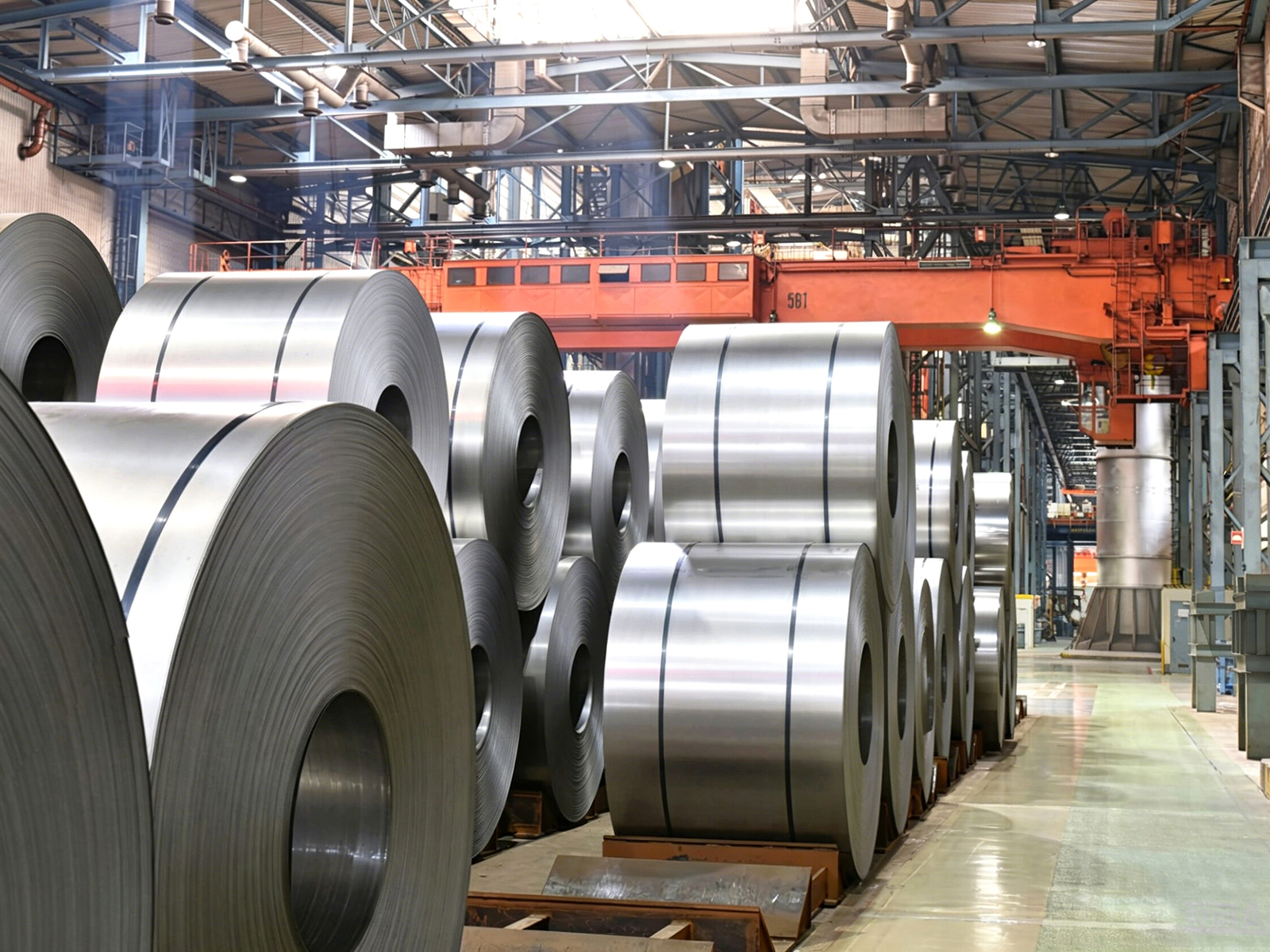
The processing and manufacturing of Gr1 titanium foil covers the entire workflow of cutting, forming, and deep processing, with the core focus on controlling the springback, flatness, and microstructure uniformity of ultra-thin materials ranging from 0.02 to 1.0 mm. ± 0.001 mm tolerance control is achieved through 20-roll precision rolling technology, combined with argon annealing (± 2℃) to ensure stable mechanical properties. Ultrasonic alkaline cleaning ensures a surface cleanliness of up to 44 DIN, meeting the requirements of subsequent processes such as welding and coating. High-precision slitting and leveling technology overcomes the deformation challenges of ultra-thin, wide materials. With an annual production capacity of 3, 000 tons, it supports mass-customized demands in aerospace, electronics, and new energy fields, realizing one-stop precision processing and delivery from raw materials to finished products.
1. What Should You Know About Gr1 Titanium Foil Cutting Process, Balancing Precision and Efficiency?
(1) What Should You Know About the Core Challenges of Cutting Ultra-thin Materials?
Gr1 titanium foil with a thickness of 0.02-1.0mm is prone to edge burrs, stress concentration, and dimensional deviation during the cutting process. Traditional shearing methods can cause microcracks on the material edges, affecting subsequent welding strength. When cutting wide materials (350-670mm), it is necessary to simultaneously control tension and speed to avoid serpentine deviation. Although laser cutting has high precision, the heat-affected zone may alter the α-phase structure of titanium, reducing its plasticity.
(2) What Should You Know About Breakthrough in High-precision Slitting Technology?
Using carbide tools in combination with a dynamic tension control system to achieve cutting accuracy of ± 0.05mm. The slitting line is equipped with an online thickness detection device, which adjusts the tool pressure in real time based on feedback data to prevent tearing in ultra-thin areas. The tool angle is optimized to 15°-20° to reduce cutting resistance while maintaining the smoothness of the cut. For the 0.02mm ultra-thin specification, a tension-free floating feeding mechanism is used to prevent material stretching and deformation.
(3) What Should You Know About Key Points for Quality Control After Cutting?
After each batch of cutting is completed, edge straightness inspection (≤ 0.1mm/m) and surface roughness testing (Ra≤ 0.8um) must be carried out. Examine the cross-section of the cut under a microscope to ensure there is no delamination or oxidation color difference. For high cleanliness applications such as electrode substrates, a secondary ultrasonic cleaning is required after cutting to remove metal dust, maintaining a surface Dain value stable above 44.
Cutting method | Applicable Thickness | Accuracy grade | Typical applications |
|---|---|---|---|
Mechanical slitting | 0.02-1.0mm | ± 0.05mm | Battery tabs, shielding materials |
Laser cutting | 0.1-1.0mm | ± 0.02mm | Special-shaped parts, microstructure processing |
Water jet cutting | 0.3-1.0mm | ± 0.1mm | composite material substrate |
2. What Should You Know About Gr1 Titanium Foil Forming Processing, Transformation From Flat to Three-Dimensional Structure?
(1) What Should You Know About Material Property Requirements for Cold Forming Process?
Gr1 titanium foil has an elongation of ≥ 25% and a yield strength of ≥ 250MPa, providing a good plastic foundation for cold bending and stamping. Before forming, the annealing state of the material needs to be confirmed. The recrystallized structure after argon annealing refines the grains to 10-15um, reducing the risk of forming cracks. A surface Dyne value of 44 ensures uniform adhesion of lubricants and reduces mold sticking. When forming wide materials, segmented pressure compensation technology must be used to avoid excessive thinning in the central area.
(2) What Should You Know About Thermoforming and Superplastic Forming Technology?
For complex curved parts (such as aircraft skins), a hot forming process at 500-650℃ is used, taking advantage of titanium’s superplasticity at high temperatures (elongation can reach 200%-500%) to achieve deep drawing. Vacuum hot pressing prevents surface oxidation and maintains the metallic luster. For ultra-thin specifications (0.02-0.05mm), gas pressure forming technology is used, controlling the deformation rate through the pressure difference to prevent local rupture. After forming, rapid cooling to below 200℃ is required to solidify the microstructure.
(3) What Should You Know About Rebound Control and Dimensional Accuracy Assurance?
The elastic modulus of titanium is about 110 GPa, and its rebound rate is 30%-50% higher than that of stainless steel. An over-bend compensation design is adopted, with the mold angle preset to deviate by 3°-5°. Multi-pass progressive forming is used to disperse stress, keeping the deformation in a single pass controlled at 8%-12%. For components with high precision requirements (tolerance ± 0.1 mm), flattening is performed after forming, and residual stress is eliminated through stretching and straightening, achieving a final dimensional consistency of over 98%.
Molding method | Temperature range | Applicable Thickness | Maximum elongation |
|---|---|---|---|
Cold stamping | Room temperature | 0.1-1.0mm | 25%-35% |
Thermoforming | 500-650℃ | 0.05-0.8mm | 200%-500% |
Superplastic forming | 800-900℃ | 0.02-0.3mm | ≥ 500% |
3. What Should You Know About Advanced Processing Technology, Welding, Coating, and Surface Modification?
(1) What Should You Know About Key Parameters of the Welding Process?
Gr1 titanium foil welding requires strict control of oxygen content to below 50ppm, using argon protection (purity ≥ 99.99%) to prevent brittleness. TIG welding current is 30-80A, speed 200-400mm/min, with heat input controlled at 0.5-1.2 kJ/cm. Ultra-thin materials (<0.1mm) use pulse welding mode, with a peak-to-base current ratio of 3: 1 to reduce thermal deformation. Weld width is controlled at 1.5-3mm, penetration reaches 70%-85% of the base material thickness, and tensile strength is maintained above 90% of the base material.
(2) What Should You Know About Surface Coating and Functionalization?
In electromagnetic shielding applications, the surface of titanium foil is plated with nickel or silver to enhance conductivity, with a coating thickness of 3-8 um and adhesion ≥ 15 MPa. Anodizing treatment forms a TiO2 film (thickness 0.1-0.5 um), improving corrosion resistance while achieving decorative colors. Fuel cell electrodes require a platinum coating (0.3-0.5 mg/cm²), and uniform distribution is ensured through magnetron sputtering, increasing catalytic activity by more than 40%. The surface must reach Ra ≤ 0.6 um before coating, and oxide scale is removed through sanding.
(3) What Should You Know About Precision Machining and Microstructure Fabrication?
Laser etching technology is used to process microchannels (width 50-200 um) on titanium foil surfaces, intended for microfluidic chips or heat exchangers. Chemical etching is used to create mesh structures (pore size 0.1-1 mm), applied in battery current collectors or filter membranes. Photoresist masks combined with ion beam etching enable nano-scale pattern transfer to meet microelectronic packaging requirements. After deep processing, dimensional tolerance is ± 0.01 mm, surface roughness Ra ≤ 0.4 um, suitable for direct use in high-precision component assembly.
Deep processing type** | Process parameters | Application field | Performance improvement |
|---|---|---|---|
TIG welding | 30-80A, argon protection | Heat exchanger, pipe connections | Weld strength ≥ 90% of base metal |
Anodizing | 20-100V, sulfuric acid electrolyte | Decorative parts, corrosion-resistant parts | Corrosion resistance increased by 5-10 times |
Laser etching | Wavelength 1064nm, Power 50-200W | Microfluidics, electronic devices | Pattern accuracy ± 5 um |
4. What Should You Know About Quality Control System, Full Traceability From Raw Materials to Finished Products?
(1) What Should You Know About Raw Material Inspection and Batch Management?
Each batch of Gr1 titanium foil entering the factory must undergo chemical composition testing (Ti≥ 99.5%, O≤ 0.18%, Fe≤ 0.20%) using ICP spectroscopy to ensure impurity standards are met. Mechanical property tests include tensile strength (≥ 370MPa), elongation (≥ 25%), and hardness (100-180HB), with three sampling points per roll. Thickness tolerance is checked using a laser thickness gauge with full-width scanning, recording deviation curves and removing any out-of-tolerance sections. A QR code traceability system is established to link furnace batch numbers, rolling parameters, and inspection data.
(2) What Should You Know About Process Monitoring and Online Detection?
The production line is equipped with 90% automated equipment, and monitoring points are set for key processes. During the 20-roll precision rolling process, the rolling force sensor provides real-time feedback on pressure fluctuations (± 5 kN) and automatically adjusts the roll gap to compensate for thickness deviations. The temperature uniformity in the argon annealing furnace is ± 2℃, monitored through multiple thermocouples, with heating rate (≤ 5℃/min) and holding time (1-3 hours) recorded. After ultrasonic cleaning, the surface roughness is tested online, and nonconforming products are automatically identified and isolated.
(3) What Should You Know About Finished Product Inspection and Certification System?
The finished products must pass tensile testing, bending testing, and metallographic analysis, with a grain size rating of ASTM 8-10. Surface quality is inspected visually in combination with magnetic particle testing to ensure there are no cracks, scratches, or oxidation spots. Dimensional measurement is carried out using a coordinate measuring machine, with flatness ≤ 0.5mm/m². EN 10204 3.1 material certificates and third-party inspection reports (SGS/TÜV) are provided, meeting ASTM B265 and JIS H4600 standards, and supporting AS9100 aerospace certification requirements.
5. Why Is Industry Application Case, Practical Verification in the High-End Manufacturing Field Important?
(1) What Should You Know About Aerospace Lightweight Structural Components?
A certain aircraft engine manufacturer uses 0.3mm × 500mm Gr1 titanium foil to make the inner lining of turbine blades, achieving complex surface conformity through superplastic forming, reducing the weight of a single piece by 40% compared to traditional materials. The welded sealed compartment passes a pressure test of 1.5 MPa without leakage, with an operating temperature range of -50℃ to 400℃. The wide material reduces splicing welds, improving overall structural reliability, and is validated through 10, 000 hours of fatigue testing.
(2) What Should You Know About New Energy Batteries and Fuel Cells?
Japanese battery manufacturers use 0.05mm × 350mm titanium foil as the base material for lithium-ion battery tabs. After nickel plating on the surface, the resistance is <0.5mΩ and the welding strength is ≥ 30N/mm. Fuel cell bipolar plates are stamped from 0.1mm titanium foil, with a channel depth of 0.8mm, contact resistance <10mΩ·cm², and corrosion resistance passing a 1000-hour salt spray test. The stability of bulk supply has increased production line yield to 98.5% and reduced the cost per piece by 25%.
(3) What Should You Know About Electronic Shielding and Precision Instruments?
South Korean consumer electronics companies use 0.02mm ultra-thin titanium foil to make electromagnetic shielding covers for smartphones, with shielding effectiveness ≥ 80dB (1GHz), and a weight of only 57% that of copper foil. The laser cutting accuracy is ± 0.02mm, suitable for automated mounting processes. Medical CT equipment detector windows use 0.15mm titanium foil, with X-ray transmittance ≥ 95%, impact resistance three times that of aluminum foil, and a service life extended to over 10 years.
Application field | Specification Selection | Core Performance Requirements | Actual benefits |
|---|---|---|---|
Aero engine | 0.3-0.8mm | High temperature resistance, low density, high strength | Reduce weight by 40%, extend lifespan by 50% |
Lithium battery tab | 0.05-0.1mm | Low resistance, high solderability | Yield increased to 98.5% |
Electromagnetic shielding | 0.02-0.05mm | Shielding efficiency ≥ 80dB, lightweight | Weight reduced by 43% |
6. What Is the Conclusion?
The core of Gr1 titanium foil processing and manufacturing lies in the precise control of ultra-thin, wide materials and the integration of multiple processes. Through 20-roll precision rolling, argon annealing, and high-precision slitting technology, a tolerance of ± 0.001mm and stable mechanical properties are achieved. Deep processing steps such as cutting, forming, welding, and coating require strict control of temperature, stress, and surface cleanliness, combined with a 90% automated production line and a full-process inspection system, to ensure consistency in batch delivery and meet the stringent standards of high-end fields such as aerospace, electronics, and new energy.
FAQ
Q1: How to prevent edge tearing when cutting 0.02mm ultra-thin titanium foil?
Using a tension-free floating feeding system with a 15°-20° tool angle, dynamically adjust the cutting pressure, and use online thickness detection for real-time compensation to ensure a cut flatness ≤ 0.1mm/m, and remove burrs through secondary ultrasonic cleaning.
Q2: How can the strength loss of Gr1 titanium foil after welding be controlled within 10%?
Use argon shielding (purity ≥ 99.99%) for TIG welding, control the heat input to 0.5-1.2 kJ/cm, use pulse mode to reduce the width of the heat-affected zone, weld penetration reaching 70%-85% of the base material thickness, and perform post-weld annealing to eliminate residual stress.
Q3: How to ensure thickness uniformity when forming wide titanium foil (670mm)?
Using segmented pressure compensation technology, during the 20-roll finish rolling process, the rolling force sensor provides real-time feedback (± 5kN), with multi-pass progressive forming single-pass deformation amount ≤ 12%. After forming, leveling treatment eliminates springback, achieving a final thickness tolerance of ± 0.001mm and dimensional consistency ≥ 98%.
7. What Should You Know About Call to Action?
As a professional Gr1 titanium foil manufacturer and supplier, Titanium Valley relies on an annual production capacity of 3, 000 tons and seven major core technological breakthroughs to provide global customers with customized processing services for ultra-thin wide titanium foils ranging from 0.02 to 1.0mm. Offering one-stop delivery from raw materials to deep-processed finished products, we meet ASTM B265 and ISO certification requirements. Customers in the aerospace, electronics, and new energy sectors are welcome to inquire for cooperation: sales@titaniumvalleys.com.
References
1. “Precision Rolling Technology for Titanium and Titanium Alloy Thin Plates and Strips,” China Nonferrous Metals Industry Publishing House, 2021
2. ‘Forming Processes and Defect Control of Ultra-Thin Metal Foils,’ China Machine Press, 2020
3. “Welding Technology Manual for Aerospace Titanium Alloys,” National Defense Industry Press, 2019
4. ‘Surface Treatment and Functionalization of Metal Foils for New Energy Batteries,’ Chemical Industry Press, 2022