
What Are the Properties, Applications, and Selection Considerations for R60705 Zirconium Bar (Zr-2.5Nb)?
- R60705 Zirconium Bar
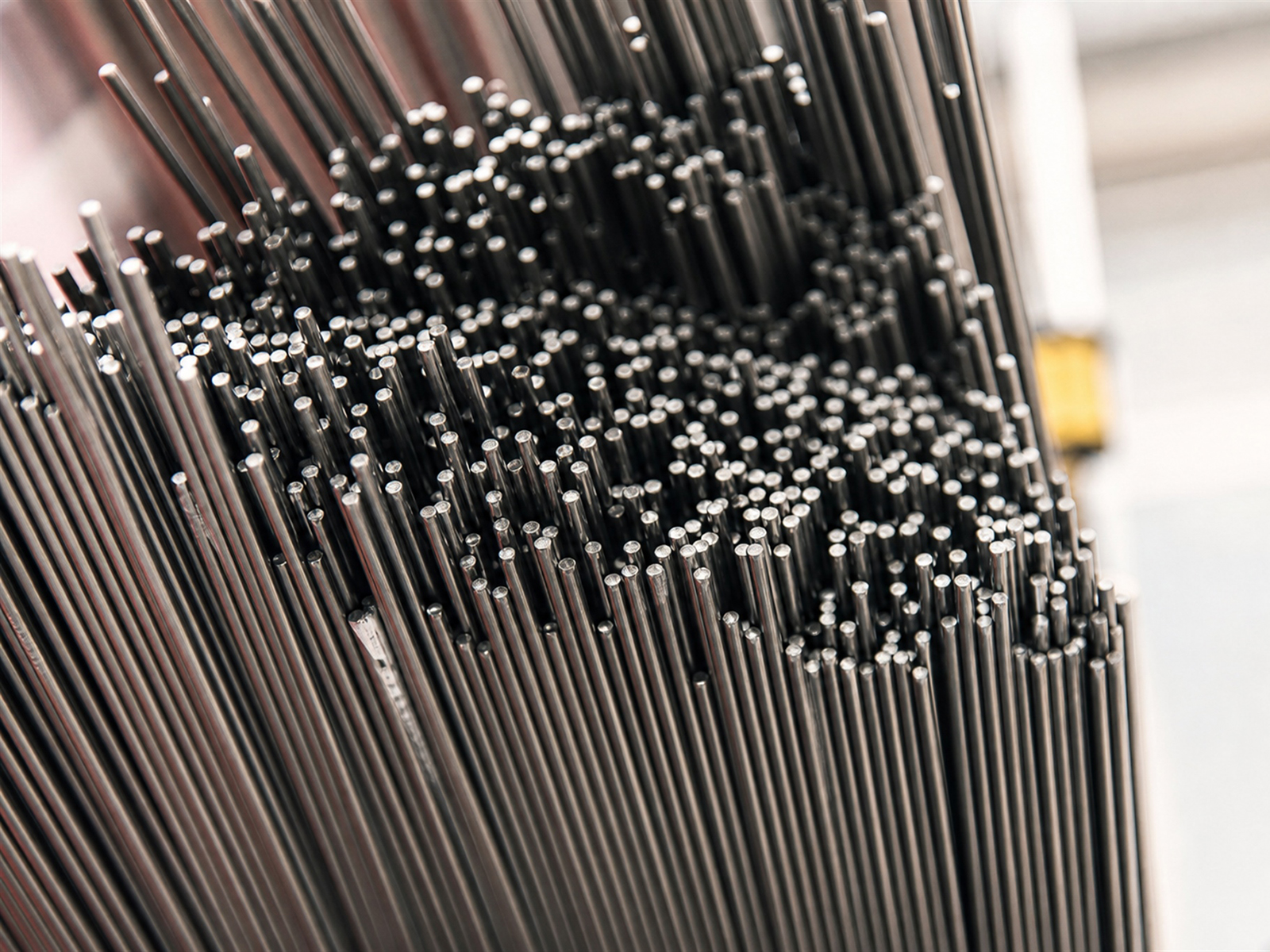
Direct engineering answer. R60705 Zirconium Bar should be evaluated against the finished component, product form, governing specification, downstream process and acceptance evidence. A general property value is an orientation tool; the released drawing, current certificate and inspection plan control the final decision.
In highly corrosive service conditions such as chemical processing, petrochemical, and marine engineering, material selection directly determines equipment service life and maintenance costs. R60705 zirconium bar (UNS R60705, also known as Zr705 or Zr-2.5Nb zirconium alloy bar) is based on a zirconium matrix with approximately 2.5% niobium added, which improves strength and high-temperature load-bearing capacity while retaining the corrosion resistance of zirconium materials. Compared with commercially pure zirconium R60702, R60705 offers higher strength and is commonly used for corrosion-resistant components subjected to high stress or elevated temperatures.
1. Core Chemical Composition and Metallurgical Characteristics of R60705 Zirconium Bar
(1) Composition: The Key Role of Niobium
The typical chemical composition of R60705 is shown in the table below:
Element | Content Range |
Zr + Hf | Balance |
Nb (Niobium) | 2.0 to 3.0% (typical 2.5%) |
Hf (Hafnium) | ≤ 4.5% |
Fe + Cr (Iron + Chromium) | ≤ 0.20% |
O (Oxygen) | ≤ 0.18% |
C (Carbon) | ≤ 0.05% |
N (Nitrogen) | ≤ 0.025% |
H (Hydrogen) | ≤ 0.005% |
Niobium is the primary strengthening element in R60705. When niobium atoms enter the zirconium matrix, they increase both tensile strength and yield strength while maintaining a certain level of ductility. Interstitial elements such as oxygen, nitrogen, and carbon are controlled at low levels to reduce the risk of embrittlement.
(2) Manufacturing Process: From Zirconium Sponge to Finished Bar
R60705 zirconium bar’s production chain directly affects final quality. The typical process route is: high-purity zirconium sponge and niobium are blended to the target composition → double vacuum arc remelting (2x VAR) → homogenization heat treatment → hot forging/hot rolling forming → cold drawing or machining finishing to specification → vacuum annealing → straightening and polishing → non-destructive testing → surface cleaning (pickling as required) → finished product. Double vacuum arc remelting is used to improve compositional uniformity and reduce segregation and porosity. Large-diameter forged billets are primarily hot forging/machining and are not cold drawn; small-size bars can be finished by cold drawing after hot working.
(3) Surface Condition and Precision Grades
Different application scenarios impose different requirements on bar surface and dimensional precision. R60705 is typically offered in the following four surface conditions:
Surface Type | Processing Method | Typical Applications |
Black oxide (as-hot-worked) surface | As-hot-worked | Large-diameter forged billets, blanks for subsequent machining |
Turned surface | Conventional or CNC turning | General machining, weldments, equipment components |
Peeled surface | Continuous peeling/centerless turning | Structural parts with high requirements for surface quality and dimensional consistency |
Polished surface | Grinding and polishing | Precision shafts, seals, appearance parts |
The main difference between a peeled surface and a turned surface is that the peeled surface is typically produced by continuous peeling or centerless turning, offering better surface roughness and dimensional uniformity than a conventional turned surface. It is suitable for parts with higher requirements for surface defect control and dimensional consistency.
2. Key Properties of R60705 Zirconium Bar
(1) Mechanical Properties: A Strength Baseline Higher Than That of Pure Zirconium
The standard minimum mechanical properties of R60705 (annealed condition, per ASTM B550) are as follows:
Property | R60702 (Pure Zirconium) | R60705 (Zr-2.5Nb) |
Tensile strength (MPa) | ≥ 380 | ≥ 552 |
Yield strength (MPa) | ≥ 207 | ≥ 379 |
Elongation (%) | ≥ 16 | ≥ 16 |
Based on the standard minimum specified values, the minimum tensile strength of R60705 is approximately 45% higher than the minimum for R60702, while the minimum elongation is similar. This indicates that R60705 can maintain comparable plasticity and toughness while achieving higher strength.
(2) 2, Corrosion Resistance: Evaluation by Media Type
R60705 zirconium bar’s corrosion resistance is demonstrated mainly in the following media types:
- Acidic media: R60705 exhibits low corrosion rates in most concentrations of hydrochloric acid, sulfuric acid, and a wide range of organic acids, and is especially suitable for reducing acids and chloride-containing acidic systems. Compared with 316L stainless steel, it offers clear advantages in many hydrochloric acid/sulfuric acid environments; compared with titanium alloys, the choice depends on the specific medium and temperature, as titanium may be more suitable in certain oxidizing acids.
- Alkaline media: R60705 provides good tolerance in strong alkaline environments such as NaOH and KOH, whereas many metallic materials are prone to corrosion cracking in strong alkalis.
- Chloride-containing environments: R60705 offers good resistance to pitting and crevice corrosion caused by chloride ions, making it suitable for seawater, brine, and chloride-containing chemical process media.
(3) High-Temperature Performance and Fabrication Suitability
Under an inert atmosphere or with appropriate protection, R60705 retains reasonably high strength at approximately 200 to 400℃. At elevated temperatures in air, zirconium alloys may oxidize, so the service temperature should be evaluated based on atmosphere and protection conditions. R60705 can be hot rolled, forged, cold drawn, and machined. Welding requires inert gas shielding (TIG/electron beam) primarily to control contamination, oxidation, and hydrogen embrittlement risks; stress-relief annealing should be performed after welding as required.
3. Primary Application Areas of R60705 Zirconium Bar
(1) Chemical and Petrochemical Equipment
The chemical industry is a typical application scenario for R60705. Components that come into contact with strong acids, strong alkalis, or chloride-containing media—such as reactors, heat exchangers, piping, valve bodies, and pump shafts—are frequently manufactured from R60705 bar for shafts, flanges, and agitator blades. Under conditions of higher media concentration, higher temperature, or higher stress, R60705 can extend equipment service life, although the actual life depends on service conditions.
(2) Marine Engineering and Desalination
Seawater has a high chloride ion content. R60705 can be used for components subject to localized high temperatures, high pressure, or crevice corrosion in desalination equipment, offshore platform structures, and offshore pipeline systems. In chloride-containing and reducing acid environments, R60705 can serve as an alternative or complement to titanium alloys, but selection should be evaluated in light of cost, density, fabricability, and the specific corrosion service conditions.
(3) Hydrometallurgy and Precision Manufacturing
The leaching, solvent extraction, and electrowinning stages of hydrometallurgy involve acidic slurries that are highly corrosive, although erosion wear may also be present. R60705 offers good corrosion resistance, but its wear resistance is not outstanding; the effect of erosion wear should be evaluated when used in slurry erosion service. R60705 may also be selected for certain precision-manufactured components requiring non-magnetic and corrosion-resistant properties, but this must be evaluated against specific purity requirements, especially where strict limits apply to hafnium content or trace elements.
4. Selection Considerations and Specification Guide for R60705 Zirconium Bar
(1) Matching Service Parameters
When selecting a material, the following service parameters should be confirmed as a priority:
- Corrosive media type and concentration: strong acid concentration, pH value, chloride ion content, and media temperature
- Working pressure and stress level: high-pressure reactors and high-speed rotating shafts demand higher strength
- Temperature range: whether the service involves temperatures above 200℃ or wide-temperature cyclic conditions
When stress levels are relatively high or service temperatures are relatively high, R60705 offers a clear suitability advantage over R60702. When the medium is highly corrosive but the stress is low, the corrosion rates and allowable stresses of the two materials in the target medium should first be compared, and then the selection should be made based on cost and available supply specifications.
(2) Common Specifications and Delivery Conditions
Parameter | Typical Range |
Cross-section shape | Round, square, and hexagonal bar |
Round bar diameter | Φ6 mm to Φ300 mm (other sizes available on request) |
Square/hexagonal bar | Across-flats or side length customized as required |
Length | Cut to fixed length or random length |
Delivery condition | Annealed (general), cold-worked (high-strength requirements) |
Specification | ASTM B550 / ASME SB550 (EN 10204 3.1 certificate available upon customer request) |
Surface condition | Black, turned, peeled, or polished (as required) |
(3) Quality Verification Requirements
For industrial procurement, the following quality documents and inspection items should be reviewed:
- Chemical composition report: verify that the contents of key elements such as Nb, Hf, Fe+Cr, and O meet the requirements of ASTM B550
- Mechanical property test report: tensile strength, yield strength, and elongation
- Non-destructive testing (NDT): ultrasonic testing (UT) for internal defect indications in accordance with acceptance criteria
- Metallographic examination: evaluate grain size and heat treatment uniformity
- Material test certificate (MTC): chemical composition and mechanical property reports are normally provided in accordance with ASTM B550; an MTC conforming to EN 10204 3.1 can be provided upon customer request
5. Conclusion
R60705 zirconium bar, with niobium as its primary strengthening element, offers a balanced combination of strength, corrosion resistance, high-temperature load-bearing capacity, and fabricability. It is an important candidate material for highly corrosive service in chemical reactors, desalination plants, and hydrometallurgical equipment. Material selection should be evaluated against standard specifications and supplier data, taking into account the specific media, temperature, stress, and service life requirements.
FAQ
(1) Q1: What Is the Core Difference Between R60705 and R60702 Zirconium Bar?
R60705 contains approximately 2.5% niobium and has a higher minimum strength than R60702. R60705 should be prioritized for corrosion-resistant components under high stress, at elevated temperatures, or with high strength requirements; for service with low stress and mild corrosive media, R60702 may be selected after comparing corrosion rates and cost.
(2) Q2: What Is the Corrosion Rate of R60705 Zirconium Bar in Hydrochloric Acid and Sulfuric Acid Environments?
R60705 exhibits excellent corrosion resistance over certain hydrochloric acid and sulfuric acid concentration and temperature ranges, but the actual corrosion rate is influenced by media concentration, temperature, flow velocity, and impurities. When selecting a material, the corrosion data in ASTM standards, supplier corrosion curves, or corrosion testing should be referenced.
(3) Q3: What Should Be Noted When Welding R60705 Zirconium Bar?
R60705 has good weldability and is suitable for TIG welding and electron beam welding. Welding must be performed under inert gas shielding to prevent high-temperature oxidation, nitriding, and hydrogen embrittlement. The weld bevel and adjacent surfaces should be cleaned before welding. For thick-section welds or components sensitive to subsequent distortion, vacuum or inert atmosphere stress-relief annealing can be performed in accordance with ASTM B550 and welding procedure qualification requirements.
Contact Us
Looking for a reliable manufacturer, supplier, or processing service for R60705 zirconium bar (Zr-2.5Nb, UNS R60705, also known as Zr705)? A professional zirconium material company with full-process capability—from high-purity zirconium sponge and niobium blending, double vacuum arc remelting (2x VAR), homogenization heat treatment, and hot forging/hot rolling to cold drawing finishing, vacuum annealing, straightening and polishing, and non-destructive testing—can supply to ASTM B550 / ASME SB550, covering round bar (Φ6–Φ300 mm), square bar, hexagonal bar, and other cross-section shapes, with four surface conditions (black, turned, peeled, and polished) and two delivery conditions (annealed and cold-worked), in fixed lengths or random lengths. Material test certificates conforming to ASTM B550 (including chemical composition for Nb, Hf, Fe+Cr, O, C, N, H, and mechanical properties), ultrasonic testing reports, metallographic examination reports, and batch traceability documents can be provided, and EN 10204 3.1 certificates are available upon customer request. For applications such as chemical reactors, desalination, and hydrometallurgy, material selection and corrosion data references can be provided. Please contact:
References
- Liu Jianzhang. Zirconium and Zirconium Alloys [M]. Beijing: Metallurgical Industry Press, 2001.
- Li Xianjun, Wang Hao, Wang Hai. Application of zirconium and zirconium alloys in the chemical industry [J]. Titanium Industry Progress, 2004, 21(3): 38-41.
- Zhao Yongqing, Li Peizhi, Liu Caili, et al. Current status and development of zirconium and zirconium alloys [J]. Rare Metal Materials and Engineering, 2004, 33(5): 449-453.
Engineering specification and verification framework
For R60705 Zirconium Bar, state grade, ordered product form, condition, nominal dimensions, tolerances, surface requirement, quantity and documentation in one controlled RFQ. The applicable product-form reference is ASTM B550, subject to the current edition and project-specific requirements. When tensile evidence is required, define the test method and sampling basis; ASTM E8/E8M or ISO 6892-1 may apply where consistent with the order.
| RFQ field | Required detail | Reason |
|---|---|---|
| Material identity | Grade, form, ASTM B550, condition | Prevents unintended substitution. |
| Geometry | Nominal size, tolerance, length or coil form | Defines production and inspection scope. |
| Process context | Forming, machining, joining, etching or assembly | Relates supply condition to actual manufacture. |
| Verification | Certificate, dimensional checks, lot identity | Creates a traceable acceptance plan. |
Risk review and incoming control
Common avoidable risks include tolerance stack-up, unclear condition, surface damage, undocumented substitution and loss of lot identity after cutting. At receipt, reconcile the purchase order, packing label and certificate before release to production. Define any supplementary testing, sampling and report format before quotation rather than after shipment.
Technical FAQ
Can catalogue values approve the material?
No. Final approval must use the ordered form, condition, standard, drawing, process route and service boundary.
What should an RFQ include?
Provide the drawing where available, grade and standard, dimensions, tolerance, condition, quantity, process context, service information and documentation requirement.
Product resources and technical quotation
Review the relevant zirconium product category. For a drawing-based review, request a technical quotation with the full specification.
References and use note
- ASTM B550, applicable edition, for the ordered product form.
- ASTM E8/E8M or ISO 6892-1 where the project specifies tensile verification.
- Project drawing, purchase specification, certificate and agreed inspection plan.
This engineering note supports procurement specification. It does not replace component design validation or the governing contractual standard.