
Can Gr1 Titanium Bar Be Welded? Welding Processes and Best Practices
- Gr1 Titanium Bar
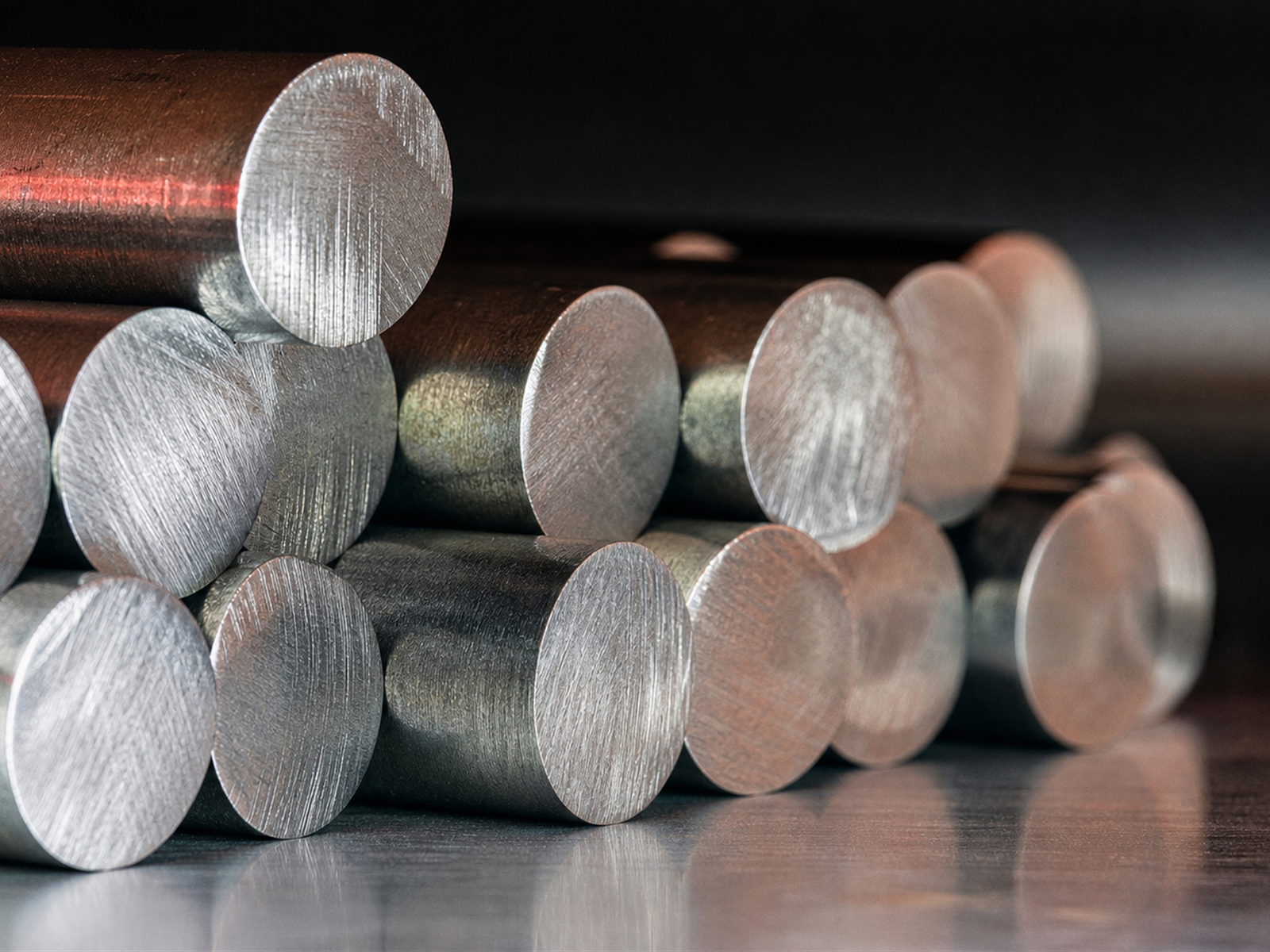
Gr1 titanium bar (Grade 1 commercially pure titanium, UNS R50250) can not only be welded, but among the titanium and titanium alloy grades, its weldability is generally considered the most outstanding. By inference from the impurity limits of ASTM B348 Grade 1, its titanium content is typically no less than approximately 99.5%; however, the standard does not directly specify a “titanium content ≥99.5%” but instead controls the composition through limits on impurities such as Fe, O, N, H, and C. Gr1 exhibits high elongation (≥24%), and under adequate shielding and appropriate heat input, the toughness of the weld zone approaches that of the base metal. Nevertheless, titanium is extremely sensitive to oxygen, nitrogen, and hydrogen; once contaminated at elevated temperatures, the weld will become brittle and may even crack. Therefore, welding Gr1 titanium bar is not “impossible,” but rather “must be performed per procedure” — only by mastering the correct processes and protective measures can the material’s welding potential be fully realized.
1. Why Does Gr1 Titanium Bar Offer Excellent Weldability?
The fundamental reason Gr1 titanium bar is widely used in welded structures in the chemical processing, medical, and marine engineering fields lies in the purity and mechanical characteristics of the material itself.
(1) High Purity Reduces Impurity Interference
The chemical composition of Gr1 is controlled per ASTM B348 Grade 1, with Fe ≤0.20%, O ≤0.18%, N ≤0.03%, H ≤0.015%, and C ≤0.08%. The strict control of these trace impurities means a lower tendency toward embrittlement in the weld heat-affected zone (HAZ). The fewer impurities, the lower the tendency for HAZ embrittlement. It should be noted that grain growth is primarily governed by welding heat input and cooling rate, while residual stress is more closely related to structural restraint, welding sequence, and fixture design; these therefore still need to be controlled through the welding procedure and clamping arrangement.
(2) High Ductility Reduces the Risk of Weld Cracking
Elongation ≥24% means Gr1 possesses a good plastic deformation allowance in areas of concentrated welding thermal stress, reducing the risk of cold cracking. However, this does not mean cracks can never occur; if poor shielding leads to oxygen, nitrogen, or hydrogen contamination, or if defects such as lack of fusion or porosity are present, the welded joint may still crack. By contrast, high-strength titanium alloys (e.g., Ti-6Al-4V) typically exhibit elongation of only about 10%–14% and often require more stringent stress relief after welding. Gr1 has an advantage in this regard and is suitable for multi-pass welding or the welding of complex structures.
(3) No Alloying Elements Avoid Weld Metal Segregation
Gr1 is an unalloyed commercially pure titanium containing no alloying elements such as Al, V, or Mo. During solidification of the weld pool, there is no selective volatilization or significant segregation of alloying elements, and the weld metal composition is uniform. This characteristic enables Gr1 titanium bar welded joints to generally maintain corrosion resistance close to that of the base metal in chloride environments and oxidizing media such as nitric acid; however, in strongly reducing acids (e.g., hot dilute sulfuric acid, hydrochloric acid), titanium’s inherent corrosion resistance is limited, and it cannot be broadly claimed to resist all “acid-base media.” For chemical piping and seawater desalination equipment, evaluation should be based on the specific medium conditions.
2. Mainstream Welding Processes in Detail: TIG Welding, Electron Beam Welding, and Other Supplementary Processes
For welding Gr1 commercially pure titanium bar, TIG welding is the most commonly used process in industry, followed by electron beam welding (EBW); laser welding and plasma arc welding are also used as supplementary processes in specific scenarios.
(1) Comparison of Main Welding Processes for Gr1 Titanium Bar
Welding Process | Heat Input | Shielding Method | Applicable Thickness | Typical Applications |
TIG welding (GTAW) | Medium | Argon/helium shielding hood | 0.5–20 mm | Piping, flanges, medical devices |
Electron beam welding (EBW) | Very low | Vacuum chamber | 0.5–50 mm (depending on equipment capability) | Precision instruments, aerospace structural components |
Plasma arc welding (PAW) | Relatively high | Argon shielding | 3–25 mm | Thick-wall pipe, structural components |
Laser beam welding (LBW) | Very low | Inert gas coverage | 0.1–10 mm | Thin-wall precision parts |
(2) TIG Welding: The Most Widely Used Welding Method for Gr1 Titanium Bar
TIG welding uses high-purity argon (purity ≥99.999%, 5N grade) as the shielding gas, and the welding current is typically direct current electrode negative (DCEN), providing a stable arc and controllable heat input. The filler wire selected is ERTi-1 (per AWS A5.16), which matches the Gr1 composition, ensuring weld metal properties consistent with the base metal. For thin-walled parts with a wall thickness ≤3 mm, autogenous TIG welding may be used; for greater thicknesses, a V- or U-groove bevel with multi-pass filler is required. It should be particularly noted that a trailing shield must be provided in the TIG welding work area to protect the high-temperature weld and heat-affected zone on the face side during cooling; the back side must be protected through back purge fixtures and cannot rely on the trailing shield alone.
(3) Electron Beam Welding: The Preferred Choice for High-Precision Gr1 Titanium Parts
Electron beam welding is performed in a vacuum environment, greatly reducing the risk of gas contamination. Welding speed is high, and under appropriate power, welding speed, and workpiece thickness, the heat-affected zone can be controlled within a very narrow range, often significantly narrower than with TIG welding, resulting in low post-weld distortion. For high-precision parts such as medical device components and precision sensor brackets, electron beam welding of high-precision Gr1 titanium bar machined parts is one of the preferred choices. Its drawbacks are high equipment cost and part size limited by the vacuum chamber, making it unsuitable for field welding of large structural components. Even with vacuum welding, the influence of residual gases in the vacuum chamber and gases evolved from the workpiece on the weld must still be considered.
(4) Supplementary Applications of Laser Welding and Plasma Arc Welding
Laser welding is suitable for thin-walled, high-precision Gr1 titanium parts (e.g., vacuum chamber connection components in the electronics industry), with extremely low heat input and fine, uniform weld beads. Plasma arc welding is suitable for butt welding of Gr1 titanium bar in thicknesses of 3–25 mm, offering strong penetration and relatively high welding efficiency. Both processes require high-purity inert gas shielding systems; the operating practices are similar to TIG welding, but the parameter windows are narrower and the skill requirements for operators are higher.
3. Pre-Weld Preparation and Gas Shielding: Key Steps to Prevent Oxidation Contamination
Titanium is extremely sensitive to oxygen, nitrogen, and hydrogen: hydrogen absorption can occur noticeably even at relatively low temperatures, while oxidation and nitriding reactions intensify sharply at welding temperatures. Therefore, the core challenge in welding Gr1 titanium bar is to completely isolate the titanium from air throughout the entire welding thermal cycle and to strictly control moisture, grease, and dissimilar metal contamination.
(1) Pre-Weld Surface Cleaning: Removing All Sources of Contamination
Gr1 titanium bar must undergo a strict surface treatment process before welding: pickling (HF+HNO₃ mixed acid system) to remove oxide scale, ultrasonic degreasing to remove grease and metallic contaminants, and wiping of the weld bevel and 50 mm on each side with acetone or anhydrous ethanol. The use of chlorine-containing cleaning agents is strictly prohibited, and steel wire brushes must not be used on titanium surfaces (to prevent iron contamination). Any residual grease, moisture, or dissimilar metal particles may cause weld porosity or embrittlement.
(2) Quick Reference Table for Pre-Weld Cleaning and Gas Shielding Practices
Processing Step | Operating Requirement | Common Mistake |
Surface degreasing | Wipe with acetone or anhydrous ethanol | Using chlorine-containing cleaning agents |
Oxide scale removal | Pickling or mechanical grinding (dedicated grinding wheel) | Using a steel wire wheel causing iron contamination |
Shielding gas purity | Argon purity ≥99.999% | Using industrial-grade argon (99.9%) |
Back-side protection | Back-side argon purge; if a copper backing bar is used, back-side argon purge must also be provided and copper contamination prevented | No protection on the weld back side exposed to air; or mistakenly assuming a copper backing bar can replace the argon purge |
Post-weld cooling | Continue argon flow until the weld surface or HAZ surface temperature is <200℃ | Removing the shielding gas too early |
(3) Configuration Requirements for the Inert Gas Shielding System
The front-side torch nozzle is purged with argon (flow rate 10–15 L/min), and a trailing gas shield (flow rate 15–25 L/min) must be installed to cover the cooling weld zone; the back side is continuously purged with argon through back purge fixtures (flow rate 5–10 L/min). Argon purity must be ≥99.999% (5N grade), with a dew point below -50℃. If shielding is inadequate, the weld surface will exhibit discoloration ranging from silver-white to golden yellow, blue, and gray-white/gray-brown; gray-white/gray-brown or deeper oxidation colors indicate severe contamination, and such welds should generally be reworked or re-qualified.
(4) Welding Environment and Operating Practices
The ambient wind speed in the welding area must be below 0.5 m/s to prevent air currents from disturbing the shielding atmosphere. Operators must wear powder-free latex gloves, and bare hands are prohibited from touching the cleaned weld area. The welding machine should be set with pre-flow (approximately 2–5 s) and post-flow (approximately 10–30 s) to ensure that the weld remains under argon coverage before arc initiation and after arc termination. These details directly determine the final quality of Gr1 titanium bar welds.
4. Post-Weld Treatment and Quality Inspection: Ensuring Long-Term Weld Reliability
Completing the weld is only the first step; post-weld stress relief and non-destructive testing are equally indispensable, particularly for Gr1 titanium bar weldments used in chemical process media, medical devices, or aerospace structural components.
(1) Post-Weld Stress-Relief Annealing
For Gr1 titanium bar, post-weld stress-relief annealing is recommended in a vacuum or argon-protected furnace, with typical parameters of 480–595℃ for 1–4 hours, followed by furnace cooling and removal below 150℃. Annealing eliminates welding residual stresses, improves the fatigue performance of the welded joint, and prevents stress corrosion cracking. The stress-relief annealing temperature should remain below the range of significant grain coarsening; 700℃ should not be treated as a strict absolute limit. Actual parameters should be determined in combination with procedure qualification and workpiece condition.
(2) Visual and Color Assessment of the Weld
The visual color of the weld is the most direct method for a preliminary assessment of shielding quality. A silver-white or metallic luster indicates adequate shielding and acceptable weld quality; golden yellow indicates slight oxidation, and acceptability should be determined according to the acceptance level; blue or gray indicates obvious oxidation and should generally be judged unacceptable or repaired; gray-white, gray-brown, or dark gray indicates severe oxidation, and that section of weld must be cut out and reworked. Whether degraded use is permissible must be determined through design, procedure qualification, and corrosion verification; it cannot be decided by field visual inspection alone.
(3) Selection of Non-Destructive Testing Methods
For high-requirement applications such as pressure equipment and medical devices, Gr1 titanium bar welds require dedicated non-destructive testing: radiographic testing (RT) is used to detect volumetric defects such as internal porosity and tungsten inclusions and has some detection capability for lack of fusion and cracks with favorable orientation, but the detection rate for lack-of-fusion defects is affected by defect orientation and should be used in conjunction with ultrasonic testing and other methods; ultrasonic testing (UT) is suitable for thick-wall butt welds; penetrant testing (PT) is used only for the examination of surface-opening defects. Because titanium’s acoustic characteristics differ from steel, UT requires dedicated probes and recalibration; the testing parameters for steel parts cannot be applied directly.
5. Typical Application Scenarios and Applicability Limits
(1) Welding Applications in Chemical and Marine Engineering
Chemical reactor linings, titanium flange butt welds, and titanium tube-to-tubesheet connections in heat exchangers are the most intensive application scenarios for Gr1 titanium bar welding. In chloride media, oxidizing/chlorine-containing environments such as sodium hypochlorite, and oxidizing media such as nitric acid at suitable concentrations and temperatures, the corrosion resistance of Gr1 welded joints is generally comparable to that of the base metal, meeting long-cycle maintenance requirements. Titanium piping welds in seawater desalination equipment likewise rely on Gr1’s purity — the weld zone is not prone to pitting, avoiding the common failure of ordinary stainless steel welds in high-chloride media.
(2) Summary of Typical Welding Applications for Gr1 Titanium Bar
Application Field | Typical Weldments | Primary Welding Process | Key Performance Requirements |
Chemical anti-corrosion | Reactor linings, flanges, agitator shafts | TIG welding | Weld corrosion resistance ≈ base metal |
Marine engineering | Piping, valve bodies, sensor brackets | TIG welding | Resistance to chloride corrosion |
Medical devices | Surgical instrument connectors, medical device structural components (if long-term implantation is involved, full separate verification is required) | Electron beam welding / laser welding | Biocompatible, contamination-free |
Precision electronics | Vacuum chambers, non-magnetic connectors | Electron beam welding | Small post-weld distortion |
Food and pharmaceutical | Agitator shafts, fixtures, piping | TIG welding | Non-toxic, cleanable surface |
(3) Welding Requirements in the Medical and Precision Electronics Fields
Medical-grade Gr1 titanium bar weldments (e.g., surgical instrument fixtures and dental bracket connectors) impose extremely high requirements on weld biocompatibility, surface cleanliness, and dimensional accuracy. If long-term implantable medical devices are involved, stricter biological evaluation, cleaning, and production verification requirements must also be satisfied; such parts cannot be treated as ordinary industrial welding. Electron beam welding or laser welding is performed in a vacuum/inert atmosphere, producing welds with no oxidation discoloration and narrow heat-affected zones; for thin-walled, small parts with matched parameters, post-weld distortion can be controlled within a small range; specific values should be determined based on workpiece size, wall thickness, and process verification. The same applies to titanium vacuum chamber components in the precision electronics industry, where weld leak-tightness must reach the 10⁻⁹ Pa·m³/s level, verified by helium mass spectrometer leak testing.
(4) Applicability Limits for Welding Gr1 Titanium Bar
Gr1 titanium bar has lower strength than most high-strength titanium alloys; ASTM B348 Grade 1 specifies a minimum tensile strength of 240 MPa, and the standard does not specify a 345 MPa maximum. It is therefore not suitable for high-load load-bearing welded structures, such as critical aircraft engine connection components or heavy-duty robotic arm joints. For such applications, Gr5 (Ti-6Al-4V) or other high-strength titanium alloys should be selected with more stringent welding process control. In addition, Gr1 titanium bar weldments are generally not recommended for continuous service at temperatures above 350℃, but the specific upper limit should still be evaluated in combination with load, environmental media, and creep design factors and cannot be used as the sole criterion.
6. Conclusion
Gr1 titanium bar can not only be welded, but its high purity and high ductility give it good weldability among the commercially pure titanium grades. To obtain welded joints with stable performance and reliable corrosion resistance, qualified welders, qualified welding procedures, and verification appropriate to the actual service conditions are required. Mastering TIG welding procedures, strictly implementing inert gas shielding, and performing thorough pre-weld cleaning and post-weld inspection are essential to broadly meet the welded structure requirements of the chemical, marine, medical, and precision electronics fields.
FAQ
(1) Q1: The weld on Gr1 titanium bar turned yellow after welding. Does it need to be reworked?
A golden yellow weld indicates slight oxidation. It may be acceptable in general industrial low-corrosion applications, but for medical devices or highly corrosive or fatigue-sensitive applications, it should be assessed against the corresponding acceptance level. Typically, the shielding gas flow rate and trailing shield position should be checked, and pickling or repair may be necessary if required; acceptability cannot simply be judged by color.
(2) Q2: Can ordinary industrial argon (99.9%) be used for TIG welding of Gr1 titanium bar?
It is not recommended. Industrial argon has insufficient purity, and residual oxygen and moisture will cause weld oxidation and embrittlement. Gr1 titanium bar welding must use high-purity argon with purity ≥99.999% (5N grade), and the gas lines must be dry with well-sealed connections; this is one of the basic conditions for ensuring weld quality.
(3) Q3: Is post-weld annealing mandatory for Gr1 titanium bar weldments?
For simple, non-pressure, low-stress structural parts, post-weld annealing may be omitted at the discretion of the manufacturer. However, for chemical pressure piping, medical devices, or fatigue-loaded applications, stress-relief annealing at 480–595℃ should be performed to eliminate welding residual stresses and improve weld fatigue life and long-term service reliability.
Contact Us
Looking for a reliable Gr1 titanium bar (Grade 1 commercially pure titanium bar, UNS R50250) manufacturer, supplier, or processing service provider? A professional titanium materials company with full-process capabilities from vacuum arc remelting (VAR), forging and breakdown, hot rolling/precision forging to annealing, straightening, pickling, and turning/polishing can support custom specifications per ASTM B348, GB/T 2965, and other standards, covering diameters from φ4–φ200 mm, and offering multiple surface conditions including turned bar, polished bar, pickled bar, and black bar. For Gr1 titanium bar welding applications, ERTi-1 filler wire (AWS A5.16) can be supplied, along with welding process support including pre-weld pickling and degreasing cleaning practices, multi-layer 5N-grade high-purity argon shielding (face-side trailing shield + back-side argon purge), heat input and shielding gas flow rate parameter recommendations, post-weld stress-relief annealing at 480–595℃, and weld color assessment with RT/UT/PT non-destructive testing plans; welding procedure qualification can be performed per NB/T 47014, JB/T 4745, and other codes. Mill test certificates (MTC, including Fe, O, N, H, C compositions and mechanical properties), non-destructive testing reports, and batch traceability documents are available. Please contact: sales@titaniumvalleys.com
References
- Standardization Administration of China. GB/T 3620.1—2016 Titanium and titanium alloys—Designation and composition[S]. Beijing: Standards Press of China, 2016.
- Standardization Administration of China. GB/T 3621—2007 Titanium and titanium alloy sheets and plates[S]. Beijing: Standards Press of China, 2007.
- Standardization Administration of China. GB/T 3623—2007 Titanium and titanium alloy wires[S]. Beijing: Standards Press of China, 2007.
- National Energy Administration. NB/T 47014—2011 Welding procedure qualification for pressure equipment[S]. Beijing: Standards Press of China, 2011.
- National Development and Reform Commission of the People’s Republic of China. JB/T 4745—2002 Titanium welded pressure vessels[S]. Beijing: Standards Press of China, 2002.