
What Are the Industrial Applications of Zirconium R60705 Rod?
- R60705 Zirconium Rod
Direct engineering answer. R60705 Zirconium Rod should be evaluated against the finished component, product form, governing specification, downstream process and acceptance evidence. A general property value is an orientation tool; the released drawing, current certificate and inspection plan control the final decision.
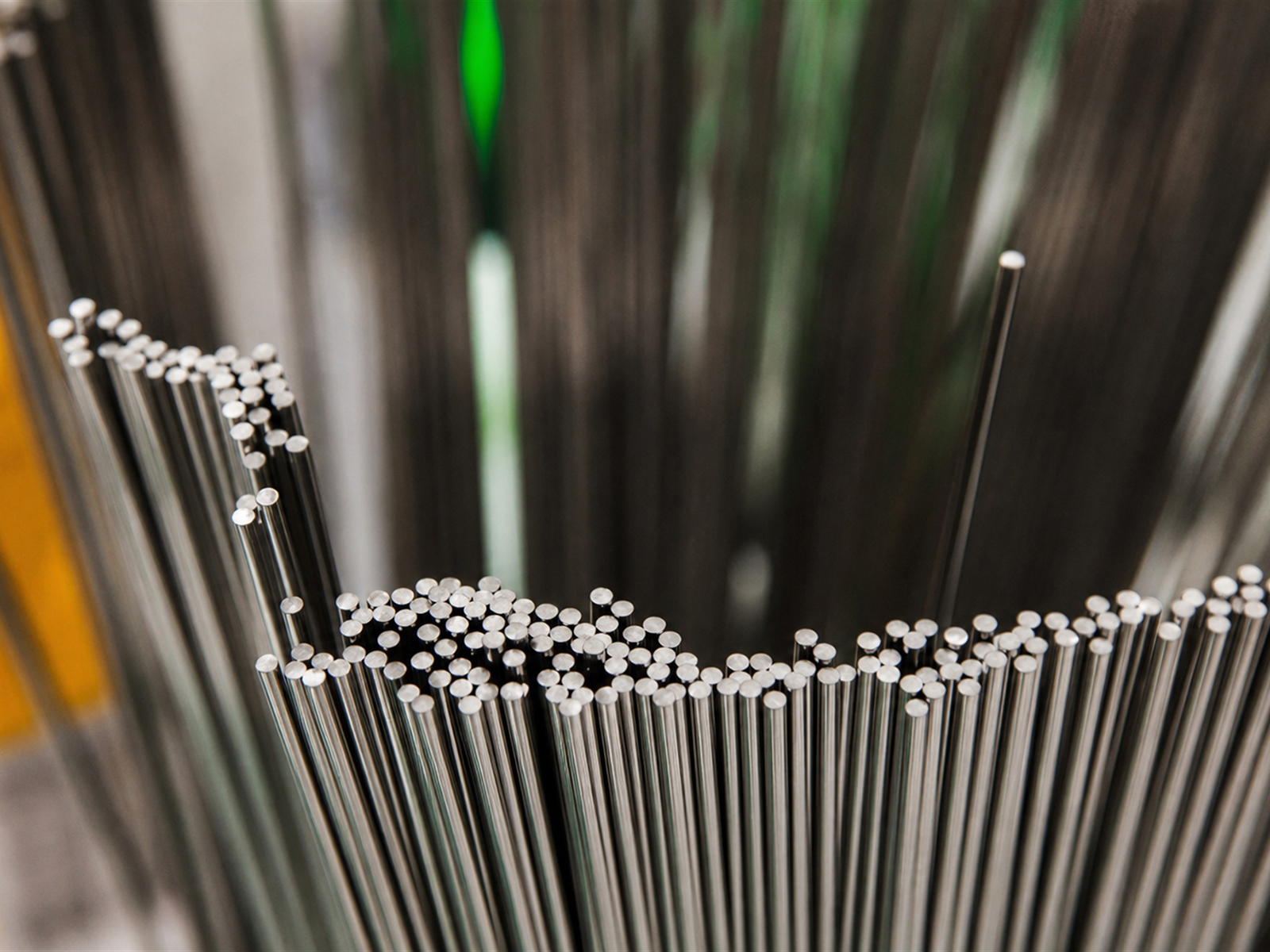
Zirconium R60705 Rod (UNS R60705, i.e., the Zr705 zirconium-niobium alloy rod) is a zirconium alloy profile based on commercially pure zirconium R60702 with approximately 2.5% niobium added. Compared with commercially pure zirconium, it offers increased strength while retaining good corrosion resistance in reducing acids and chloride-ion environments. Typical applications of R60705 are concentrated in highly corrosive chemical processing equipment, hydrometallurgy, marine engineering, semiconductors, nuclear power, and other service conditions with specific requirements for corrosion resistance, non-ferromagnetic behavior, or low metal ion leaching. R60705 is not suitable for all corrosive environments. In oxidizing acids such as nitric acid, stainless steel or titanium alloys may be superior; in high-temperature oxidizing atmospheres, titanium alloys and nickel-based alloys are generally more appropriate. The following describes its main applications and usage boundaries by industry.
1. Chemical and Petrochemical Industries: Material Selection in Reducing Acid and Chloride-Ion Environments
The chemical and petrochemical industries are among the primary application fields for R60705 zirconium rod. Equipment in these industries frequently contacts hydrochloric acid, sulfuric acid at low to medium temperatures, organic acids, and halide salt solutions, but the use of R60705 must be evaluated in conjunction with the media type, concentration, temperature, and pressure.
(1) Materials for Reactors and Heat Exchangers
In reducing acid service conditions, conventional stainless steel may suffer intergranular corrosion or pitting. R60705 rod can be machined into shafts, connectors, and structural components. Taking hydrochloric acid as an example, the boiling point of 37% hydrochloric acid at atmospheric pressure is below 100℃; if the service temperature exceeds the boiling point, pressurization is required. R60705 typically exhibits a low corrosion rate in hydrochloric acid near its atmospheric-pressure boiling point; whether it is applicable under pressurized high-temperature conditions should be determined from corrosion test data at the specific temperature, concentration, and pressure, and “below 0.05 mm/a” should not be used as a general acceptance criterion. For oxidizing acids such as nitric acid, evaluation should be cautious, as zirconium alloys are not always superior to stainless steel or titanium alloys.
(2) Pump Shafts, Valve Stems, and Agitator Shafts
Pump shafts, valve stems, and agitator shafts in chemical fluid transfer equipment are simultaneously subjected to corrosion and mechanical stress. R60705 rod supplied to ASTM B550/B550M has a minimum tensile strength of 552 MPa, higher than that of commercially pure zirconium. This strength allows it, under proper design and machining conditions, to be used for shaft components subject to certain torque and vibration loads, but fatigue and structural strength still need to be verified.
(3) Pickling and Hydrometallurgical Equipment
Hydrometallurgical leaching and solvent extraction processes often involve sulfuric acid, hydrochloric acid, or mixed acid systems. R60705 rod can be machined into guide channels, agitator blade shafts, connectors, and similar components. In reducing acid or chloride-ion environments, R60705 generally offers good corrosion resistance; however, in high-temperature concentrated sulfuric acid, fluoride-containing media, or oxidizing mixed acids, its applicability is clearly limited, and corrosion evaluation should be performed in advance. Rod is generally not fabricated directly into piping; zirconium alloy tube should be the preferred choice for piping components.
Application scenario | Typical corrosive media | R60705 advantages and boundaries |
Strong acid reactors | Hydrochloric acid, sulfuric acid at low to medium temperatures | Resistant to reducing acids and chlorides; high-temperature concentrated sulfuric acid and oxidizing acids require evaluation |
Pump shafts/valve stems | Chloride salts, mixed acids | Higher strength than commercially pure zirconium; resistant to pitting and crevice corrosion |
Hydrometallurgical agitator shafts | Sulfuric acid/hydrochloric acid leach solutions | Suitable for reducing acid service; wear and media compatibility must be supported by data |
Heat exchanger tubesheet accessories | Chloride solutions | Resistant to chloride crevice corrosion; tubesheets should use plate/forgings, rod used for fasteners and shafts |
Note: The “tubesheet” in the table only describes the service environment of the associated fasteners or shaft components; actual tubesheets should be manufactured from the corresponding plate or forgings.
2. Nuclear Power Sector: The Boundary Between Nuclear-Grade and Non-Nuclear-Grade Materials
The nuclear power industry places very high demands on material purity, mechanical stability, and irradiation resistance. Industrial R60705 must be distinguished from nuclear-grade Zr-2.5Nb alloy; the two cannot be directly equated.
(1) Pressure Tubes and Structural Components
In CANDU-type pressurized heavy water reactors (PHWRs), pressure tubes are typically manufactured from nuclear-grade Zr-2.5Nb alloy through tube-making processes such as ingot extrusion, rotary piercing, or cold rolling, rather than by direct hot forging and machining from rod. Industrial R60705 does not meet nuclear-grade pressure tube requirements in terms of impurity content, hafnium content, melting standards, and inspection requirements and cannot be used for in-core pressure tubes.
(2) Non-Core Fasteners and Guide Shafts at Nuclear Power Plants
For corrosion-resistant fasteners, guide shafts, and locating pins in auxiliary systems of nuclear power plants where neutron economy is not required, industrial R60705 rod can be used for machining. ASTM B550 allows a maximum hafnium content of 4.5% for industrial-grade R60705; this is an impurity content upper limit, not a nuclear-grade “control target.” Because hafnium is a strong thermal-neutron absorber, industrial R60705 does not have good neutron transparency. In-core locations or areas sensitive to neutron absorption must use nuclear-grade low-hafnium zirconium alloys, typically requiring Hf < 0.01%.
(3) Nuclear Fuel Accessories and Processing Billets
Accessories and end plugs for nuclear fuel assemblies intended for in-core use must be made of nuclear-grade low-hafnium material and cannot be directly replaced by industrial-grade R60705. Industrial R60705 rod has a certain level of machinability for cutting, turning, and grinding and can be used for non-core mock-up components or process test pieces. Vacuum annealing can refine the microstructure, reduce residual stress, and improve ductility, but scrap rates and dimensional consistency depend mainly on the machining process, inspection, and process control, and there is no direct causal relationship with vacuum annealing.
3. Marine Engineering and Seawater Desalination: Corrosion-Resistant Material Selection in Chloride-Ion Environments
Marine environments feature high chloride-ion concentrations and large temperature variations and are high-risk areas for material corrosion failure. R60705 has good resistance to pitting and crevice corrosion in chloride-containing media, but absolute statements should not be used.
(1) Support Components for Seawater Desalination Heat Transfer Piping
In reverse osmosis and multi-effect distillation seawater desalination systems, piping supports, end plates, and sealing shafts are in long-term contact with high-chloride seawater. R60705 has good resistance to pitting and crevice corrosion caused by chlorides, and its surface oxide film has a certain self-healing capability in chloride-containing environments. Compared with conventional stainless steel, it can reduce maintenance caused by localized corrosion under similar chloride service conditions, but the specific maintenance interval should be determined on the basis of operating data, design, and material evaluation.
(2) Shaft Components for Offshore Platforms and Deep-Sea Equipment
Components such as fluid control valve stems and seal rings on deep-sea oil production platforms are subjected to high-chloride, high-pressure, and cyclic temperature conditions. R60705 rod can serve as one of the alternative materials to duplex stainless steel and super-austenitic steel. Because the initial procurement cost of zirconium alloys is relatively high, cost-effectiveness should be assessed through life-cycle cost analysis, including initial procurement, processing, inspection, maintenance, and replacement cycles, and should not simply be described as “high value for money.”
(3) Corrosion Protection Structural Components for Ships and Ports
In marine atmospheres or salt-spray environments, components such as ship mechanical drive shafts and port gate sealing shafts face corrosion and crevice corrosion risks. Precision turning or polishing of R60705 rod can reduce surface roughness, lessen the adhesion of salt deposits and contaminants, and help maintain corrosion resistance; however, surface finish cannot fundamentally change the material’s intrinsic corrosion resistance in chloride-ion environments.
4. Pharmaceuticals, Semiconductors, and Precision Manufacturing: High Purity and Extremely Low Leaching Requirements
In pharmaceutical synthesis and semiconductor processes, mutual contamination between materials and process media is an important concern. R60705 has a low tendency for metal ion leaching, but this must be considered in conjunction with the specific media and certification requirements.
(1) Agitator Shafts and Seals for Pharmaceutical Reactors
Active pharmaceutical ingredient (API) synthesis reactors impose strict limits on metal ion release. Stainless steel may release iron, chromium, and nickel ions in organic acid and halide systems, affecting API purity. Agitator shafts and seals made from R60705 zirconium rod have a very low tendency for metal ion leaching in acidic pharmaceutical synthesis environments. However, GMP compliance depends on equipment design, cleaning validation, process control, and inspection systems and cannot be determined by material alone.
(2) Fixtures and Shaft Components for Semiconductor Wet Etching Processes
Semiconductor wafer cleaning and etching processes may use mixtures of high-purity hydrochloric acid and hydrofluoric acid. Zirconium alloys have limited corrosion resistance in HF-containing environments, and corrosion occurs especially at high HF concentrations or elevated temperatures. R60705 may only be used as gripping shafts, transfer rails, or tank supports in specific processes with extremely low HF concentrations, low temperatures, and corrosion testing verification; direct use in high-concentration HF or fluoride-containing oxidizing mixed acids is not recommended. A dedicated evaluation based on the actual HF/HCl ratio, temperature, and contact time should be performed before application.
(3) Non-Magnetic Components for Precision Instruments and Medical Equipment
MRI equipment, precision mass spectrometers, and nuclear magnetic resonance spectrometers are sensitive to magnetic field interference. R60705 is generally non-ferromagnetic and does not produce magnetic attraction, but whether it meets strong magnetic field environment requirements should be confirmed against specific magnetic susceptibility data. After precision grinding and polishing, a surface roughness of Ra ≤ 0.4 μm can be achieved, allowing its use in shafts, fasteners, and positioning components requiring high dimensional accuracy and surface quality.
Industry | Pain point | Key value and boundaries of R60705 |
Pharmaceuticals | Metal ion leaching contaminates API | Low leaching tendency; GMP requires comprehensive validation |
Semiconductors | Corrosion in HF/HCl systems | Possibly applicable at low HF concentration and low temperature; high HF requires evaluation |
Precision instruments | Magnetic field interference failure | Generally non-ferromagnetic; requires magnetic susceptibility data support |
5. Oil and Gas Extraction and High-Pressure Chemical Processing: H₂S/CO₂ and High-Pressure Cyclic Stress Conditions
(1) Downhole Corrosion Protection Tool Components for Oil and Gas
Deep-well oil and gas production environments often contain high concentrations of H₂S, CO₂, and halide salts. R60705 rod can be machined into downhole tool shafts, packer mandrels, and valve bodies. However, zirconium alloys may absorb hydrogen in hydrogen-containing environments and form hydrides, posing risks of hydrogen embrittlement and hydride orientation sensitivity. Before long-term service, evaluations of hydrogen embrittlement, hydride orientation, and stress corrosion should be performed; suitability cannot be determined on the basis of corrosion resistance alone.
(2) Ductility and Safety of High-Pressure Chemical Equipment
High-pressure polymerization reactors and continuous production equipment impose certain ductility requirements on materials. Under the relevant standards, R60705 rod typically has an elongation of ≥ 16%, which can meet general plastic forming and structural deformation needs. However, for high-stress cyclic and fatigue conditions, evaluation should be based on fatigue testing, fracture toughness, and flaw tolerance, and fatigue resistance or fracture resistance cannot be inferred from elongation alone.
Field | Typical components | Service environment/key boundaries |
Oil and gas extraction | Downhole tool shafts, packer mandrels | H₂S + CO₂ + halide salts; hydrogen embrittlement/hydride evaluation required |
High-pressure chemical processing | Reactor agitator shafts | High-pressure cyclic stress; fatigue and fracture evaluation required |
6. Specific Aerospace Applications: Non-Oxidizing Acid Environments and Low-Temperature Connectors
(1) Specific Aerospace Fasteners and Connectors
In certain low-temperature, non-oxidizing acidic media environments, R60705 can be a candidate material for fasteners and conduit connectors. Compared with titanium alloys of the same strength level, it may offer better corrosion resistance in reducing or non-oxidizing acidic media. However, the oxidation resistance of zirconium alloys in high-temperature oxidizing atmospheres is generally inferior to that of titanium alloys and nickel-based alloys, so their use as high-temperature heat-resistant fasteners is not recommended.
7. Conclusion
R60705 zirconium rod has higher strength than commercially pure zirconium and exhibits good corrosion resistance in reducing acid and chloride-ion environments, while generally being non-ferromagnetic with a low tendency for metal ion leaching. It is suitable for specific applications in the chemical, non-core nuclear, marine, pharmaceutical, semiconductor, and oil and gas industries. Actual material selection should be a comprehensive evaluation combining media type, concentration, temperature, pressure, design codes, material standards, and life-cycle cost, avoiding absolute recommendations detached from service conditions.
FAQ
(1) Q1: How Should I Choose Between R60705 Zirconium Rod and R60702 Commercially Pure Zirconium Rod?
R60702 offers better ductility and usually lower cost and is suitable for low-stress corrosive environments; R60705, with approximately 2.5% niobium added, provides higher strength and is suitable for service conditions requiring resistance to both corrosion and relatively high mechanical loads. Material selection for pressure vessels must also consider design codes, welding processes, inspection and acceptance, and economics and cannot be judged as a “preferred choice” based on grade alone.
(2) Q2: Can R60705 Zirconium Rod Be Used in Hydrofluoric Acid (HF) Environments?
Zirconium alloys have limited corrosion resistance in HF acid, and noticeable corrosion occurs especially at high HF concentrations or elevated temperatures. R60705 may only be applicable under specific conditions of low HF concentration, low temperature, and particular mixed acid compositions, and must be evaluated against measured corrosion data; direct use in high-concentration HF environments or without applicability data is not recommended.
(3) Q3: What Are the Common Surface Conditions of R60705 Rod, and How Do They Affect Applications?
R60705 zirconium rod is typically available in four surface conditions: hot-worked/forged, turned, peeled, and polished. Hot-worked/forged surfaces are suitable for subsequent machining; turned surfaces are used for general machining; peeled surfaces are used for structural components requiring higher surface quality; polished surfaces are used for precision shafts, seals, and precision instrument components sensitive to magnetic fields, offering higher dimensional accuracy and surface cleanliness.
Contact Us
Looking for a high-quality Zirconium R60705 Rod manufacturer, supplier, or factory? Titanium Valley (Baoji Titanium Valley Titanium-Nickel-Zirconium Materials Precision Processing Co., Ltd.) focuses on the R&D and mass production of high-end precision zirconium, titanium, and nickel bar stock and can provide custom specifications and certification support. Please contact us: sales@titaniumvalleys.com
References
- Liu Jianzhang. Nuclear Structural Materials [M]. Beijing: Chemical Industry Press, 2007.
- Zhao Yongqing, Xi Zhengping, Qu Henglei. Research and Development of Zirconium Alloys in China [J]. Rare Metal Materials and Engineering, 2004, 33(1): 8-12.
- Yang Wendou. Reactor Materials Science [M]. Beijing: Atomic Energy Press, 2006.
- Xiong Bingkun, Wen Wangguang, Yang Xinmin. Zirconium and Hafnium Metallurgy [M]. Beijing: Metallurgical Industry Press, 2002.
- National Technical Committee on Nonferrous Metals Standardization. GB/T 8769-1988 Zirconium and Zirconium Alloy Rod and Bar [S]. Beijing: China Standards Press, 1989.
Engineering specification and verification framework
For R60705 Zirconium Rod, state grade, ordered product form, condition, nominal dimensions, tolerances, surface requirement, quantity and documentation in one controlled RFQ. The applicable product-form reference is ASTM B550, subject to the current edition and project-specific requirements. When tensile evidence is required, define the test method and sampling basis; ASTM E8/E8M or ISO 6892-1 may apply where consistent with the order.
| RFQ field | Required detail | Reason |
|---|---|---|
| Material identity | Grade, form, ASTM B550, condition | Prevents unintended substitution. |
| Geometry | Nominal size, tolerance, length or coil form | Defines production and inspection scope. |
| Process context | Forming, machining, joining, etching or assembly | Relates supply condition to actual manufacture. |
| Verification | Certificate, dimensional checks, lot identity | Creates a traceable acceptance plan. |
Risk review and incoming control
Common avoidable risks include tolerance stack-up, unclear condition, surface damage, undocumented substitution and loss of lot identity after cutting. At receipt, reconcile the purchase order, packing label and certificate before release to production. Define any supplementary testing, sampling and report format before quotation rather than after shipment.
Technical FAQ
Can catalogue values approve the material?
No. Final approval must use the ordered form, condition, standard, drawing, process route and service boundary.
What should an RFQ include?
Provide the drawing where available, grade and standard, dimensions, tolerance, condition, quantity, process context, service information and documentation requirement.
Product resources and technical quotation
Review the relevant zirconium product category. For a drawing-based review, request a technical quotation with the full specification.
References and use note
- ASTM B550, applicable edition, for the ordered product form.
- ASTM E8/E8M or ISO 6892-1 where the project specifies tensile verification.
- Project drawing, purchase specification, certificate and agreed inspection plan.
This engineering note supports procurement specification. It does not replace component design validation or the governing contractual standard.