
Titanium Welding Wire Suppliers: Quote and Documentation Checklist
- Titanium Welding Wire Supplier
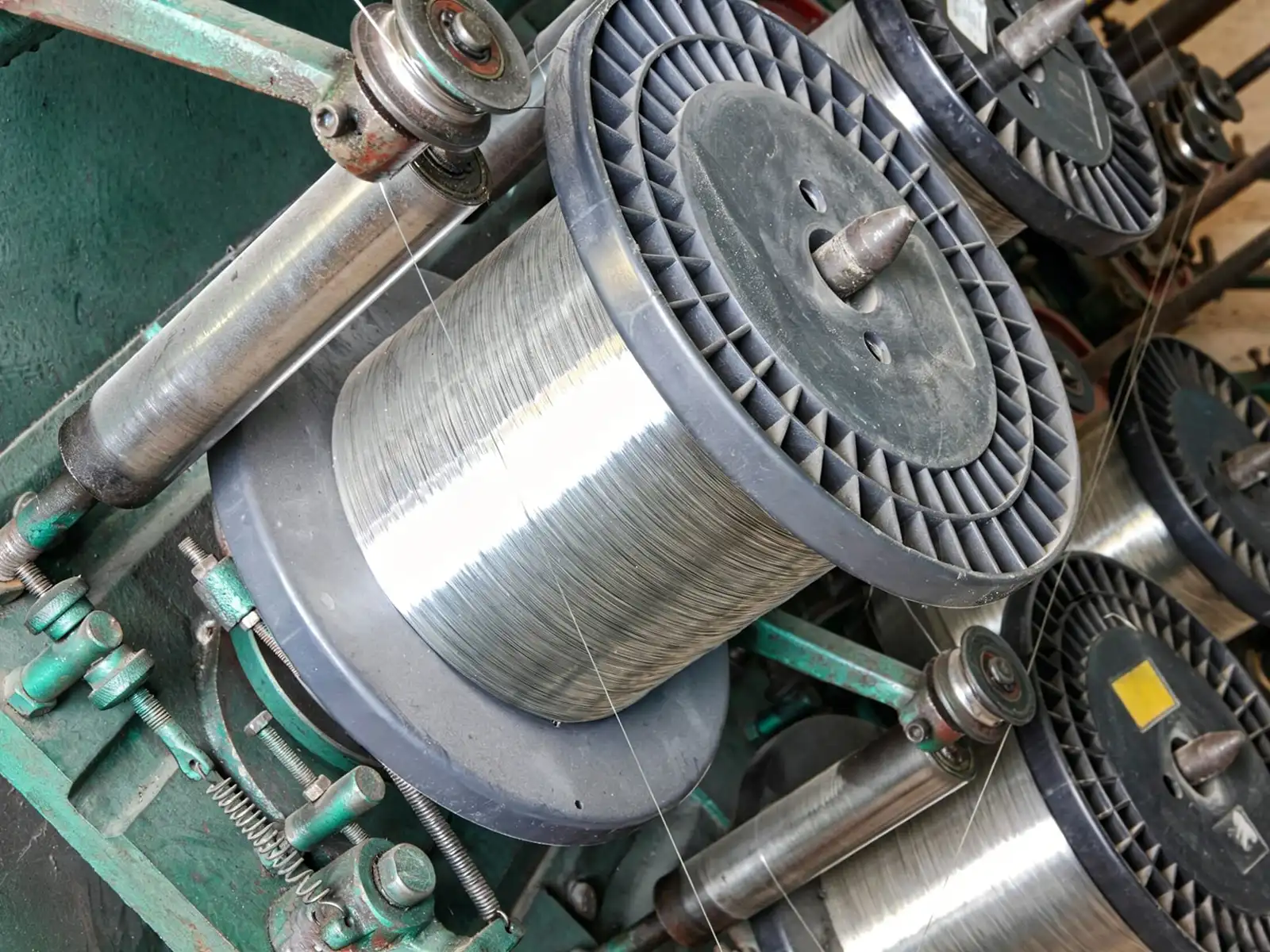
Evaluate titanium welding wire suppliers using comparable consumable specifications and evidence for the proposed supply route. A useful quotation identifies the filler classification, format, packaging and documents that will accompany the order.
1. Selection and Acceptance Decisions
- Send the same diameter, spool, quantity, classification and certificate requirements to each proposed supplier.
- Ask who manufactures, tests, packs and releases the quoted wire, and identify the party responsible for a nonconformance.
- Compare offered documentation and sample acceptance alongside price and delivery, then confirm the actual quoted range before ordering.
Send a specification for this material with the grade, dimensions, quantity, intended use and the acceptance details listed above. Ask for confirmation of the quoted size, condition and documentation.
2. The RFQ That Gets Comparable Quotes
Send: filler classification (ERTi-5), diameter and tolerance, spool size and coil weight, quantity, condition (annealed bright, degreased), standard + edition, documentation (EN 10204 3.1/3.2 class, third-party where required), and destination. Identical RFQ fields are the only way to compare two quotes honestly. Custom size, condition, tolerance and documentation can be reviewed to the purchase specification.
Red Flags
- No hydrogen value on the certificate — the single most common omission;
- “Meets AWS A5.16” claims without a classification and edition;
- Certificates that cannot be traced to heat and lot markings on the spool;
- Unwillingness to provide historical batch data (3–5 heats) for tensile and chemistry spread;
- Tolerance promises without stating the diameter band and measurement method.
3. Qualifying a New Source
Run a three-stage qualification: document review (certificates, standards, QMS) → sample trial (same-grade welds, inspect color, porosity, tensile) → pilot batch (feed behavior, cast stability, repeat chemistry). Only the pilot batch proves the supplier can repeat what the sample demonstrated.
FAQ
(1) How do I verify a supplier’s certificates are real?
Match heat and lot numbers on certificate, spool and packing list; request third-party verification or independent chemistry for critical programs; check the laboratory’s ISO/IEC 17025 scope.
(2) Should the supplier be ISO 13485 certified?
Only if you weld medical device components. For general industry, ISO 9001 plus AWS A5.16 compliance is the baseline; aerospace programs add NADCAP/AS9100 expectations.
(3) What is a reasonable sample program?
1–2 spools of your diameter and grade, trial welds on your joint design with your shielding practice, then a pilot batch of 5–10 spools to verify consistency.
(4) Do all suppliers melt their own titanium?
No — some convert purchased rod. That is acceptable if chemistry and traceability are documented, but the audit should follow the material one step upstream.
(5) What should the certificate list for welding wire?
Classification and edition, full chemistry including O/N/H, diameter and tolerance, surface condition, heat/lot numbers, and the inspection document type (EN 10204 3.1/3.2). Custom size, condition, tolerance and documentation can be reviewed to the purchase specification.
Related Resources and Inquiry
See the titanium wire category or send your specification to start a supplier review.
Baoji Titanium Valley Titanium Nickel Zirconium Material Processing Co., Ltd. produces titanium wire and welding wire per ASTM B863 / AWS A5.16 from a dedicated drawing line, from fine wire to welding filler on spools, under ISO 9001 / ISO 13485. Send your specification to sales@titaniumvalleys.com — Custom size, condition, tolerance and documentation can be reviewed to the purchase specification.
4. Related Reading
- Titanium Welding Wire Manufacturer: Qualification and Repeat Supply
- Titanium MIG Wire: Spools, Storage and Receiving Inspection
References
1. AWS A5.16/A5.16M, Specification for Titanium and Titanium Alloy Welding Electrodes and Rods.
2. ASTM B863, Standard Specification for Titanium and Titanium Alloy Wire.
3. EN 10204, Metallic Products — Types of Inspection Documents.
This article is a technical reference. It does not constitute a commercial offer; dimensions, tolerances and documentation are confirmed at order review.
Published by: Titanium Valley Technical Team. Technical and quality review: pending.