
Grade 2 Titanium Rod: Corrosion Service and Fabrication
- Grade 2 Titanium Rod
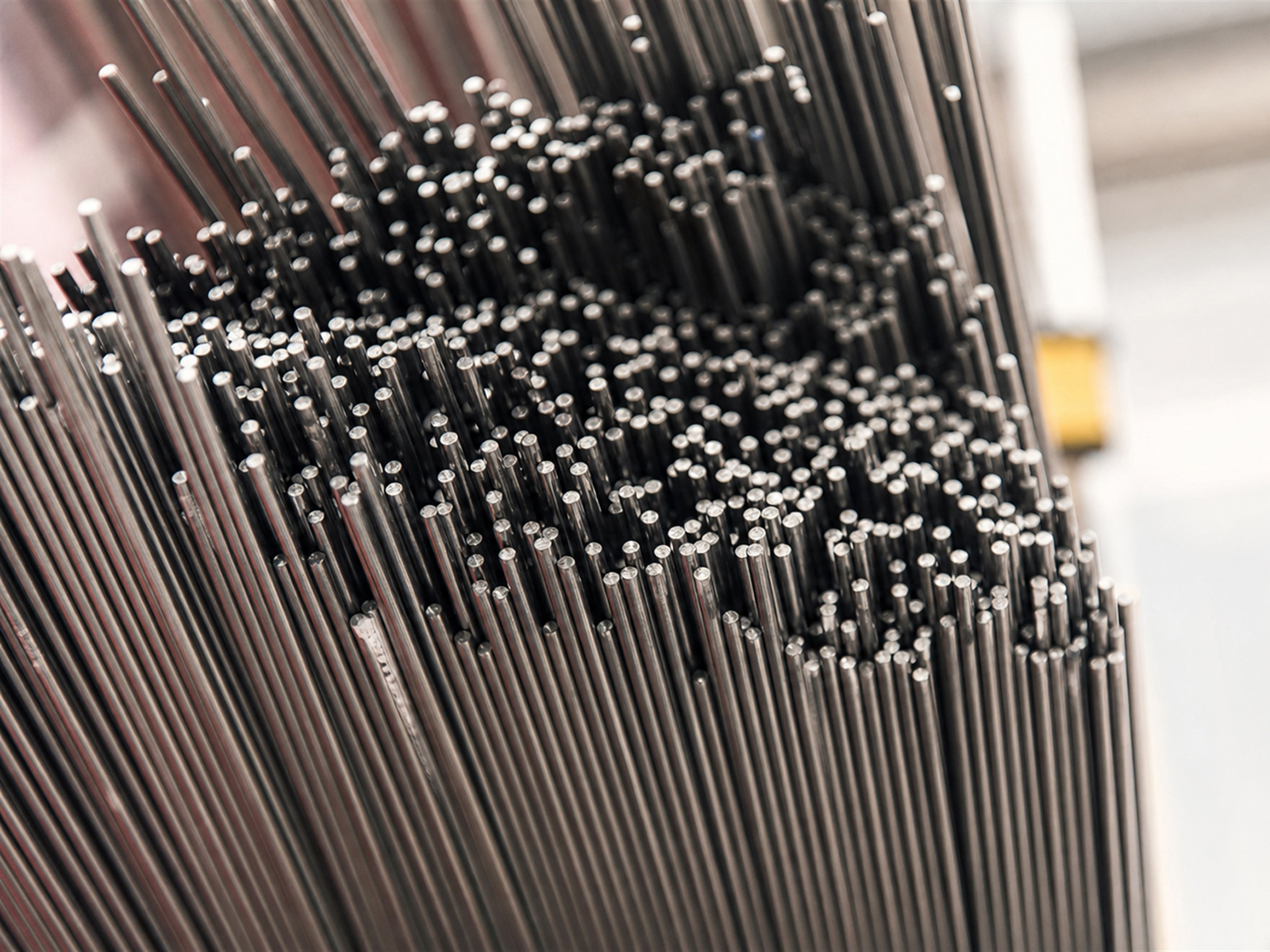
Grade 2 titanium rod is widely used for commercially pure titanium components. Select it using the service environment and fabrication requirements, then agree the rod dimensions, surface and acceptance documents.
1. Selection and Acceptance Decisions
- Describe normal operation, cleaning chemicals and credible upset conditions when reviewing corrosion suitability.
- Compare Grade 1 for a forming-led part, Grade 2 for the proposed general fabrication route and Grade 12 where a service-specific review justifies it.
- Specify the surface and dimensional allowance needed for the finished component, including weld preparation where relevant.
Send a specification for this material with the grade, dimensions, quantity, intended use and the acceptance details listed above. Ask for confirmation of the quoted size, condition and documentation.
2. Chemical Composition
Element (max %) | Grade 2 limit |
Nitrogen (N) | 0.03 |
Carbon (C) | 0.08 |
Hydrogen (H) | 0.015 |
Iron (Fe) | 0.30 |
Oxygen (O) | 0.25 |
Titanium (Ti) | Balance (typically ≥ 99.2%) |
Table 1 — ASTM B348 Grade 2 composition limits.
3. Mechanical and Physical Properties
Property | Value |
Tensile strength (min) | ≥ 345 MPa (50 ksi) |
Yield strength (min) | ≥ 275 MPa |
Elongation (min) | 20% |
Density | 4.51 g/cm³ (≈ 57% of stainless steel) |
Relative permeability | ≈ 1.00005–1.0001 (non-magnetic) |
Melting point | ≈ 1668℃ |
Table 2 — Annealed properties per ASTM B348 Grade 2 and typical physical data.
4. Corrosion Behavior
A self-healing TiO₂ film 2–7 nm thick gives Grade 2 its corrosion story: immunity in seawater, chlorides, oxidizing acids and marine atmospheres, usually outperforming 304/316L in chloride pitting and crevice exposure. Two boundaries matter: reducing acids (hot concentrated HCl, H₂SO₄) break the film — that service belongs to Grade 12 or another family; and galvanic coupling — titanium is cathodic to steel and aluminum, so mixed-metal joints need insulation, coating or cathodic protection on the less noble side.
5. Welding
Grade 2 welds with TIG, plasma, laser or electron-beam under inert-gas shielding. Thin-section, low-restraint joints normally need no post-weld heat treatment, and weld-zone corrosion resistance stays close to parent metal when shielding and cleanliness are right. MIG is rarely used for precision CP titanium work.
Applications
- Chemical industry — heat-exchanger tube plates, agitator shafts, pump bodies, valve parts and fasteners;
- Marine engineering — desalination shafts, seawater piping components, platform fasteners and sensor sleeves;
- Medical — surgical instrument blanks and low-load implant hardware per ASTM F67 / ISO 5832-2;
- New energy — electrolyzer support structures and electrochemical cell hardware;
- General industry — food and pharmaceutical contact parts where corrosion and cleanliness decide.
6. Sizes and Supply Routes
Cold-drawn precision rod covers φ4–30 mm (h9/h10 class, bright or ground); hot-rolled annealed rod covers φ30–100 mm (φ8–200 mm overall, pickled); forged rod covers φ100–300 mm. Random lengths ≈ 300–3, 000 mm annealed, up to ~6, 000 mm hot-worked; cut-to-length on request.
FAQ
(1) What is the difference between Grade 1 and Grade 2 titanium rod?
Grade 2 raises the oxygen cap to 0.25% (from 0.18%), lifting tensile minimum to ≥ 345 MPa (from ≥ 240 MPa) — about 44% stronger — with ductility still ≥ 20%. Choose Grade 1 for heavy forming, Grade 2 for general strength-plus-corrosion duty.
(2) Does Grade 2 rod rust in seawater?
No — the self-healing oxide film makes it effectively immune in seawater and marine atmospheres, which is why it displaces stainless steel in desalination and offshore hardware.
(3) Is Grade 2 rod non-magnetic?
For engineering purposes yes: relative permeability ≈ 1.00005–1.0001, making it suitable for MRI-adjacent and instrument applications.
(4) Can Grade 2 rod be welded without post-weld heat treatment?
Thin-section, low-restraint joints typically need none; thick or highly restrained joints may warrant stress relief. Welding must be done under full inert-gas shielding.
(5) Is Grade 2 suitable for implants?
For low-load implants and surgical instruments, ordered to ASTM F67 / ISO 5832-2. Load-bearing orthopedic implants more commonly use Grade 4 or Ti-6Al-4V ELI.
(6) What surface should I order?
Pickled for general use, peeled or ground where tolerance and finish matter. State Ra if the part finishes from stock surface.
(7) Why does titanium rod cost more than stainless steel?
Vacuum melting, slower machining and higher raw-material cost. In corrosive service the total-life cost typically reverses the comparison.
Related Resources and Inquiry
See the Grade 2 titanium rod product page and the titanium rod category, or send your specification.
Baoji Titanium Valley Titanium Nickel Zirconium Material Processing Co., Ltd. produces titanium rod and barstock from VAR-melted ingots on a rolling line rated over 20, 000 t/yr, per ASTM B348 / GB/T 2965, with cold-drawn, hot-rolled and forged routes. Send your specification to sales@titaniumvalleys.com — Custom size, condition, tolerance and documentation can be reviewed to the purchase specification.
7. Related Reading
- Grade 1 Titanium Rod: Bending and Welding Selection
- Grade 12 Titanium Rod: When to Review It Against Grade 2
References
1. ASTM B348/B348M, Standard Specification for Titanium and Titanium Alloy Bars and Billets.
2. ASTM F67, Standard Specification for Unalloyed Titanium, for Surgical Implant Applications.
3. ISO 5832-2, Implants for Surgery — Metallic Materials — Unalloyed Titanium.
4. ASTM E8/E8M, Standard Test Methods for Tension Testing of Metallic Materials.
5. GB/T 2965, Titanium and Titanium Alloy Bars.
This article is a technical reference. It does not constitute a commercial offer; dimensions, tolerances and documentation are confirmed at order review.
Published by: Titanium Valley Technical Team. Technical and quality review: pending.