
Grade 1 Titanium Rod: Bending and Welding Selection
- Grade 1 Titanium Rod
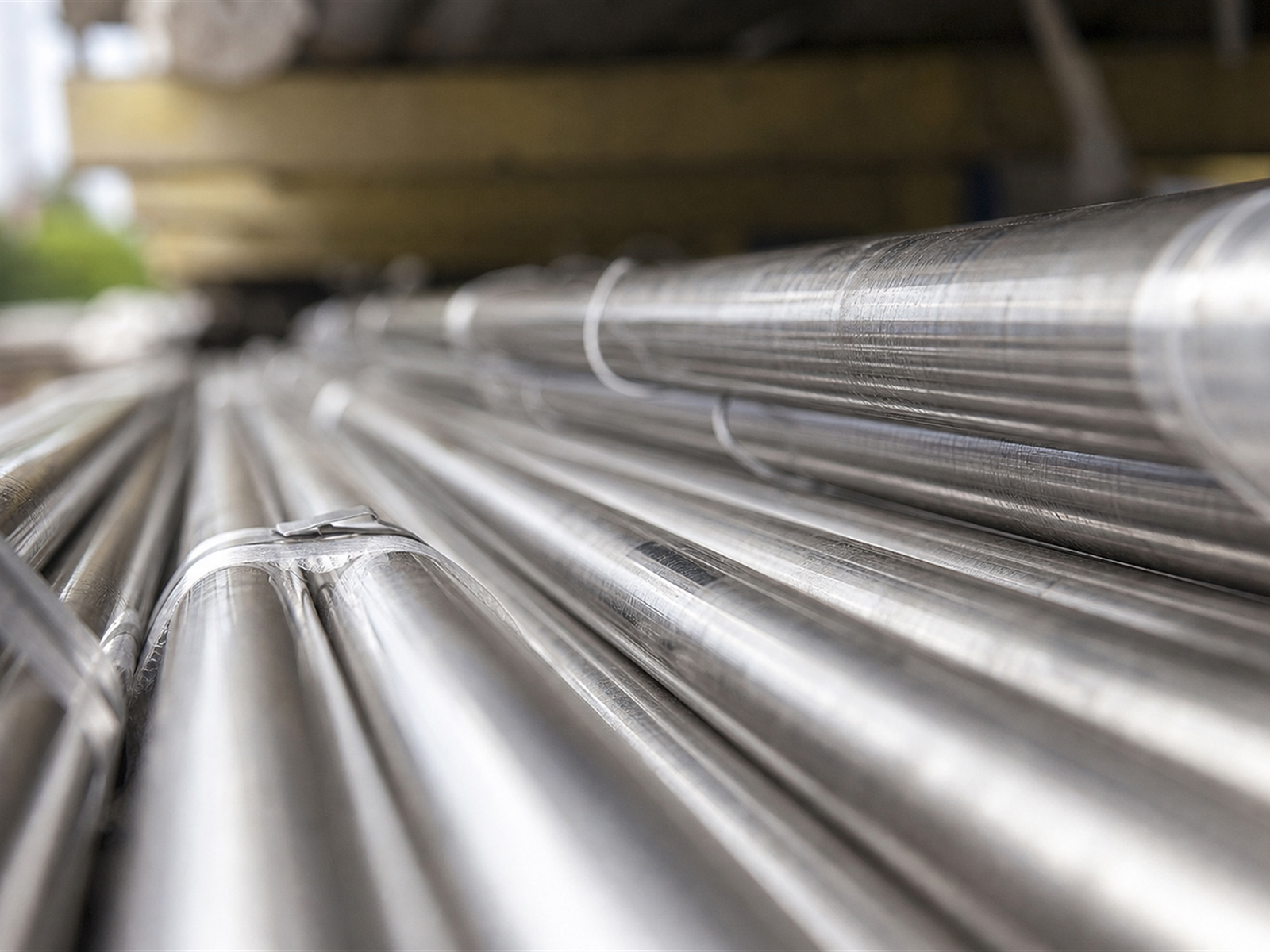
Grade 1 titanium rod is a commercially pure option for parts where forming and fabrication are central to selection. Specify the rod diameter and condition alongside the bend geometry and welding requirements.
1. Selection and Acceptance Decisions
- Use a trial at the actual rod diameter and delivery condition to establish bend radius and springback.
- Describe the rolling or drawing history when known, and agree how surface damage or cracks will be assessed.
- For welded assemblies, qualify joint preparation, shielding and the required inspection with the fabricator.
Send a specification for this material with the grade, dimensions, quantity, intended use and the acceptance details listed above. Ask for confirmation of the quoted size, condition and documentation.
2. Chemical Composition
Element (max %) | Grade 1 limit |
Nitrogen (N) | 0.03 |
Carbon (C) | 0.08 |
Hydrogen (H) | 0.015 |
Iron (Fe) | 0.20 |
Oxygen (O) | 0.18 |
Titanium (Ti) | Balance (typically ≥ 99.5%) |
Table 1 — ASTM B348 Grade 1 composition limits.
3. Mechanical and Physical Properties
Property | Value |
Tensile strength (min) | ≥ 240 MPa (typical 240–345) |
Yield strength | 170–275 MPa |
Elongation (min) | 24% |
Elastic modulus | ≈ 103 GPa |
Density | 4.51 g/cm³ |
Magnetism | Non-magnetic |
Table 2 — Annealed properties per ASTM B348 Grade 1 and typical physical data.
4. Bending and Forming Behavior
Grade 1’s formability comes with springback: the low modulus stores more elastic strain, so bent parts spring back further than steel. Shop-floor reference points for annealed rod: minimum bend radius about 2D for φ4–10 mm, 2.5D–3D for φ10–30 mm, and warm forming at 200–300℃ with 3D+ radius above φ30 mm. Typical over-bend compensation for a 90° bend is 3–8° (more for cold-worked stock). Cold-drawn rod should be stress-relieved at 480–595℃ before heavy bending to avoid cracking. Lubrication matters: MoS₂ or graphite-based titanium lubricants, no chlorides. After forming, pickle-passivate (HF: HNO₃ ≈ 1: 3–1: 5) to restore the oxide film.
5. Welding
Grade 1 welds with TIG or laser under inert-gas shielding and is the most forgiving titanium grade in thin sections. Its filler metal is ERTi-1 (AWS A5.16), with 5N-purity argon, trailing shields and back purging for high-quality joints.
Applications
- Formed and welded structures — brackets, frames and ducting where bending decides the grade;
- Chemical equipment — liners, anode hangers and low-stress corrosion parts;
- Medical — surgical hardware and low-load implants per ASTM F67 / ISO 5832-2;
- Cryogenic service — parts needing toughness at deep-cold temperatures, verified per design;
- Electronics and instruments — non-magnetic structural parts.
FAQ
(1) What is the minimum bend radius for Grade 1 rod?
About 2D for φ4–10 mm, 2.5D–3D for φ10–30 mm, and warm forming (200–300℃) with 3D+ radius above φ30 mm — validated by trial bends for the batch.
(2) Why does Grade 1 spring back more than steel?
Its elastic modulus (≈ 103 GPa) is about half of steel’s, so more elastic strain is stored at a given bend load; expect over-bend compensation of roughly 3–8° for a 90° bend, more for cold-worked stock.
(3) Should I stress-relieve cold-drawn rod before bending?
Yes — 480–595℃ stress relief (about 1 h per 25 mm of section, minimum 1 h) removes drawing residual stress that otherwise adds to the bending stress and causes cracking.
(4) Is Grade 1 rod weldable?
Yes — TIG or laser with full inert-gas shielding and ERTi-1 filler; it is the most forgiving CP grade for welding.
(5) Which standard covers surgical Grade 1 rod?
ASTM F67 (ISO 5832-2) for surgical implants; ASTM B348 covers general industrial supply.
Related Resources and Inquiry
See the titanium rod category or send your specification for Grade 1 rod supply and forming support.
Baoji Titanium Valley Titanium Nickel Zirconium Material Processing Co., Ltd. produces titanium rod and barstock from VAR-melted ingots on a rolling line rated over 20, 000 t/yr, per ASTM B348 / GB/T 2965, with cold-drawn, hot-rolled and forged routes. Send your specification to sales@titaniumvalleys.com — Custom size, condition, tolerance and documentation can be reviewed to the purchase specification.
6. Related Reading
- Grade 2 Titanium Rod: Corrosion Service and Fabrication
- Grade 4 Titanium Rod: Strength and Forming Trade-Offs
References
1. ASTM B348/B348M, Standard Specification for Titanium and Titanium Alloy Bars and Billets.
2. ASTM F67, Standard Specification for Unalloyed Titanium, for Surgical Implant Applications.
3. ISO 5832-2, Implants for Surgery — Metallic Materials — Unalloyed Titanium.
4. ASTM E8/E8M, Standard Test Methods for Tension Testing of Metallic Materials.
5. GB/T 2965, Titanium and Titanium Alloy Bars.
This article is a technical reference. It does not constitute a commercial offer; dimensions, tolerances and documentation are confirmed at order review.
Published by: Titanium Valley Technical Team. Technical and quality review: pending.