
Beta Titanium Wire Specifications: Alloys, Conditions and RFQ
- Beta Titanium Wire
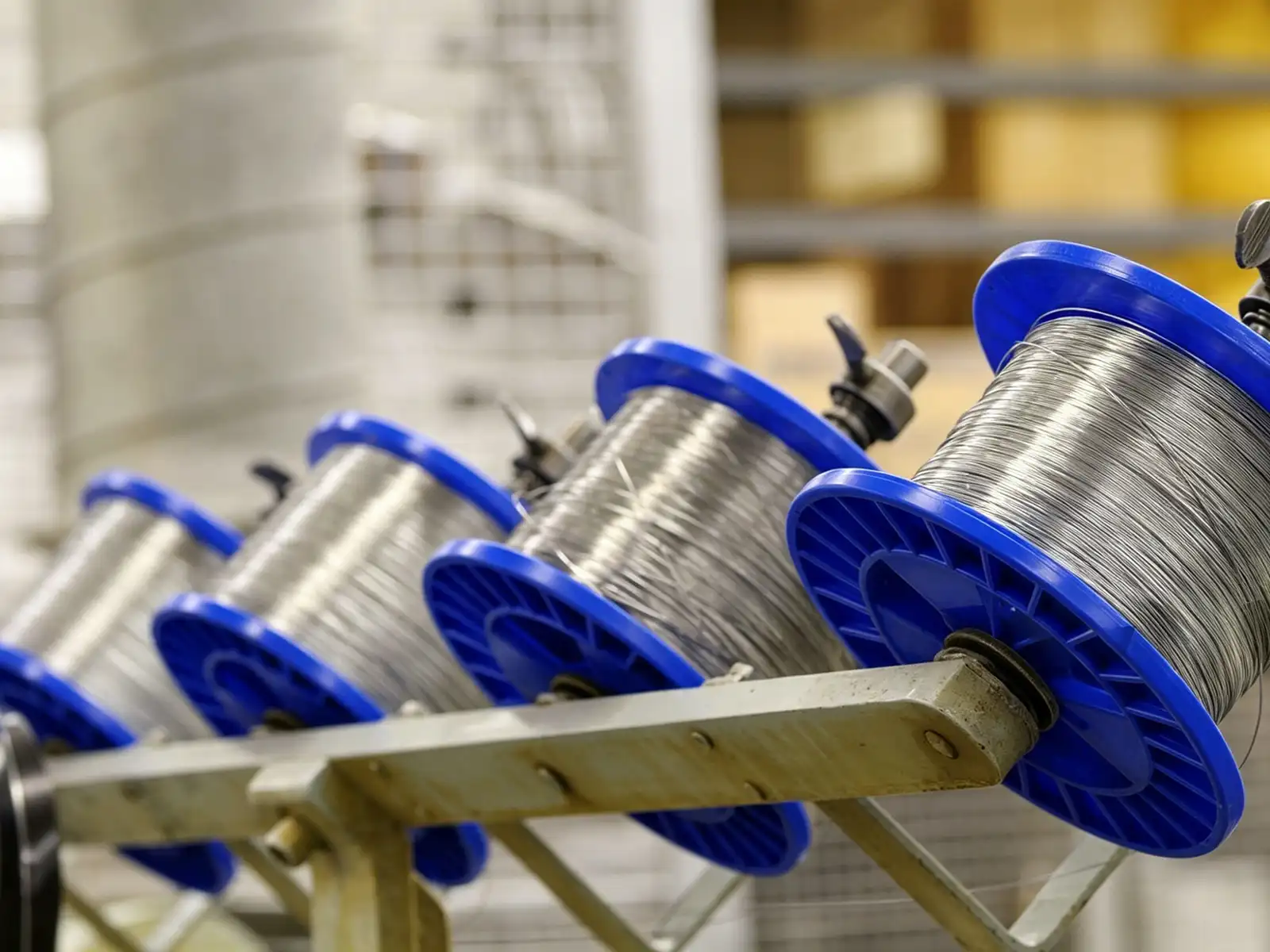
A beta titanium wire specification should connect alloy designation, delivered condition and final processing. This page focuses on the information needed to compare quotations and define acceptance for a repeatable wire order.
1. Selection and Acceptance Decisions
- State whether forming occurs before or after the agreed heat treatment and identify who performs that treatment.
- Request the wire diameter, tolerance, surface condition and coil or straight-length format on each quotation.
- Record the required test condition and lot traceability so reports from different suppliers can be compared.
Send a specification for this material with the grade, dimensions, quantity, intended use and the acceptance details listed above. Ask for confirmation of the quoted size, condition and documentation.
2. The Condition System
Condition | What it means | Typical use |
Solution treated (ST) | Soft, formable BCC state after high-temperature quench | Cold heading, winding |
Cold worked (CW) | ST material deformed to raise strength | Springs, fasteners |
Aged (STA / CWA) | Precipitation-hardened to final strength | Finished spring and structural wire |
Table 1 — Beta wire conditions; the order must pair each condition with its mechanical targets.
3. What Makes the Beta Order Different
Three differences from α+β wire. Condition carries the properties: beta wire strength spans a wide range across ST/CW/aged states, so “Grade X” alone says nothing — the condition plus mechanical targets define the product. Standards are framework, not table: ASTM B863 supplies the testing methods and tolerances; the alloy chemistry is fixed in the purchase specification. Heat treatment is in-house: aging response depends on mill practice, so ask for the condition-specific tensile data, not generic alloy values. Custom size, condition, tolerance and documentation can be reviewed to the purchase specification.
RFQ Fields for Beta Wire
- Alloy + UNS — e.g., Ti-15V-3Al-3Cr-3Sn / R58153;
- Condition + targets — e.g., aged, tensile 1, 200 MPa class, elongation ≥ 5%;
- Diameter, tolerance, form — spool or straight, ±0.05 mm class or tighter;
- Test framework — ASTM B863, with supplementary chemistry and microstructure checks;
- Documentation — MTR per heat, EN 10204 3.1 class, batch traceability.
FAQ
(1) Is beta titanium wire covered by ASTM B863?
B863 provides the wire testing and tolerance framework; the alloy chemistry and condition-specific mechanical targets are fixed in the purchase specification, because beta wire is largely custom material. Custom size, condition, tolerance and documentation can be reviewed to the purchase specification.
(2) What is Beta C wire used for?
Oil-and-gas downhole springs and fasteners where sour-service corrosion resistance plus high spring performance is needed, evaluated within the NACE MR0175/ISO 15156 framework.
(3) What does “15-3-3-3” mean?
Ti-15V-3Al-3Cr-3Sn: 15% vanadium, 3% each of aluminum, chromium and tin — the classic aerospace beta alloy for springs, clips and fasteners.
(4) How do I compare two beta wire quotes?
Compare like conditions: tensile/elongation at the same diameter and condition, tolerance practice, heat-treatment disclosure and documentation level — not alloy name alone.
(5) Can beta wire be supplied as welding filler?
Some beta compositions are used as filler for beta fabrications; confirm classification under AWS A5.16 or by private agreement with the weld procedure.
Related Resources and Inquiry
See the titanium wire category or send your specification for a beta wire review.
Baoji Titanium Valley Titanium Nickel Zirconium Material Processing Co., Ltd. produces titanium wire and welding wire per ASTM B863 / AWS A5.16 from a dedicated drawing line, from fine wire to welding filler on spools, under ISO 9001 / ISO 13485. Send your specification to sales@titaniumvalleys.com — Custom size, condition, tolerance and documentation can be reviewed to the purchase specification.
4. Related Reading
- Beta Titanium Wire: Choosing an Alloy for the Part
- Titanium Wire Drawing: Process Stages and Defect Control
References
1. ASTM B863, Standard Specification for Titanium and Titanium Alloy Wire.
2. ASTM E8/E8M, Standard Test Methods for Tension Testing of Metallic Materials.
3. NACE MR0175/ISO 15156, Petroleum and Natural Gas Industries — Materials for Use in H₂S-Containing Environments.
4. EN 10204, Metallic Products — Types of Inspection Documents.
This article is a technical reference. It does not constitute a commercial offer; dimensions, tolerances and documentation are confirmed at order review.
Published by: Titanium Valley Technical Team. Technical and quality review: pending.