
Anodized Titanium Foil: Colors, Voltage and Finish Specifications
- Anodized Titanium Foil
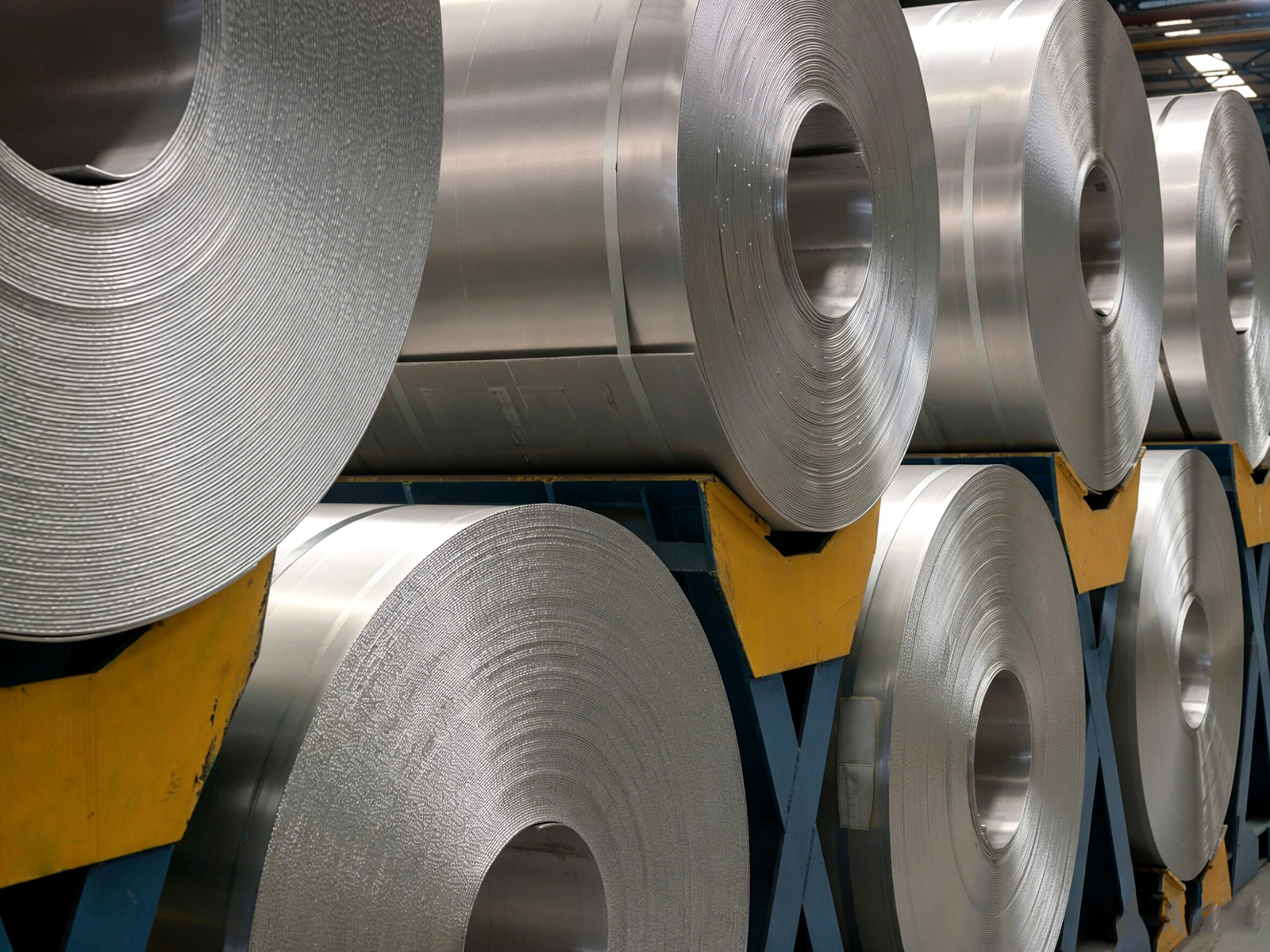
Anodized titanium foil gets its color from light interference in a thin oxide layer. Use the voltage examples below as a starting point, then approve a physical color sample on the same alloy and finish as the production foil. Browse titanium foil grades.
What Anodizing Does to Titanium
In an alkaline or acid electrolyte, applied voltage grows an adherent TiO₂ layer whose thickness scales linearly with voltage. At roughly 20–100 nm the film becomes an interference filter: reflected light from the film surface and the metal interface combines to produce the visible color. The color is therefore a direct, non-destructive record of film thickness — and a repeatable manufacturing parameter, not a coating that can chip.
Voltage–Color Reference
Voltage (approximate) | Resulting color |
15–20 V | Bronze / brown |
25–30 V | Blue |
40–45 V | Yellow / gold |
55–60 V | Magenta / purple |
75–90 V | Green |
Table 1 — Approximate titanium anodize colors by voltage; exact hues depend on electrolyte, alloy and surface preparation.
Decorative Color and Surface Preparation
Decorative anodizing and surface preparation have different acceptance criteria. For decorative foil, approve a sample and inspection lighting. For bonded foil, specify the qualified surface preparation and verify bond performance.
Applications by Thickness Band
Application | Typical thickness | Process | Key requirement |
Decorative anodized foil | 0.05–0.2 mm | Stamping + anodized coloring | Gold / blue / purple interference colors, wear resistance |
Tweeter / headphone driver diaphragms | 0.03–0.05 mm | Stamping + anodized coloring | High rigidity, low damping, uniform thickness |
consumer electronics precision shielding and masking parts | 0.03–0.15 mm | Etching, stamping, laser cutting | Thin, hard, temperature-resistant, etchable to micron detail |
Table 2 — Foil band (0.02–0.2 mm): decorative foil, driver diaphragms and consumer electronics shielding with anodized surfaces.
Application | Typical thickness | Process | Key requirement |
Eyeglass frames and hinges | 0.3–0.5 mm | Bending + anodized coloring (β-Ti / Ti-6Al-4V) | Light, corrosion-resistant, skin-friendly, elastic |
Table 3 — Strip band (0.2–0.5 mm): eyeglass frames with anodized coloring.
Application | Typical thickness | Process | Key requirement |
consumer electronics housing structural parts | 0.5–0.8 mm | CNC machining + anodizing | Light, hard, anodizable, premium feel |
Premium watch cases and jewelry | 0.5–1.0 mm | Stamping / machining + anodizing | Skin-friendly, sweat-resistant, rich anodized colors |
Titanium crafts and souvenirs | 0.5–1.0 mm | Anodized coloring | Gradient iridescent colors, metallic finish |
Table 4 — Sheet band (0.5–1.0 mm): housings, watch cases and crafts where anodized color is the selling surface.
1. Deep Dive: Decorative anodized foil
Decorative anodized foil at 0.05–0.2 mm is stamped into consumer electronics appearance parts, jewelry, watch dials and nameplates, then color-anodized to gold, blue or purple. The oxide film is wear-resistant and integral to the metal — unlike paint or plating, it cannot flake off a flexed thin part.
2. Deep Dive: Tweeter / headphone driver diaphragms
High-end tweeter and balanced-armature driver diaphragms are stamped from 0.03–0.05 mm foil and anodized: the color treatment doubles as identification and surface passivation, and titanium’s rigidity gives the transient response that JBL-style titanium-dome tweeters are known for.
3. Deep Dive: consumer electronics housing structural parts
Flagship phone mid-frames and laptop shells are CNC-machined from 0.5–0.8 mm sheet and anodized: the oxide adds scratch resistance and a premium color palette to titanium’s hardness and light weight — the finish strategy behind high-end consumer electronics product lines.
4. Deep Dive: Eyeglass frames and hinges
Eyeglass frames and hinges bent from 0.3–0.5 mm strip are anodized in multiple colors for product differentiation; the oxide film survives skin oils and sweat without the allergy risks of nickel-based frame alloys.
5. Deep Dive: Premium watch cases and jewelry
Watch cases, straps and jewelry use anodized color as part of the design language; craft pieces and commemorative products push the technique to iridescent gradients — the “炫彩” effect achieved by controlled voltage ramps across the part.
Quality Considerations for Foil
Specify the substrate finish, cleaning, acceptable color variation across the width, and inspection lighting. For bonded assemblies, qualify the complete preparation and bonding process.
FAQ
(1) Are anodized titanium colors produced with dye?
No — the classic bronze-to-green palette is pure light interference from the oxide film itself. Dyed finishes exist but change surface chemistry and are specified separately.
(2) Does anodizing weaken titanium foil?
Negligibly for thin color films: the oxide is nanometers thick on a metal tens of micrometers thick. The practical concern is surface chemistry (bonding, sealing), not load capacity.
(3) Can Grade 2 titanium foil be anodized?
Yes — CP grades anodize readily, and Grade 1/2 foil is among the most common anodized foil in bonding and identification applications. Ti-6Al-4V also anodizes well.
(4) How thick is the anodic film?
Typically tens to a few hundred nanometers, growing with voltage — orders of magnitude thinner than the foil itself. Exact thickness depends on electrolyte and voltage schedule.
(5) How do I order anodized titanium foil?
Specify grade, gauge, tolerance and condition, followed by the required anodic process, approved appearance sample and inspection method. Confirm the governing process specification with the processor.
(6) Which colors are most requested?
Gold, blue and purple are the commercial mainstays for consumer electronics, jewelry and eyewear; craft work extends to iridescent multi-color gradients via voltage ramping.
(7) Does anodized foil still bond adhesively?
Adhesive bonding requires a qualified surface preparation. Confirm the anodic process and acceptance tests with the bonding team.
(8) Can the oxide be stripped and redone?
The oxide can be removed and the part re-anodized within dimensional limits, but rework should be planned with the processor — repeated stripping can affect surface finish on ultra-thin foil.
Related Resources and Inquiry
Start from the titanium foil category or the Grade 5 foil page for alloy substrates, and send your specification including the anodize requirement.
Baoji Titanium Valley Titanium Nickel Zirconium Material Processing Co., Ltd. operates a 750 mm 20-high titanium foil line (3, 000 t/yr, ISO 9001 / ISO 13485) covering the full 0.02–1.0 mm range with etching, stamping and welding compatibility. Send your specification to sales@titaniumvalleys.com — Custom size, condition, tolerance and documentation can be reviewed to the purchase specification.
References
1. ASTM B265, Standard Specification for Titanium and Titanium Alloy Strip, Sheet, and Plate.
2. SAE AMS2488F (Titanium Valley material documentation), anodic treatment, solution pH 13 or higher.
3. SAE AMS2487B (Titanium Valley material documentation), anodic treatment, solution pH 12.4 maximum.
4. Baoji Titanium Valley: 0.02–1.0 mm Titanium and Titanium Alloy Strip and Foil — Application Introduction (internal application deck).
5. Titanium Valley product data: titanium foil product pages (titaniumvalleys.com).
This article is a technical reference. It does not constitute a commercial offer; dimensions, tolerances and documentation are confirmed at order review.
Published by: Titanium Valley Technical Team. Technical and quality review: pending.