
Nickel 200 Foil Thickness Guide: How to Choose the Right Size
- Nickel 200 Foil
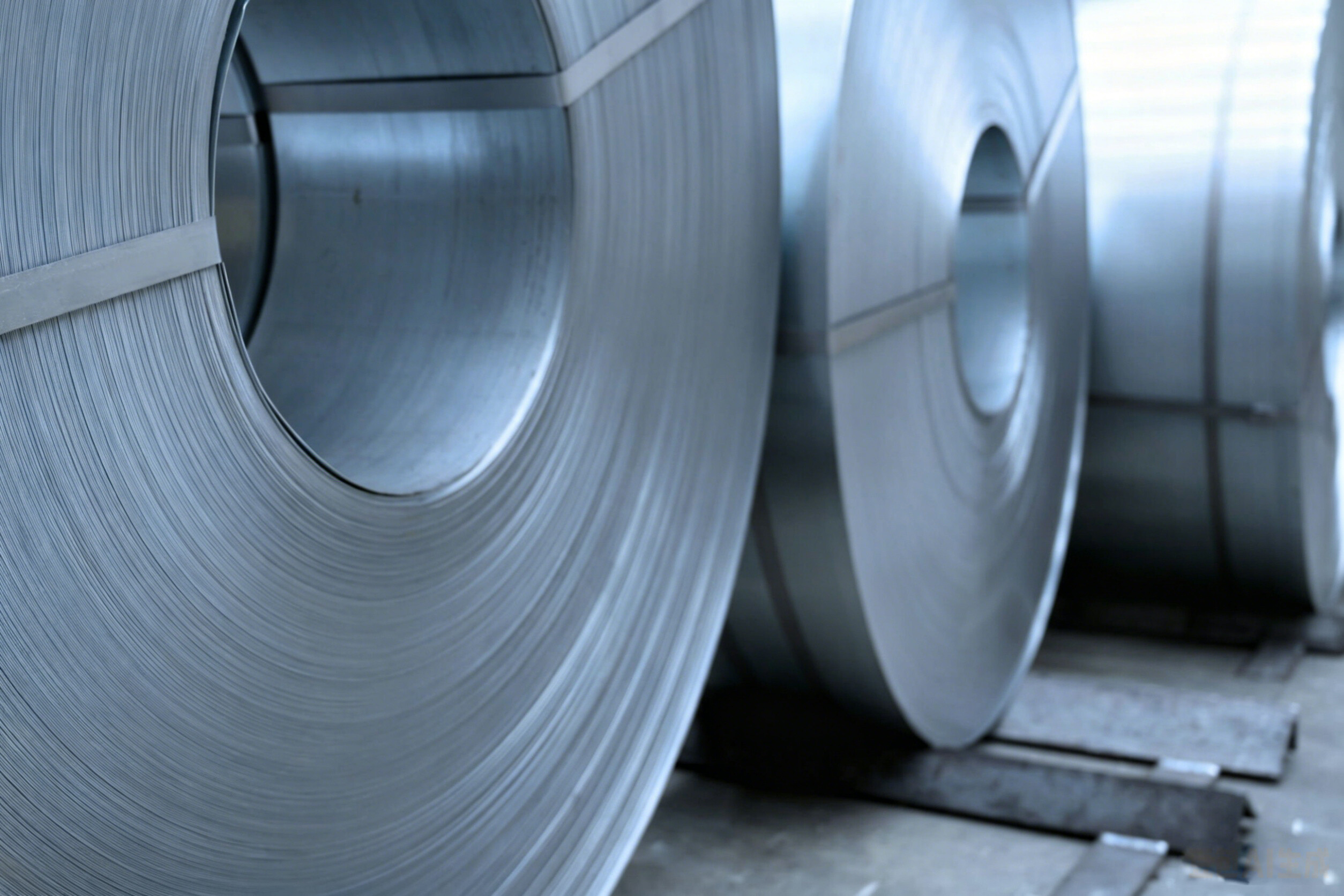
Nickel 200 (UNS N02200) is a commercially pure nickel material. When supplied to ASTM B162, the Ni+Co content is typically controlled at no less than 99.0%, with 99.6% better regarded as a typical value or internal control target rather than a minimum purity requirement. The material performs well in conductive connections, strong-alkali corrosion resistance, and forming operations, and is commonly used in the form of thin strip and foil for battery connector tabs, shielding layers, and small electrode components. Thickness selection directly affects contact resistance, welding heat input, formability, weight, and cost. This article is organized around “terminology and thickness classification — application scenario matching — key parameters — material cross-comparison — validation before production” to help engineers establish a clearer basis for thickness selection.
1. Thickness Classification and Terminology for Nickel 200
In engineering practice, the definitions of “foil,” “thin strip,” and “thin sheet” are not fully standardized, so this article first provides a practical thickness classification:
- 0.005–0.03 mm: ultra-thin foil
- 0.03–0.2 mm: standard foil
- 0.2–0.8 mm: thin strip/sheet
This classification is intended only for engineering selection discussions and is not a general classification system in ASTM/ISO standards. For ultra-thin foil in the 0.005–0.03 mm range, ASTM B162 does not necessarily provide direct coverage; thickness tolerances, flatness, and inspection methods should be supplemented through a technical agreement between supplier and purchaser.
Table 1: Nickel 200 Thin Strip/Foil Thickness Classification and Typical Application Scenarios
Thickness Range | Material Form Category | Typical Application Scenarios | Selection Considerations |
0.005–0.03 mm | Ultra-thin foil | Microelectronics shielding layers, thin-film sensor structural components, specialty electrode/catalyst substrates | Focus on thickness tolerance, flatness, pinholes, and slitting burrs; not suitable for load-bearing structures |
0.03–0.2 mm | Standard foil | EMI shielding covers, battery tabs/connector tabs, precision stamped parts, small electrode components | Balance conductivity, formability, and cost; mostly used in the annealed condition |
0.2–0.8 mm | Thin strip/sheet | Thin corrosion-resistant liners, connector tabs for small electrolytic components, conductive structural parts | Focus on rigidity, welding heat input, and post-processing flatness; thicker plates should be selected for large anode plates |
2. Matching Different Thickness Specifications to Application Scenarios
Thickness selection cannot simply be summarized as “thinner is better” or “thicker is more reliable”; it must be judged comprehensively in light of conductivity requirements, mechanical strength, forming processes, welding methods, and the corrosive environment.
(1) Battery and Energy Storage Industry: Tabs, Connector Tabs, and Electrode Substrates
It should first be clarified that in lithium-ion batteries, aluminum foil is typically used as the cathode current collector and copper foil as the anode current collector; Nickel 200 is not a mainstream choice for lithium-ion battery current collectors. Nickel 200 foil is more commonly used in certain lithium battery tabs/connector tabs and weld tabs, as well as electrode components or connection structures in systems such as nickel-metal hydride (NiMH) batteries, nickel-cadmium (NiCd) batteries, and alkaline batteries.
For battery tabs and connector tabs, common thicknesses are mostly concentrated in the 0.1–0.3 mm range. Among these, 0.1–0.2 mm typically falls within the standard foil category, while 0.2–0.3 mm approaches the thin strip range. Excessively thin material can result in insufficient weld strength, while excessively thick material increases weight, volume, material cost, and welding heat input, which may affect the local heat-affected zone of the cell.
For certain thin-film electrode substrates or specialty sintered electrode plates, a precision thickness range of 0.02–0.05 mm may be used. Within this range, 0.02–0.03 mm is classified as ultra-thin foil and 0.03–0.05 mm as standard foil. Such applications typically require separate verification of flatness, cleanliness, and batch consistency.
(2) Chemical and Electrolytic Industries: Thin Corrosion-Resistant Liners and Small Electrode Components
Nickel 200 offers good corrosion resistance in strong alkali media such as NaOH and KOH and is therefore commonly used for thin corrosion-resistant liners, small electrolytic electrode components, or conductive connectors in alkaline service. For these non-load-bearing or lightly loaded applications, thin strip/sheet specifications of 0.3–0.8 mm are typically selected to ensure adequate rigidity and weldability.
It should be distinguished that large electrolytic nickel anode plates generally fall within the plate category, with actual thicknesses often well above 0.8 mm, and are outside the thin strip/foil scope of this article. In addition, “aqueous ammonium chloride solution” should not be classified as an alkaline medium, because an aqueous ammonium chloride solution is weakly acidic and should not be used as an example of Nickel 200 in alkaline service.
(3) Electronics and Precision Manufacturing: EMI Shielding and Micro-Stamped Parts
EMI shielding layers have stringent requirements for thickness uniformity, as minor deviations can cause fluctuations in shielding effectiveness. Precision micro-stamped parts require the material to have good ductility in the annealed condition. Standard foil of 0.03–0.1 mm is commonly selected for such applications. The annealed condition typically offers high elongation, making it suitable for bending, shallow drawing, or stamping, but the specific forming limits must still be verified against the tooling and part geometry.
3. Influence of Key Technical Parameters on Thickness Selection
(1) Supply Condition: Performance Differences Between Annealed and Cold-Worked States
Nickel 200 foil condition should be expressed using internationally accepted terminology: annealed and cold-worked (hard rolled). The annealed condition offers good ductility and is suitable for forming operations; the cold-worked condition provides higher strength but reduced ductility, and different cold-rolling reductions can result in significantly different properties.
In the annealed condition, tensile strength is typically approximately 345–455 MPa, with elongation reaching ≥40%. Cold-worked properties cannot be simply summarized by a single fixed range; common engineering reference values are a tensile strength of approximately 500–700 MPa and elongation of approximately 2%–10%, with the specific values to be confirmed with the supplier based on cold-rolling reduction or hardness state.
(2) Thickness Tolerance and Flatness Control
Thickness tolerance must be evaluated in segments according to thickness; it cannot be summarized by a single value. For foil in the 0.005 mm class, ±0.001 mm already represents a 20% tolerance band and should not be called high precision. The following target tolerance ranges can be used as a reference:
- 0.005–0.01 mm: ±0.0005–0.001 mm
- >0.01–0.03 mm: ±0.001–0.002 mm
- >0.03–0.1 mm: ±0.002–0.005 mm
- >0.1–0.8 mm: ±0.005–0.01 mm, or per ASTM B162/agreement between the parties
Achieving good thickness consistency typically relies on process measures such as multi-roll precision mills, multi-pass rolling, intermediate annealing, and online thickness measurement feedback. When purchasing, attention should be paid to thickness distribution and flatness, not just the nominal thickness.
(3) Effect of Surface Cleanliness on Contact Resistance, Weldability, and Connection Reliability
Surface contaminants do not significantly change the bulk volume resistivity of nickel, but they noticeably increase contact resistance and affect laser welding, spot welding, and subsequent connection reliability. Methods such as ultrasonic cleaning combined with alkaline cleaning can effectively remove residual surface oils and particulates, but industrial cleaning cannot verify “complete removal”; a more reasonable approach is to agree on allowable residue levels, cleanliness grades, and inspection methods.
Surface wetting tension can be used as a reference for cleanliness, with a common requirement of no less than 44 mN/m (44 dyn/cm). For precision electronics and welding applications, targets should be set based on the actual contamination sensitivity of the workpiece.
Table 2: Comparison of Key Properties of Nickel 200 in the Annealed and Cold-Worked Conditions
Property | Annealed | Cold-Worked (Hard Rolled) |
Tensile strength | Approx. 345–455 MPa | Approx. 500–700 MPa, varies with cold-rolling reduction |
Elongation | ≥40% | 2%–10%, varies with cold-rolling reduction |
Forming suitability | Suitable for stamping, bending, and shallow drawing | Only suitable for shallow bending and simple forming; not suitable for complex drawing |
Weldability | Good | Good, but more sensitive to surface cleanliness |
Typical application thickness | 0.03–0.2 mm commonly used for formed parts | 0.1–0.8 mm commonly used for structural connection parts |
Note: The values in this table are engineering reference values and do not replace the specific material test report (MTR) or specimen verification.
4. Comparison Boundaries Between Nickel 200 and Titanium Thin Strip/Foil
In certain conductive and corrosion-resistant applications, engineers compare Nickel 200 with titanium materials. The two differ significantly in electrical conductivity, corrosion resistance systems, and density, and their application boundaries should not be confused.
(1) Differences in Electrical Conductivity
Nickel 200 has significantly better electrical conductivity than titanium. The resistivity of commercially pure titanium (such as Gr2) is approximately 6–7 times that of pure nickel; Ti-6Al-4V (Gr5 titanium alloy) has even higher resistivity, reaching more than 20 times that of pure nickel. When the core requirement of the application is stable current conduction, Nickel 200 is generally the more engineering-sound choice.
(2) Material Selection Boundaries in Corrosive Environments
Titanium materials excel in oxidizing acidic media and chloride-containing environments, whereas Nickel 200 is more suitable for alkaline media such as strong alkalis and carbonates, as well as certain neutral or weakly reducing salt solutions. It should be noted that “alkaline media” cannot be extended to all alkali-related solutions, and weakly acidic salt solutions such as ammonium chloride must not be classified as alkaline media. The specific corrosion resistance must be determined by corrosion testing that takes into account concentration, temperature, flow velocity, aeration conditions, and impurity types.
(3) Weight, Stiffness, and Thickness Design
The density of Nickel 200 is approximately 8.9 g/cm³, much higher than that of titanium at approximately 4.5 g/cm³. In weight-sensitive structural components, titanium more readily enables lightweight design. However, if conductive connection or strong-alkali corrosion resistance is the primary objective, Nickel 200 is usually the more appropriate choice. When designing thickness, one should not look only at the thickness value; recalculation is required based on density, stiffness, conductive cross-section, and processing requirements.
Table 3: Comparison of Overall Properties of Nickel 200 and Titanium Thin Strip/Foil
Comparison Dimension | Nickel 200 | Gr2 Titanium | Gr5 Titanium Alloy |
Density | Approx. 8.9 g/cm³ | Approx. 4.5 g/cm³ | Approx. 4.4 g/cm³ |
Electrical conductivity | Good, low resistivity | Poor, approximately 6–7 times that of pure nickel | Poor, up to more than 20 times that of pure nickel |
Typical tensile strength (annealed) | Approx. 345–455 MPa | Approx. 340–480 MPa | Approx. 900–1100 MPa |
Corrosion resistance | Excellent; suitable for strong alkalis, alkaline salts, and certain neutral/weakly reducing salt solutions | Excellent; suitable for oxidizing acids and chloride environments | Excellent, but more susceptible to stress corrosion under certain conditions |
Typical applications | Conductive connections, electrodes, shielding, alkali-resistant liners | Lightweight structures, corrosion resistance in oxidizing acid environments | High-strength structural parts, aerospace fasteners |
5. Validation Points from Thickness Options to Batch Production
(1) First Establish a “Candidate Thickness + Condition + Cleanliness” Plan Based on Service Conditions
Before contacting a supplier or requesting samples, at least the following conditions should be defined: the type and concentration of the corrosive medium, current density or contact resistance requirements, downstream processing methods (stamping, bending, welding), and assembly tolerance requirements. From these, the thickness range, supply condition, and surface cleanliness requirements can be preliminarily determined, followed by small-batch trial production for validation.
(2) Focus on Tolerances and Batch Consistency Rather Than Only Nominal Thickness
In batch production, thickness uniformity within a single coil and batch-to-batch consistency are often more important than nominal thickness. When purchasing, the supplier should be required to provide a material test report (MTR) confirming that the material conforms to ASTM B162 or the agreement between the parties. For ultra-thin specifications, additional indicators such as thickness distribution, flatness, and pinhole rate should also be agreed upon. The material specification should be expressed as “supplied to ASTM B162” or “conforming to ASTM B162,” not “certified delivery.”
(3) Processing Feasibility and Inspection Methods for Ultra-Thin Specifications Should Be Confirmed in Advance
Ultra-thin nickel foil below 0.01 mm carries high process risks in rolling, annealing, slitting, and inspection. The annealing method should be selected according to the actual specification; continuous annealing, bell-type furnace annealing, or vacuum annealing may all be used, but particular attention should be paid to evaluating tension control, strip-breakage risk, and flatness changes. Slitting burrs, edge curling, and thickness measurement methods should also be clarified with the supplier during the design stage to avoid project delays caused by infeasible specifications.
6. Conclusion
Thickness selection for Nickel 200 foil is essentially a matter of matching engineering requirements such as conductivity, corrosion resistance, formability, weldability, weight, and cost with the material condition, tolerance capability, and processing methods. From 0.005 mm ultra-thin foil to 0.8 mm thin strip, different thickness ranges correspond to different process logic and failure risks. When making a selection, avoid judging solely by the thickness number; it is recommended to base decisions on service condition validation, material test reports, and batch consistency data.
FAQ
(1) Q1: When Should One Switch Between Nickel 200 and Nickel 201 in Thickness Selection?
When equipment is expected to serve long-term at approximately 315℃ or above, or when the effects of carbide precipitation on corrosion resistance and workability need to be avoided, the low-carbon grade Nickel 201 should generally be selected. In such cases, thickness, grain size, and supply condition must be re-evaluated, and the Nickel 200 thickness solution cannot simply be carried over.
(2) Q2: Can ±0.001 mm Be Considered a High-Precision Tolerance for 0.005 mm-Class Ultra-Thin Nickel Foil?
Not recommended. At a thickness of 0.005 mm, ±0.001 mm corresponds to a tolerance band of about 20% and should not be called high precision. For ultra-thin foil, stricter tolerances should be required, such as the ±0.0005 mm class, or indicators such as thickness distribution, Cp/Cpk, and flatness should be specified at the same time.
(3) Q3: Is Nickel 200 Suitable for All Alkaline Service Conditions?
No. Although Nickel 200 performs well in strong alkalis such as NaOH and KOH, its corrosion behavior is still affected by concentration, temperature, aeration, and impurities. In high-temperature, high-concentration strong alkalis or in the presence of oxidizing impurities, accelerated corrosion may occur. Material selection should be based on corrosion testing or reference to corrosion data under the specific medium conditions.
Contact Us
Looking for a reliable Nickel 200 (UNS N02200) foil or thin strip manufacturer, supplier, or processing service provider? A professional nickel materials company with full-process capabilities from vacuum melting, multi-pass precision rolling, and annealing (continuous annealing/bell-type furnace/vacuum annealing) to precision slitting can support custom specifications across the 0.005–0.8 mm thickness range and small-batch prototyping, supplying to ASTM B162 with complete material test reports (MTR). Welcome to contact us: sales@titaniumvalleys.com
References
- ASTM International. ASTM B162—2019 Standard Specification for Nickel Plate, Sheet, and Strip [S]. West Conshohocken: ASTM International, 2019. (Primarily for sheet and strip; for ultra-thin foil, a mutual agreement between supplier and purchaser is required.)
- Special Metals Corporation. Nickel 200 & Nickel 201 Technical Data Sheet [EB/OL]. New Hartford: Special Metals Corporation, 2021.
- ASM International. ASM Handbook, Vol. 2: Properties and Selection: Nonferrous Alloys and Special-Purpose Materials (Chinese Edition) [M]. Beijing: China Machine Press, 1997.