
Nickel 200 Wire vs. Nickel Alloy Wire: How Do Their Performance and Applications Compare?
- Nickel 200 Wire
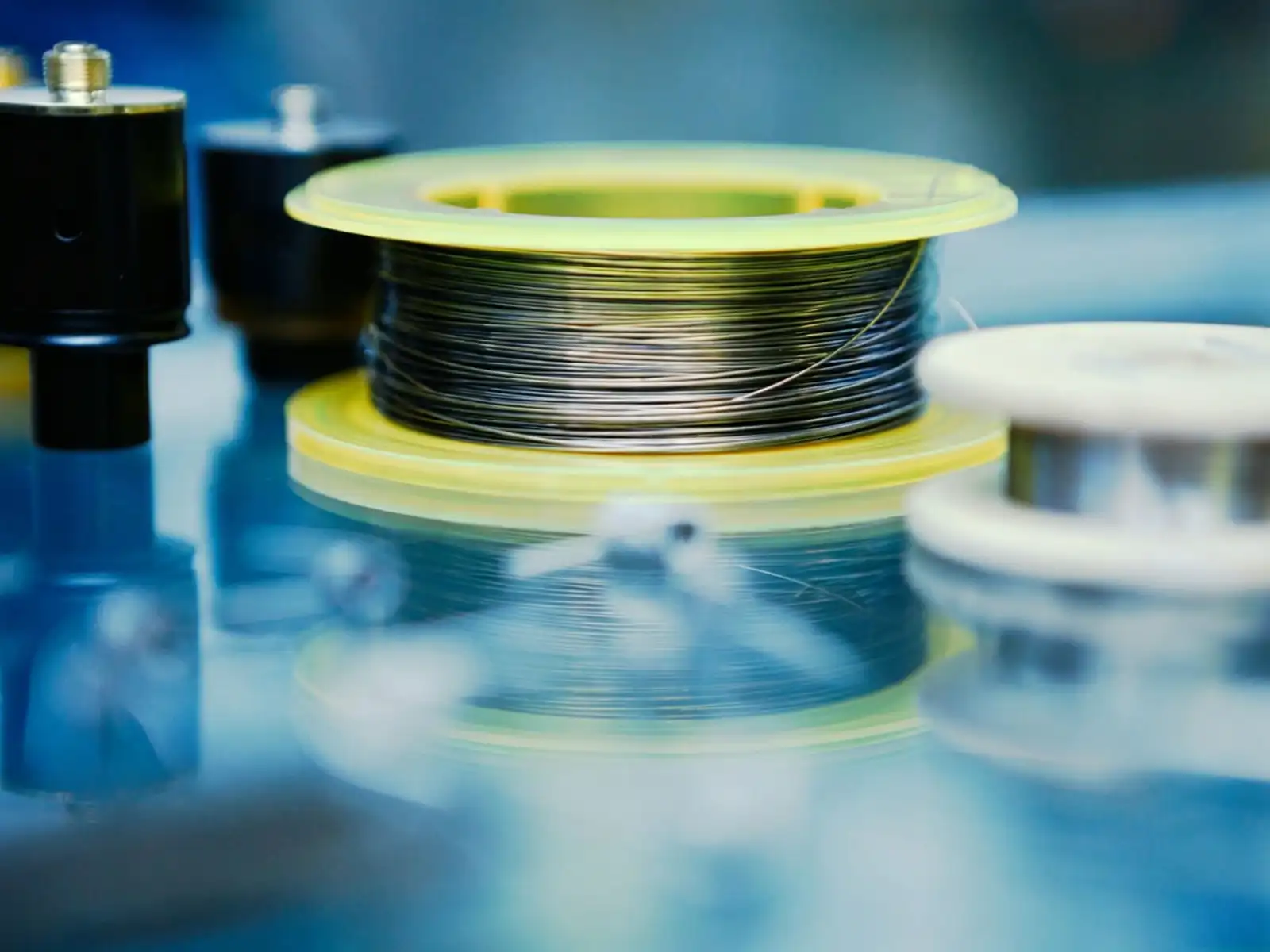
In industrial material selection, “pure nickel wire” and “nickel alloy wire” are often discussed side by side, yet the two differ significantly in composition, physical properties, mechanical properties, and applicable service conditions. Nickel 200 pure nickel wire (UNS N02200) is a commercially pure nickel grade, commonly required by standards to contain no less than 99.0% nickel + cobalt, and excels in electrical conductivity, thermal conductivity, and corrosion resistance in strong alkalis; however, it is ferromagnetic at room temperature and is not a non-magnetic material. Nickel alloy wire (such as Inconel 625, Monel 400, and Hastelloy C-276) gains advantages in high-temperature strength, oxidation resistance, and specific corrosive environments through the deliberate addition of elements such as chromium, molybdenum, copper, and tungsten. Material selection should be driven by service condition parameters rather than the “pure nickel” or “alloy” label alone. This article compares the two across composition, mechanical properties, corrosion resistance, workability, and procurement quality, for the reference of engineering and technical personnel.
1. Composition and Fundamental Properties: Purity Defines the Performance Envelope
(1) Composition Characteristics of Nickel 200
Nickel 200 (UNS N02200) is a commercially pure nickel grade, and its European standard counterpart should be verified against the relevant EN material standards. Under the common chemical composition requirements for Nickel 200 in ASTM B160, nickel + cobalt content is ≥99.0%, iron ≤0.40%, copper ≤0.25%, carbon ≤0.15%, and sulfur ≤0.01%. This composition does not represent the “highest-purity commercial nickel” but rather a widely used commercially pure nickel grade. If the user requires stricter targets such as Ni ≥99.5% or S ≤0.005%, these constitute additional agreements or sorted-product guarantees and should not be assumed as general standard defaults.
(2) Composition Logic of Nickel Alloy Wire
Nickel alloy wire uses nickel as the base metal and intentionally adds alloying elements. Inconel 625 contains approximately 20%–23% chromium and 8%–10% molybdenum, combining corrosion resistance, high-temperature strength, and oxidation resistance; Monel 400 contains approximately 30% copper and is primarily used in seawater, hydrofluoric acid, and reducing environments; Hastelloy C-276 has relatively high molybdenum and tungsten contents, with its main advantages in mixed acids, reducing acids, wet chlorine, and chloride environments, and should not be simplistically described as “for strongly oxidizing media”. The cost of alloying is usually a reduction in electrical and thermal conductivity, but the targeted performance is more concentrated.
(3) Comparison of Basic Physical Property Data
Property | Typical Nickel Alloy Wire (Inconel 625) | |
Density (g/cm³) | 8.90 | 8.44 |
Melting Point (°C) | 1453–1455 | 1290–1350 |
Electrical Resistivity (Ω·m) | 6.84×10⁻⁸ | ~1.29×10⁻⁶ |
Thermal Conductivity (W/m·K) | 70 | ~9.8 |
Magnetic Properties | Ferromagnetic at room temperature | Generally weakly magnetic / non-ferromagnetic; must be verified by condition and grade |
Data note: Nickel 200 has noticeably higher electrical and thermal conductivity than Inconel 625, but absolute conclusions such as “far superior” should be avoided. Nickel alloys have advantages in high-temperature strength and oxidation resistance, and material selection should start from the service condition requirements.
2. Mechanical Properties and Processing Suitability: Cold Forming vs. High-Temperature Strength
(1) Mechanical Differences in the Annealed (Soft) Condition
In the annealed condition, Nickel 200 typically exhibits a tensile strength ≥350 MPa, yield strength ≥130 MPa, elongation ≥30%, and hardness of approximately 85–95 HB, with good cold-workability suitable for multi-pass cold drawing and bending/winding forming. Nickel alloy wire such as annealed Inconel 625 typically has a distinctly higher tensile strength, reaching about 800 MPa or more; elongation depends on the condition, commonly 30%–60% in the annealed state, while cold-worked states may be well below 20%. It cannot be broadly stated that nickel alloy wire generally has elongation below 20%.
(2) Wire Diameter Precision and Surface Quality
Nickel 200 Wire and bar products can cover a range of specifications: fine wire such as φ0.4–3.0 mm, with small-gauge wire tolerances controllable to within ±0.01 mm, but these should be specified by size grade; φ200 mm falls in the bar category and should not be called “wire”, with its tolerance, straightness, and other requirements to be defined separately per bar standards or agreements. Surface conditions can be supplied as bright, semi-bright, pickled, polished, and others to meet different cleanliness requirements. Nickel alloy wire has a narrower process window when drawn to fine gauges, with more difficult surface defect control and generally higher processing costs.
(3) Weldability and Secondary Processing
Pure nickel wire has good weld process adaptability and generally does not require complex preheating, with well-maintained toughness in the heat-affected zone; it can be used for welding consumables, precision springs, and similar products. When welding nickel alloy wire, heat input must be controlled, and some age-hardening or precipitation-hardened grades also require post-weld heat treatment to restore properties, resulting in a longer process chain and higher cost.
3. Corrosion Resistance: Each Material Has Its Own Suitable Environments
(1) Core Corrosion Advantages of Nickel 200
Corrosive Environment | Nickel 200 Wire | Nickel Alloy Wire (grades vary widely; examples: Inconel 625 / Monel 400 / Hastelloy C-276) |
Strong alkalis (NaOH, KOH) | Excellent | Good to excellent, depending on grade |
Reducing acids (hydrochloric, dilute sulfuric) | Good | Depends on grade; Hastelloy C-276 is generally good |
Seawater / salt spray | Good | Monel 400, Inconel 625, etc., generally good to excellent |
Oxidizing acids (concentrated nitric) | Not recommended | Hastelloy C-series may be usable, but requires case-by-case evaluation |
High-temperature sulfur-bearing atmospheres (>315℃) | Not recommended | Pure nickel / most nickel-based alloys require caution; some specialty alloys may be used |
Strongly alkaline chloride solutions | Evaluate case by case | Monel series is relatively suitable, but still requires media-specific testing |
Note: The table above is a qualitative empirical comparison and cannot replace grade-specific technical manuals and corrosion test data.
Nickel 200 is widely used in strong alkalis and certain reducing environments, but recommendations should not be made without reference to specific service conditions.
(2) Specialized Corrosion Capabilities of Nickel Alloy Wire
Monel 400 is more commonly used in seawater and hydrofluoric acid environments; Hastelloy C-276 is better suited to complex environments such as mixed acids, reducing acids, and wet chlorine/chloride; Inconel 625 performs well in high-temperature oxidation and chloride-induced pitting/crevice corrosion environments. Corrosion performance varies greatly by grade and must be evaluated in conjunction with medium type, concentration, temperature, flow rate, and oxygen content.
(3) Effect of Temperature on Corrosion Behavior
Nickel 200 is relatively stable in alkaline and neutral environments below approximately 300℃. Above roughly 315℃, prolonged holding may affect ductility due to carbide precipitation or graphitization tendency, which is why the low-carbon grade Nickel 201 (C≤0.02%) is used at intermediate temperatures to avoid carbon-precipitation embrittlement. However, Nickel 201 cannot solve sulfur embrittlement/sulfur corrosion problems in high-temperature sulfur-bearing atmospheres; sulfur-bearing high-temperature environments should use sulfur-resistant alloys or other material solutions. Nickel alloy wire generally has a wider service temperature range, but the grade and conditions must be specified: for example, the typical maximum continuous service temperature of Inconel 625 is approximately 980℃, and not all “nickel alloy wire” can operate continuously above 1000℃.
4. Typical Application Scenarios: Matching Materials to Service Conditions
(1) High-Value Applications of Nickel 200 Wire
- Electronics and electrical: transformer coils, battery tabs, conductive leads, etc., leveraging its low resistivity and stable thermo-electrical properties;
- Chemical and chlor-alkali: electrolytic cell plates, alkali filter screens, heat exchanger components, etc., leveraging its strong-alkali corrosion resistance;
- Precision machinery: precision springs, miniature shafts, connectors, etc., leveraging its ductility and wire diameter consistency;
- Intermediate-temperature industry: heating elements, fixtures, etc., in inert or reducing atmospheres, with attention to temperature limits and atmosphere conditions;
- Medical devices: certain non-implantable tools, probes, or guide wires may involve pure nickel wire, but claims of being “completely non-magnetic” or “highly biocompatible” should be avoided as default conclusions; magnetism and biocompatibility must be evaluated against specific product standards such as the ISO 10993 series.
(2) Scenarios Where Nickel Alloy Wire Is Irreplaceable
High-temperature components in aircraft engines, sealing wire for deep-sea oil and gas equipment, and thermocouple protection tubes for high-temperature furnaces must operate stably over the long term under high temperatures or combined corrosive media. In these cases, the high-temperature strength, oxidation resistance, and specific corrosion resistance of nickel alloy wire are more appropriate. Pure nickel wire may fail in these conditions due to creep, oxidation, or corrosion by specific media.
(3) Material Selection Decision Framework
Service Condition | Recommended Material |
Strong alkalis / reducing acids, low to moderate temperature | Nickel 200 Wire |
High electrical/thermal conductivity required, no special magnetic restrictions | Nickel 200 Wire |
Precision springs / welding consumables / certain electronic leads | Nickel 200 Wire |
High-temperature oxidizing atmospheres (>500℃) | Inconel series alloy wire |
Seawater / hydrofluoric acid media | Monel 400 |
Strongly oxidizing mixed acids / wet chlorine | Hastelloy C-276, subject to grade-specific evaluation |
Ultra-high-temperature structural components (>800℃) | Inconel 625/718, etc., to be validated against service conditions |
5. Procurement and Quality Control: Details Determine Success
(1) Standards Framework and Certification
Nickel 200 Bar/Wire should generally be checked against pure nickel product standards such as ASTM B160, rather than ASTM B166, which applies to nickel-chromium-iron / nickel-chromium-cobalt-molybdenum alloy bars and rods. Pure nickel plate and strip may reference ASTM B162 or other corresponding standards, and the specific wire product should also be defined in combination with product specifications and the agreement between supplier and buyer. ASTM F72 and JIS H 4551 are not appropriate as general execution standards for pure nickel wire and should be verified before being cited. Nickel alloy wire has its own corresponding ASTM/AMS standard systems, and aerospace-grade applications additionally require compliance with process certification schemes such as NADCAP.
When purchasing, suppliers should be required to provide an EN 10204 3.1 material certificate; note that 3.1 is an inspection certificate signed by the manufacturer or its authorized inspection representative and does not equal independent third-party inspection. If an independent third-party certificate is genuinely required, an EN 10204 3.2 certificate should be requested, or a third-party organization commissioned for re-verification.
(2) Key Points of Quality Inspection
Factory inspection of high-quality pure nickel wire should cover chemical composition, tensile strength, elongation, hardness, dimensional accuracy, and surface condition. Straightness requirements must be specified by size grade: for example, small-gauge wire can be required to meet ≤1 mm/m, while large-diameter bars should be defined separately per standards and agreements. Electronics and medical fields additionally require cleanliness and surface roughness reports.
(3) Supply Chain Stability and Customization Capability
For long-term volume users, batch-to-batch consistency from the supplier is more critical than the quality of a single sample. Manufacturers with supporting processes such as continuous rolling, multi-pass drawing, and bright annealing are usually better able to ensure stable performance between batches. It should be made clear: a continuous rolling line cannot directly produce “ultra-fine wire”; subsequent multi-pass drawing is required. Full-size coverage from fine-gauge wire up to φ200 mm bars, together with multiple surface treatments such as bright, pickled, and polished finishes, can better satisfy diverse order requirements.
6. Conclusion
Nickel 200 Pure Nickel Wire offers advantages in chemical, electronics, precision machinery, and certain intermediate-temperature inert/reducing atmosphere scenarios through its commercially pure nickel composition, relatively high electrical and thermal conductivity, and excellent strong-alkali corrosion resistance; nickel alloy wire, through alloying, meets extreme service condition requirements in high-temperature strength and specific corrosive environments. The two should not be simply judged as better or worse; selection should integrate temperature, medium, magnetic properties, conductivity, mechanical properties, and cost.
FAQ
(1) Q1: What is the difference between Nickel 200 Wire and Nickel 201, and which is better for high-temperature alkaline environments?
Nickel 201 is a low-carbon improved version of Nickel 200, typically with a carbon content requirement of C≤0.02%, used mainly for applications above 300℃ to reduce the embrittlement risk caused by carbide precipitation or graphitization. If the service temperature exceeds about 315℃ and the medium is a strong alkali, Nickel 201 can be given priority; for low-to-intermediate temperature alkaline environments, Nickel 200 is usually sufficient and less costly. However, if a sulfur-bearing atmosphere is present, switching to Nickel 201 will not solve the sulfur embrittlement problem, and alternative material solutions should be selected.
(2) Q2: Can pure nickel wire be used directly for lithium battery tab welding, and what purity and surface requirements apply?
Yes, it can be used for lithium battery tab welding, but the agreed specification indicators should be made explicit. General ASTM B160 requirements for Nickel 200 are Ni+Co ≥99.0% and S ≤0.01%; if the product requires Ni ≥99.5%, S ≤0.005%, or other stricter indicators, these should be treated as additional agreements or sorted-product guarantees, and the supplier should list them explicitly in the material certificate. The surface condition is generally required to be bright, free of oxidation and visible oil contamination, to reduce the risk of weld porosity. Welding processes should be validated before actual use.
(3) Q3: When purchasing Nickel 200 Wire, how can buyers judge whether the supplier’s material certificate is reliable?
Buyers should verify that the certificate is in EN 10204 3.1 format and confirm that it is signed by the manufacturer or its authorized inspection representative; if independent third-party inspection is required, an EN 10204 3.2 certificate should be requested, or a third-party re-verification commissioned. The certificate should list chemical composition and mechanical properties item by item, and state the applicable standard and heat/batch number. Where necessary, organizations such as SGS can be commissioned for re-verification.
Contact Us
Looking for a reliable Nickel 200 Wire manufacturer, pure nickel wire supplier, or nickel wire factory? Titanium Valley can provide custom processing of pure nickel wire and nickel alloy wire in accordance with standards such as ASTM B160. Please send your inquiry to: sales@titaniumvalleys.com
References
- National Technical Committee on Nonferrous Metals Standardization. GB/T 5235—2007 Wrought Nickel and Nickel Alloys — Chemical Composition and Product Forms [S]. Beijing: China Standards Press, 2007.
- National Technical Committee on Nonferrous Metals Standardization. GB/T 15007—2008 Designations of Corrosion-Resistant Alloys [S]. Beijing: China Standards Press, 2008.
- Lu Shiying. Nickel-Based and Iron-Nickel-Based Corrosion-Resistant Alloys [M]. Beijing: Chemical Industry Press, 1989.
- Editorial Committee of the Corrosion and Protection Handbook. Corrosion and Protection Handbook: Corrosion-Resistant Metal Materials and Anti-Corrosion Technology [M]. Beijing: Chemical Industry Press, 2006.