
How Should You Select Gr2 Titanium Wire to Ensure Long-Term Performance?
- Gr2 Titanium Wire
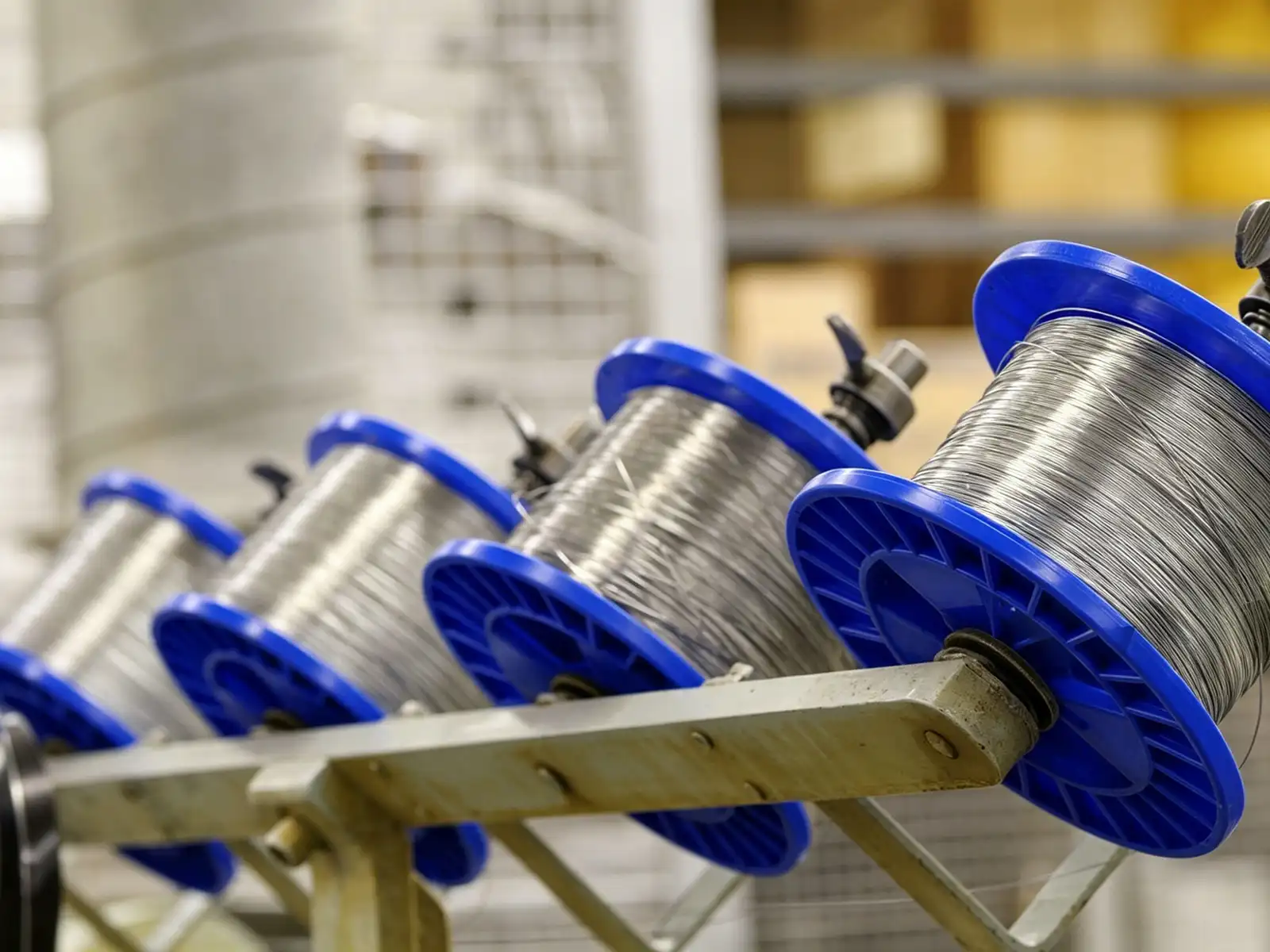
In the industrial material-selection chain, wire selection is often underestimated — it only attracts serious attention once wire breakage, corrosion, or dimensional deviation causes production losses. Gr2 (Grade 2 commercially pure titanium wire) is one of the most widely used grades of commercially pure titanium, with a titanium content of no less than 99.2%. Its stable mechanical properties and outstanding corrosion resistance have made it indispensable in the chemical, marine, medical, and electronics industries. This guide starts from the material itself, helping engineers and procurement decision-makers make more evidence-based material choices at the design stage, thereby extending component service life and lowering whole-life-cycle cost.
1. Core Properties of Gr2 Titanium Wire
(1) Purity and Composition Stability
Gr2 titanium wire has a titanium content of no less than 99.2%, with strict upper limits on all other elements: oxygen (O) ≤0.25%, iron (Fe) ≤0.30%, nitrogen (N) ≤0.03%, carbon (C) ≤0.08%, and hydrogen (H) ≤0.015%. This high-purity composition offers two key advantages: extremely small lot-to-lot compositional variation and highly repeatable mechanical properties, making it suitable for precision manufacturing scenarios that demand tight quality consistency. Control of the oxygen content is especially critical — oxygen is the primary interstitial strengthening element in commercially pure titanium, and even minor differences directly affect elongation and hardness.
(2) Graded Matching of Mechanical Properties
The table below shows the typical property ranges commonly used for engineering material selection; in actual supply, the measured values stated in the material certificate of compliance shall prevail.
Condition | Tensile Strength (MPa) | Yield Strength (MPa) | Elongation (%) | Hardness (HV) |
Annealed | 400~500 | 230~340 | 15~20 | 140~200 |
Half-hard | 480~620 | 350~460 | 8~12 | 180~240 |
Hard | 550~750 | 470~540 | 5~8 | 220~300 |
The annealed condition suits applications requiring extensive bending and forming; the half-hard condition performs consistently in elastic elements and structural fasteners; the hard condition is used for high-strength components subjected to short-term loading. Designers should select the corresponding heat-treatment condition based on the actual service conditions rather than uniformly pursuing maximum strength.
(3) Engineering Significance of Physical Properties
With a density of only 4.51 g/cm³ — roughly 57% of that of stainless steel — Gr2 titanium wire can significantly reduce structural weight under the same load-bearing conditions. Its electrical resistivity is about 0.57 μΩ·m, and its conductivity is lower than that of common conductors such as copper and aluminum, so it is not suitable for current-carrying components. It can be advantageous in structural-support applications where current conduction must be avoided or eddy-current effects reduced; however, it should be noted that titanium is not itself an electrical insulator, and an insulating layer should be provided where electrical isolation is required. Most critically, Gr2 titanium wire is a non-magnetic material (weakly paramagnetic), which gives it an irreplaceable competitive advantage in MRI equipment, precision instruments, and specialized electronic assemblies.
2. Suitability Assessment Under Different Service Conditions
(1) Durability in Corrosive Environments
Corrosive Medium | Gr2 Titanium Wire Performance | Comparison Reference |
Seawater and salt spray | Excellent, no pitting over extended periods | Superior to 316L stainless steel |
Organic acids and weak alkalis | Stable resistance | Superior to ordinary carbon steel |
Oxidizing acids (e.g., nitric acid, at ambient to moderate temperatures and common concentration ranges) | Strong resistance, approaching some high-nickel alloys | Assess against concentration and temperature |
Atmospheric environments | No rusting over extended periods | No coating protection required |
The dense TiO₂ oxide film that forms naturally on the titanium surface is the source of its corrosion resistance. This oxide film can self-repair in oxygen- or water-containing environments after damage, a property that gives it a service life far exceeding that of ordinary materials in chemical anti-corrosion equipment such as heat exchangers and electrolytic cells.
(2) Stability Boundaries Across the Temperature Range
Gr2 titanium wire operates stably across a wide temperature range from -253℃ (the liquid-hydrogen temperature regime) to 300℃ and is suitable for liquid-oxygen environments at approximately -183℃; it can withstand temperatures up to 450℃ for short periods. No brittle transition occurs at the low-temperature end, in sharp contrast to many iron-based alloys whose toughness drops sharply at low temperatures. Note that with long-term use above 300℃, the surface oxidation rate increases, and the effect of the oxide layer on contact surfaces should be evaluated.
(3) Biocompatibility and Suitability for Non-Magnetic Applications
Gr2 commercially pure titanium wire complies with ISO 5832-2, is non-toxic, non-allergenic, and biocompatible, and is suitable for the manufacture of surgical instruments, dental materials, and minimally invasive medical devices. In applications involving long-term contact with physiological environments, such as medical implants, its stable passive film reduces the risk of metal-ion release. In precision electronics manufacturing and magnetically sensitive environments, its non-magnetic character and stable surface condition make it suitable for sensor leads, high-frequency component supports, and precision shielding structures. For ultra-fine wire or specific precision applications, the diameter tolerance may need to be controlled within ±0.002mm, though not all wire used in electronics must meet this tolerance level.
3. Selection Logic for Dimensions and Surface Finishes
(1) Diameter Selection by Application
Gr2 titanium wire covers the full range from φ0.1mm to φ6.5mm, with custom sizes up to φ10.0mm. Ultra-fine wire (φ0.1–0.4mm) suits precision instruments, medical devices, and electronic components; common welding-wire sizes are φ0.8mm, 1.0mm, 1.2mm, 1.6mm, 2.0mm, 2.4mm, and 3.0mm; wire for structural parts and electrodes covers φ0.5mm to φ6.0mm. When selecting, the roundness-control capability should also be considered — the ovality of φ6.5mm product can be controlled within 0.15–0.20mm, well below the prevailing market level of 0.30mm.
(2) Process Implications of Delivery Condition
Straight wire (Straight Wire) is suitable for fixed-length cutting, automated feeding, and precision welding positioning; coil wire (Coil Wire) is supplied at 500m to 3000m per spool and suits automatic welding equipment with continuous wire feed or high-volume winding operations. The straightness of straight wire is controlled within 2mm/m, ensuring accurate weld alignment and a stable weld pool, which significantly affects the consistency of TIG and plasma welding quality.
(3) Functional Selection of Surface Finishes
Pickled surfaces suit applications requiring surface cleanliness but not gloss, such as chemical-piping welding materials; bright-drawn (Bright Drawing) surfaces are intended for medical devices and precision electronic structural parts, where stricter limits on surface-defect density are required; lubricant-coated surfaces are designed specifically for forging and die forming, effectively preventing die sticking and improving precision-forming accuracy. Anodized surfaces (e.g., silver-gray, light gold) meet the aesthetic requirements of consumer electronics and medical applications.
4. Quality Control and Certification System
(1) Quality Assurance Through the Production Process
The production process for Gr2 titanium wire covers: sponge-titanium raw-material preparation → vacuum melting (ingot) → blooming forging/hot rolling into wire rod → surface conditioning and inspection of the rod → multiple cold-drawing passes → staged stress-relief annealing → precision roller-die straightening (straightness controlled to product specification) → surface treatment → full-dimension inspection and sorting → in-line eddy-current nondestructive testing (off-line ultrasonic verification when necessary) → vacuum packaging. The entire line uses continuous, highly automated production and inspection equipment, reducing batch-to-batch variation caused by manual intervention and providing assurance of consistency for volume orders.
(2) Applicable Standards and Documentation
Standard Type | Standard Number | Applicable Scenario |
U.S. material standard | ASTM B863 | General requirements for titanium and titanium-alloy wire for industrial use |
U.S. medical implant material standard | ASTM F67 | Gr2 commercially pure titanium implant material |
International surgical implant standard | ISO 5832-2 | Wrought commercially pure titanium for surgical implants |
Gr2 commercially pure titanium wire for medical implant applications typically corresponds to ASTM F67 or ISO 5832-2; ASTM F136 applies to Ti-6Al-4V ELI and should not be applied to Gr2 commercially pure titanium wire.
EN 10204-3.1 is an inspection-document/material-certificate standard and is not listed among the material product standards in the table above. This report is signed by the manufacturer’s authorized inspection representative and includes heat-traceable measured chemical-composition and mechanical data; it carries legal-compliance significance but does not constitute third-party certification. When purchasing, explicitly require the supplier to provide a 3.1 report conforming to EN 10204-3.1, and verify the signatory and the heat number.
For procurements involving Japanese JIS or Russian GOST markets, require the supplier to provide the corresponding grade cross-reference and valid-edition certificates; it is not recommended to cite JIS H4630, GOST 19807, and the like directly as general standards for Gr2 wire.
(3) Engineering Significance of Key Inspection Items
Chemical-composition testing (spectroscopic analysis) confirms grade conformance; mechanical-property testing (tensile/yield/elongation) verifies the heat-treatment condition; diameter-tolerance and roundness inspection ensure assembly and forming accuracy; salt-spray testing (480h without corrosion) serves as a comparative reference for corrosion resistance but should not be equated directly with actual service life; fatigue-strength testing evaluates reliability under cyclic loading. These five items are the core inspection dimensions for a complete quality assessment of Gr2 titanium wire.
5. Design Recommendations for Ensuring Long-Term Performance
(1) Avoiding Common Material-Selection Mistakes at the Design Stage
One common mistake is to mix up Gr2 with Gr1 — Gr1 has higher purity and greater elongation, suiting extremely demanding forming scenarios, while Gr2 has higher strength and suits structural load-bearing. Another mistake is ignoring the upper service-temperature limit: long-term use of Gr2 titanium wire above 300℃ without protective measures accelerates surface oxidation and gradually degrades the base material. A further mistake is using hard-condition wire in applications requiring repeated bending, leading to premature fatigue fracture.
(2) Precautions When Joining Dissimilar Materials
Direct contact between titanium and aluminum, carbon steel, or copper creates a galvanic-corrosion risk; insulating shims or titanium-specific fasteners should be incorporated into the design. For welding, ERTi-2 should be selected as the matching filler for Gr2 titanium wire, and the shielding gas must be high-purity argon (≥99.999%), with proper back shielding to avoid oxidation discoloration of the weld and heat-affected zone; after welding, the color should remain silver-white or light gold.
(3) Long-Term Storage and Maintenance Management
Unused Gr2 titanium wire should be stored sealed and dry, avoiding prolonged contact with chloride-containing environments (e.g., ammonium chloride, hydrochloric-acid vapor), which can damage the passive film on the titanium surface. Coiled wire should be protected from high-temperature sun exposure, which accelerates aging of the lubricating coating. In-service components can be assessed for damage through periodic visual inspection and surface nondestructive testing, eliminating the need for frequent replacement and truly realizing the design intent of “low maintenance, long service life.”
6. Conclusion
Selecting Gr2 titanium wire is not merely a material decision but a comprehensive engineering judgment encompassing service conditions, service life, and cost. From matching purity and mechanical condition to coordinating dimensional tolerances and surface finish, every detail influences the final long-term performance. A clear selection logic and rigorous quality documentation are the key path to translating material advantages into product competitiveness.
FAQ
(1) Q1: What is the most critical difference between Gr2 and Gr1 titanium wire in practical applications?
Gr2 has a higher oxygen-content limit (≤0.25%) than Gr1, so its tensile strength is higher, making it suitable for structural load-bearing and welding applications; Gr1 offers greater elongation and suits extreme cold-forming scenarios. Selection should weigh formability requirements against loading needs rather than comparing purity alone.
(2) Q2: Can Gr2 titanium wire fully replace high-nickel alloys such as Hastelloy in chemical corrosive environments?
In oxidizing acids, organic acids, seawater, and similar media, Gr2 titanium wire offers corrosion resistance close to or even better than some nickel-based alloys, while being lighter and lower in cost. However, in strongly reducing acids (e.g., hydrochloric acid, dilute sulfuric acid), Gr2 has limited tolerance, and the specific medium concentration and temperature conditions must be evaluated before deciding.
(3) Q3: What is the essential difference between a 3.1 material certificate (MTR) and an ordinary quality certificate when purchasing Gr2 titanium wire?
A 3.1 report (conforming to EN 10204-3.1) must be signed by the manufacturer’s authorized inspection representative and includes heat-traceable measured chemical-composition and mechanical data, giving it legal-compliance significance; an ordinary quality certificate is merely a company statement without independent verification and cannot satisfy the entry requirements of European and American high-end manufacturing and medical-device industries.
Contact Us
To purchase high-quality Gr2 commercially pure titanium wire, please contact Titanium Valley — a professional titanium wire manufacturer, supplier, and factory providing 3.1 material certificates to ASTM B863. Feel free to contact us at any time at sales@titaniumvalleys.com
For inquiries and further information, custom sizes and volume supply are supported.
References
- Zhang Xiyan, Zhao Yongqing, Bai Chenguang. Titanium Alloys and Their Applications [M]. Beijing: Chemical Industry Press, 2005.
- Wang Jinyou, Ge Zhiming, Zhou Yanbang. Titanium Alloys and Their Applications [M]. Beijing: Chemical Industry Press, 2005.
- Zhao Yongqing, Ge Peng, Xin Shewei. Research status and development trends of titanium and titanium alloys [J]. Materials China, 2010, 29(5-6): 1-6.
- Welding Institution of Chinese Mechanical Engineering Society. Welding Handbook (Vol. 2): Welding of Materials [M]. 3rd ed. Beijing: China Machine Press, 2014.
- Zhu Zhishou. Titanium Alloys for Aerospace Applications [M]. Beijing: National Defense Industry Press, 2010.