
How Is the Fatigue Performance of Gr1 Titanium Wire?
- Gr1 Titanium Wire
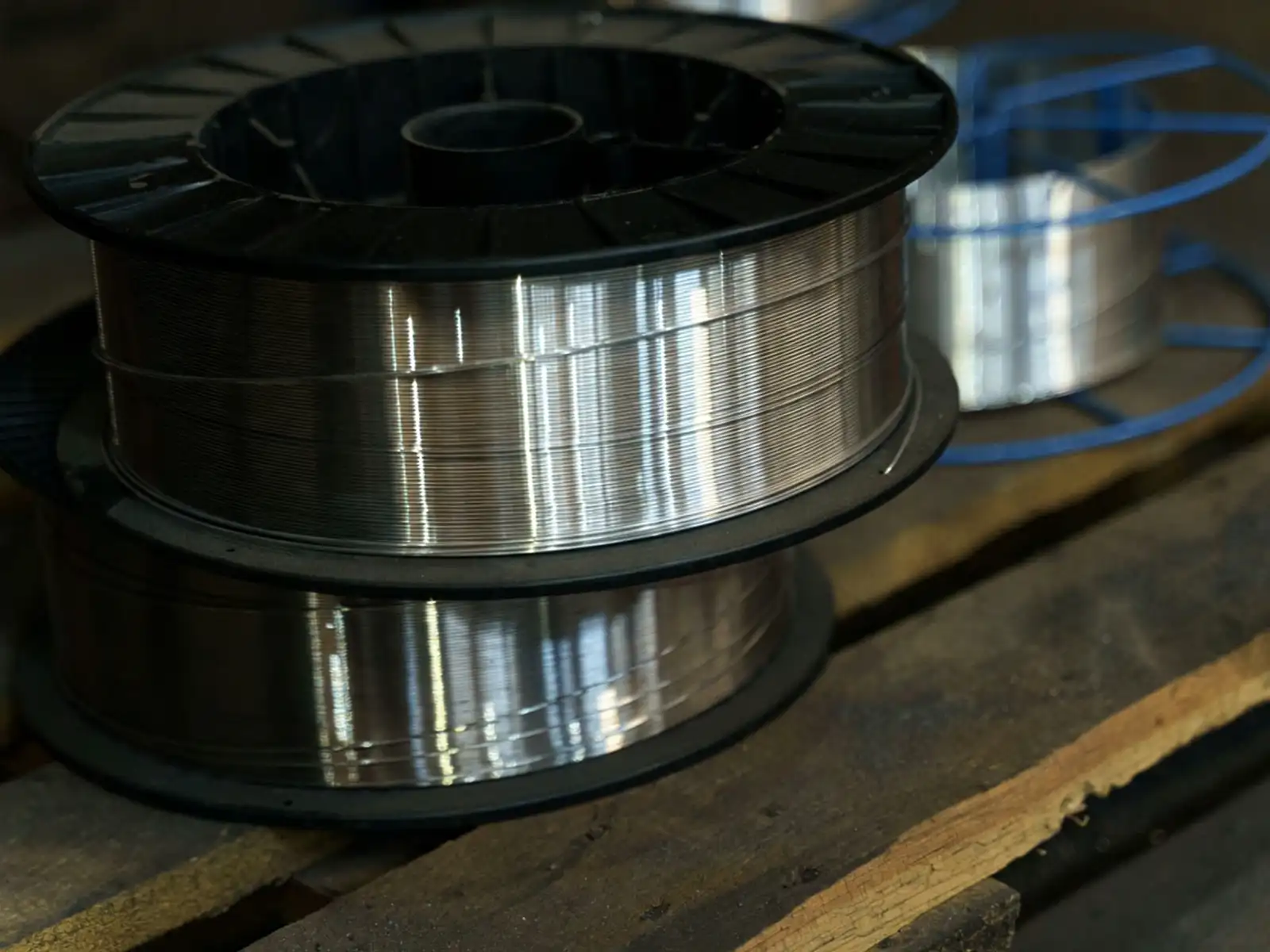
Annealed Gr1 commercially pure titanium wire typically exhibits the following mechanical properties: tensile strength ≥240 MPa, yield strength ≥170 MPa, and elongation ≥24%. Its room-temperature rotating-bending fatigue limit can generally be estimated at 45%–55% of the tensile strength, corresponding to approximately 108–132 MPa in the annealed condition. If the surface is bright and the residual compressive stress is well controlled, the fatigue limit may exceed this range, but a “340 MPa tensile strength” should not be used as the basis for estimation.
In ordinary air, the absolute fatigue limit of 304 stainless steel is generally higher than that of Gr1 titanium wire; however, when cyclic stress is superimposed on corrosive media such as seawater and chloride ions, the fatigue strength retention of Gr1 titanium wire is markedly superior to that of most stainless steel fine wires. After density normalization, the specific fatigue strength of Gr1 titanium wire approaches that of 304 stainless steel, making it more meaningful in engineering material selection than a simple comparison of absolute fatigue limits. This article analyzes the fatigue performance and engineering applicability of Gr1 titanium wire from the perspectives of annealed baseline data, microstructure, typical service conditions, and processing techniques, while avoiding over-extrapolation of a single indicator such as high elongation or corrosion resistance into fatigue life.
1. Core Fatigue Performance Indicators and the Gr1 Annealed Baseline
(1) Fatigue Limit and Estimation Method for Gr1 Annealed Wire
The fatigue limit is the maximum stress amplitude at which a material does not fracture under a specified stress ratio and number of cycles. For annealed Gr1 commercially pure titanium wire, the room-temperature rotating-bending fatigue limit is typically about 45%–55% of the tensile strength. Based on a tensile strength of ≥240 MPa, the fatigue limit is approximately 108–132 MPa. It should be noted that although 304 stainless steel has a tensile strength of about 520 MPa, its industrial rotating-bending fatigue limit is commonly estimated in the 200–240 MPa range, which corresponds to about 0.38–0.46 of the tensile strength. The ratio of fatigue strength to tensile strength can vary with alloy system, surface condition, specimen size, and test frequency, so it cannot be extrapolated using a single coefficient.
(2) Microstructural and Compositional Basis of Fatigue Resistance in Gr1 Commercially Pure Titanium
Gr1 commercially pure titanium has a titanium content of ≥99.5%, with oxygen ≤0.18% and iron ≤0.20%. The high purity results in relatively little impurity segregation at grain boundaries, reducing the probability of preferential fatigue crack initiation along grain boundaries. In the annealed condition, Gr1 has a single-phase α hexagonal close-packed structure with good microstructural uniformity and low local stress concentration. These factors give Gr1 titanium wire a long crack initiation life under low- and medium-stress cyclic loading. However, the absolute fatigue strength of commercially pure titanium remains limited by its relatively low tensile strength, so “high purity” cannot substitute for insufficient strength.
(3) Cross-Comparison with Common Metal Fine Wires
Material | Density (g/cm³) | Tensile Strength (MPa) | Estimated Fatigue Limit (MPa) | Corrosion Resistance |
Gr1 titanium wire | 4.51 | ≥240 | ~108–132 | Excellent, especially resistant to chlorides |
304 stainless steel wire | 7.93 | ~520 | ~200–240 | Good |
Pure copper wire | 8.96 | ~220 | ~60–80 | Fair |
Commercially pure aluminum wire | 2.70 | ~80 | ~30–40 | Weak |
In terms of specific fatigue strength:
- Gr1 titanium wire: approximately 24–29 MPa·cm³/g;
- 304 stainless steel wire: approximately 25–30 MPa·cm³/g.
The two are comparable in air, but Gr1 titanium wire exhibits a higher fatigue strength retention under corrosion fatigue conditions, which is a significant advantage in marine engineering, medical, and chemical applications.
2. Effects of Microstructure, Processing, and Inclusions on Fatigue Behavior
(1) Cold-Drawing Fibrous Structure and Dislocation Density
Gr1 commercially pure titanium has a single-phase α structure (HCP) at room temperature. Multi-pass cold drawing does not truly refine the grains into equiaxed fine grains; instead, it elongates the grains along the axial direction, forming a fibrous structure. This fibrous structure introduces a high dislocation density, improving the axial yield strength and the resistance to fatigue crack initiation, but it simultaneously reduces ductility. Therefore, a cold-drawn structure should not be described as “obvious grain refinement with moderate dislocation density.” A more accurate statement is that cold drawing fibrousizes the grains along the deformation direction and significantly increases the dislocation density; subsequent annealing can partially restore the equiaxed structure and reduce the dislocation density.
(2) Texture and Anisotropy
Cold drawing imparts an axial texture to Gr1 titanium wire, resulting in differences in mechanical and fatigue properties between the axial and radial directions. This anisotropy must be considered in applications such as springs, woven mesh, and sensor leads that are subjected to multi-directional or bending loads. Annealing can reduce the strength of the cold-drawn texture and improve anisotropy, but some annealing texture may persist after heat treatment, so full recovery of isotropy cannot be guaranteed. In engineering practice, confirmation should be made through texture testing or mechanical property tests in different orientations.
(3) Melting Process and Inclusion Control
Commercially pure titanium is typically produced by vacuum arc remelting (VAR) or cold-hearth melting, rather than “VM” in the vacuum induction melting sense. VAR and cold-hearth melting can significantly reduce gas content and minimize nitride, oxide, and other inclusions, but they cannot “completely eliminate” them. High-quality VAR or cold-hearth melted billets, combined with proper forging and rolling breakdown, help reduce the density of internal defects and improve batch-to-batch consistency of fatigue performance. However, inter-batch scatter is still influenced by raw materials, electrode preparation, melting parameters, and subsequent processing, and must be evaluated with actual test data rather than by making absolute commitments based on the melting process alone.
3. Fatigue Performance of Gr1 Titanium Wire under Typical Service Conditions
(1) Corrosion Fatigue: Salt Spray, Seawater, and Acidic Environments
Corrosion fatigue is a common failure mode in marine engineering and chemical process equipment. The fatigue limit of plain carbon steel or low-alloy steel in seawater can decrease by 50%–70% compared with that in air. Gr1 titanium wire, relying on its dense surface TiO₂ passivation film, exhibits a high fatigue strength retention in seawater and chloride environments. The data in the table below are qualitative trends summarized from the literature and engineering experience, intended for comparison only and not to be used directly as design allowable values. Actual fatigue performance is also affected by stress ratio, frequency, specimen surface condition, solution flow velocity, oxygen content, and the number of test cycles.
Service Environment | 304 Stainless Steel Fatigue Strength Retention | Gr1 Titanium Wire Fatigue Strength Retention |
Air (baseline) | 100% | 100% |
3.5% NaCl salt water | ~55%–65% | ~88%–95% |
Dilute hydrochloric acid, pH 3 | ~30%–45% | ~60%–75% |
High-temperature steam, 200℃ | ~70%–80% | ~85%–92% |
It should be emphasized that commercially pure titanium is not particularly corrosion resistant in reducing acids such as dilute hydrochloric acid, and its corrosion fatigue retention should not be overestimated. The retention values given for Gr1 in dilute hydrochloric acid in the table above have been provided on a conservative basis.
(2) Low-Temperature Fatigue
Gr1 titanium wire generally does not exhibit the pronounced ductile-to-brittle transition characteristic of body-centered cubic steels at liquid hydrogen temperature (-253℃). Describing Gr1 as having an “extremely low ductile-to-brittle transition temperature” is not rigorous, because this term is mainly used to describe the low-temperature embrittlement behavior of certain steels. For Gr1 commercially pure titanium, ductility decreases relatively gradually at low temperatures, and fatigue life is generally no lower than at room temperature. However, engineering applications still need to consider low-temperature contraction, connection structures, media compatibility, and stress concentration.
(3) High-Frequency Vibration Fatigue
Gr1 titanium wire has low internal friction, and hysteretic heat generation is typically small, which helps reduce the risk of thermal softening under high-frequency vibration. However, temperature rise in ultrasonic fatigue is governed jointly by amplitude, frequency, heat conduction, heat dissipation area, and cooling conditions, so it cannot be inferred from low internal friction alone that “failure due to cyclic heating will not occur.” In ultrasonic or high-frequency fatigue testing, the stress amplitude and duty cycle should be controlled, and thermal stability should be assessed by measuring the actual specimen temperature.
4. Effects of Surface Condition and Processing Techniques on Fatigue Life
(1) Pickling, Bright Drawing, and Residual Stress
Pickling removes scale and surface contamination layers and reduces surface roughness, but it cannot remove microcracks. If drawing or bending cracks exist on the surface, the pickling solution may attack along the cracks, and hydrogen introduced during pickling may be absorbed into the material, increasing the risk of hydrogen embrittlement. Therefore, a dehydrogenation anneal or mechanical polishing should be scheduled after pickling as needed.
Bright drawing and roller-die cold drawing can produce favorable surface integrity and residual compressive stress with appropriate die angles, lubrication, and reduction ratios, but the residual stress state is not always compressive. The actual stress state must be measured by the electrolytic polishing layer-removal method or X-ray diffraction, and cannot be generalized. Indicators such as surface gray-spot grade and discoloration level can be specified in the technical agreement between the supplier and the buyer, but they lack unified, quantified public standards and should not be directly and precisely correlated with fatigue life.
(2) Selection of Annealed vs. Work-Hardened Conditions
The hardness of annealed Gr1 titanium wire is commonly about HV 120–160, with the specific value depending on the test load and standard. In the annealed condition, elongation is ≥24%, ductility is at its best, and crack initiation life is long, but the absolute yield strength is low. Half-hard and hard Gr1 titanium wire achieve a higher tensile strength and an increased fatigue crack initiation threshold through cold working, but ductility and fracture toughness decrease. The effect of different heat-treatment conditions on fatigue performance is not simply “harder is better”; the choice should be made by considering the cyclic stress amplitude, mean stress, notch sensitivity, and installation process together.
(3) Dimensional Accuracy, Straightness, and Bending Fatigue
The straightness of Gr1 titanium wire can generally be controlled to ≤2 mm/1000 mm. In applications with alternating bending loads, initial curvature is superimposed on the working stress and creates an additional bending moment, accelerating fatigue failure. Dimensional tolerances should be specified separately for each diameter range. For fine wire, for example diameters of 0.1–0.5 mm, the tolerance can be tightened to ±0.01 mm; for diameters of 0.5–1.0 mm, it can be controlled to ±0.02 mm; and for diameters of 1.0–3.0 mm, it can be ±0.03 mm. A uniform ±0.2 mm tolerance should not be applied across all specifications.
5. Fatigue Prevention and Material Selection Recommendations in Engineering Applications
(1) Medical Devices and Surgical Implants
In surgical implants and minimally invasive instruments, Gr1 titanium wire may be subjected to substantial physiological cyclic loading. Surface roughness and inclusions are key factors affecting fatigue life. A bright surface with Ra≤0.4 μm and strict inclusion control can reduce the risk of fatigue crack initiation. Commercially pure titanium wire for surgical implants should be specified to ASTM F67 or ISO 5832-2, and GB/T 13810-2017 may also be referenced. ASTM F136 applies to Ti-6Al-4V ELI and does not apply to Gr1 commercially pure titanium.
(2) Corrosion Fatigue in Chemical Process Equipment
Gr1 titanium wire generally has good corrosion resistance in neutral, alkaline, and oxidizing environments, but it can corrode noticeably in reducing acids such as hydrochloric and sulfuric acid, as well as in some organic acids such as oxalic acid and hot formic acid. The medium type, concentration, and temperature must be limited. At temperatures up to approximately 200–250℃, Gr1 titanium wire typically has good stability; long-term exposure above 300℃ can cause surface oxidation and a decrease in strength, so it should not be simply assumed that “long-term service stability is maintained from -253℃ to 300℃.”
(3) Material Selection Reference for Precision Springs, Sensor Leads, and Similar Components
Application Type | Recommended Heat-Treatment Condition | Recommended Surface Condition | Key Control Indicators |
Precision springs | Half-hard Y2 | Bright drawn, Ra≤0.4 μm | Straightness, dimensional tolerance, residual stress |
Sensor leads | Annealed M | Pickled, Ra≤0.8 μm | Elongation, minimum bending radius |
Welding filler wire | Annealed M | Bright or pickled | Wire diameter tolerance, cleanliness, feed stability |
Marine structural lashing bands | Half-hard Y2 | Pickled | Corrosion resistance, fatigue retention |
Medical implant elastic elements | Annealed M | Bright, Ra≤0.4 μm | Biocompatibility, inclusion control |
6. Conclusion
Gr1 titanium wire’s fatigue performance must be evaluated comprehensively in light of strength, surface condition, loading type, and service environment: the annealed tensile strength is typically ≥240 MPa, the room-temperature rotating-bending fatigue limit is approximately 108–132 MPa, and the absolute values are lower than those of 304 stainless steel wire, but the density-normalized specific fatigue strength is close to that of 304 stainless steel. Its outstanding advantage is a markedly higher fatigue strength retention in corrosive media such as seawater and chloride ions, making it more valuable in marine engineering, medical devices, and chemical process equipment. At the same time, one should avoid estimating the fatigue limit from a “340 MPa tensile strength,” simplistically describing a cold-drawn structure as grain refinement, or directly extrapolating high elongation and corrosion resistance into fatigue life. Actual material selection and design should be based on service-condition simulation tests and authoritative test data, and the trade-offs among strength, ductility, and fatigue life should be balanced according to the annealed, half-hard, or hard condition.
FAQ
(1) Q1: What is the difference in fatigue performance between Gr1 and Gr2 titanium wire?
Gr1 has a lower oxygen content and generally better ductility and fatigue crack initiation life; Gr2 has slightly higher strength, and its absolute fatigue limit may be slightly higher. The fatigue performance difference between the two is smaller than the influence of the corrosive environment and surface condition, so material selection should account for the stress level, processing condition, and media conditions together.
(2) Q2: Will Gr1 titanium wire fracture in repeated bending applications?
Whether fracture occurs depends on the bending radius, surface quality, stress amplitude, and mean stress. High elongation helps suppress crack initiation but cannot alone guarantee bending fatigue life. As a general rule, the bending radius should be no less than 10 times the wire diameter, and surface scratches should be avoided.
(3) Q3: How can the fatigue reliability of Gr1 titanium wire be verified through test reports?
Suppliers should be required to provide a material certificate conforming to GB/T 3623 or EN 10204-3.1, and the chemical composition, tensile properties, and heat/lot traceability information should be checked. When necessary, rotating-bending fatigue testing per GB/T 4337 should be conducted rather than judging fatigue capability solely on the basis of the grade designation or a “high purity” description.
Contact Us
Looking for a reliable manufacturer, supplier, or processing service provider for Gr1 titanium wire (Grade 1 commercially pure titanium wire, UNS R50250)? A professional titanium materials company with full-process capability from vacuum arc remelting (VAR) or cold-hearth melting, forging breakdown, multi-pass cold drawing, and annealing to bright drawing/pickling and precision sizing can support custom specifications to standards such as GB/T 3623, ASTM F67, and ISO 5832-2, covering supply conditions including annealed (M) and half-hard (Y2), with wire diameter tolerances controlled in segments of 0.1–0.5 mm, 0.5–1.0 mm, and 1.0–3.0 mm. Material certificates (conforming to EN 10204-3.1), chemical composition and tensile property reports, and straightness and surface roughness inspection data are available, and rotating-bending fatigue testing per GB/T 4337 is supported for verification. Please contact us at: sales@titaniumvalleys.com
References
- Zhang Xiyan, Zhao Yongqing, Bai Chenguang. Titanium Alloys and Their Applications [M]. Beijing: Chemical Industry Press, 2005.
- Zhao Yongqing, Hong Quan, Ge Peng. Metallographic Atlas of Titanium and Titanium Alloys [M]. Beijing: Metallurgical Industry Press, 2011.
- State Administration for Market Regulation, Standardization Administration of China. GB/T 3623-2022 Titanium and Titanium Alloy Wire [S]. Beijing: Standards Press of China, 2022.
- State Administration for Market Regulation, Standardization Administration of China. GB/T 4337-2015 Metallic Materials — Fatigue Testing — Rotating Bar Bending Method [S]. Beijing: Standards Press of China, 2015.
- Suresh S. Fatigue of Materials [M]. Wang Zhongguang et al., trans. Beijing: National Defense Industry Press, 1993.
- State Administration for Market Regulation, Standardization Administration of China. GB/T 228.1-2021 Metallic Materials — Tensile Testing — Part 1: Method of Test at Room Temperature [S]. Beijing: Standards Press of China, 2021.