
How Is Nickel 200 Bar Used in Industrial Manufacturing?
- Nickel 200 Bar
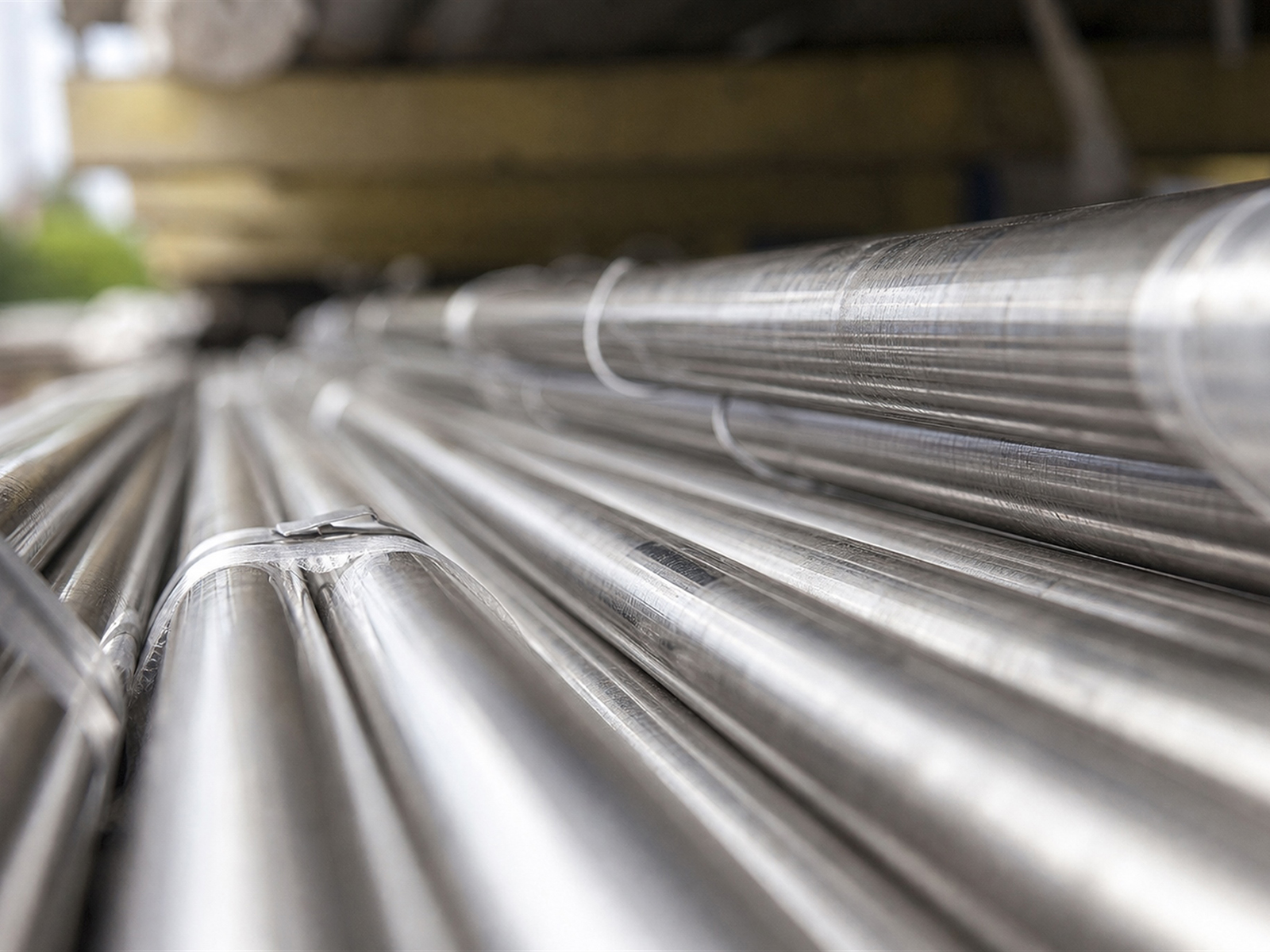
In manufacturing sectors such as chemical equipment, electronic components, marine engineering, and aerospace, material selection has a significant impact on equipment service life and operating stability. Ni200 (UNS N02200) commercially pure nickel bar, with a standard minimum guaranteed Ni+Co content of ≥99.0%, offers good resistance to alkali corrosion, excellent electrical and thermal conductivity, and favorable formability, making it an important candidate material for certain alkaline and low-to-moderate temperature service conditions. In applications such as chlor-alkali electrolysis electrode plate components and precision electronic conductive elements, Ni200 bar provides stable performance, helping to extend equipment life and control maintenance costs. It should be noted that Ni200 is not a “one-size-fits-all” material; its performance boundaries should be clearly understood during material selection.
1. Core Material Properties and Composition Advantages of Ni200 Pure Nickel Bar
(1) High-Purity Nickel Content Delivers Stable Baseline Performance
Under ASTM B160, the minimum guaranteed nickel (Ni+Co) content of Ni200 is ≥99.0%, with the typical content of commercially pure nickel commonly reaching approximately 99.5%–99.6%; iron ≤0.40%, carbon ≤0.15%, sulfur ≤0.01% [1, 2]. The lower impurity content supports consistency and reproducibility of material properties. It should be noted that pure nickel can still release trace ions or particles, so for applications with extremely stringent medium purity requirements, it is advisable to further control risk through validation or surface treatment; it should not be described as “completely eliminating contamination risk.”
(2) Alkali Corrosion Resistance: A Core Competitive Advantage in the Chlor-Alkali Industry
Within the operating temperatures and concentrations of NaOH/KOH commonly encountered in the chlor-alkali industry, Ni200 exhibits good corrosion resistance. Ordinary carbon steel or stainless steel may be subject to intergranular corrosion or stress corrosion cracking in certain high-temperature concentrated alkali service conditions, whereas Ni200 bar can typically provide long-term stable service in such media, helping to reduce the safety hazards and unplanned shutdowns caused by corrosion-related leakage [3].
(3) Combined Assessment of Electrical, Thermal, and Magnetic Properties
Ni200 offers good electrical and thermal conductivity. It should be noted, however, that Ni200 is a ferromagnetic material at room temperature, with a Curie temperature of approximately 358℃, and it cannot be selected as a non-magnetic material. For magnetic-sensitive environments, actual measurement and evaluation should be performed in conjunction with service temperature and processing condition; “non-magnetic in the annealed condition” cannot be used as a basis for material selection.
Table 1: Chemical Composition of Ni200 (UNS N02200)
Element | Standard Limit (ASTM B160) | Typical Value (Reference Only, Not an Acceptance Limit) |
Ni + Co | ≥99.0% | 99.5–99.6% |
Fe (Iron) | ≤0.40% | ≈0.10–0.20% |
C (Carbon) | ≤0.15% | ≈0.05% |
Mn (Manganese) | ≤0.35% | ≈0.15% |
Si (Silicon) | ≤0.35% | ≈0.10% |
Cu (Copper) | ≤0.25% | ≈0.10% |
S (Sulfur) | ≤0.01% | ≈0.003% |
> Data reference: ASTM B160, with grade cross-reference to GB/T 5235 [1].
2. Primary Industrial Manufacturing Applications of Ni200 Bar
(1) Chemical and Chlor-Alkali Industry: A Core Application for Alkali Corrosion Resistance
In chlor-alkali production, components such as electrolytic cells, heating tubes, heat exchangers, and valve bodies frequently contact NaOH/KOH alkaline media. Within the temperature and concentration ranges commonly encountered in the chlor-alkali industry, electrode plates and heating tube components made from Ni200 bar can reduce the frequency of unplanned shutdowns and spare-part replacements caused by alkali corrosion. High-purity nickel releases relatively few harmful metal ions in alkaline media, which helps control metal contamination of industrial chemicals, though it should not be described as absolutely contaminant-free.
(2) Electronics and Semiconductor Industry: A Reliable Source of High-Purity Conductive Components
With its typical nickel content of approximately 99.5% and stable electrical characteristics, Ni200 can be used in resistance heating elements, thermocouple protection sheaths, electron tube anodes, and grid support structures, among other components. For magnetic-sensitive applications, selection should be evaluated based on Ni200’s ferromagnetic characteristics and the actual temperature and magnetic field requirements; it cannot simply be treated as a non-magnetic material.
(3) Limited Applications in Marine Engineering and Food Processing
In marine engineering applications such as desalination systems, Ni200 offers a certain degree of resistance to general chloride corrosion and can be used for corrosion-resistant parts under low loads and low flow velocities; however, pump shafts, valves, and load-bearing fasteners are typically better suited to higher-strength nickel-based alloys such as Monel K-500 and Alloy 625. In food processing, Ni200 provides some resistance to weak organic acids such as acetic acid and citric acid and can be used for molds or equipment components that do not have prolonged direct contact with food; it is not recommended for generalized use in prolonged contact with food or in medical devices, as the release of nickel ions and sensitization risks must be assessed.
Table 2: Primary Application Scenarios of Ni200 Bar and Associated Performance
Application Area | Specific Components | Key Properties Utilized |
Chemical/Chlor-Alkali | Electrode plates, heating tubes, heat exchangers | Corrosion resistance in alkaline media; relatively low impurity release |
Electronics/Semiconductor | Resistance heating elements, thermocouple protection sheaths, electron tube supports | High electrical/thermal conductivity, high purity; magnetic properties must be evaluated by service condition |
Marine Engineering | Low-load corrosion-resistant parts (Ni200 not recommended for load-bearing parts) | Resistance to general chloride corrosion; Monel K-500/625 recommended for load-bearing parts |
Food/Pharmaceutical | Equipment parts without prolonged direct contact with food or the human body | Resistance to weak organic acids; nickel release and sensitization risks must be assessed |
Automotive/Heat Treatment Equipment | Not recommended for exhaust systems or high-temperature sulfur-bearing furnace fixtures | Sulfur embrittlement risk in high-temperature sulfur-bearing atmospheres; exhaust systems may contain sulfur or oxidizing atmospheres |
Precision Machinery | Sensor shafts, non-standard automation wear parts | High dimensional accuracy, good ductility |
3. Production Process and Supply Conditions of Ni200 Bar
(1) Process Quality Control from Melting to Finishing
The typical production process for Ni200 bar is: raw material preparation → melting (options include vacuum induction melting, vacuum arc remelting, or electroslag remelting; if VAR is used, consumable electrodes must first be prepared) → forging and billet preparation → rolling → heat treatment → finishing → dimensional and non-destructive testing (per standard or purchase agreement) → final inspection before shipment. ASTM B160 does not mandate the use of VAR; Ni200 may also be produced by other melting processes. VAR helps reduce metallurgical defects such as porosity and segregation, but it is not the only process permitted by the standard.
(2) Performance Differences Among Supply Conditions and Their Applicable Scenarios
Ni200 bar is typically supplied in the hot-worked, annealed, and cold-worked conditions. The annealed condition offers good ductility and is suitable for applications requiring further cold forming; the cold-worked condition offers higher strength and is suited to structural components with higher mechanical load requirements; the hot-worked condition is commonly used for large-size billets or forgings. It should be noted that Ni200 is a ferromagnetic material and the annealed condition cannot be described as “non-magnetic” or as having the “lowest permeability”; applications with magnetic property requirements should undergo actual measurement and evaluation.
(3) Dimensional Sizes and Custom Processing Capabilities
Ni200 bar is available in common forms such as round, square, and hexagonal bar, produced through processes including hot rolling, forging, and cold drawing to yield a variety of cross-sections and standard sizes. The actual supply range is constrained by equipment capability, billet size, and standards; there is no unconditional “full-size coverage.” Control in accordance with ASTM B160 and the applicable dimensional tolerance agreements helps ensure assembly precision in batch production [2].
4. Material Selection Boundaries and Usage Limitations of Ni200 Bar
(1) Corrosion Risk in High-Temperature Oxidizing Acid Environments
Ni200 exhibits poor corrosion resistance in strongly oxidizing acid media such as nitric acid at elevated temperatures and concentrations and should not be used directly in such environments. The specific temperature and concentration boundaries should be determined from corrosion data or testing; an unconditional “high-temperature” suitability conclusion cannot be given. Compared with highly alloyed nickel-based alloys (such as the Hastelloy C series), there is a significant gap, and purchasers must accurately identify the oxidation-reduction nature of the media.
(2) Sulfur Embrittlement Failure Risk in High-Temperature Sulfur-Bearing Atmospheres
When the operating temperature exceeds 315℃ and the environment contains sulfides, Ni200 is highly susceptible to sulfur embrittlement failure, resulting in a rapid deterioration of mechanical properties. This characteristic requires strict evaluation of operating temperature and sulfur content in sulfur-bearing service conditions in the oil and gas industry to avoid premature material failure.
(3) Pitting Risk in Strongly Oxidizing Chloride Salt Environments
Although Ni200 offers good resistance to general chlorides, pitting can potentially occur on the material surface in strongly oxidizing chloride salt environments (such as hot sodium hypochlorite solutions). Dedicated corrosion evaluation testing is recommended in such media, or consideration should be given to higher-grade nickel-based alloys.
Table 3: Suitable and Unsuitable Service Conditions for Ni200 Bar
Service Condition | Suitability | Remarks |
Alkaline solutions (NaOH/KOH) | ✅ Recommended | Temperature, concentration, and flow velocity must be limited; applicable to typical chlor-alkali service |
Neutral/weakly reducing chemical media | ✅ Suitable | Good corrosion resistance |
Low-temperature service | ✅ Suitable | No low-temperature embrittlement transition |
Strongly oxidizing acids such as nitric acid at elevated temperature/concentration | ❌ Not Recommended | Insufficient corrosion resistance; temperature and concentration limits must be defined |
High-temperature sulfur-bearing atmospheres (>315℃) | ❌ Not Recommended | Sulfur embrittlement failure risk |
Strongly oxidizing chloride salts (high temperature) | ⚠️ Use with Caution | Pitting risk must be assessed; dedicated corrosion testing required |
5. How Industrial Manufacturers Can Scientifically Evaluate and Procure Ni200 Bar
(1) Key Quality Verification Dimensions: Standards, Certifications, and Testing
A high-quality Ni200 bar supplier should be able to provide material test certificates (MTC) conforming to ASTM B160 and have chemical composition analysis and mechanical property test data. Whether NDT records are provided by default for each batch should distinguish between standard default items and additional purchaser requirements; if NDT is required, it is recommended to specify it in the contract. Independent third-party certification (such as ISO systems) can serve as a reference for a supplier’s quality control capability [2].
(2) Matching Supply Specifications and Communicating Customization Requirements
Different service conditions impose varying requirements on bar dimensional accuracy, surface condition, and heat treatment condition. Precision sensor shaft components may require ground surfaces and strict roundness control, while electrode plates place greater emphasis on resistivity stability. Before placing an order, it is recommended to communicate in detail with the supplier regarding service condition parameters, machining allowance requirements, and subsequent welding or forming processes to determine the appropriate combination of size and condition.
(3) Long-Term Cooperation and Batch Supply Stability Assessment
For continuous-production industries such as chemical and electronics manufacturing, batch-to-batch stability of bar supply directly affects production line continuity. It is recommended to prioritize specialized suppliers with complete in-house capabilities across melting, forging/rolling, heat treatment, and finishing in order to control material consistency from the source and reduce the risk of quality variation associated with multi-level subcontracting.
6. Conclusion
Ni200 pure nickel bar offers clear application value in the chemical, electronics, and selected precision manufacturing sectors, thanks to its high-purity nickel content, good corrosion resistance in alkaline and certain neutral/reducing media, and excellent electrical and thermal conductivity. Its ferromagnetic behavior and usage boundaries in high-temperature sulfur-bearing and strongly oxidizing acid environments must also be kept in mind. Accurately understanding both the performance advantages and the limitations is the key to rational material selection, extending equipment service life, and reducing costs.
FAQ
(1) Q1: What Is the Fundamental Difference Between Ni200 Bar and Ni201 Bar, and How Should They Be Chosen for Industrial Applications?
Ni201 (UNS N02201) is the low-carbon version of Ni200, with a carbon content of ≤0.02%, primarily used for high-temperature applications above 315℃ to reduce embrittlement or loss of ductility caused by carbon precipitating as graphite along grain boundaries at high temperatures. Ni200 is better suited to ambient-to-moderate temperature service, while Ni201 is appropriate for applications where the effects of high-temperature carbon precipitation must be considered.
(2) Q2: When Procuring Ni200 Bar, How Should One Choose Between the Annealed and Cold-Worked Conditions?
Annealed Ni200 offers good ductility and is suitable for subsequent cold forming; the cold-worked condition provides higher strength and is suited to structural parts with higher mechanical loads. Note that Ni200 is a ferromagnetic material at room temperature, and “non-magnetic in the annealed condition” or “lowest permeability” cannot be used as the basis for material selection; applications sensitive to magnetic properties should be evaluated by actual measurement in combination with service temperature and condition.
(3) Q3: Can Ni200 Bar Be Welded Directly to Other Metal Materials, and Is the Post-Weld Performance Stable and Reliable?
Ni200 offers good weldability and supports processes such as TIG, MIG, and resistance welding. Matched pure nickel filler metals (such as ERNi-1) are recommended to ensure weld metal composition consistency. Post-weld joints typically meet requirements, but for demanding service conditions, welding procedure qualification and necessary post-weld stress relief are recommended.
7. About Titanium Valley
Baoji Titanium Valley Titanium-Nickel-Zirconium Materials Precision Processing Co., Ltd. (Titanium Valley) is a professional producer of high-purity nickel bar (Ni200 Rod Manufacturer / Supplier / Factory) with full-process production capability from melting to finishing and delivery. Products are manufactured to the ASTM B160 international standard and are available in custom sizes for batch supply. Welcome to contact us: sales@titaniumvalleys.com
References
- China National Technical Committee on Nonferrous Metals Standardization. GB/T 5235—2007 Wrought nickel and nickel alloys — Chemical composition and forms of wrought products [S]. Beijing: Standards Press of China.
- China National Technical Committee on Nonferrous Metals Standardization. GB/T 4435—2010 Nickel and nickel alloy bars [S]. Beijing: Standards Press of China.
- Chinese Society for Corrosion and Protection. Handbook of Corrosion and Protection [M]. 2nd ed. Beijing: Chemical Industry Press, 2008.
- Huang Boyun, Li Chenggong, Shi Likai, et al. China Materials Engineering Canon, Vol. 4: Nonferrous Metals Materials Engineering (I) [M]. Beijing: Chemical Industry Press, 2006.