
How chemically stable is Gr5 titanium bar in different chemical solutions?
- Gr5 Titanium Bar
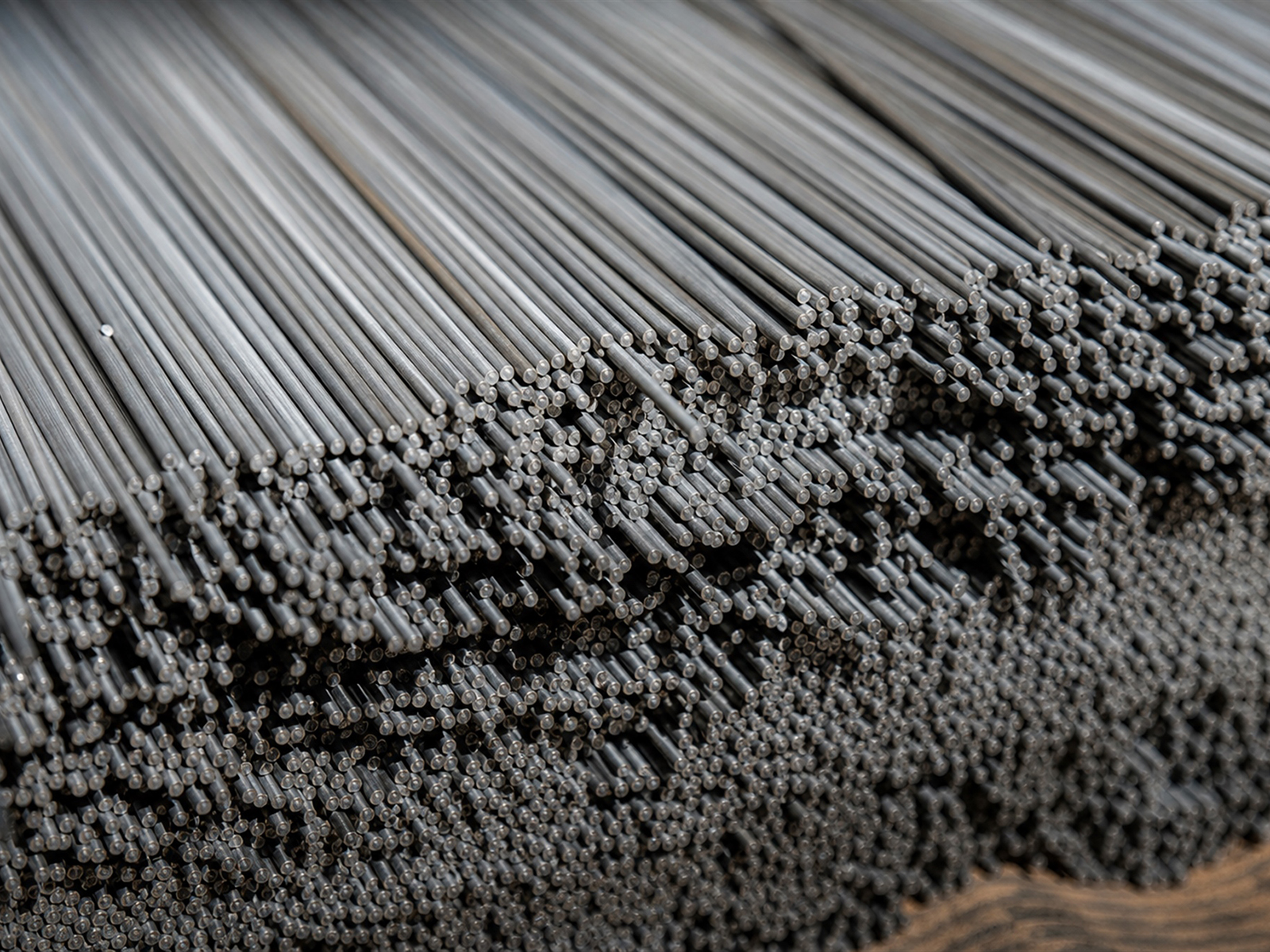
Gr5 titanium bar (Ti-6Al-4V) exhibits good chemical stability in most common chemical media, but its corrosion resistance is not without limits. Its protective core is the dense TiO₂ passive film that forms spontaneously on the surface. This film, typically several to a dozen or more nanometers thick, effectively isolates the corrosive medium from the base metal. In seawater, dilute hydrochloric acid, weak organic acids such as acetic acid, and various oxidizing acids, Gr5 titanium bar generally maintains structural and dimensional integrity as long as concentration and temperature remain within suitable ranges. However, under conditions such as hydrofluoric acid, fluoride-containing acidic media, hot concentrated strong alkalis, and hot concentrated reducing acids, titanium’s passive film may fail, and material selection must be carefully evaluated.
1. The TiO₂ passive film and the corrosion resistance basis of Gr5 titanium bar
(1) The self-healing mechanism of the passive film
When Gr5 titanium bar is exposed to an oxygen- or water-containing environment, a TiO₂ oxide film forms on the surface within an extremely short time. Even if the film is damaged by scratching or localized breakdown, it can re-form as long as trace oxygen or moisture is present in the environment. This self-healing characteristic provides continuous protection in dynamic corrosive environments[2].
(2) Effect of alloying elements on mechanical properties and corrosion resistance
In Ti-6Al-4V, aluminum (Al, 5.5–6.75 wt%) mainly strengthens the α phase and may improve the bonding between the oxide film and the substrate; vanadium (V, 3.5–4.5 wt%) mainly stabilizes the β phase and enhances alloy strength. Corrosion resistance is still primarily provided by the TiO₂ passive film, and it is not appropriate to simply describe the role of Al and V as “keeping the passive film chemically inert.” Gr5 has corrosion resistance similar to pure titanium in most media, but its strength is significantly higher than that of Gr1/Gr2.
(3) Limitations of the passive film and media that require caution
The TiO₂ film is not stable in all chemical media. Hydrofluoric acid and fluoride-containing acidic media directly attack the titanium surface; hot concentrated hydrochloric acid, hot concentrated sulfuric acid, and other strongly reducing high-temperature acids may cause the passive film to fail; fuming nitric acid and hot concentrated phosphoric acid also require individual evaluation. In addition, hot concentrated NaOH/KOH may cause caustic embrittlement or hydrogen embrittlement and should not simply be described as “slight corrosion.” Before using Gr5 titanium bar in the above media, a full service-condition evaluation or corrosion testing should be performed.
2. Stability of Gr5 titanium bar in major chemical media
(1) Corrosion resistance comparison table for major media
Chemical Medium | Concentration Range | Temperature Conditions | Corrosion Resistance Rating | Remarks |
Hydrochloric acid (HCl) | ≤5% | Room temperature | ★★★★☆ | Corrosion intensifies with rising concentration or heating |
Sulfuric acid (H₂SO₄) | ≤5% | ≤60℃ | ★★★☆☆ | Stability decreases at high concentration or high temperature |
Nitric acid (HNO₃) | ≤65% | Room temperature to boiling point | ★★★★★ | Strongly oxidizing, passive film relatively stable; use per specific concentration |
Phosphoric acid (H₃PO₄) | ≤50% | ≤80℃ | ★★★★☆ | Evaluate at moderate-to-high concentration or high temperature; not recommended directly above 85% at high temperature |
Hydrofluoric acid (HF) | Any concentration | Any temperature | ✗ | Severe corrosion, prohibited |
Sodium chloride (NaCl)/Seawater | Natural concentration | ≤150℃ | ★★★★★ | Excellent at ambient temperature in neutral chloride environments; assess crevice corrosion at high temperature, in crevices, or with deposits |
Alkaline media (NaOH) | ≤30% | Room temperature | ★★★★☆ | High-temperature, high-concentration NaOH/KOH may cause caustic embrittlement or hydrogen embrittlement |
Organic acids (acetic, citric, etc., excluding oxalic acid) | Industrial concentration | ≤100℃ | ★★★★★ | Reducing organic acids such as oxalic acid may corrode; evaluate separately |
Rating key: ★★★★★ indicates a corrosion rate generally below 0.05 mm/y; ★★★★ indicates approximately 0.05–0.25 mm/y; ★★★ indicates approximately 0.25–0.5 mm/y; ✗ indicates not recommended. This rating is only for lateral comparison under normal service conditions; actual material selection should be validated against the specific medium composition, flow velocity, aeration conditions, and equipment design.
(2) Oxidizing acid environments: the advantage range of Gr5 titanium bar
In nitric acid systems, Gr5 titanium bar performs particularly well. Oxidizing environments help maintain the stability of the TiO₂ film. Under common conditions of ≤65% nitric acid at temperatures below the boiling point at atmospheric pressure, its corrosion rate is typically below 0.01 mm/y[1]. In applications such as chemical reactors and electrochemical equipment that need both light weight and corrosion resistance, Gr5 titanium bar can serve as one alternative to high-alloy stainless steel. Its density of about 4.43 g/cm³ is significantly lower than stainless steel’s approximately 7.9 g/cm³.
(3) Chloride-containing environments: clear advantages at ambient temperature in neutral conditions
Chloride ions are a major cause of pitting and stress corrosion cracking in stainless steel. Gr5 titanium bar has excellent pitting resistance in ambient-temperature neutral chloride environments and is therefore widely used in seawater desalination, offshore platform piping, and marine heat exchangers. However, “completely immune to chloride ions” is not accurate. Under high-temperature, high-chloride, low-flow-velocity, crevice, or deposit conditions, titanium can still suffer crevice corrosion. In long-term service, changes in fatigue, hydrogenation, and corrosion fatigue should also be monitored, and it is not appropriate to simply state that “mechanical properties do not degrade.”
(4) Weak organic acid media: assurance for food-grade and medical-grade applications
In weak organic acids such as acetic, citric, and lactic acid, Gr5 titanium bar exhibits low corrosion rates. However, not all organic acids are suitable; for example, reducing organic acids such as oxalic acid can corrode titanium, and acetic or citric acid cannot represent all organic acids. Medical implants and surgical instruments require materials with high biocompatibility and chemical inertness; Gr5 complies with the relevant titanium bar standards and offers good biocompatibility, but material selection still requires distinguishing between specific organic acid types and service conditions.
3. The dual effect of temperature and concentration on the corrosion resistance of Gr5 titanium bar
(1) Temperature–concentration corrosion resistance variation (sulfuric acid as an example)
The following table shows typical trends based on references [1][2], used only to illustrate the coupled effect of temperature and concentration and not as a substitute for measured data in specific engineering material selection.
Sulfuric Acid Concentration | Room Temperature (25℃) | 60℃ | 100℃ |
5% | Stable (corrosion rate <0.05 mm/y) | Slight corrosion | Corrosion accelerated, not recommended |
20% | Slight corrosion | Moderate corrosion | Severe corrosion |
50% | Moderate corrosion | Severe corrosion | Not allowed |
80%+ | Severe corrosion | Not allowed | Not allowed |
(2) Effect of rising temperature on passive film stability
Rising temperature generally accelerates corrosion reactions, but the specific degree of acceleration depends greatly on the medium type, concentration, and alloy surface condition; a uniform multiplier such as “corrosion rate increases 2–3 times for every 10℃ rise” should not be used for estimation. For Gr5 titanium bar, the high-temperature oxidation resistance reaches roughly 400℃ in dry oxidizing atmospheres; however, in aqueous wet corrosion media, the service temperature is generally recommended to be kept below 150℃ to reduce the risks of crevice corrosion and caustic embrittlement.
(3) Concentration threshold effects: “more dilute” is not always “safer”
The effect of acid concentration on titanium corrosion behavior is not linear. Taking hydrochloric acid as an example, at low concentration (≤5%) and room temperature, Gr5 titanium bar has good corrosion resistance; however, at moderate concentrations (10–20%) with heating, the corrosion rate may rise significantly. Material selection should be based on the specific concentration–temperature combination, referencing corrosion data handbooks or test results for a comprehensive evaluation rather than relying on a single concentration indicator.
(4) Synergistic corrosion effects under combined service conditions
In real industrial environments, corrosion is often the combined result of multiple factors such as temperature, pressure, chloride ions, flow velocity, and electrochemistry. Because Gr5 titanium bar combines relatively high strength (tensile strength ≥895 MPa) with good corrosion resistance, its overall performance under various combined conditions is usually superior to some duplex stainless steels and Hastelloy C-series alloys, while also being lower in density. However, its corrosion resistance limits still need to be confirmed through service-condition analysis and sound material selection.
4. Material selection comparison with other high-performance alloys
(1) Gr5 titanium bar vs 316L stainless steel
316L stainless steel is prone to pitting and crevice corrosion in chloride-containing environments. Gr5 titanium bar offers better pitting resistance in ambient-temperature neutral chloride environments and is about 44% lower in density than 316L. For marine engineering components requiring long service life, the full lifecycle cost of Gr5 titanium bar may be lower than stainless steel solutions that require frequent replacement.
(2) Gr5 titanium bar vs Hastelloy C-276
Hastelloy C-276 performs well in both strongly oxidizing and strongly reducing media, but the choice in certain media should be based on specific service conditions. Gr5 titanium bar has good corrosion resistance in certain oxidizing acids, and its density is about 50% of Hastelloy C-276 (4.43 vs 8.89 g/cm³), giving it a clear advantage in lightweight designs for aerospace and high-end precision machinery. However, Gr5 should not be simply regarded as an equivalent replacement for C-276 in corrosion resistance, especially in strongly reducing acids where caution is required.
(3) Gr5 titanium bar vs pure titanium (Gr2)
Pure titanium Gr2 also has excellent corrosion resistance, with a tensile strength of about 485 MPa; Gr5 is about 1.85 times that. In combined conditions requiring both high strength and high corrosion resistance, Gr5 titanium bar can carry the same load with a smaller cross-section, making the structure more compact. However, in certain strongly oxidizing or special reducing environments, pure titanium may offer better corrosion resistance, and it should not be assumed that Gr5 is always more corrosion-resistant than pure titanium.
5. Process factors affecting corrosion resistance and key engineering material selection points
(1) Effect of delivery condition on corrosion resistance
Gr5 titanium bar delivery condition, such as Annealed, Hot-Rolled, or Cold-Drawn, affects the internal residual stress distribution and thereby the susceptibility to stress corrosion cracking. The annealed condition, with lower residual stress, offers better resistance to stress corrosion cracking in wet chloride-containing environments and is suitable for applications with high corrosion sensitivity requirements such as chemical equipment.
(2) Selection of surface finish specifications
The surface condition mainly affects the density of corrosion initiation sites. Peeled bar has the surface scale removed and a relatively uniform surface, suitable for general chemical media; polished bar has low surface roughness, reducing initiation sites for pitting caused by crevices and deposits, and is suitable for medical and food-grade applications; black-pickled bar has an uneven surface oxide layer and is not recommended for direct contact with corrosive media.
(3) The necessity of quality certification and nondestructive testing
For critical components in aerospace, nuclear energy, and medical fields, chemical composition compliance alone is insufficient to guarantee safe use. Suppliers should be required to provide a complete material test certificate (MTC) and nondestructive testing reports. Bar internal quality is primarily checked by ultrasonic testing, supplemented by eddy current testing for surface and near-surface quality[5]. Chemical composition, mechanical properties, and dimensional tolerances should comply with the relevant titanium bar standard requirements.
6. Conclusion
Gr5 titanium bar, thanks to the self-repairing TiO₂ passive film, the strength advantages of the Ti-6Al-4V alloy system, and its low density, can demonstrate good long-term stability in most common industrial chemical media—provided hydrofluoric acid, fluoride-containing media, hot concentrated strong alkalis, and hot concentrated reducing acids are avoided. Reasonable evaluation of medium type, temperature, concentration, and combined service conditions is key to preventing corrosion failure and achieving safe material selection.
FAQ
(1) Q1: Can Gr5 titanium bar be used long-term in dilute hydrochloric acid environments?
Gr5 titanium bar has good corrosion resistance in low-concentration (≤5%) hydrochloric acid at room temperature, but the corrosion rate rises significantly as temperature or concentration increases. Before use, it is recommended to combine actual service parameters, reference corrosion data handbooks, or conduct coupon testing, and select a higher-corrosion-resistance grade if necessary.
(2) Q2: What is the essential difference between Gr5 titanium bar and Gr2 pure titanium in corrosion resistance?
Both rely on the TiO₂ passive film as the basis of corrosion resistance and show similar corrosion resistance in many media. The core difference lies in mechanical properties: Gr5 has a tensile strength of ≥895 MPa, about 1.85 times that of Gr2. In scenarios requiring both high strength and high corrosion resistance, Gr5 titanium bar is superior; however, in certain special media, pure titanium may be more corrosion-resistant.
(3) Q3: How do you determine whether Gr5 titanium bar is suitable for a specific chemical medium?
Consult corrosion data handbooks or the titanium alloy corrosion data in relevant standards, focusing on the medium concentration, temperature, pH value, and whether HF, fluoride ions, or other reducing components are present. For critical equipment, laboratory corrosion testing or on-site coupon testing is recommended.
Contact Us
Looking for a reliable manufacturer, supplier, or processing service for Gr5 titanium bar (Ti-6Al-4V, UNS R56400)? A professional titanium enterprise with full-process capability from vacuum arc remelting (VAR), forging and cogging, and rolling and forming to annealing, finishing, and nondestructive testing can custom manufacture to standards such as ASTM B348 and GB/T 2965, covering φ4–φ300 mm round bars as well as special cross-sections such as square and hexagonal bars, and provide material test certificates (MTC), ultrasonic/eddy current inspection reports, and batch traceability documentation. For specific media conditions such as chloride-containing and oxidizing acid environments, it can assist with corrosion data references and material selection recommendations. Contact us at: sales@titaniumvalleys.com
References
- Zuo Jingyi. Corrosion Data and Material Selection Handbook. Beijing: Chemical Industry Press, 1995.
- Zhang Baohong, Cong Wenbo, Yang Ping. Metal Corrosion and Protection. Beijing: Chemical Industry Press, 2005.
- GB/T 3620.1—2016, Designation and Chemical Composition of Titanium and Titanium Alloys.
- GB/T 2965—2007, Titanium and Titanium Alloy Bars.
- NB/T 47013.3—2015, Nondestructive Testing of Pressure Equipment — Part 3: Ultrasonic Testing.