
How Can You Select a Reliable UNS R60702 Foil Supplier?
- UNS R60702 Foil
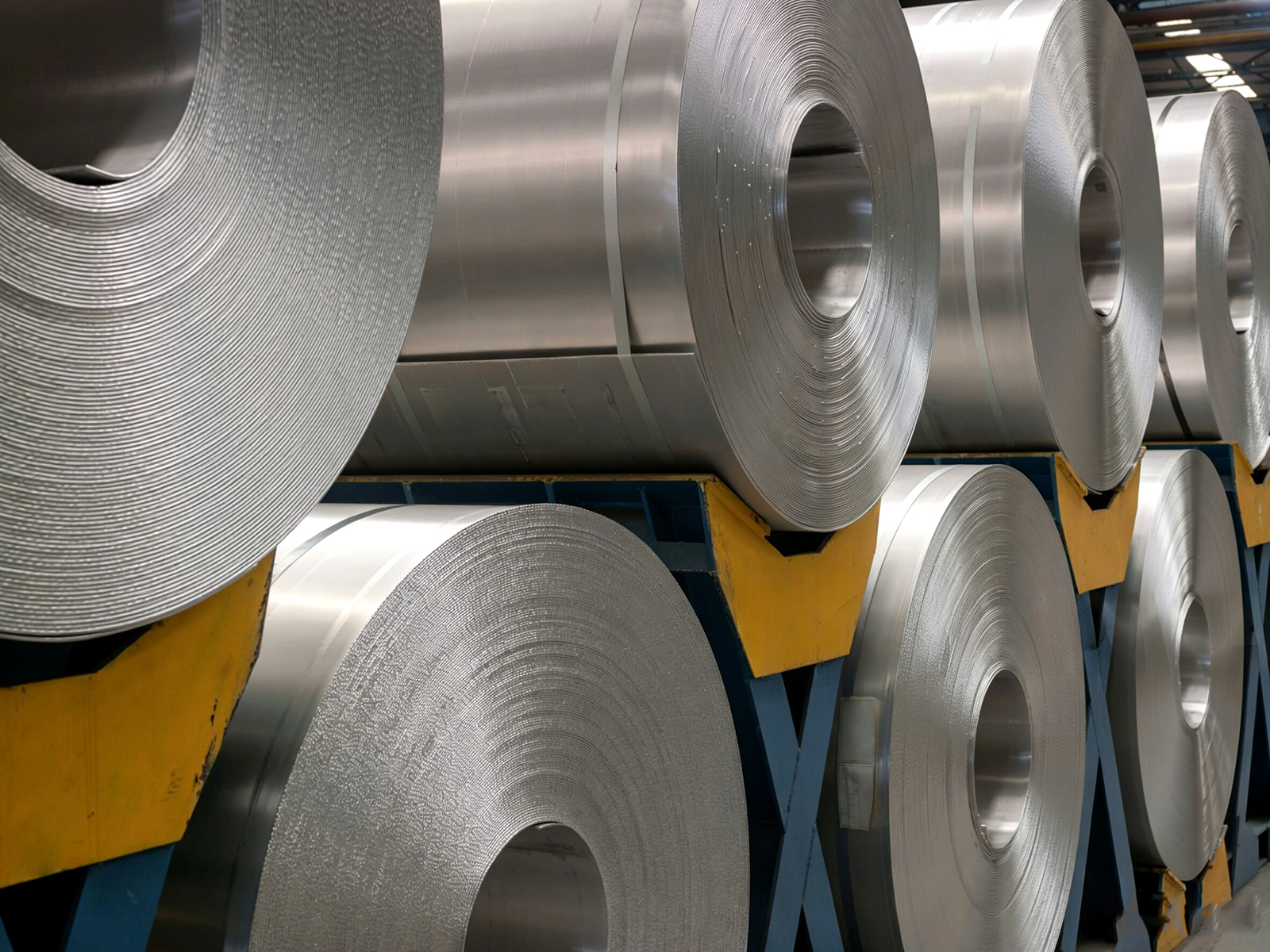
Choosing a reliable UNS R60702 foil supplier should center on four dimensions: material standard compliance, process capability, quality control, and supply capability. Zr702 foil (commercially pure zirconium foil) often shows corrosion resistance superior to titanium and some stainless steels in strongly reducing acids such as hydrochloric and sulfuric acid, but this advantage does not hold for every acid type, concentration, and temperature; in oxidizing strong acids such as nitric acid, or under special conditions such as high temperature and the presence of impurities, titanium, stainless steel, or other materials may be more competitive. Therefore, a reliable supplier should first help the customer confirm the material selection boundaries rather than making vague performance promises. Zirconium foil from inferior suppliers may suffer from composition deviation, out-of-control thickness tolerances, and surface oxidation contamination. In chemical seals, electrolytic cells, or vacuum systems, these problems can directly evolve into equipment failure risks. This article systematically organizes the key points for selecting a quality Zr702 foil supplier from the four dimensions of material standard, process capability, quality control, and supply capability.
1. Material Standard Compliance: Composition and Specifications Are the Baseline
(1) Chemical Composition Must Genuinely Meet ASTM B551 Requirements
The core composition requirements for UNS R60702 are Zr+Hf ≥99.2%, Hf ≤4.5%, with additional limits of O ≤0.16%, N ≤0.025%, C ≤0.05%, and Fe+Cr ≤0.20%. For zirconium foil, hydrogen content is equally critical; the standard typically requires H ≤0.005% because hydrogen significantly increases the risk of hydrogen embrittlement in zirconium. Small deviations in oxygen content affect ductility and weldability, while excessive nitrogen leads to embrittlement. A reliable supplier must provide a complete chemical composition analysis report for every batch, with data traceable to the actual melting heat number.
For ultra-thin foil at the 0.02 mm level, the applicability of ASTM B551, specimen preparation, and mechanical property sampling are constrained by thickness; the relevant indicators often need to be agreed between the buyer and supplier in the contract. The standard’s routine mechanical property requirements mainly apply to thickness ranges from which standard specimens can be prepared. This point should be clearly stated in the purchase technical agreement.
(2) Material Certificates Must Have a Complete Traceability Chain
A proper material certificate should include the melting number, rolling batch, heat treatment condition (such as annealed, or a cold-worked condition agreed upon by both parties), chemical composition, and mechanical property test results. The cold-worked condition designation should not simply borrow the M/H symbols from other standard systems; it should follow ASTM B551 and the contract requirements. Some suppliers issue certificates with vague information that cannot be matched to the physical batch, which is an unacceptable risk in procurement for aerospace, nuclear, or critical chemical equipment.
(3) Mechanical Properties Should Follow Thickness Ranges and Standard Requirements
Annealed Zr702 foil mechanical properties should comply with the thickness-tiered requirements in ASTM B551. Within the standard’s conventional thickness range, tensile strength is typically ≤380 MPa and elongation is generally no less than 16%; however, for ultra-thin gauges such as 0.02–0.1 mm, sampling is difficult and size effects are pronounced, so elongation is not uniformly held to ≥16%. The actual test method, specimen size, and acceptance values should be agreed with the supplier. If the supplier cannot provide measured mechanical property data at the corresponding thickness, its process control capability is questionable.
Table 1: Comparison of key technical indicators for UNS R60702 foil (ASTM B551)
Test Item | Standard/Reference Requirement | What a Reliable Supplier Should Provide |
Zr+Hf content | ≥99.2% | Spectroscopic/chemical analysis report for each batch |
Hf content | ≤4.5% | Spectroscopic/chemical analysis report for each batch |
H content | ≤0.005% (or per standard/contract) | Hydrogen content test records for each heat/batch |
O content | ≤0.16% | Oxygen content test records for each heat/batch |
Tensile strength (annealed) | ≤380 MPa (per thickness range) | Mechanical test report for the same batch |
Elongation (annealed) | Tiered per standard, typically ≥16% (conventional thickness; ultra-thin per agreement) | Measured data, including specimen specifications |
Thickness tolerance | Agreed in tiers by thickness and width | ±0.002 mm accuracy available for typical thickness segments; extreme gauges agreed separately |
2. Process Capability Determines the Ceiling of Product Quality
(1) Rolling Equipment and Thickness Tolerance Control
Rolling ultra-thin zirconium foil is highly demanding; zirconium has strong elastic springback, and uneven thickness and shape distortion are common during rolling. For very thin gauges below 0.1 mm, multi-roll precision mills such as 20-high mills have advantages in shape and thickness control; for medium-thickness gauges, properly configured four-high or six-high mills can also meet routine accuracy. Therefore, it is not accurate to simply say that ordinary four-high or six-high mills cannot qualify, nor can a single absolute tolerance cover the full 0.02–1.0 mm range. The supplier should provide a tolerance table divided by thickness segment along with measured data. For example, for the typical 0.05–0.3 mm thickness segment, high-end production lines can achieve tolerances at the ±0.002 mm level; for the extremely thin 0.02 mm gauge, ±0.002 mm corresponds to ±10%, which usually needs to be controlled on a percentage basis or by mutual agreement; for gauges above 0.5 mm, the absolute tolerance range also differs.
(2) Annealing Protection and Temperature Control
Zirconium oxidizes easily at high temperatures. Without adequate protection during annealing, the surface will show color differences or oxide layers that affect subsequent welding and sealing performance. A reliable supplier can use vacuum batch annealing furnaces or inert-atmosphere continuous annealing lines to ensure uniform microstructure, a clean surface, and satisfactory ductility. Vacuum annealing is typically done in batch furnaces, while continuous annealing lines are mostly protected by inert atmospheres; the two should not be conflated. Temperature uniformity indicators should be evaluated in the context of the equipment type and standard requirements. For industrial equipment, a ±2℃ control accuracy is not universally applicable and is not sufficient on its own as a procurement criterion; more attention should be paid to furnace temperature uniformity test data, post-annealing surface condition, and mechanical property results.
(3) Surface Cleaning and Cleanliness Control
Surface treatment before and after annealing determines the cleanliness level of the zirconium foil. With ultrasonic and alkaline cleaning processes, the surface wetting tension can be stably controlled at about 40 mN/m (40 dyne/cm), but when this indicator is used to evaluate the surface cleanliness of metal foil, it should be applied in conjunction with the specific test method and downstream processing requirements. Surface pinholes and scratches are mostly related to rolling, handling, or surface treatment control; inclusions, on the other hand, mainly originate from melting and metallurgical defects in the raw material and should not be simply attributed to cleaning and rolling.
3. Quality Control System: From Process Control to Shipping Inspection
(1) Process Automation and Consistency
The higher the degree of automation at critical production-line steps, the less human intervention and the stronger batch-to-batch consistency. For the production of UNS R60702 foil, the key is to examine whether critical nodes such as thickness inspection, tension control, and annealing temperature management achieve closed-loop feedback, rather than looking only at vague metrics like an “automation rate of 90%” whose calculation basis cannot be defined. The supplier should state which processes are covered by automation, how data are recorded, and the anomaly traceability mechanism.
(2) Which Steps Should Full-Process Inspection Cover
A reliable supplier’s inspection system should cover: incoming raw material composition acceptance, on-line thickness monitoring during rolling, post-annealing mechanical property sampling (where thickness permits) or performance tests agreed by both parties, and final surface visual inspection and dimensional accuracy inspection. For ultra-thin foil at the 0.02 mm level, metallographic specimen preparation is difficult and destroys the finished product, and conventional non-destructive testing has limited ability to detect defects in thin foil; it is therefore not suitable as a universal full-process inspection method for all gauges. If the customer has specific requirements, feasibility should be evaluated separately with the supplier.
(3) Corrosion Resistance Verification Capability
Customers in the chemical industry pay particular attention to the corrosion rate of zirconium foil in strongly reducing acid systems such as hydrochloric and sulfuric acid, and may also evaluate selected organic acid or mixed acid systems as needed. However, zirconium has limited corrosion resistance in some organic acids and oxidizing conditions, so it cannot be broadly claimed to suit all organic acids. A quality supplier should be able to provide corrosion test data at specified media, concentrations, and temperatures, or cooperate with the customer to complete immersion or electrochemical validation under specific service conditions.
Table 2: Comparison of key differences between reliable suppliers and suppliers requiring caution
Evaluation Dimension | Reliable Supplier | Supplier Requiring Caution |
Composition report | Batch-traceable, with melting heat number; key impurities such as H/O/N complete | Only generic spec sheets, no measured data |
Thickness tolerance control | Tiered by thickness/width, on-line monitoring, measured data provided | Broad tolerances, reliant on manual sampling |
Annealing protection method | Vacuum batch furnace or inert-atmosphere continuous line, with temperature uniformity records | Ordinary box annealing, no atmosphere protection, no process data |
Corrosion performance data | Measured corrosion rate reports at specified media, concentrations, and temperatures | Only claims “conforms to standard,” no supporting data |
Supply capability | Stable delivery records; actual Zr702 foil capacity and lead times can be verified | Small-batch processing, unstable lead times, vague capacity figures |
4. Supply Capability and Customization Services: Core Considerations for Long-Term Cooperation
(1) Production Capacity and Stable Supply
For chemical equipment manufacturers, electrolytic cell integrators, or new-energy battery producers, the annual usage of Zr702 foil may reach several tons to tens of tons. If a supplier lacks sufficient capacity reserves, delivery delays are highly likely during peak order seasons or raw material shortages. Note, however, that a supplier’s claimed “annual output of 3, 000 tons” is often the plant’s total capacity across all titanium, nickel, and zirconium materials, not the actual Zr702 foil capacity. When evaluating, request the supplier’s annual output, inventory, and delivery records for the corresponding Zr702 foil specifications, rather than a vague plant-wide capacity figure.
(2) Ultra-Thin and Wide-Width Customization Capability
Standard specifications (thickness 0.02–1.0 mm, width 15–680 mm) cover most routine industrial applications. For precision instruments, high-end electrolytic equipment, or scientific research, extremely thin gauges down to 0.005 mm may be required, or stable volume supply may be demanded for wide widths of 350–670 mm within the 15–680 mm range. It must be emphasized that the manufacturability, dimensional stability, and supply capability of 5 μm-level zirconium foil must be verified through samples, measured data, and trial production batches, and cannot rely on verbal promises alone.
(3) Whether One-Stop Processing Services Are Provided
A quality supplier not only provides standard foil, but should also have full-process supporting capability for cleaning, annealing, finishing, slitting, and cut-to-length. This way, customers do not need to coordinate multiple processors, reducing interface risks, shortening delivery lead times, and ensuring each step is executed under controlled conditions within the same quality system.
Table 3: Comparison of comprehensive performance between UNS R60702 foil and major competing materials
Comparison Item | Zr702 Foil (R60702) | Titanium Foil (Gr2) | Nickel Foil (Ni200) |
Hydrochloric acid corrosion resistance | Excellent (subject to confirmation of concentration, temperature, and impurity conditions) | Poor (easily corroded in reducing hydrochloric acid; subject to service condition confirmation) | Moderate (subject to confirmation of concentration, temperature, and oxygen conditions) |
Sulfuric acid corrosion resistance | Excellent (subject to confirmation of concentration and temperature) | Moderate/poor (may corrode significantly in dilute sulfuric acid) | Moderate (subject to confirmation of concentration and temperature) |
Density (g/cm³) | 6.51 | 4.51 | 8.90 |
Magnetic properties | Non-magnetic | Non-magnetic | Magnetic (ferromagnetic) |
Primary application scenarios | Strongly reducing acid seals/electrolysis/precision instruments | Structural/weakly corrosive/oxidizing environments | Alkaline/conductive structures/specific corrosion-resistant conditions |
Note: Corrosion resistance evaluation must consider the specific medium concentration, temperature, flow rate, and impurity conditions. The table above is only a general comparison and cannot serve as the material selection basis for all service conditions.
5. Conclusion
Selecting a reliable UNS R60702 foil supplier should involve systematic evaluation across the four dimensions of material standard compliance, process capability, quality control, and supply capability. Among these, material composition, rolling precision, annealing process, inspection data, and capacity authenticity are key control points. A deficiency in any single dimension can plant hidden hazards in practical applications. Rather than dealing with equipment corrosion failures after the fact, it is better to strictly screen at the supplier evaluation stage and choose a long-term partner with complete technical capability and a quality system.
FAQ
(1) Q1: Are UNS R60702 foil and Zr702 foil the same material?
They are exactly the same. UNS R60702 is the standard designation in the Unified Numbering System for metals and alloys in the United States, and Zr702 is its common commercial name. Both refer to commercially pure zirconium foil with Zr+Hf ≥99.2%, governed by ASTM B551. For users in China, corresponding grades in standards such as GB/T 26314 may also be referenced.
(2) Q2: When purchasing Zr702 foil, how can you quickly verify the authenticity of a supplier’s material reports?
Ask the supplier to provide the original chemical analysis report including the melting heat number, and check whether key elements such as Zr+Hf, Hf, H, O, and N match the standard requirements. If necessary, commission a third-party laboratory to re-verify the composition of samples. For ultra-thin gauges, also confirm that the report corresponds to the actual thickness and batch.
(3) Q3: Can 0.02 mm ultra-thin Zr702 foil maintain long-term stability in sealing applications?
0.02 mm ultra-thin zirconium foil can be used in strong-acid sealing structures, provided the supplier’s thickness tolerance, annealing protection, and surface quality all meet requirements and the actual service medium, temperature, and installation loads have been validated. Extremely thin foil tends to crack during stamping and is prone to burn-through during welding; forming and joining processes should be carefully evaluated, with dedicated process qualification performed when necessary. One cannot simply claim good stamping formability and weldability while ignoring the risks.
Contact Us
Baoji Titanium Valley Ti-Ni-Zr Material Processing Co., Ltd. is a professional manufacturer, supplier, and factory of UNS R60702 foil, offering foil in 0.02–1.0 mm specifications and custom processing services per product standards. Specific thickness tolerances, delivery conditions, and performance indicators are subject to the contract and technical agreement. Welcome to contact us by email: sales@titaniumvalleys.com
References
- National Nonferrous Metals Standardization Technical Committee. GB/T 21183—2007 Zirconium and zirconium alloy plates, strips, and foils [S]. Beijing: China Standard Press, 2007.
- National Nonferrous Metals Standardization Technical Committee. GB/T 26314—2010 Designations and chemical composition of zirconium and zirconium alloys [S]. Beijing: China Standard Press, 2010.
- Li Honggui. Metallurgy of Rare Metals [M]. Beijing: Metallurgical Industry Press, 2002.
- Editorial Committee of the Rare Metals Handbook. Rare Metals Handbook [M]. Beijing: Metallurgical Industry Press, 1992.