
How Can You Improve the Machining Efficiency of R60705 Zirconium Rods?
- R60705 Zirconium Rod
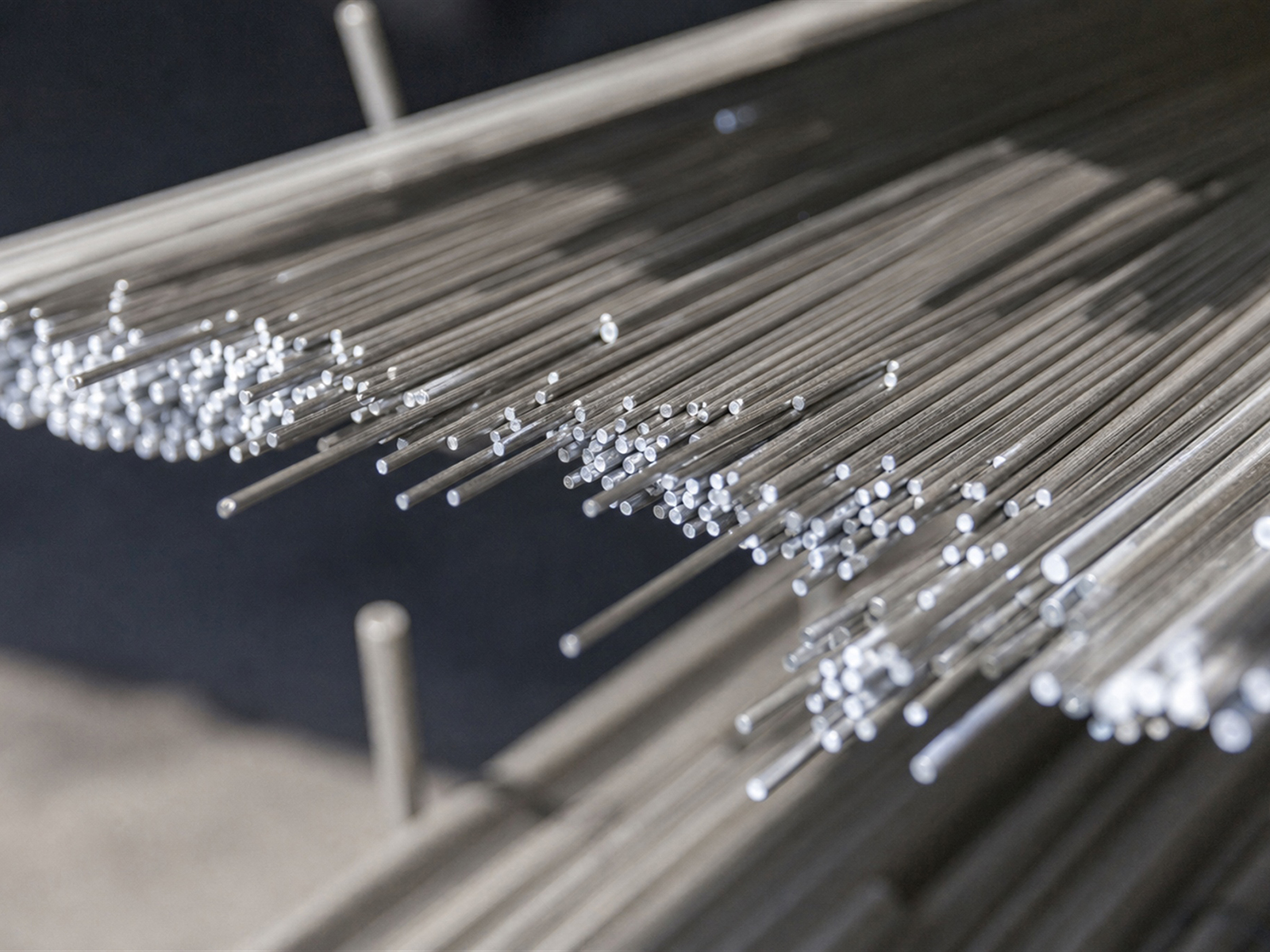
Improving R60705 zirconium rod machining efficiency hinges on systematically optimizing each processing step based on the material’s properties. R60705 (UNS R60705, i.e., Zr-2.5Nb alloy) offers outstanding corrosion resistance and relatively high mechanical strength, but its low thermal conductivity, large elastic springback, and sensitivity to tool wear mean that machining parameters cannot simply be copied from titanium alloys or stainless steels. In practice, the four pillars spanning the entire machining chain are: rationally selecting tool material and geometry, precisely controlling cutting speed and cooling methods, performing standard heat-treatment annealing after forging or rolling, and pairing the appropriate surface treatment process at the precision stage. Every step is interconnected, and none can be omitted.
1. Understanding the Material Properties and Machining Challenges of R60705 Zirconium Rods
Before discussing any machining parameters, understanding the nature of R60705 is the prerequisite for improving efficiency. Many machining mistakes stem from treating it as an ordinary metal bar.
(1) Heat Concentration Caused by Low Thermal Conductivity
R60705 has a thermal conductivity of about 17.8 W/(m·K), far lower than that of carbon steel (approximately 50 W/(m·K)). The heat generated during cutting cannot be conducted quickly into the workpiece interior; a large amount accumulates at the tool-tip contact zone, causing significantly faster tool wear and making the workpiece surface prone to heat discoloration and even microcracks. Recognizing this provides the theoretical basis for all subsequent cooling and cutting-speed settings.
(2) The Conflict Between Elastic Springback and Dimensional Accuracy
R60705 contains 2.5% niobium and has a yield strength roughly 30% to 40% higher than that of pure zirconium R60702. Higher yield strength means greater elastic springback after cutting, and dimensions tend to run oversize in precision turning. In machining shafts and seals with strict tolerance requirements, failure to pre-compensate for springback will noticeably raise the scrap rate and directly drag down machining efficiency.
(3) Adhesion to the Tool and Built-Up Edge Tendency
Zirconium alloys have a strong affinity for iron-group metals. During cutting, chips readily cold-weld to the tool rake face, forming a built-up edge (BUE). The periodic shedding of the BUE scratches the machined surface and causes dimensional fluctuations. This characteristic requires the tool rake angle, cutting-edge sharpness, and cutting-fluid selection to be configured specifically, rather than applying generic parameters.
R60705 Key Physical Parameters | Value | Impact on Machining |
Thermal conductivity | ~17.8 W/(m·K) | Heat concentration; rapid tool wear |
Yield strength (annealed) | ≥380 MPa | Large springback; high risk of dimensional deviation |
Tensile strength (annealed) | ≥550 MPa | Higher cutting force; reduce feed rate |
Hardness (HB) | ~180–210 | Moderate hardness; good machinability but requires matched tooling |
Elastic modulus | ~99 GPa | Lower than steel; thin-wall parts prone to chatter |
2. Precise Matching of Tool Selection and Cutting Parameters
The tool is the “gateway” to machining efficiency. With the wrong tool, even perfect parameters will only yield frequent tool changes and high scrap rates.
(1) Priority Ranking of Tool Materials
When machining R60705 zirconium rods, coated carbide (PVD TiAlN or AlTiN coating) is currently the most cost-effective choice in engineering practice. These coatings retain hardness at 800–900℃, have strong oxidation resistance, low chemical affinity for zirconium alloys, and can effectively suppress built-up edge. CBN tools cut fast but carry higher cost for zirconium machining, making them suitable for high-volume finishing. Ceramic tools, being rather brittle, tend to chip under interrupted cutting or vibration, and are not recommended as a first choice.
(2) Recommended Ranges for Cutting Speed and Feed
During roughing, the cutting speed should be controlled at 60–90 m/min, with a feed of 0.15–0.25 mm/rev and a depth of cut of 2–4 mm. During finishing, the cutting speed can be appropriately increased to 90–120 m/min, with the feed reduced to 0.05–0.10 mm/rev and the depth of cut controlled at 0.3–0.8 mm. Beyond 130 m/min, the rate of heat accumulation rises sharply, tool life drops drastically, and unit machining cost actually increases.
(3) Key Points for Optimizing Tool Geometry
A rake angle of 8°–12° is recommended to reduce cutting force and promote smooth chip evacuation. A clearance angle of 6°–10° balances tool strength and friction reduction. The cutting edge must remain sharp to avoid a smearing effect after dulling. A nose radius of 0.4–0.8 mm is advisable; an overly large nose radius aggravates chatter in finishing and harms surface roughness.
3. Cooling and Lubrication Strategy: Preventing Heat Accumulation and Tool Adhesion
In R60705 zirconium rod machining, the selection and application of cutting fluid often determine tool life and surface quality more than the cutting speed itself.
(1) Advantages and Mixing Requirements of Water-Soluble Cutting Fluids
Water-soluble cutting fluid (emulsion) provides both cooling and lubrication and is the most commonly used medium for turning and milling R60705. The concentration should be formulated at 8%–12%. Low concentrations offer strong cooling but insufficient lubrication, while high concentrations provide good lubrication but make cleaning harder. As for application, high-volume external cooling is more effective than low-volume point cooling. The nozzle should be aimed at the tool-tip cutting zone to ensure that cutting heat is carried away the instant it is generated, rather than allowing heat to accumulate first and then cool.
(2) The Key Role of High-Pressure Through-Tool Cooling in Deep-Hole Machining
In deep-hole drilling or boring with a large length-to-diameter ratio, conventional external cooling cannot deliver cutting fluid effectively to the cutting zone, and chips are difficult to evacuate, making tool breakage highly likely. With a high-pressure through-tool cooling system (pressure 5–7 MPa), cutting fluid flows through the internal bore of the tool holder straight to the cutting edge, chips are forcibly flushed out by the stream, the hole-wall temperature drops dramatically, and tool life can be extended 2–3 times. This is a key means of leaping deep-hole machining efficiency.
(3) Applicability Boundaries of Dry Machining
Some finishing operations (such as high-speed milling of shallow slots) can use dry machining combined with compressed-air chip evacuation, but the low thermal conductivity of R60705 means dry machining has a very narrow window of applicability. It is only marginally feasible when the depth of cut is extremely shallow (<0.3 mm), the cutting speed does not exceed 80 m/min, and the tool coating is excellent. Blindly promoting dry machining causes tool life to plummet, and overall efficiency falls rather than rises.
4. Impact of Heat Treatment and Annealing on Machining Efficiency
The machining of R60705 is not confined to the workshop; the entire process chain from melting to the finished product affects the final machinability.
(1) Direct Impact of Annealed Condition on Cutting Performance
R60705 bar stock is typically subjected to vacuum annealing (typical temperature range 700–800℃) before delivery to eliminate internal stress, restore ductility, and stabilize the microstructure. Annealed material has lower hardness and better toughness, cutting forces are relatively steady, and chip morphology is short and brittle, which aids chip evacuation and dimensional stability. By contrast, unannealed cold-drawn material carries high internal stress and is prone to edge chipping and dimensional drift during cutting, and tool wear is more erratic.
(2) Role of Intermediate Annealing in Multi-Pass Forming
For R60705 bar stock requiring multiple passes of cold drawing or cold rolling, the reduction per pass should not exceed 20%–25%. Beyond this, the material work-hardens significantly and continued deformation increases the risk of cracking. Arranging intermediate annealing between passes effectively restores plasticity, allowing subsequent deformation to proceed smoothly. Skipping intermediate annealing may seem to save time, but it actually raises the scrap rate substantially, and overall efficiency declines.
(3) Importance of Furnace Atmosphere Control in Heat Treatment
Zirconium is extremely sensitive to oxygen and nitrogen at high temperatures. Heating in air forms a dense ZrO₂ oxide layer (black scale), causing surface hardness to rise sharply and making tools prone to chipping in subsequent turning. Vacuum annealing or protective annealing under an inert (argon) atmosphere is the standard practice for R60705 heat treatment. It keeps the surface oxide layer on the bar within an acceptable range and avoids adding extra burden to downstream machining.
Machining Stage | Annealing Type | Temperature Range | Atmosphere Requirement | Primary Purpose |
After hot forging/hot rolling | Stress-relief annealing | 500–600℃ | Vacuum or argon | Eliminate residual forging stress |
Between cold-drawing passes | Intermediate annealing | 650–750℃ | Vacuum or argon | Restore plasticity; prevent cracking |
Before final product | Full annealing | 700–800℃ | Vacuum | Stabilize microstructure; optimize machinability |
5. Surface Treatment Selection and Efficiency Gains
R60705 bar stock surface condition directly determines the amount of downstream machining required; choosing the right surface specification can substantially compress machining hours.
(1) Comparison of Applicable Scenarios for the Four Surface Conditions
R60705 bar stock is typically offered in four surface conditions: black (oxide scale), turned, peeled, and polished. Black-scaled bar suits use as a forging blank or a starting point for heavy-stock roughing, but the hardened oxide scale is extremely abrasive to tools, so cutting time in the black condition should be minimized. Turned bar offers high dimensional accuracy and a uniform silvery appearance, making it the mainstream choice for general machining, welding, and equipment components, and it can directly eliminate the roughing step. Peeled bar has a crack-free surface and meets the needs of structural parts requiring high surface quality. Polished bar corresponds directly to the finished state for precision shafts, seals, and similar parts, requiring almost no secondary machining.
(2) The Enabling Role of Pickling and Passivation for Downstream Processing
After pickling with a mixed hydrofluoric acid + nitric acid solution (typical ratio HF: HNO₃: H₂O = 1: 4: 5 by volume), the oxide scale and contamination layer on the R60705 bar surface are thoroughly removed and a uniform passive film forms. Pickled bar offers more uniform cutting resistance, with no localized hard spots suddenly increasing cutting force, which helps maintain process stability and consistency. It is especially suitable as a pretreatment before batch machining of precision parts.
(3) The Logic of Matching Polish Grade with Machining Allowance
When purchasing R60705 bar stock, the required bar surface grade and size allowance should be back-calculated from the tolerance requirements of the final part. Too large an allowance means more machining time and tool consumption, while too small an allowance cannot guarantee geometric tolerances. In general, for precision shaft-type parts, it is recommended to purchase turned or peeled bar with a single-side allowance of 0.5–1.0 mm on the outside diameter, retaining enough correction room without wasting excessive cutting—a balance point between efficiency and accuracy.
6. Conclusion
Improving R60705 zirconium rod machining efficiency is never a matter of adjusting a single parameter; it is a systematic integration of material-property understanding, tool selection, cooling strategy, heat-treatment practice, and surface-condition choice. Optimization of each step produces positive compounding effects in subsequent operations. Mastering this machining logic not only lowers scrap rates and tool costs, but also enables stable delivery of high-precision zirconium alloy components, truly achieving a dual improvement in machining efficiency and product quality.
FAQ
(1) Q1: What are the fundamental differences in machining difficulty between R60705 zirconium rods and pure zirconium R60702?
R60705 contains 2.5% niobium, so it has higher yield strength, greater elastic springback, and a faster work-hardening rate than R60702. Finishing therefore requires more precise feed compensation, and the tool rake angle also needs to be increased somewhat to reduce cutting force; overall, the demands on process parameters are stricter.
(2) Q2: Can ordinary water-soluble cutting fluid be used when machining R60705?
Yes, but the concentration should be controlled at 8%–12%, and high-volume supply must reach the cutting zone directly. If the cutting fluid contains excessive chloride ions, long-term residue on the workpiece surface can induce pitting; precision parts should be promptly cleaned and passivated after machining to safeguard surface integrity.
(3) Q3: If R60705 bar has a black surface, can it be used directly for finishing without first removing the oxide scale?
Highly not recommended. The black layer (ZrO₂) is extremely hard; direct finishing will cause rapid tool wear and dimensional runout. The correct approach is to thoroughly remove the oxide scale by rough turning or pickling before entering the finishing stage, which both protects the tools and ensures dimensional accuracy and stability.
Contact Us
Baoji Titanium Valley — professional manufacturer, supplier, and factory of zirconium rods (Zirconium R60705 Rod), offering custom sizes, ASTM B550 certified products, and complete quality documentation. Welcome to inquire: sales@titaniumvalleys.com
References
- Liu Jianzhang. Zirconium Alloy Materials and Their Applications in the Nuclear Industry [M]. Beijing: Chemical Industry Press, 2008.
- Zhao Wenjin, Zhou Bangxin, Peng Qian, et al. Research progress on corrosion performance of zirconium alloys [J]. Nuclear Power Engineering, 2004, 25(6): 549-554.
- Wang Rongshan, Liu Chengze, Wang Hao, et al. Study on hot deformation behavior of Zr-2.5Nb alloy [J]. Rare Metal Materials and Engineering, 2016, 45(6): 1480-1484.
- Chen Wuyi, Yuan Yuefeng. Research progress on titanium alloy cutting technology [J]. Aeronautical Manufacturing Technology, 2010(15): 26-30.