
Gr2 Titanium Wire: The Ultimate Material Guide for Engineers and Procurement Professionals
- Gr2 Titanium Wire
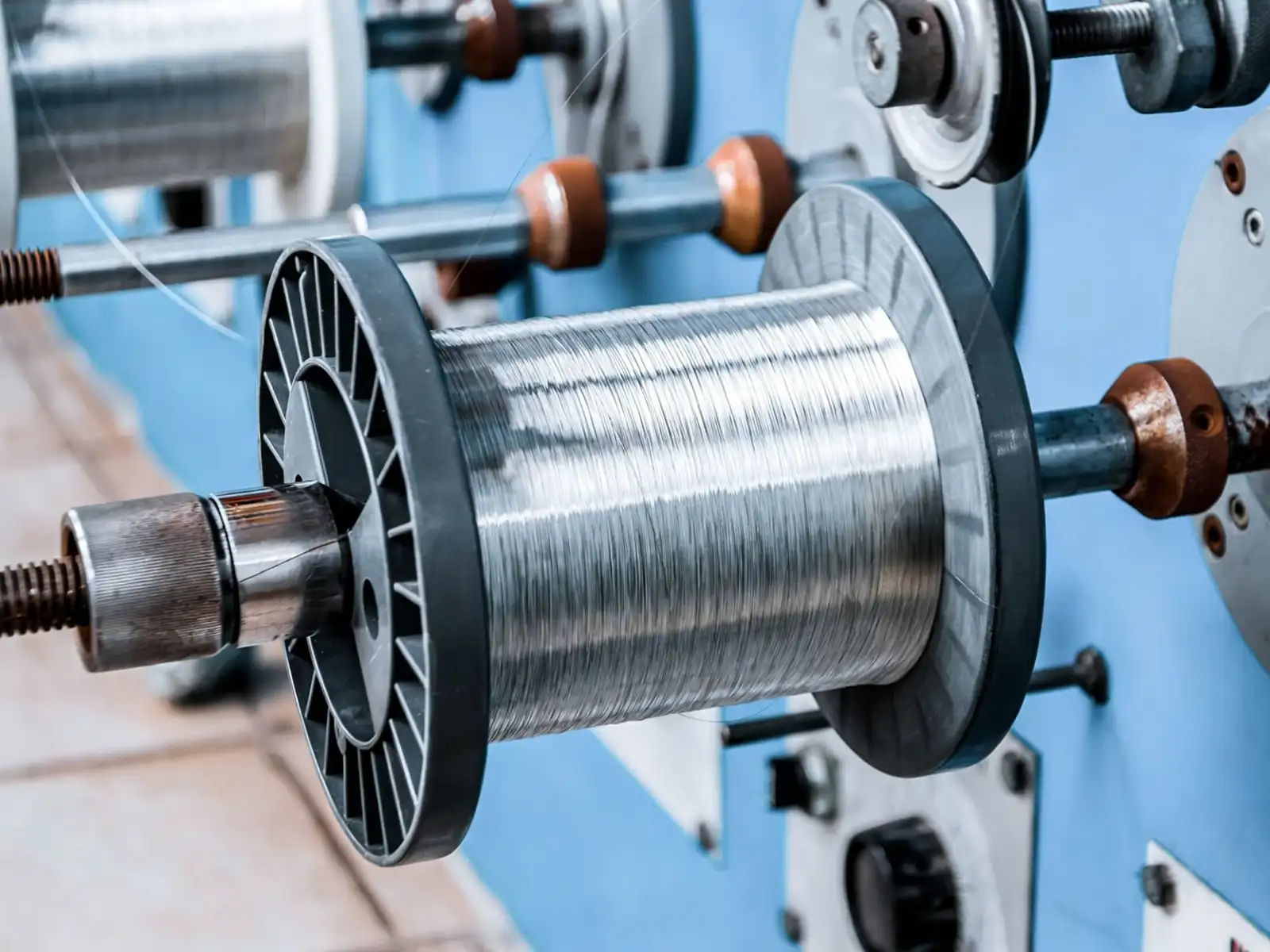
Within the titanium material family, Gr2 commercially pure titanium wire (Grade 2 Commercially Pure Titanium Wire) is one of the most widely used and cost-effective grades. With titanium as the balance element, it achieves a favorable balance among strength, ductility, and corrosion resistance through control of impurity elements such as oxygen and iron. Whether for chemical anticorrosion equipment, marine engineering structural components, medical implant devices, or precision electronic components, Gr2 titanium wire can meet the requirements of a wide range of service conditions with stable material performance. For engineers, it means a predictable processing window; for procurement professionals, it represents reliable delivery and compliance certification. This article starts from the essential nature of the material and systematically reviews the core parameters, selection logic, and key purchasing points of Gr2 titanium wire.
1. The Material Essence of Gr2 Titanium Wire: Purity, Composition, and Mechanical Boundaries
(1) Precise Control of Chemical Composition
The composition of Gr2 titanium wire uses titanium as the balance element, with the main controlled impurities being oxygen (≤0.25%), iron (≤0.30%), carbon (≤0.08%), nitrogen (≤0.03%), and hydrogen (≤0.015%). Among these, oxygen content is the most critical indicator distinguishing Gr1 from Gr2 — Gr1 has a lower oxygen ceiling and slightly lower strength, while Gr2 achieves a higher strength foundation while maintaining relatively high purity.
It should be noted that ASTM B863 does not guarantee Gr2 by directly specifying a “titanium purity ≥99.2%,” but rather by using titanium as the balance with controlled impurity elements. Commercial materials can typically be calculated to correspond to about 99.2% titanium content, but this calculated value should not be written as a value directly specified by the standard. Other individually unlisted impurity elements should be ≤0.10% and total impurity elements should be ≤0.40%; this constraint helps ensure batch-to-batch performance consistency and is a basic prerequisite for precision processing applications.
(2) Mechanical Differences Among the Three Heat-Treatment Conditions
Condition | Tensile Strength (MPa) | Yield Strength (MPa) | Elongation (%) | Hardness HV0.5 (Reference Value) |
Annealed | 400–500 | 275–420 | 15–20 | 140–200 |
Half-hard | 480–620 | 380–520 | 8–12 | 180–240 |
Hard | 550–750 | 500–680 | 5–8 | 220–300 |
Note: Tensile strength and yield strength are typical ranges; the properties of the half-hard and hard conditions are strongly influenced by the cold-working reduction, and the actual values shall be per the technical agreement confirmed by both the supplier and the buyer.
The annealed condition is suitable for bending forming and welding applications; the half-hard condition balances strength and ductility and is widely used for elastic elements; the hard condition is mainly used for ordinary load-bearing or corrosion-resistant fasteners and spring components requiring wear resistance and dimensional stability. Engineers should clarify the service conditions before placing an order to avoid the risk of brittle fracture from sacrificing ductility for strength.
(3) Engineering Significance of Density and Thermophysical Parameters
Gr2 titanium wire has a density of 4.51 g/cm³, approximately 57% of that of stainless steel. At the same cross-sectional area, the weight advantage of titanium wire translates directly into structural weight-reduction benefits, which is especially critical in aerospace and wearable medical devices. Its coefficient of thermal expansion is 8.6×10⁻⁶/°C (20–100℃ range), lower than that of aluminum alloys and steel, providing better dimensional stability under thermal cycling. The thermal conductivity is approximately 15.2 W/(m·K); the relatively low thermal conductivity slows heat dissipation in the weld heat-affected zone to some extent, but heat-affected zone behavior is also jointly influenced by heat input, shielding conditions, material thickness, and other factors, and cannot be determined by thermal conductivity alone.
2. Performance Advantages of Gr2 Titanium Wire: Corrosion Resistance, Non-Magnetic Properties, and Wide-Temperature Applicability
(1) Quantitative Boundaries of Corrosion Resistance
Gr2 titanium wire exhibits good corrosion resistance in sodium chloride solutions, dilute hydrochloric acid at room temperature and low concentration (such as low-temperature service at a mass fraction ≤5%), and most organic acids and weakly alkaline media, showing no signs of corrosion after 480 hours of salt spray testing. However, titanium does not have universal corrosion resistance to relatively concentrated or hot hydrochloric acid, and a corrosion assessment should be performed for the specific temperature, concentration, and media conditions before use. In seawater environments, its corrosion resistance is significantly superior to that of 316L stainless steel, making it a preferred material for deep-sea exploration structural components and seawater piping connectors. This performance stems from the dense TiO₂ passivation film that forms spontaneously on the titanium surface; this film is capable of self-repair in oxidizing media, maintaining long-term protection.
(2) Synergistic Value of Non-Magnetic and Biocompatible Properties
Gr2 titanium wire has an extremely low magnetic susceptibility and does not produce significant electromagnetic interference, making it a naturally compatible material for magnetically sensitive electronic components, sensor leads, and medical implants. At the same time, the biocompatibility of titanium has been certified under pure titanium medical standards such as ISO 5832-2 and ASTM F67; it is non-toxic, non-allergenic, and does not cause significant foreign-body reactions during long-term contact with human tissue, and is widely used in orthopedic implants, dental materials, and minimally invasive instruments.
(3) Wide-Temperature Stability: From Liquid Hydrogen to Industrial High Temperatures
Temperature Regime | Service Range | Typical Application Scenarios |
Ultra-low temperature | -253℃ (liquid hydrogen); -183℃ (liquid oxygen) | Aerospace low-temperature piping, low-temperature sensor leads |
Normal industrial temperature | -20℃ to 300℃ (long-term) | Chemical equipment, medical devices, electronic structural components |
Moderate temperature, short-term | ≤450℃ (short-term) | Heat exchanger connectors, industrial furnace accessories |
In a liquid hydrogen environment at -253℃, Gr2 titanium wire is not prone to low-temperature embrittlement; the boiling point of liquid oxygen is approximately -183℃, and low-temperature service is likewise applicable. This low-temperature toughness advantage gives it potential application value in low-temperature engineering fields such as liquid hydrogen piping and low-temperature sensor leads. However, it should be noted that titanium presents a risk of hydrogen embrittlement and hydride formation under long-term pressure in hydrogen environments or under high hydrogen partial pressure, so commercially pure titanium is generally not the preferred choice for hydrogen storage vessels. When selecting materials involving hydrogen environments, hydrogen storage, or fuel cell piping, material compatibility should be specially evaluated and validated; applicability cannot be judged on the basis of low-temperature toughness alone.
3. Specification System and Size Selection: Full Coverage from Ultra-Fine Wire to Structural Components
(1) Standardization Requirements for Welding Wire Specifications
For welding Gr2 titanium wire (corresponding to the ERTi-2 designation), the common diameters are φ0.8 mm, 1.0 mm, 1.2 mm, 1.6 mm, 2.0 mm, 2.4 mm, and 3.0 mm. The diameter choice is directly linked to the base material thickness and the welding process (TIG/MIG). φ1.6 mm is a frequently used size for welding chemical equipment and pressure vessels, providing stable weld strength and good weld pool control. For cut-to-length straight wire, a straightness of ≤2/1000 can be specified; for coiled welding wire, feedability, coil performance, and surface condition deserve greater attention to ensure stable automatic wire feeding.
(2) Diameter Matrix for Structural and Electrode Wire
Wire for structural components and electrodes covers a common specification series from φ0.5 mm to φ6.0 mm, typically supplied at 0.5 mm intervals; actual specifications should be confirmed by both the supplier and the buyer and are not limited to fixed increments. The φ3.0–6.0 mm range is suitable for fastener blanks, elastic elements, and sensor electrodes; the φ0.5–2.0 mm range is widely used for precision instrument brackets and functional braided structures.
Dimensional tolerance and roundness should be controlled separately for each specification segment and should not be covered by a single value across the entire range. Examples of common control capability are as follows: for φ0.5–1.0 mm, an outer diameter tolerance of approximately ±0.02 mm and ovality ≤0.02 mm; for φ1.0–3.0 mm, an outer diameter tolerance of approximately ±0.03 mm and ovality ≤0.04 mm; for φ3.0–6.0 mm, an outer diameter tolerance of approximately ±0.05 mm and ovality ≤0.06 mm. Specific indicators shall be per the product standard or technical agreement.
(3) Process Challenges and Precision Applications of Ultra-Fine Wire
Diameter Specification | Primary Application Fields | Key Performance Requirements |
φ0.1 mm | Medical minimally invasive instruments, precision sensor leads | Crack-free surface, breakage resistance |
φ0.15–0.2 mm | Precision electronic windings, eyeglass frame wire | Uniform cross-section, high ductility |
φ0.3–0.4 mm | Dental materials, fine springs | Dimensional consistency, fatigue resistance |
The production of ultra-fine wire (φ0.1–0.4 mm) relies on a multi-pass cold drawing process and precision die control, and the reduction per pass must be precisely calculated to prevent wire breakage caused by work hardening. With roller-die cold drawing, the grain structure can be improved while the cross-sectional dimensions are controlled, giving ultra-fine wire uniform mechanical distribution while maintaining relatively high ductility.
4. Production Process and Quality System: End-to-End Control from Melting to Shipment
(1) Process Chain of Vacuum Melting and Multi-Pass Cold Drawing
The production of Gr2 titanium wire begins with vacuum melting to ensure compositional uniformity and inclusion control in the high-purity titanium ingot. The material then undergoes hot rolling of the billet (with precise temperature control within the suitable hot-working range for commercially pure titanium, approximately 800–950℃) to obtain the initial bar, followed by multi-pass cold drawing into wire. After each cold-drawing pass, staged annealing must be performed to eliminate processing stress and prevent wire embrittlement. Modern short-stress rolling mills enable high-precision continuous rolling, and the straightness of φ5 mm titanium wire can be stably controlled within 2‰, laying the foundation for subsequent cold drawing.
(2) Diversified Surface Treatment Options
Gr2 titanium wire’s surface treatment method directly affects its applicable scenarios. A bright surface (bright surface) is obtained through bright drawing and is clean with high reflectivity, suitable for medical devices and precision electronics; a pickled surface (pickled surface) removes the oxide layer by chemical etching to expose a uniform metallic substrate, suitable for welding materials and chemical anticorrosion components; matte and anodized surfaces meet specific functional or decorative requirements (such as the space gray finish for consumer electronics). Before surface treatment, strict degreasing and cleaning must be performed to prevent surface contamination, carbon residue, and subsequent uneven pickling or anodizing; the integrity of the passivation film is also jointly influenced by the oxidation process, media, and subsequent treatment.
(3) Multi-Dimensional Coverage of Quality Testing
The quality control system implemented by reputable manufacturers typically covers the following core testing nodes: spectral analysis (composition verification), tensile/yield/elongation testing (mechanical properties), diameter tolerance and roundness measurement, and non-destructive testing such as eddy current inspection. For ultra-fine wire, eddy current inspection is generally preferred for detecting surface and near-surface defects; ultrasonic testing is mainly used for larger-diameter wire or bar. Corrosion tests such as salt spray testing (e.g., 480 hours) are mostly performed as type tests or per the technical agreement and are not conducted in parallel with the mechanical and dimensional testing of every batch. Delivery documentation includes a material test report (MTR), mechanical property report, and non-destructive testing report, in accordance with EN 10204-3.1, meeting compliance requirements for European and American markets. An automation rate of over 90% contributes to the objectivity and traceability of batch-to-batch test data.
5. Key Points in Purchasing Decisions: Specification Confirmation, Certification Verification, and Supplier Assessment
(1) Cross-Market Matching of Standards and Certifications
Different target markets correspond to different applicable standard systems: the US market mainly follows ASTM B863 (Titanium and Titanium Alloy Wire) and ASTM F67 (Commercially Pure Titanium for Surgical Implants); the European market references EN 10204-3.1 (form of material certificates), ISO 5832-2 (commercially pure titanium materials for medical implants), and DIN 17861; the Japanese market follows JIS H4630; and the Russian and CIS markets apply GOST 19807. When purchasing, the market of the end product must be identified and the applicable standards locked in early to avoid a mismatch between the certification documents provided by the supplier and the requirements of the target market.
(2) Standardized Confirmation Elements for the Specification List
Before issuing a request for quotation, engineers and procurement professionals need to confirm the following key parameters: diameter and tolerance grade, supply form (straight wire/coiled wire), heat-treatment condition (annealed/half-hard/hard), surface treatment method, straightness requirement, single-piece length or coil weight, and the type of certification documents required (MTR grade). Ambiguity in any one of these parameters can cause the delivered product to deviate from expectations and affect downstream processing throughput.
(3) Assessment Dimensions of Supplier Comprehensive Capability
A high-quality Gr2 titanium wire supplier should possess the following verifiable capabilities: an in-house melting and rolling production line (not merely a trader), a stable annual production capacity, a complete end-to-end quality system, rapid sample response capability, and a clear record of large-volume deliveries. In addition, a supplier’s custom capability for ultra-fine wire or special specifications (such as stable mass production of φ0.1 mm ultra-fine wire) is often a direct reflection of technical strength and deserves focused verification during the assessment process.
6. Conclusion
Gr2 titanium wire, with its balanced mechanical properties, good corrosion resistance, and broad specification coverage, has become one of the most practically valuable materials in the commercially pure titanium family. From ultra-fine precision wire to structural-grade large-diameter wire, from welding materials to medical implants, its application boundaries continue to expand. Choosing the right material and the right supplier is the core proposition shared by engineers and procurement professionals. It is recommended to cooperate with manufacturers that possess full-process manufacturing capability and can provide material certificates conforming to the standard 3.1 form.
FAQ
(1) Q1: What are the core differences between Gr2 titanium wire and Gr1 titanium wire, and how should they be selected?
Gr1 has a lower oxygen content (≤0.18%) with slightly better ductility but lower strength; Gr2 has an oxygen content of ≤0.25% and a tensile strength roughly 50–80 MPa higher. For chemical equipment and structural components requiring higher strength, Gr2 is preferred; for precision parts with extremely high formability requirements, Gr1 may be considered.
(2) Q2: What welding process requirements require particular attention when welding Gr2 titanium wire?
Titanium reacts readily with oxygen and nitrogen at high temperatures, causing weld embrittlement, so welding must be protected throughout with an inert gas (argon), including a trailing shield on the back side of the weld and purge protection. Before welding, the surfaces of the wire and base material must be thoroughly cleaned to remove grease and oxide layers, ensuring that weld cleanliness and toughness meet the requirements.
(3) Q3: When purchasing ultra-fine Gr2 titanium wire (φ0.1–0.4 mm), which parameters are most easily overlooked?
The parameters most easily overlooked when purchasing ultra-fine wire are fracture elongation and surface microcrack inspection requirements. Ultra-fine wire work-hardens significantly during cold drawing; if the annealing process is not properly controlled, elongation decreases markedly, leading to a higher breakage rate during subsequent winding or forming operations. Therefore, the lower limits of mechanical properties and the inspection methods must be clearly specified in the technical agreement.
Contact Us
Looking for a reliable manufacturer, supplier, or processing service provider for Gr2 titanium wire (Grade 2 commercially pure titanium wire, UNS R50400)? A professional titanium materials company with full-process capability from vacuum melting and hot rolling of billets (approximately 800–950℃) to multi-pass cold drawing, staged annealing, and surface treatment can support custom specifications to standards such as ASTM B863, ASTM F67, GB/T 3623, ISO 5832-2, and JIS H4630, covering ultra-fine wire from φ0.1 mm to structural wire up to φ6.0 mm, offering three conditions — annealed, half-hard, and hard — as well as bright, pickled, and matte surface treatments, with dimensional tolerances and ovality controlled separately for each specification segment. Material analysis reports (MTR) conforming to EN 10204-3.1, mechanical property reports, eddy current inspection reports, and batch traceability documents are available, and ERTi-2 straight or coiled welding wire can be supplied. Please contact us at: sales@titaniumvalleys.com
References
- China Nonferrous Metals Standardization Technical Committee. GB/T 3623-2007 Titanium and Titanium Alloy Wire [S]. Beijing: Standards Press of China, 2007.
- China Nonferrous Metals Standardization Technical Committee. GB/T 3620.1-2016 Titanium and Titanium Alloy Designation and Chemical Composition [S]. Beijing: Standards Press of China, 2016.
- China Nonferrous Metals Standardization Technical Committee. GB/T 13810-2017 Wrought Titanium and Titanium Alloy for Surgical Implants [S]. Beijing: Standards Press of China, 2017.
- Zhang Xiyan, Zhao Yongqing, Bai Chenguang. Titanium Alloys and Their Applications [M]. Beijing: Chemical Industry Press, 2005.