
Titanium Weld Wire: Filler Selection and Procedure Review
- Titanium Weld Wire
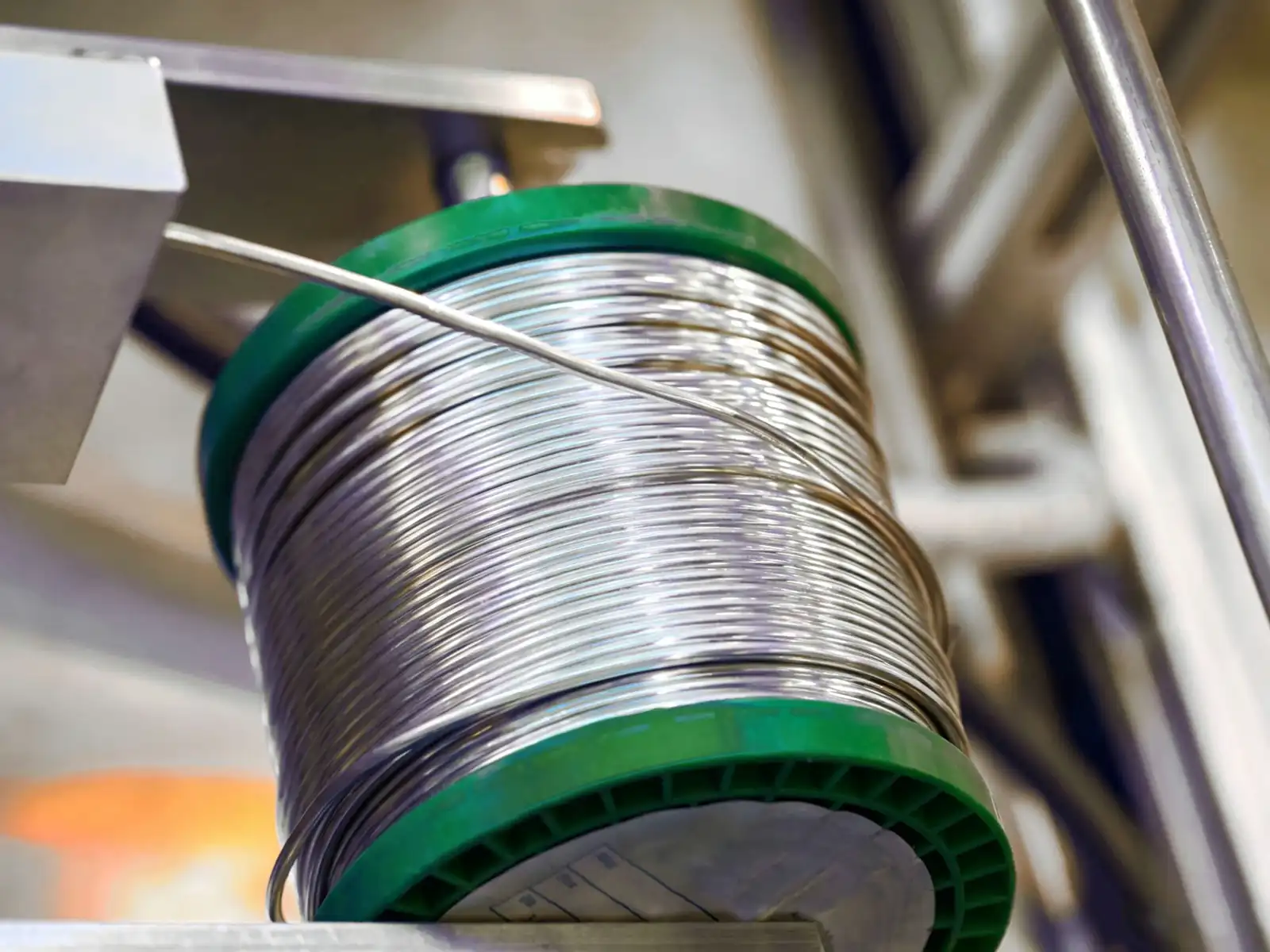
Titanium weld wire is selected against the base material, joint and qualified welding procedure. Start with the required filler classification and confirm the form, diameter, cleanliness and documentation for the intended process.
1. Selection and Acceptance Decisions
- Identify the base-metal grade and the properties required of the joint before reviewing candidate fillers.
- State whether the requirement is for straight filler lengths or a spool compatible with the selected process.
- Agree the certificate fields and traceability with the welding quality team, then qualify the selected consumable in the procedure as required.
Send a specification for this material with the grade, dimensions, quantity, intended use and the acceptance details listed above. Ask for confirmation of the quoted size, condition and documentation.
2. Filler Matching Logic
Base metal | Filler (AWS A5.16) | Why |
Grade 1 | ERTi-1 | Matching pure-Ti chemistry |
Grade 2 | ERTi-2 | Industry-standard CP filler |
Grade 4 | ERTi-4 | Strength-matching CP filler for higher-stress welds |
Grade 5 / Ti-6Al-4V | ERTi-5 | Matching alloy filler |
Grade 9 | ERTi-9 | Cold-formable alloy filler |
Grade 12 | ERTi-12 | Corrosion-matched filler |
Grade 23 ELI | ERTi-23 | ELI weld ductility for fracture-critical joints |
Table 1 — The base-metal-to-filler map.
3. Diameters and Forms
TIG rod runs φ0.8–3.0 mm in straight lengths (500–3, 000 mm class); MIG wire runs φ0.8–1.6 mm on spools. Buy annealed, bright, degreased product; cold-worked wire feeds inconsistently and carries surface lubricant residue unless explicitly cleaned.
Welding Essentials
- Clean everything — solvent-degrease (no chlorinated solvents) base metal and filler, wipe, and handle with gloves;
- Shield the whole weld — 5N argon torch shielding, trailing shield on the hot bead, back purge the root;
- Read the color — silver/light straw passes; blue-grey means contamination and rework;
- Keep H out — dry wire, dry gas, no moisture in the torch circuit;
- Match the procedure — weld qualification per code (ASME Section IX class practice) rather than ad-hoc parameters.
4. Common Failure Modes
Porosity comes from hydrogen (dirty wire or damp shielding); embrittlement comes from oxygen and nitrogen pickup (failed shielding); cracking comes from restraint plus contaminated filler. All three trace back to cleanliness and shielding — which is why titanium weld quality is mostly discipline, not metallurgy. Custom size, condition, tolerance and documentation can be reviewed to the purchase specification.
FAQ
(1) Which titanium weld wire is most common?
ERTi-2 — the matching filler for Grade 2, the most widely used titanium grade in welded equipment.
(2) Can I weld Grade 2 with ERTi-5?
Technically possible, but the weld overmatches the base metal and forfeits ductility. Match the filler to the base grade; ERTi-2 is the right filler for Grade 2.
(3) What shielding gas for titanium welding?
5N-purity argon is standard; helium additions help penetration on thicker sections. Trailing shields and back purging are mandatory, not optional.
(4) What is the maximum hydrogen limit for weld wire?
0.015% is the ceiling for alloy fillers (0.008% class for CP fillers per A5.16 practice) — demand the value on every certificate.
(5) Which diameter should I order?
Match to the joint: φ1.2–1.6 mm for general TIG work, φ0.8–1.2 mm for fine and root passes, φ2.0–3.0 mm for heavy fill. Custom size, condition, tolerance and documentation can be reviewed to the purchase specification.
Related Resources and Inquiry
See the titanium wire category or send your specification for weld wire supply.
Baoji Titanium Valley Titanium Nickel Zirconium Material Processing Co., Ltd. produces titanium wire and welding wire per ASTM B863 / AWS A5.16 from a dedicated drawing line, from fine wire to welding filler on spools, under ISO 9001 / ISO 13485. Send your specification to sales@titaniumvalleys.com — Custom size, condition, tolerance and documentation can be reviewed to the purchase specification.
5. Related Reading
- Titanium MIG Welding Wire: Shielding and Process Qualification
- Titanium MIG Wire: Spools, Storage and Receiving Inspection
References
1. AWS A5.16/A5.16M, Specification for Titanium and Titanium Alloy Welding Electrodes and Rods.
2. ASTM B863, Standard Specification for Titanium and Titanium Alloy Wire.
3. EN 10204, Metallic Products — Types of Inspection Documents.
This article is a technical reference. It does not constitute a commercial offer; dimensions, tolerances and documentation are confirmed at order review.
Published by: Titanium Valley Technical Team. Technical and quality review: pending.