
Titanium Alloy Rod: A Grade Selection Workflow
- Titanium Alloy Rod
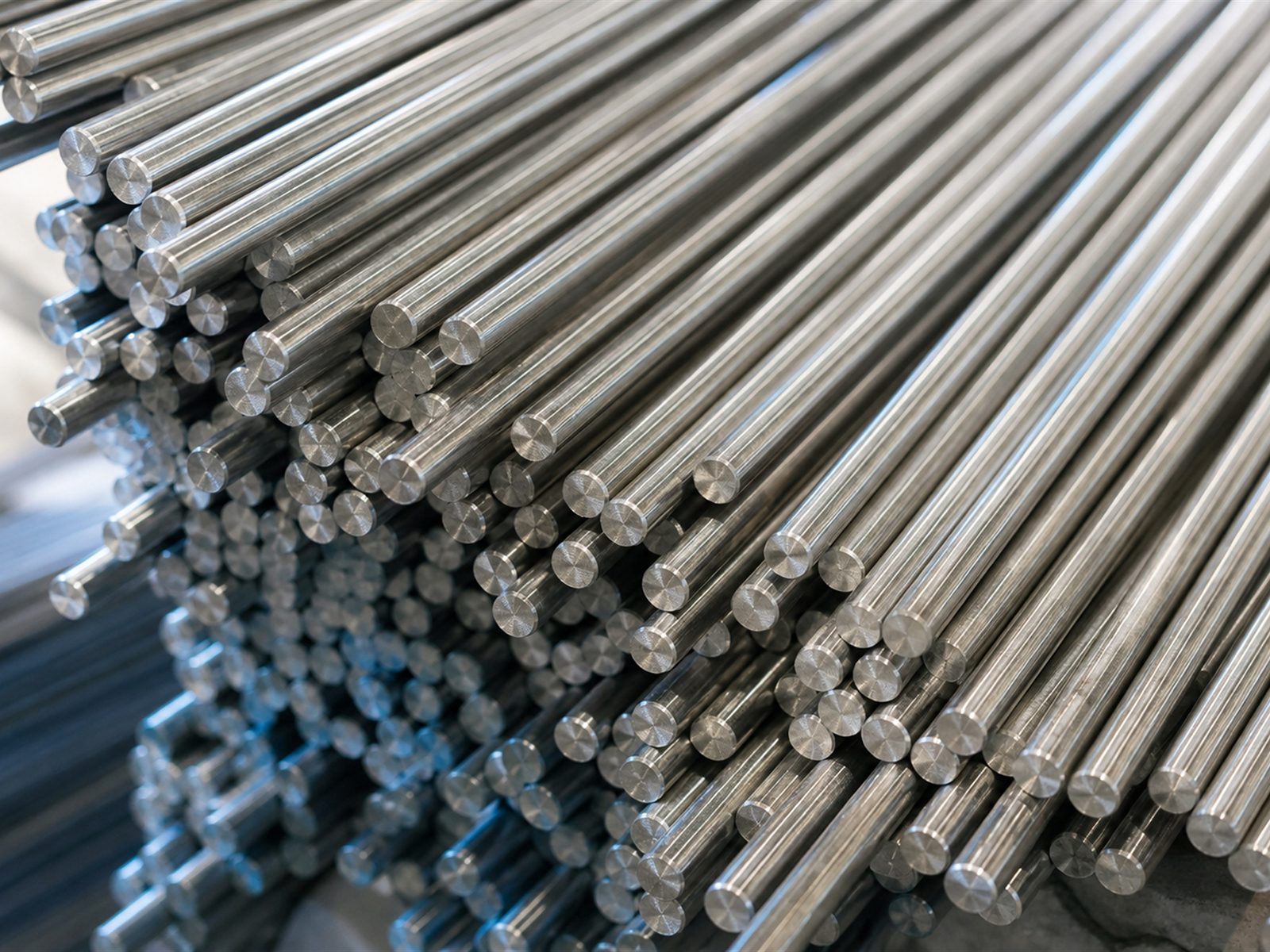
Titanium alloy rod selection starts with the component requirement. Compare strength, fabrication, corrosion service and any special material qualification, then identify the grade and delivery condition that need supplier review.
1. Selection and Acceptance Decisions
- For structural or machined parts, compare the required alloy condition with the finished-part mechanical requirements.
- For formed parts, review bend or forming trials before choosing a stronger alloy by a table value.
- For corrosion or specialist applications, state the service and applicable qualification separately from dimensional requirements.
Send a specification for this material with the grade, dimensions, quantity, intended use and the acceptance details listed above. Ask for confirmation of the quoted size, condition and documentation.
2. The Alloy Rod Ladder
Grade | Alloy | UNS | Tensile (min) | Elongation (min) | Position |
Grade 12 | Ti-0.3Mo-0.8Ni | R53400 | ≥ 483 MPa | 18% | Corrosion-focused, near-α |
Grade 9 | Ti-3Al-2.5V | R56320 | ≥ 620 MPa | 15% | Cold-formable, weldable |
Grade 5 | Ti-6Al-4V | R56400 | ≥ 895 MPa | 10% | α+β strength workhorse |
Grade 23 | Ti-6Al-4V ELI | R56401 | ≥ 860 MPa (F136) | 10% | Implant / fracture-critical |
Table 1 — Annealed minimums per ASTM B348 (Grade 23 per ASTM F136).
3. Selection Logic
Work the decision in three questions. Strength: above ~550 MPa only alloy rod qualifies — Grade 9 at 620 MPa, Grade 5 at 895 MPa. Forming and welding: Grade 9 cold-forms and welds like CP titanium; Grade 5 needs hot forming or careful process development and disciplined welding; Grade 12 adds crevice-corrosion value without the forming penalty. Temperature: Grade 5 holds strength to 350–400℃ continuously (500℃ short-term), well beyond the CP ceiling; Grade 9 and Grade 12 sit between. For implants, Grade 23 (ELI) is mandatory — ordinary Grade 5 does not satisfy ASTM F136 chemistry.
Applications by Grade
- Grade 5 — aerospace fasteners and brackets (AMS 4928), motorsport springs ~40–50% lighter than steel, high-end marine shafts, oil-and-gas hardware;
- Grade 9 — hydraulic and fluid-system fittings, bicycle and sports hardware, cold-formed precision parts;
- Grade 12 — heat-exchanger and desalination components, FGD internals, sour-service parts;
- Grade 23 — orthopedic implants, dental abutments, fracture-critical aerospace parts.
4. Machining and Cost Notes
All alloy rod machines harder than CP titanium, and Grade 5 hardest of all: thermal conductivity ≈ 1/7 of steel, so heat concentrates at the tool edge. Plan carbide tooling, 30–60 m/min speeds and high-pressure coolant. Alloy rod also costs more than CP — Grade 12 modestly, Grade 5 and Grade 23 significantly — so confirm the grade is doing real work before paying for it. Custom size, condition, tolerance and documentation can be reviewed to the purchase specification.
FAQ
(1) Which titanium alloy rod is strongest?
Grade 5 (Ti-6Al-4V) at ≥ 895 MPa annealed; cold-worked or heat-treated variants go higher, and Ti-6Al-4V ELI (Grade 23) sits just below at ≥ 860 MPa per ASTM F136.
(2) When should I choose alloy rod over pure titanium rod?
When tensile above ~550 MPa is needed, when service temperature approaches or exceeds the CP ceiling, or when certified aerospace/implant alloy chemistry is required.
(3) What is the difference between Grade 5 and Grade 9 rod?
Grade 5 (Ti-6Al-4V) is ~30% stronger but forms with difficulty; Grade 9 (Ti-3Al-2.5V) cold-forms and welds easily at 620 MPa. Fluid systems, springs and sports hardware favor Grade 9; load-bearing aerospace parts favor Grade 5.
(4) Does alloy rod anodize?
Yes — color and bond-prep anodizing work across the family, with the same process discipline as CP titanium.
(5) Which standards govern alloy rod?
ASTM B348 (Grades 5/9/12/23), AMS 4928 (Grade 5 aerospace), AMS 4943 practice for Grade 9 product, and ASTM F136 / ISO 5832-3 for Grade 23 implants.
5. Related Resources and Inquiry
See the Grade 5 rod page, the ASTM B348 ELI bar page and the titanium rod category, or send your specification.
Baoji Titanium Valley Titanium Nickel Zirconium Material Processing Co., Ltd. produces titanium rod and barstock from VAR-melted ingots on a rolling line rated over 20, 000 t/yr, per ASTM B348 / GB/T 2965, with cold-drawn, hot-rolled and forged routes. Send your specification to sales@titaniumvalleys.com — Custom size, condition, tolerance and documentation can be reviewed to the purchase specification.
6. Related Reading
- Grade 5 Titanium Rod: Machining Stock and Delivery Condition
- Grade 12 Titanium Rod: When to Review It Against Grade 2
References
1. ASTM B348/B348M, Standard Specification for Titanium and Titanium Alloy Bars and Billets.
2. ASTM E8/E8M, Standard Test Methods for Tension Testing of Metallic Materials.
3. SAE AMS 4928, Titanium Alloy Bars, Wire, Forgings and Rings, 6Al-4V, Annealed.
4. ASTM F136, Standard Specification for Wrought Titanium-6Aluminum-4Vanadium ELI Alloy for Surgical Implant Applications.
5. GB/T 2965, Titanium and Titanium Alloy Bars.
This article is a technical reference. It does not constitute a commercial offer; dimensions, tolerances and documentation are confirmed at order review.
Published by: Titanium Valley Technical Team. Technical and quality review: pending.