
Quarter-Inch Titanium Rod: Tolerance and Cut-Length Checklist
- 1/4 Titanium Rod
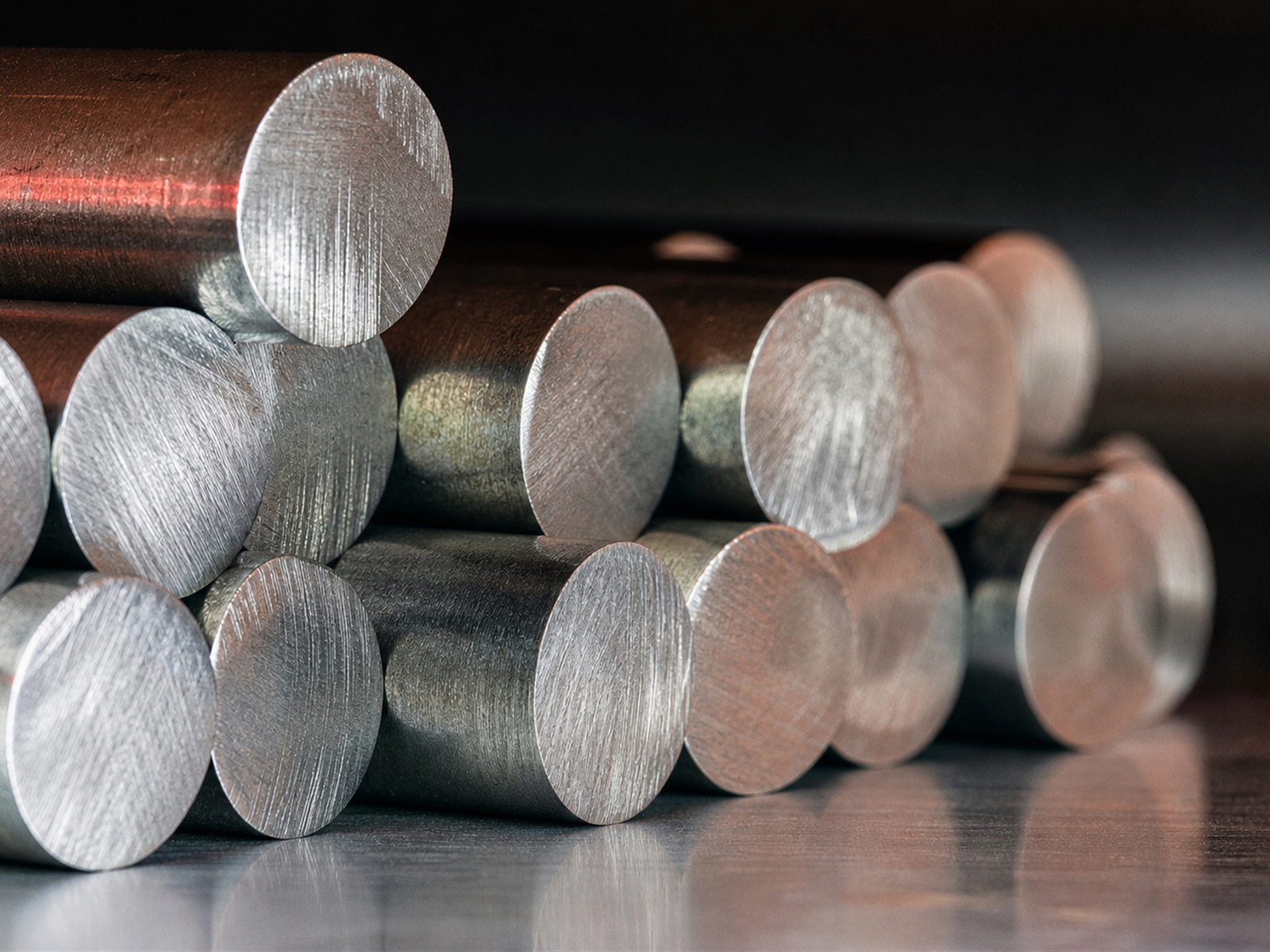
1/4 titanium rod is round titanium stock with a nominal diameter of 6.35 mm. Choose the grade for the part, then specify diameter tolerance, straightness, surface and cut length so the delivered stock suits the machining or assembly operation.
1. Selection and Acceptance Decisions
- Specify whether 6.35 mm is the raw-stock diameter or a finished part dimension.
- Give cut length, length tolerance and any deburring or chamfer requirement.
- For pins or shafts, state the finished fit and machining allowance before selecting the stock tolerance.
Send a specification for this material with the grade, dimensions, quantity, intended use and the acceptance details listed above. Ask for confirmation of the quoted size, condition and documentation.
2. The 6.35 mm Size in Context
Quarter-inch rod sits in the cold-drawn precision band (φ4–30 mm). It arrives straight — straightness targets of ≤1 mm/1, 000 mm are typical — with a bright drawn surface that machines and anodizes cleanly. Imperial buyers should also state the metric equivalent (6.35 mm) on the order, since mills plan in metric and the conversion is the source of most tolerance disputes.
3. Grades and Properties
Grade | Tensile (min) | Elongation (min) | Typical use |
Grade 1 | ≥ 240 MPa | 24% | Forming, welding stock, low-stress parts |
Grade 2 | ≥ 345 MPa | 20% | Pins, shafts, marine and chemical hardware |
Grade 5 | ≥ 895 MPa | 10% | High-strength pins, fasteners, spring stock |
Table 1 — Annealed minimums for the grades commonly supplied at 1/4 inch.
Typical Applications
- Marine and outdoor hardware — rigging pins, hinge pins and clips that must not rust;
- Machined shafts and axles — small mechanisms, drones, robotics;
- Fastener blanks — Grade 5 stock headed or threaded into titanium screws and studs;
- Jewelry, hobby and laboratory use — the classic small-quantity titanium rod order;
- Medical instrument components — non-magnetic, sterilizable, ordered to F67/F136 where applicable.
4. Ordering Notes
Specify: grade + UNS; diameter 6.35 mm (1/4 in) with tolerance (±0.05 mm class, or h9 tied to the route); length (random or cut); condition (annealed is the machining default); surface (bright or pickled); standard — ASTM B348 for bar form, or B863 if the same diameter is wanted on spools. Custom size, condition, tolerance and documentation can be reviewed to the purchase specification.
FAQ
(1) What is 1/4 inch in millimeters?
6.35 mm — quote the metric value on the order to avoid conversion-driven tolerance disputes.
(2) Is 1/4 inch titanium rod available in Grade 5?
Yes — Ti-6Al-4V at 6.35 mm is standard for high-strength pins and fastener stock, usually annealed.
(3) What tolerance should I expect?
±0.05 mm is common commercial practice; tighter bands are available for precision work and are quoted against the production route. Custom size, condition, tolerance and documentation can be reviewed to the purchase specification.
(4) Can 1/4 inch rod be welded?
Yes — all titanium grades weld with TIG or laser under inert-gas shielding; Grade 1 and Grade 2 are the most forgiving.
(5) Which grade for saltwater use?
Grade 2 is the standard cost-effective choice; Grade 12 where crevice corrosion or reducing-acid exposure is expected.
Related Resources and Inquiry
See the titanium rod category for grade pages, or send your specification.
Baoji Titanium Valley Titanium Nickel Zirconium Material Processing Co., Ltd. produces titanium rod and barstock from VAR-melted ingots on a rolling line rated over 20, 000 t/yr, per ASTM B348 / GB/T 2965, with cold-drawn, hot-rolled and forged routes. Send your specification to sales@titaniumvalleys.com — Custom size, condition, tolerance and documentation can be reviewed to the purchase specification.
5. Related Reading
- Titanium Rod 2.5 mm: Straight Stock and Coil Requirements
- Titanium Round Bar: Surface, Straightness and Tolerances
References
1. ASTM B348/B348M, Standard Specification for Titanium and Titanium Alloy Bars and Billets.
2. ASTM B863, Standard Specification for Titanium and Titanium Alloy Wire.
3. ASTM E8/E8M, Standard Test Methods for Tension Testing of Metallic Materials.
This article is a technical reference. It does not constitute a commercial offer; dimensions, tolerances and documentation are confirmed at order review.
Published by: Titanium Valley Technical Team. Technical and quality review: pending.