
Titanium Round Bar: Surface, Straightness and Tolerances
- Titanium Round Bar
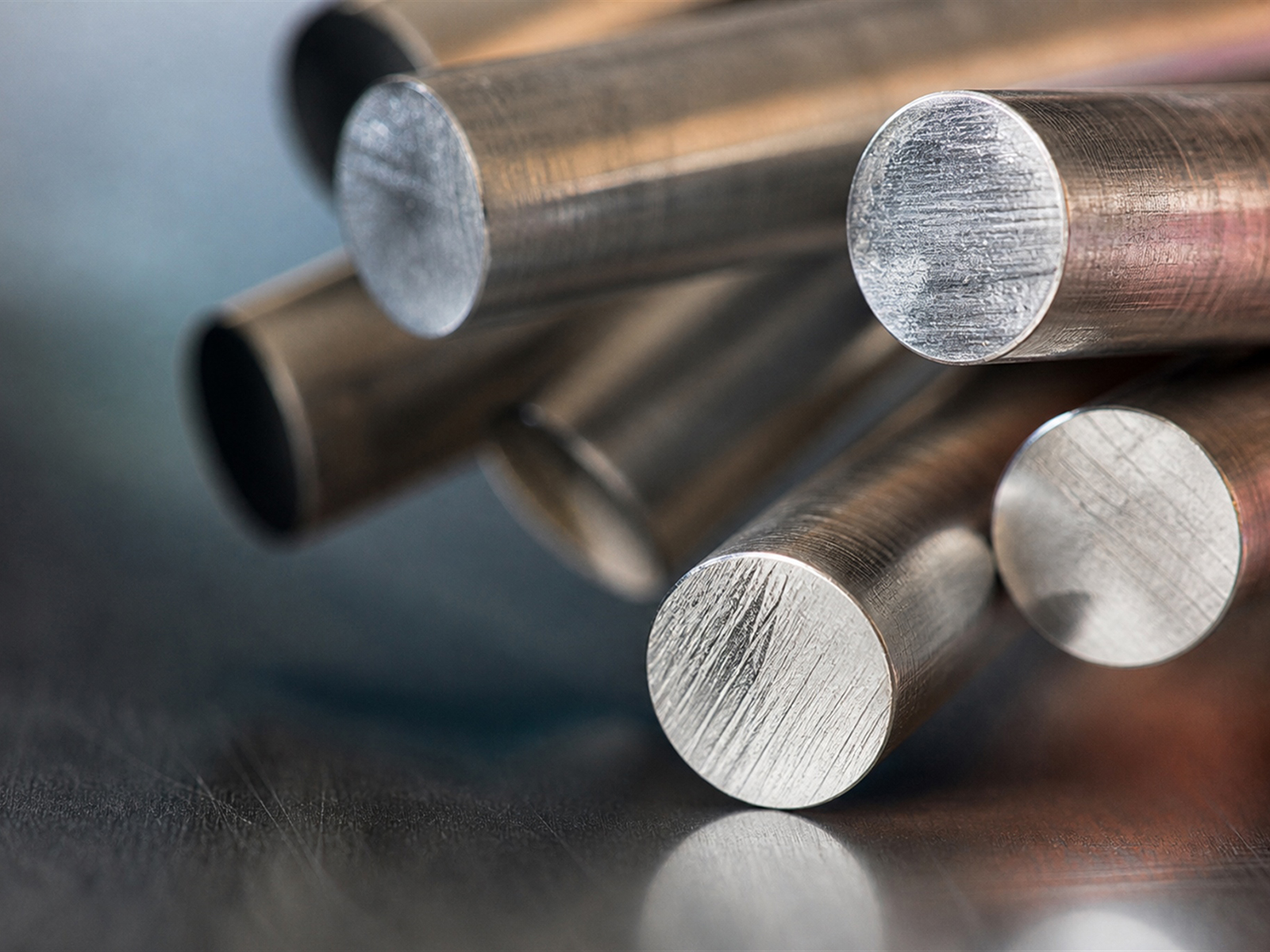
Titanium round bar orders need a coordinated choice of diameter, surface and delivery condition. The preferred stock depends on whether the material will be machined, formed or used close to its supplied dimensions.
1. Selection and Acceptance Decisions
- Compare drawn, peeled, turned or ground surface options against the required finish and cleanup allowance.
- Specify how straightness is measured, including the supported length and acceptable deviation.
- Separate diameter, ovality and length requirements so the quotation identifies the tolerance basis for each.
Send a specification for this material with the grade, dimensions, quantity, intended use and the acceptance details listed above. Ask for confirmation of the quoted size, condition and documentation.
2. The Three Supply Routes
Route | Diameter | Tolerance character | Surface | Best for |
Cold-drawn / precision | φ4–30 mm | h9/h10 class, ±0.05 mm class | Bright or ground | Precision parts, pins, fasteners |
Hot-rolled + annealed | φ30–100 mm (φ8–200 mm) | Standard rolling band | Pickled | General structures, shafts |
Forged | φ100–300 mm | Per drawing | Black or machined | Large load-bearing sections |
Table 1 — Size, tolerance and surface by production route.
3. Tolerance Bands, Used Correctly
The h9/h10/h11 system only means something when tied to a diameter and a route: h9 on a φ20 mm cold-drawn bar is a real machining input, while quoting “h9” without diameter or route is not. For roundness-sensitive parts, state ovality and straightness (≤1 mm/1, 000 mm is typical drawn-bar practice); for finish-machined parts, state the Ra target rather than the surface name.
Surface Conditions
- Black — as-forged or as-rolled, with oxide scale; the cheapest input, machined all over;
- Peeled — scale removed by peeling; silver finish, tighter diameter, common for hot-rolled stock;
- Turned / bright — machined to tolerance with a clean metallic surface; saves a roughing pass;
- Ground — precision shafts, Ra below 0.8 µm available; costs more, straightens best.
4. Lengths and Straightness
Random-length bar arrives at ~300–3, 000 mm (annealed) or up to ~6, 000 mm (hot-worked). Cut-to-length is standard practice, with the cut tolerance agreed in the contract — treat “random length” as a packaging term, not a tolerance. For automated feeding and precision machining, specify straightness explicitly.
5. Ordering Round Bar: The Complete Field List
Grade + UNS; diameter with tolerance band (tied to route); length type; surface with Ra where it matters; condition (annealed is the machining default); standard and edition (ASTM B348, GB/T 2965, AMS where required); quantity; documentation (MTR, NDT where agreed). Custom size, condition, tolerance and documentation can be reviewed to the purchase specification.
FAQ
(1) What diameter range is standard round bar?
φ4–30 mm cold-drawn, φ30–100 mm hot-rolled (φ8–200 mm overall), φ100–300 mm forged — with overlaps where both routes exist; choose by tolerance and surface need.
(2) What is the difference between peeled and turned bar?
Peeled bar is mechanically descaled after rolling — good tolerance, economical. Turned (bright) bar is machined to a cleaner, more consistent finish and tolerance; it costs more and saves a roughing pass.
(3) What tolerance should I specify?
Tie the band to the diameter and route: h9/h10 for drawn and turned bar, rolling bands for hot-rolled stock, per-drawing for forgings. Custom size, condition, tolerance and documentation can be reviewed to the purchase specification.
(4) What lengths are available?
Random lengths in the 300–3, 000 mm class (annealed) and up to ~6, 000 mm (hot-worked); cut-to-length with the cut tolerance agreed in the contract.
(5) Is square or hex stock also available?
Yes — square and hex sections (typically 6×6 to 80×80 mm) are standard alongside round bar, from the same grades and routes.
Related Resources and Inquiry
See the titanium rod category and its grade pages, or send your specification for a round bar quote.
Baoji Titanium Valley Titanium Nickel Zirconium Material Processing Co., Ltd. produces titanium rod and barstock from VAR-melted ingots on a rolling line rated over 20, 000 t/yr, per ASTM B348 / GB/T 2965, with cold-drawn, hot-rolled and forged routes. Send your specification to sales@titaniumvalleys.com — Custom size, condition, tolerance and documentation can be reviewed to the purchase specification.
6. Related Reading
- Titanium Barstock: Forms, Grades and Ordering Fields
- ASTM B348 Titanium Rod: Specification and MTR Review
References
1. ASTM B348/B348M, Standard Specification for Titanium and Titanium Alloy Bars and Billets.
2. ASTM E8/E8M, Standard Test Methods for Tension Testing of Metallic Materials.
3. GB/T 2965, Titanium and Titanium Alloy Bars.
This article is a technical reference. It does not constitute a commercial offer; dimensions, tolerances and documentation are confirmed at order review.
Published by: Titanium Valley Technical Team. Technical and quality review: pending.