
ASTM B348 Titanium Rod: Specification and MTR Review
- ASTM B348 Titanium Rod
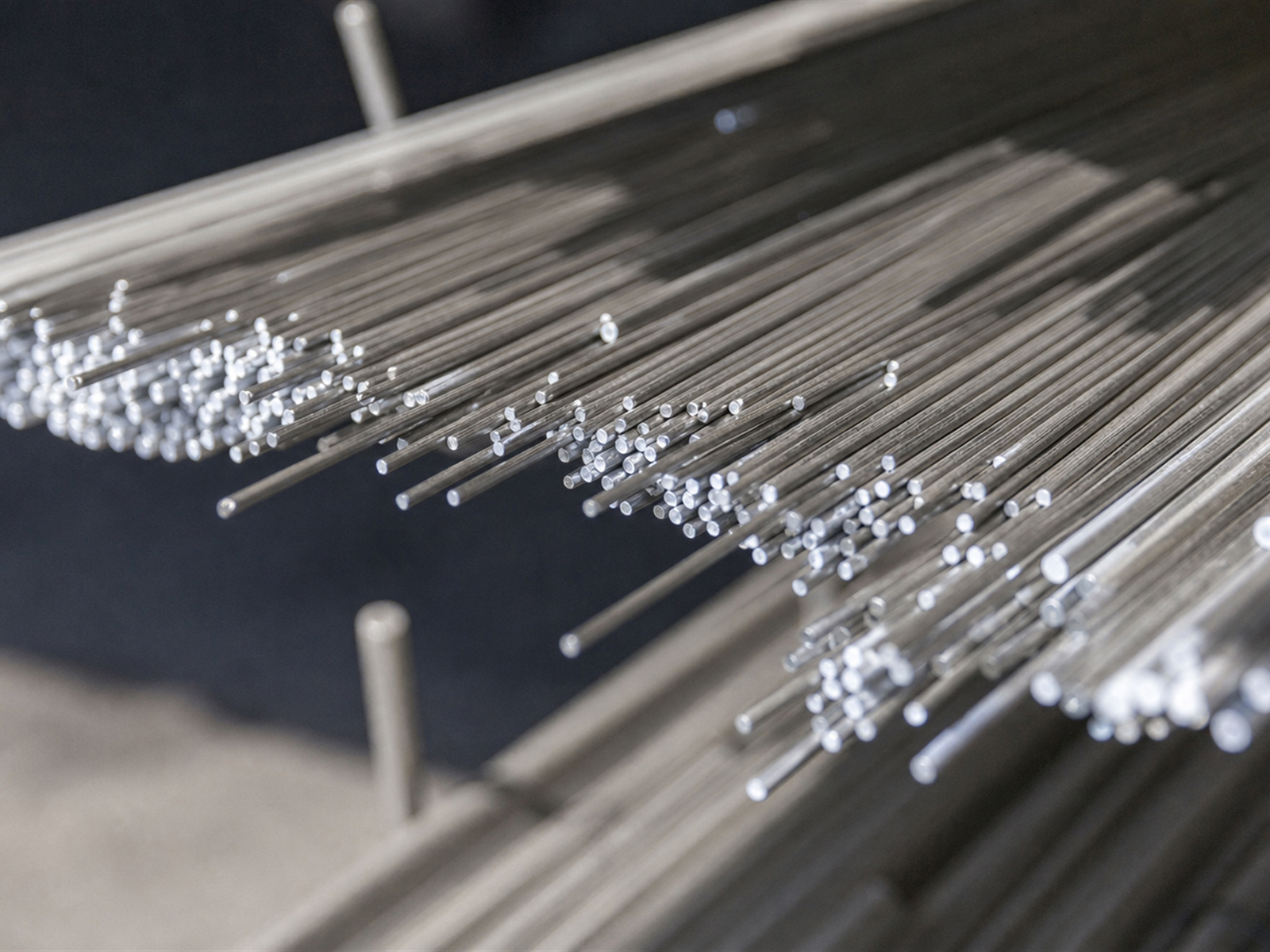
An ASTM B348 titanium rod order identifies the grade, standard edition and delivery condition together with dimensions and inspection requirements. Use the purchase order and material test report as a matched set when accepting the shipment.
1. Selection and Acceptance Decisions
- Match the heat number on the material to the report, then check grade, edition and reported condition.
- Separate mandatory standard requirements from added purchase-order requirements such as special surface or inspection criteria.
- Ask how the ordered size and condition affect the mechanical test requirements instead of copying a value from another product form.
Send a specification for this material with the grade, dimensions, quantity, intended use and the acceptance details listed above. Ask for confirmation of the quoted size, condition and documentation.
2. What B348 Covers
B348 covers bar (round, square, hex and other shapes) and billet in the commercial grades: Grade 1, 2, 3, 4 (CP), Grade 5 (Ti-6Al-4V), Grade 7 (Ti-0.2Pd), Grade 9 (Ti-3Al-2.5V), Grade 12 (Ti-0.3Mo-0.8Ni), Grade 23 (Ti-6Al-4V ELI) and others. B348M is the metric companion. The standard names the edition year on every certificate for a reason: composition and tolerance details change between editions, so the order must pin the edition.
3. Key Requirements by Grade
Grade | Tensile (min) | Yield (min) | Elongation (min) | Reduction of area (min) |
Grade 1 | ≥ 240 MPa | 170–310 MPa | 24% | 30% |
Grade 2 | ≥ 345 MPa | ≥ 275 MPa | 20% | 30% |
Grade 4 | ≥ 550 MPa | ≥ 483 MPa | 15% | 25% |
Grade 5 | ≥ 895 MPa | ≥ 828 MPa | 10% | 25% |
Grade 9 | ≥ 620 MPa | ≥ 483 MPa | 15% | 25% |
Grade 12 | ≥ 483 MPa | ≥ 345 MPa | 18% | 25% |
Table 1 — Annealed tensile minimums per ASTM B348 (confirm against the contracted edition; Grade 23 requirements align with the standard’s Grade 23 table).
Where B348 Stops
- NDT — ultrasonic/eddy-current inspection is supplementary, not default;
- Hardness — not a B348 acceptance item; use it only by private agreement;
- Implant and aerospace regimes — ASTM F67/F136 and AMS 4928 impose additional chemistry, melting and documentation requirements on top of B348;
- Special melting — double/triple VAR, cold-hearth melting and grain-size controls are purchase-specification items.
4. How to Read the MTR
Five checks: heat number; full chemistry including O, N, H and Fe (and Al/V/Mo/Ni for alloys); tensile, yield, elongation and reduction of area against the stated condition and size; the standard edition plus any supplementary requirements; and traceability between certificate, packing list and bar markings. A certificate quoting only tensile strength, or omitting interstitial chemistry, is incomplete.
5. Ordering Against B348
Write: grade + UNS; diameter with tolerance band tied to route; length type; surface; condition; “ASTM B348-xx Grade X” with edition year; supplementary requirements (NDT, special melting, tighter chemistry); documentation (MTR, third-party where required). Custom size, condition, tolerance and documentation can be reviewed to the purchase specification.
FAQ
(1) Does ASTM B348 cover titanium wire?
No — wire is covered by ASTM B863. B348 governs bar and billet; small diameters sold as straight rod are bar form, while the same diameter on spools is wire form.
(2) Is NDT included in ASTM B348?
No — ultrasonic or eddy-current testing must be specified as a supplementary requirement for load-bearing or safety-critical parts.
(3) What is the difference between B348 and F67?
B348 is the general industrial bar specification; F67 is the surgical-implant specification for unalloyed titanium with its own chemistry, property and documentation regime.
(4) Why does the edition year matter?
Composition limits and tolerance details change between editions; the certificate and the order must name the same edition to be enforceable.
(5) Which grades are in ASTM B348?
More than 30, including all the commercial grades buyers order: 1, 2, 3, 4, 5, 7, 9, 12, 23 and the alloy and palladium-bearing variants.
6. Related Resources and Inquiry
See the titanium rod category and the ASTM B348 aerospace Gr5 ELI bar page (request matching material specifications), or send your specification.
Baoji Titanium Valley Titanium Nickel Zirconium Material Processing Co., Ltd. produces titanium rod and barstock from VAR-melted ingots on a rolling line rated over 20, 000 t/yr, per ASTM B348 / GB/T 2965, with cold-drawn, hot-rolled and forged routes. Send your specification to sales@titaniumvalleys.com — Custom size, condition, tolerance and documentation can be reviewed to the purchase specification.
7. Related Reading
- Titanium Barstock: Forms, Grades and Ordering Fields
- Grade 5 Titanium Rod: Machining Stock and Delivery Condition
References
1. ASTM B348/B348M, Standard Specification for Titanium and Titanium Alloy Bars and Billets.
2. ASTM E8/E8M, Standard Test Methods for Tension Testing of Metallic Materials.
3. ASTM F67, Standard Specification for Unalloyed Titanium, for Surgical Implant Applications.
4. ASTM F136, Standard Specification for Wrought Titanium-6Aluminum-4Vanadium ELI Alloy for Surgical Implant Applications.
5. SAE AMS 4928, Titanium Alloy Bars, Wire, Forgings and Rings, 6Al-4V, Annealed.
6. EN 10204, Metallic Products — Types of Inspection Documents.
This article is a technical reference. It does not constitute a commercial offer; dimensions, tolerances and documentation are confirmed at order review.
Published by: Titanium Valley Technical Team. Technical and quality review: pending.