
What Is the Engineering Selection Guide for Gr2 (Grade 2) Titanium Bar: Composition, Properties, Specifications, and Applications?
- Gr2 Titanium Bar
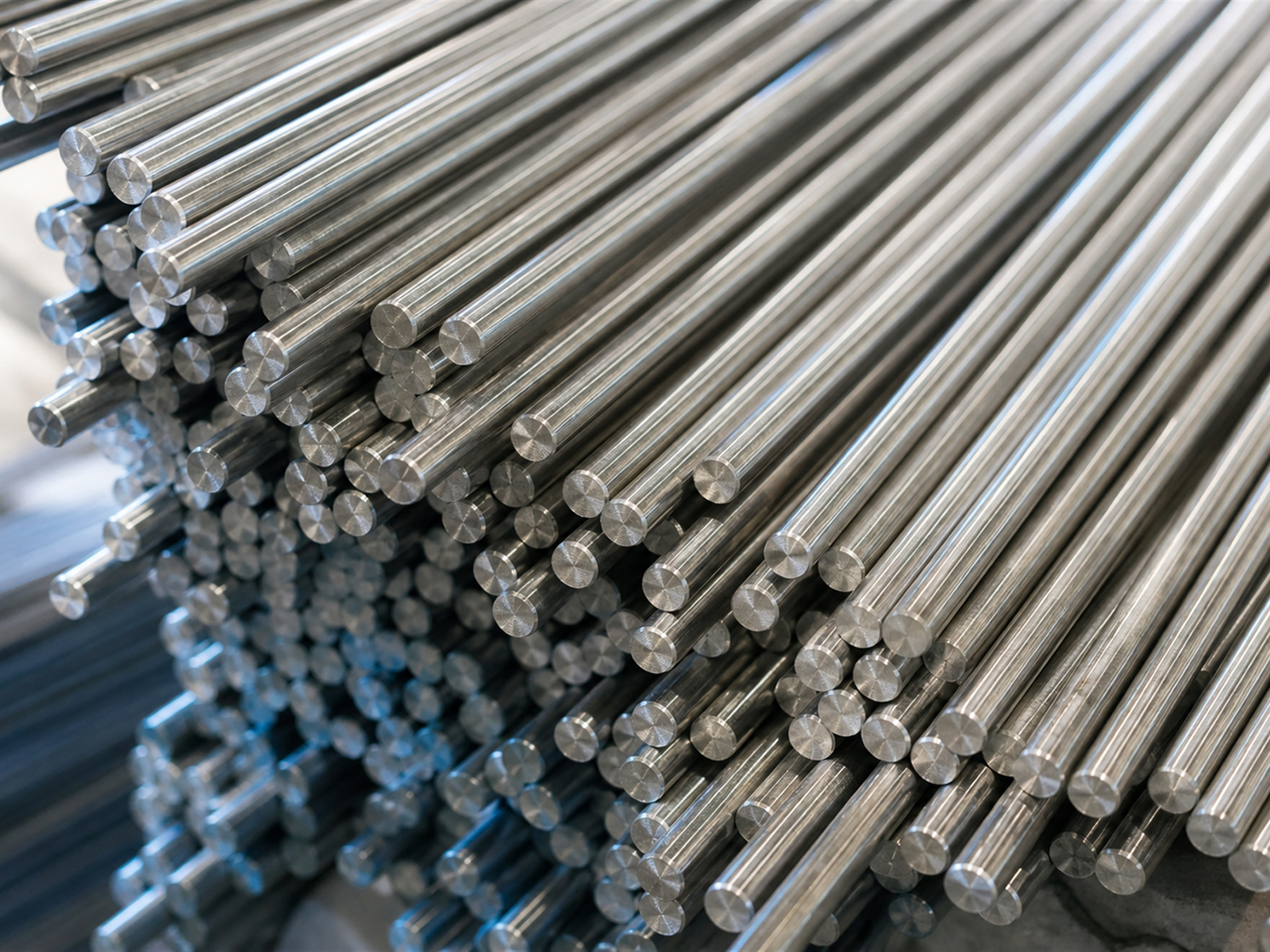
Direct engineering answer. Gr2 Titanium Bar should be evaluated against the finished component, product form, governing specification, downstream process and acceptance evidence. A general property value is an orientation tool; the released drawing, current certificate and inspection plan control the final decision.
Among metallic materials, Gr2 titanium rod (Grade 2 Titanium Rod) has long held an important position. It is neither the strongest titanium alloy nor the lowest-cost metal, but it strikes an excellent balance among corrosion resistance, workability, biocompatibility, and weight control. Whether you are an engineer responsible for chemical equipment material selection or a procurement specialist needing a stable supply chain, Gr2 titanium rod can often meet requirements at a lower total life-cycle cost under suitable service conditions. This article begins with the material fundamentals and systematically reviews the composition logic, performance boundaries, specification systems, and typical applications of Gr2 titanium rod to help you make well-documented material selection decisions.
1. The Material Fundamentals of Gr2 Titanium Rod: Composition Logic Determines Performance Boundaries
To understand Gr2 titanium rod, one must first read its chemical composition table carefully. Many procurement professionals simply classify it as pure titanium, but this understanding can easily lead to material selection errors. The chemical composition of Gr2 is a tightly controlled engineering formulation, and the upper limit of every element directly affects the final performance of the material.
(1) Chemical Composition and Impurity Control
Per ASTM B348 Grade 2, the primary chemical composition control of Gr2 titanium rod is as follows:
Element | Content Requirement |
Nitrogen (N) | ≤ 0.03% |
Carbon (C) | ≤ 0.08% |
Hydrogen (H) | ≤ 0.015% |
Iron (Fe) | ≤ 0.30% |
Oxygen (O) | ≤ 0.25% |
Titanium (Ti) | Balance |
In the table, titanium balance is the conventional representation used by ASTM B348 for Grade 2. Although the titanium content of Gr2 is typically above 99.2%, the standard primarily controls composition through impurity maximums and titanium balance; Ti ≥ 99.2% should not be listed as a standalone acceptance clause.
Oxygen content is one of the most critical control variables. The maximum oxygen content of Gr1 is 0.18%; for Gr2 it is raised to 0.25%. Correspondingly, in ASTM B348, the minimum tensile strength of Grade 2 is 345 MPa versus 240 MPa for Grade 1, an increase of approximately 44%. Oxygen acts as an interstitial strengthening element in the titanium lattice, contributing to strength while also affecting ductility. Iron content also requires control; excessive iron may affect passive film stability or localized corrosion tendency. However, under the Gr2 limit of 0.30%, significant TiFe precipitates generally do not form, and the effect of iron on corrosion resistance should not be simplistically attributed to a grain-boundary TiFe mechanism.
(2) Microstructure, Low-Temperature Toughness, and Welding Behavior
At room temperature, Gr2 is an α-phase commercially pure titanium with a hexagonal close-packed (HCP) crystal structure and good low-temperature toughness. Even in cryogenic environments such as liquid hydrogen storage tanks at -253℃, Gr2 titanium rod maintains good toughness and can serve as a candidate structural material for cryogenic equipment. However, it should not be absolutized as an irreplaceable material without reference to specific design and specification requirements.
Regarding welding, although Gr2 is α-phase at room temperature, the weld heat-affected zone still undergoes α→β transformation and grain growth, reforming α microstructure upon cooling. Therefore, Gr2 titanium rod generally does not require post-weld heat treatment, but weld heat input, shielding gas, and surface cleanliness must be controlled to achieve acceptable joint performance.
(3) Key Differences from Adjacent Grades
Many engineers hesitate among Gr1, Gr2, Gr3, and Gr4. The common commercially pure titanium grades include Gr1–Gr4; the table below lists their main distinguishing points:
Grade | Tensile Strength (MPa) | Max Oxygen Content | Typical Advantage |
Gr1 | ≥ 240 | 0.18% | Extreme ductility, suitable for deep drawing |
Gr2 | ≥ 345 | 0.25% | Best balance of strength and workability |
Gr3 | ≥ 450 | 0.35% | Further increased strength while retaining certain workability |
Gr4 | ≥ 550 | 0.40% | High strength, greater machining difficulty |
Gr2 occupies the balanced zone of the commercially pure titanium series—its strength is sufficient for light- to medium-load applications, elongation is typically ≥ 20%, and it performs consistently in cold forming, bending, and deep drawing. This balance is a major reason it has become one of the most widely used commercially pure titanium grades worldwide.
2. Production Processes and Specification Systems: Technical Parameters That Procurement Professionals Must Master
Many procurement errors stem from a vague understanding of specification parameters. The production process of Gr2 titanium rod directly affects internal microstructure uniformity and surface condition, which in turn influences downstream processing yield.
(1) Common Process from Titanium Sponge to Finished Bar
The manufacturing of Gr2 titanium rod begins with high-purity titanium sponge. Depending on the production route, processes such as vacuum arc remelting (VAR) and cold hearth melting are commonly used. The number of melting cycles depends on raw material quality, product application, and standard requirements; multiple melts are common to ensure composition uniformity, but not all Gr2 titanium rod must undergo two vacuum melting cycles. The material is then formed into bar by forging, hot rolling, or hot forging. Subsequent steps may include annealing and pickling; turning or grinding is performed when precision dimensions are required. Whether ultrasonic or eddy current inspection is performed should follow the order, application field, and standard requirements; it is not a mandatory step for all bars. Uniform internal microstructure and stable dimensional tolerances are prerequisites for batch precision machining, but the specific process should be confirmed in conjunction with supplier capability and product specification.
(2) Common Specifications and Customization Capability (Examples)
The following are examples of common specifications from some suppliers; they are not unified industry standards. Specifics should be confirmed against the supplier’s actual inventory and capability:
Specification Type | Diameter/Dimension Range | Primary Application |
Hot-rolled round bar | φ8–φ200 mm | General industrial parts, chemical equipment components |
Cold-drawn precision bar | φ4–φ30 mm | Precision machining, medical devices |
Forged bar | φ100–φ300 mm | Large structural components, mold accessories |
Square bar | Side length 6×6–80×80 mm | Bolts, nuts, special fasteners |
Hexagonal bar | Width across flats S6–S80 mm | Bolts, nuts, special fasteners |
Regarding length, annealed bars are typically supplied in random/mill lengths, commonly in the range of approximately 300–3000 mm; hot-worked bars can reach approximately 6000 mm. Cut-to-length tolerances should be agreed between buyer and supplier in the contract; supplier rule-of-thumb values such as +20 mm or 5 mm per cut should not be treated as general industry standards.
(3) Effect of Surface Condition on Downstream Processing
The surface condition of Gr2 titanium rod directly affects subsequent machining, welding, and coating adhesion. Pickled surfaces typically have a silver-white matte appearance, with roughness largely influenced by prior hot working; typical values may be Ra 3.2–6.3 μm or higher, but these should not be treated as guaranteed standard values. Bright turned or ground surfaces typically have an Ra below 0.8 μm or even lower, suitable for precision instrument components. Medical implants, however, often require additional polishing, passivation, or higher surface finish and should not be assumed to be standard with turned/ground surfaces. During procurement, the required surface condition and roughness should be clearly specified to avoid rework losses caused by surface treatment differences.
3. In-Depth Analysis of Performance Advantages: Decision Basis for Engineer Material Selection
Gr2 titanium rod is often described as a corrosion-resistant lightweight material, but this description is far from sufficient to support engineering decisions. Its performance advantages must be analyzed within the dimensions of specific service conditions.
(1) Corrosion Resistance: The Engineering Value of the Self-Healing Oxide Film
The corrosion resistance mechanism of Gr2 titanium rod derives from a spontaneously formed TiO₂ passive film on the surface, approximately 2–7 nanometers thick, which possesses the ability to self-repair after damage. Gr2 titanium rod exhibits good corrosion resistance in seawater, chloride environments, and oxidizing acids such as nitric acid. In media with high chloride ion concentrations, such as chlor-alkali production environments, Gr2 titanium rod is generally more stable than 316L stainless steel.
It is particularly important to note that titanium generally has poor corrosion resistance in reducing acids such as dilute hydrochloric acid and should not be selected for such environments unless oxidizers or corrosion inhibitors are present. The corrosion resistance of the weld zone is affected by welding protection, heat input, and specific medium conditions; with good welding practice it is generally close to that of the base metal, but it cannot be absolutely guaranteed to be unaffected. Specific corrosion service life should be evaluated comprehensively based on medium composition, temperature, flow rate, and structural design; generic conclusions such as 3–5 times stainless steel or more than 15 years should not be stated.
(2) Lightweight Characteristics and Magnetic Properties
The density of Gr2 titanium rod is 4.51 g/cm³, approximately 57% of that of stainless steel (7.9 g/cm³); comparing material density alone, per-part weight can be reduced by about 43%. However, actual structural weight reduction must also consider stiffness, strength, and cross-sectional design. Titanium has a relatively low elastic modulus, and components sensitive to bending stiffness may require larger cross-sections; system-level weight reduction cannot be calculated by density alone. The relative magnetic permeability of Gr2 is typically about 1.00005–1.0001, close to that of non-magnetic materials, making it suitable for applications sensitive to magnetic field interference such as structural components around MRI equipment and precision instrument sensors.
(3) Biocompatibility: The Material Foundation for Medical-Grade Applications
The use of Gr2 titanium rod in the medical field must be selected according to specific loading and application. Titanium has good osseointegration affinity with human bone tissue, does not release harmful metal ions, and rarely provokes immune rejection reactions. Gr2 is mainly used for surgical instruments, non-load-bearing or low-load-bearing implants, temporary fixation devices, and accessories. Dental implants and most load-bearing orthopedic implants more commonly use Grade 4 commercially pure titanium or Ti-6Al-4V ELI and should be selected in accordance with ASTM F67, ISO 5832-2, or the applicable medical specification. Gr2 should not be considered generically suitable for all orthopedic implants.
4. Analysis of Mainstream Application Scenarios: From Chemical Anti-Corrosion to New Energy Frontiers
The application landscape of Gr2 titanium rod spans multiple industries, but different scenarios emphasize different aspects of its performance. A thorough understanding of these differences is necessary to match materials to needs during selection.
(1) Chemical Anti-Corrosion: The Largest Traditional Application Base
Chemical anti-corrosion is a large-volume application field for Gr2 titanium rod. Components such as heat exchanger tube bundles, reactor agitator shafts, tower equipment accessories, pump bodies, valves, and flange fasteners frequently contact nitric acid, chloride-containing oxidizing media, organic acids, alkaline solutions, and seawater/chloride environments. It should be particularly noted that reducing acids such as dilute hydrochloric acid are generally not suitable unless oxidizers or corrosion inhibitors are present. In certain chlor-alkali and seawater conditions, Gr2 titanium rod can significantly extend maintenance intervals, but actual service life must be evaluated against real service conditions, and unconditional life multipliers should not be given.
(2) Marine Engineering and Shipbuilding: The Preferred Choice for Chloride Environments
The most challenging factors of the marine environment for metallic materials are high concentrations of chloride ions and sustained electrochemical corrosion. Gr2 titanium rod has gained substantial engineering validation in desalination plants, seawater piping, ship corrosion-resistant structural components, and offshore platform accessories. It offers good resistance to seawater, salt spray, and chloride ions and generally does not require additional cathodic protection, though specific designs must still be evaluated against system requirements. Marine engineering procurement has long lead times and large batch volumes; consistent material quality and traceable quality documentation are capabilities that suppliers must possess.
(3) Structural Applications in New Energy and Green Hydrogen
In electrolytic hydrogen production, electrodes, bipolar plates, and porous diffusion layers are typically made from titanium sheet, powder, or porous materials, which are not the primary bar product forms. Gr2 titanium rod is more likely to be used for structural supports, connectors, and frames within electrolyzer cells. In all-vanadium redox flow batteries, titanium rod may be used for electrode frames, conductive supports, or structural connectors; seals, however, are typically made from materials such as fluororubber and PTFE, and titanium rod should not be regarded directly as a sealing material. As the green hydrogen industry develops, demand for high-purity commercially pure titanium is rising, but bar demand should be evaluated in the context of specific structural and conductive connection applications.
5. Procurement Decision Checklist: How to Avoid Material Selection and Supply Chain Risks
(1) Key Points for Verifying Technical Documentation
For each batch of Gr2 titanium rod purchased, a Material Test Certificate (MTC) should be requested, and the following key items verified: chemical composition reports (per heat), mechanical property test data, and non-destructive testing reports. Standard selection should match the application field: general industrial procurement may reference ASTM B348; medical implant applications should cite ASTM F67 or ISO 5832-2; aerospace applications should cite AMS or the applicable aerospace specification. ASTM B348 alone should not be used to cover medical or aerospace scenarios.
Non-destructive testing methods should also be specifically defined: ultrasonic testing is primarily for internal defects, while eddy current testing is primarily for surface/near-surface defects; the two cannot be loosely interchanged or simply listed together. The completeness of the documentation chain directly affects quality traceability and is an important defense against inbound quality risks.
(2) Clear Specification of Dimensional Tolerances and Surface Condition
The purchase order must clearly specify diameter tolerances and the corresponding processing method, such as hot rolling, cold drawing, turning, or grinding. Common tolerance grades such as h9, h10, and h11 are meaningful only when matched to a specific diameter range and processing method; they cannot be written in isolation. Length should distinguish between cut length and random/mill length, and the latter is not a tolerance concept. Surface condition and straightness requirements should also be specified in the contract. Confirming each item before ordering is an effective way to avoid delivery disputes.
(3) Dimensions for Supplier Capability Assessment
When evaluating Gr2 titanium rod suppliers, priority should be given to the match between annual capacity and lead time, non-standard customization capability, quality system certifications, availability of third-party test reports, and the industry coverage of historical customer cases. Suppliers capable of stable supply, rapid response, and complete quality documentation are the ones that can reduce overall procurement risk.
6. Conclusion
The value of Gr2 titanium rod lies not in being the best material but in its ability to provide a balance of durability, workability, and safety at favorable cost-effectiveness under suitable service conditions. Understanding its composition logic, specification systems, performance boundaries, and application limits makes material selection decisions more reliable.
FAQ
(1) Q1: What Are the Fundamental Differences in Applicable Scenarios Between Gr2 Titanium Bar and Gr5 Titanium Alloy Bar?
Gr2 is a commercially pure titanium known for corrosion resistance and workability, suitable for corrosive environments in chemical, medical, and marine applications. Gr5 (Ti-6Al-4V) has a tensile strength of more than 900 MPa and is mainly used for aerospace structural components and high-load mechanical parts, but its machining difficulty and cost are significantly higher than those of Gr2.
(2) Q2: When Purchasing Gr2 Titanium Bar, How Can I Determine Whether the Material Conforms to ASTM B348?
The supplier should provide a heat-by-heat Material Test Certificate (MTC). The report should include chemical composition and mechanical property test data and meet ASTM B348 requirements. For medical or aerospace applications, it should also comply with ASTM F67/ISO 5832-2 or AMS/the applicable aerospace specification, respectively. Independent third-party test reports may be requested when necessary.
(3) Q3: Does Gr2 Titanium Bar Require Additional Heat Treatment After Welding?
Under normal circumstances, Gr2 titanium bar does not require post-weld heat treatment after conventional welding. However, it should be noted that the weld heat-affected zone undergoes α→β transformation and grain growth, reverting to α-phase microstructure upon cooling; the final joint’s corrosion resistance and mechanical properties are influenced by welding protection, heat input, and cleanliness. For special applications involving high stress concentration or cryogenic service, whether to perform stress-relief annealing should be evaluated based on specific service conditions.
Contact Us
Looking for a reliable Gr2 titanium bar (Grade 2 commercially pure titanium bar, UNS R50400) manufacturer, supplier, or processing service provider? A professional titanium material company with full-process capability—from high-purity titanium sponge, vacuum arc remelting/cold hearth melting, forging breakdown, hot rolling/hot forging to annealing, pickling, turning/grinding, and non-destructive testing—can supply to standards such as ASTM B348 and GB/T 2965, covering hot-rolled round bar (φ8–φ200 mm), cold-drawn precision bar (φ4–φ30 mm), forged bar (φ100–φ300 mm), square bar, and hexagonal bar. Lengths can be delivered as random lengths (approximately 300–3000 mm) or cut to length, with surface conditions including pickled and bright turned/ground finishes. Material Test Certificates (MTC, including per-heat chemical composition and mechanical properties), non-destructive testing reports (ultrasonic/eddy current as specified), third-party test reports, and batch traceability documentation can be provided; for medical or aerospace applications, supply can comply with ASTM F67/ISO 5832-2 or AMS specifications, respectively. Contact us at: sales@titaniumvalleys.com
References
- China National Nonferrous Metals Standardization Technical Committee. GB/T 3620.1-2016 Designation and composition of titanium and titanium alloys [S]. Beijing: Standards Press of China, 2016.
- China National Nonferrous Metals Standardization Technical Committee. GB/T 2965-2016 Titanium and titanium alloy bars [S]. Beijing: Standards Press of China, 2016.
- China Food and Drug Administration. GB/T 13810-2017 Wrought titanium and titanium alloy for surgical implants [S]. Beijing: Standards Press of China, 2017.
- Zhang Xiyan, Zhao Yongqing, Bai Chenguang. Titanium Alloys and Applications [M]. Beijing: Chemical Industry Press, 2005.
Engineering specification and verification framework
For Gr2 Titanium Bar, state grade, ordered product form, condition, nominal dimensions, tolerances, surface requirement, quantity and documentation in one controlled RFQ. The applicable product-form reference is ASTM B348, subject to the current edition and project-specific requirements. When tensile evidence is required, define the test method and sampling basis; ASTM E8/E8M or ISO 6892-1 may apply where consistent with the order.
| RFQ field | Required detail | Reason |
|---|---|---|
| Material identity | Grade, form, ASTM B348, condition | Prevents unintended substitution. |
| Geometry | Nominal size, tolerance, length or coil form | Defines production and inspection scope. |
| Process context | Forming, machining, joining, etching or assembly | Relates supply condition to actual manufacture. |
| Verification | Certificate, dimensional checks, lot identity | Creates a traceable acceptance plan. |
Risk review and incoming control
Common avoidable risks include tolerance stack-up, unclear condition, surface damage, undocumented substitution and loss of lot identity after cutting. At receipt, reconcile the purchase order, packing label and certificate before release to production. Define any supplementary testing, sampling and report format before quotation rather than after shipment.
Technical FAQ
Can catalogue values approve the material?
No. Final approval must use the ordered form, condition, standard, drawing, process route and service boundary.
What should an RFQ include?
Provide the drawing where available, grade and standard, dimensions, tolerance, condition, quantity, process context, service information and documentation requirement.
Product resources and technical quotation
Review the relevant titanium bar or rod product category. For a drawing-based review, request a technical quotation with the full specification.
References and use note
- ASTM B348, applicable edition, for the ordered product form.
- ASTM E8/E8M or ISO 6892-1 where the project specifies tensile verification.
- Project drawing, purchase specification, certificate and agreed inspection plan.
This engineering note supports procurement specification. It does not replace component design validation or the governing contractual standard.