
What Is the Comprehensive Guide to Ni200 Bar (UNS N02200) for Industrial Buyers?
- Ni200 Bar
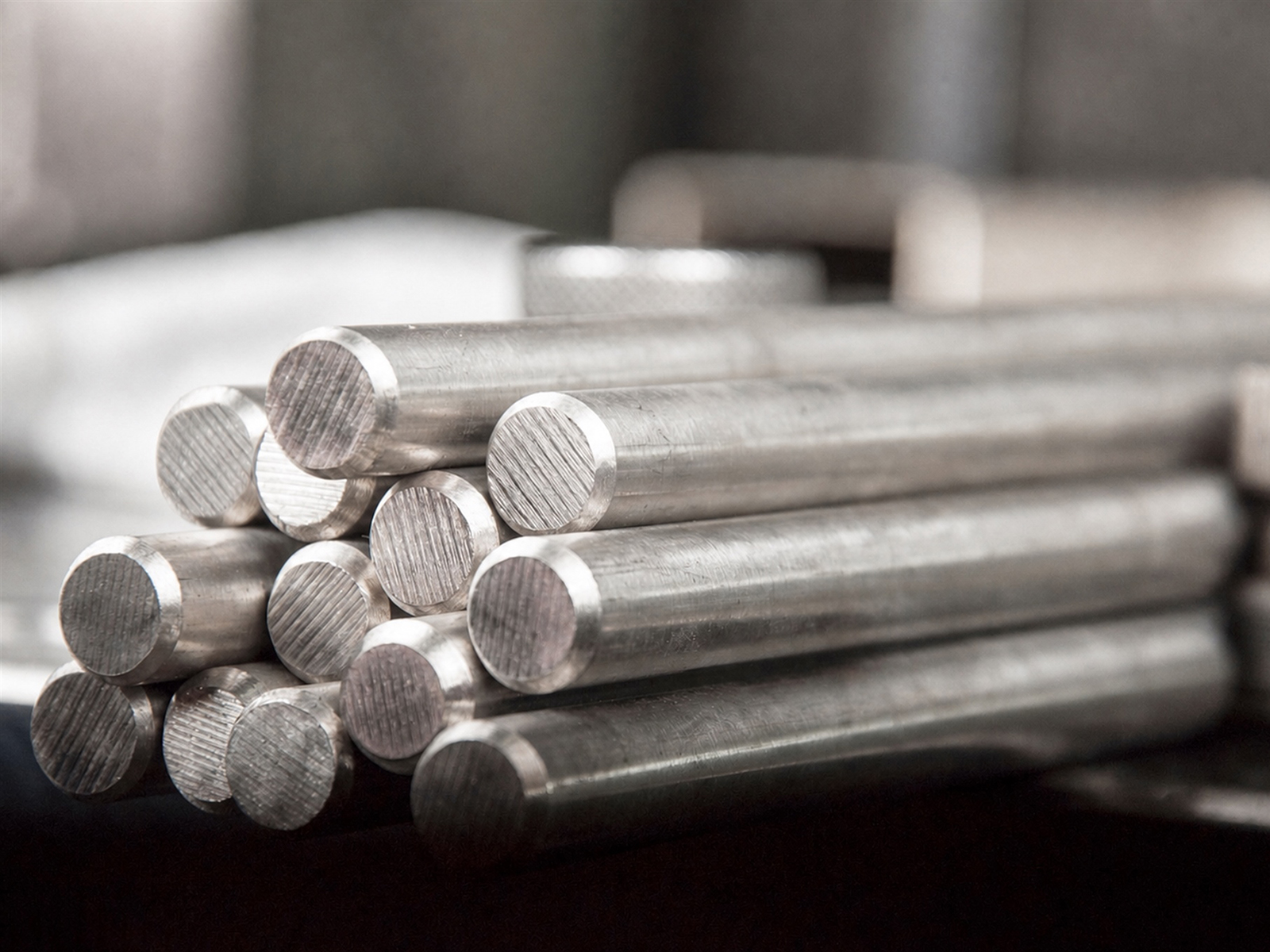
Direct engineering answer. Ni200 Bar should be evaluated against the finished component, product form, governing specification, downstream process and acceptance evidence. A general property value is an orientation tool; the released drawing, current certificate and inspection plan control the final decision.
Ni200 bar (UNS N02200) is a commercially pure nickel material with a nickel content typically not less than 99.0%, conforming to ASTM B160. It offers good corrosion resistance in caustic media, electrical and thermal conductivity superior to some corrosion-resistant metals but lower than copper and aluminum, and relatively stable machining characteristics, making it an important candidate material in the chemical, electronics, food processing, and precision manufacturing industries. Whether in cathode-side components of chlor-alkali electrolytic cells or sensor shaft components in precision instruments, Ni200 commercially pure nickel bar maintains relatively stable performance under suitable service conditions. This article provides a reference for industrial buyers covering material properties, application scenarios, procurement essentials, and supplier evaluation.
1. Material Properties of Ni200 Bar and Governing Standards
(1) Chemical Composition and Standard Minimums
Element | Content Requirement (wt %) |
Nickel (Ni + Co) | ≥99.0 |
Iron (Fe) | ≤0.40 |
Carbon (C) | ≤0.15 |
Manganese (Mn) | ≤0.35 |
Silicon (Si) | ≤0.35 |
Copper (Cu) | ≤0.25 |
Sulfur (S) | ≤0.01 |
Phosphorus (P) | ≤0.015 |
Note: The nickel content in the table is the common minimum requirement for N02200 per ASTM B160; actual typical values may be higher, but acceptance should be based on the standard minimums and the material test report. The nickel content of Ni200 is typically not less than 99.0%, and the lower impurity content helps maintain consistent properties across batches. For applications sensitive to media cleanliness, such as high-purity chemical service, the material itself should not be assumed to release no impurities at all; evaluation should be based on the specific medium and service conditions.
(2) Corrosion Resistance: Applicability Limits in Strong Alkalis and Certain Reducing Media
Ni200 exhibits good stability in strongly alkaline environments (e.g., concentrated NaOH and KOH solutions). Ordinary carbon steel and stainless steel may experience corrosion problems in hot concentrated caustic service, whereas Ni200 is generally more resistant to caustic corrosion under equivalent conditions. Ni200 is also suitable for certain reducing acidic media (e.g., dilute hydrochloric acid and organic acids), but the non-applicable scenarios must be clearly identified: hot oxidizing acids (e.g., hot nitric acid), high-temperature sulfur-bearing atmospheres, and strongly oxidizing chloride environments, which can cause severe corrosion or sulfur attack failure. Accurately identifying the service condition boundaries is a prerequisite for material selection.
(3) Electrical, Thermal, and Magnetic Properties
The electrical conductivity and thermal conductivity of Ni200 are superior to some corrosion-resistant metals but significantly lower than those of copper and aluminum, making it suitable for electrical connector and heat exchange components that require a combination of conductivity, thermal performance, and corrosion resistance. Magnetically, Ni200 is a ferromagnetic material and remains clearly magnetic in the annealed condition, with a Curie temperature of approximately 358℃. Therefore, Ni200 should not be used in applications requiring non-magnetic behavior or in environments sensitive to magnetic field interference. If non-magnetic performance is required, non-magnetic nickel-based materials, copper alloys, or other materials should be selected instead of Ni200.
2. Primary Applications and Service Condition Limits
(1) Chemical and Chlor-Alkali Industries: Cathode Side and Caustic Soda Systems
This is a concentrated area of use for Ni200 bar. In the chlor-alkali industry, Ni200 is suitable for the cathode side or caustic soda systems, such as alkali-resistant components in the cathode compartment, caustic liquor heaters, evaporators, and related piping; the anode side, which is a chlorine-evolution oxidizing environment, is not suitable for Ni200. Reactors, valves, and pump bodies in fine chemical applications may also be specified in Ni200 based on resistance to caustic or reducing media.
Application Scenario | Primary Requirement | Ni200 Matching Advantage |
Chlor-alkali cell cathode side / caustic soda evaporation components | Resistance to hot concentrated caustic; stable electrical conductivity | High-purity nickel matrix; resistant to NaOH corrosion |
Internal components of chemical reactors | Corrosion resistance; low contamination | Low impurity content; stable in strong alkalis and certain reducing media |
Heat exchanger tube side | Good thermal conductivity; corrosion resistance | Thermal conductivity superior to some corrosion-resistant metals; resistant to caustic corrosion |
Oil and gas downstream piping | Resistance to sour service containing H₂S; evaluation per NACE MR0175/ISO 15156 required | Suitable only for low-oxygen reducing acidic environments that have been assessed for fitness-for-service; hardness, H₂S partial pressure, pH, temperature, and chloride content must be controlled |
(2) Electronic and Electrical Components: Balancing Purity and Conductivity
In the electronics and electrical field, the high-purity nickel matrix and relatively stable electrical properties of Ni200 make it usable for electrical connector components, thermocouple sheaths, vacuum tube anodes, and battery current collectors operating at low to intermediate temperatures in reducing or neutral atmospheres. For resistance heating elements in high-temperature oxidizing atmospheres, pure nickel has limited high-temperature oxidation resistance, and conventional high-temperature heating elements typically use Ni-Cr alloys. Therefore, Ni200 should not be broadly characterized as a high-temperature heating element material; the temperature and atmosphere boundaries must be defined before selection.
(3) Food Processing, Precision Machinery, and Medical-Related Components
Ni200 has a certain level of corrosion resistance to some organic acids (e.g., acetic acid and citric acid) and may be used in food processing equipment after compliance assessment. However, pure nickel carries risks of nickel ion release and sensitization, and should not be broadly described as “non-toxic” or “highly biocompatible.” For medical devices or long-term human contact, assessment should be based on relevant biocompatibility and ion release standards, not on the material designation alone. In precision machinery, Ni200 can be used for non-heavy-duty precision shaft components and sensor spindles, taking advantage of its good ductility and surface machining quality. However, pure nickel has low hardness and poor wear resistance and is not suitable for wear components.
3. Supply Conditions and Specifications of Ni200 Bar
(1) Supply Conditions
Ni200 bar is typically available in hot worked, annealed, and cold worked conditions. The hot worked condition offers higher strength and suits rough machining with less demanding dimensional accuracy; the annealed condition offers better ductility and suits subsequent forming and precision machining; the cold worked condition offers higher strength and better surface quality and dimensional accuracy. The specific supply condition should be defined at the time of ordering per ASTM B160 or as agreed between the supplier and buyer, and condition codes from other standard systems should not be directly applied.
(2) Bar Forms and Production Processes
Standard forms of Ni200 bar include round bar, square bar, and hexagonal bar, and the production processes may cover hot rolling, hot forging, cold drawing, and bright turning. A typical process flow is: raw material and electrode preparation → melting/remelting → forging breakdown → rolling to shape → heat treatment → finishing → nondestructive testing → inspection and delivery. Processes such as vacuum arc remelting (VAR) help control purity and structural uniformity, but ASTM B160 does not mandate VAR. VAR should not be used as the sole evaluation criterion when purchasing; assessment should combine the material test report and actual inspection results.
(3) Related Standards and Designation References
Standard/Designation | Type | Description |
ASTM B160 | Bar standard | Nickel and nickel alloy bar, wire, and forgings |
UNS N02200 | Material designation | U.S. Unified Numbering System designation corresponding to Ni200 |
ASTM B163 | Tube standard | Seamless nickel and nickel alloy tubes; not a bar standard, reference separately when purchasing tubing |
W.Nr. 2.4060 / 2.4066 | European material number | Correspondence must be verified against the product form and standard edition; do not list interchangeably without clarification |
When purchasing, the supplier should be required to provide a material test certificate (MTC), and nondestructive testing (NDT) reports should be reviewed as needed to ensure the material properties conform to the design specification.
4. Procurement Decisions and Supplier Evaluation Points
(1) Production Equipment and Process Capability
Suppliers with vacuum melting, remelting, or electric furnace refining capability can control impurities and structural uniformity at the source. The precision control capability of rolling and drawing equipment affects dimensional and surface quality. Buyers can evaluate suppliers through factory audits or by requesting an equipment list.
(2) Quality Control and Certification Systems
A full-process quality system should cover incoming material inspection, process monitoring, finished product testing, and shipping documentation. Material test reports, nondestructive inspection reports, and dimensional inspection reports should be required as routine shipping documents. For high-end industries such as aerospace and medical, ISO certification credentials and traceability documentation are equally important.
(3) Customization Capability and Delivery Lead Times
Industrial procurement often involves non-standard sizes and special technical requirements. Suppliers should be capable of customizing round bar diameter, length, and surface condition and be able to provide reasonable delivery lead times. For long-term stable supply needs, it is recommended to establish framework agreements with manufacturers that have stable production capacity to reduce supply chain volatility risk.
5. Side-by-Side Comparison of Ni200 with Other Nickel-Based Materials
(1) Ni200 vs. Ni201 (Low-Carbon Commercially Pure Nickel)
Ni201 (UNS N02201) is the low-carbon version of Ni200, with a maximum carbon content of 0.02% (Ni200 is 0.15%). When the long-term service temperature continuously exceeds approximately 315℃, the higher carbon content in Ni200 may cause carbon precipitation along grain boundaries or graphitization, leading to grain boundary weakening or high-temperature embrittlement; Ni201, with its low carbon content, is more stable in such high-temperature service. Therefore, if the long-term service temperature continuously exceeds 315℃, Ni201 should be preferred.
(2) Ni200 vs. Nickel-Based Superalloys (e.g., Inconel 625)
Ni200 is commercially pure nickel with relatively limited strength at room and intermediate temperatures; nickel-based superalloys such as Inconel 625 achieve significantly higher high-temperature strength and oxidation resistance through multi-element alloying, but at considerably higher cost. In scenarios where resistance to caustic corrosion, electrical/thermal conductivity, or low-to-intermediate temperature service are the primary requirements, Ni200 generally offers better cost-effectiveness than superalloys.
(3) Ni200 vs. Titanium and Zirconium Alloys
In acidic media (especially oxidizing acids), titanium alloys and zirconium alloys generally offer better corrosion resistance than Ni200; however, in strongly alkaline environments, Ni200 is often relatively more stable. The three materials differ in electrical conductivity, processing methods, and cost, and should be selected specifically according to the service conditions; they should not be treated as simple substitutes for one another.
6. Conclusion
Ni200 bar, with its high-purity nickel matrix, good resistance to caustic corrosion, and machining adaptability, has clear application value in specific scenarios such as the chemical, electronics, and food processing industries. When purchasing, buyers should accurately identify the service conditions, match the supply condition, rigorously verify quality documentation, and avoid using the material in unsuitable applications such as non-magnetic, high-temperature oxidizing, or wear service. Rational material selection helps extend equipment service life and control overall costs.
FAQ
(1) Q1: What is the maximum service temperature of Ni200 bar in hot concentrated caustic environments?
Ni200 has good corrosion resistance in strong caustic media such as NaOH, but the service limit is jointly governed by concentration, stress, impurities, and temperature. Based on general engineering experience, it can be used as a reference up to approximately 300℃ under low stress, without harmful impurities such as chlorates or sulfides, and with relatively stable medium conditions. If continuously above 300℃, particularly in concentrated caustic, high-stress conditions, or with oxidizing impurities present, there is a risk of stress corrosion cracking and accelerated uniform corrosion, requiring corrosion testing and design verification based on the specific conditions. Therefore, a single fixed value should not be simply given for the maximum service temperature of Ni200 in hot concentrated caustic environments; 300℃ is generally recommended as a conservative reference limit, and actual use should be determined by combining medium concentration, stress level, impurity content, and equipment life requirements.
(2) Q2: What is the maximum service temperature of Ni200 bar in hot concentrated caustic environments?
Ni200 has good corrosion resistance in strong caustic media such as NaOH, but the service limit is jointly governed by concentration, stress, impurities, and temperature. Based on general engineering experience, it can be used as a reference up to approximately 300℃ under low stress, without harmful impurities such as chlorates or sulfides, and with relatively stable medium conditions. If the temperature is higher, the caustic concentration is greater, or there is a stress corrosion risk, corrosion testing and engineering design assessment should be performed based on the specific conditions.
(3) Q3: Which caustic environments are suitable for Ni200 bar?
Ni200 has good corrosion resistance in strong caustic media such as NaOH and KOH and is commonly used in caustic evaporation, concentration, and storage and transport service. In actual selection, however, the caustic concentration, temperature, stress state, and the presence of harmful impurities such as chlorates and sulfides must be considered comprehensively. For hot concentrated caustic service with significant stress, the material should not be simply selected as an ordinary caustic-resistant material.
(4) Q4: Why can’t the service temperature of Ni200 in hot concentrated caustic be judged by a single fixed value?
Because the corrosion resistance and service safety of Ni200 depend not only on temperature but also on caustic concentration, stress level, impurity type and content, and medium flow conditions. For example, impurities such as chlorates and sulfides can significantly increase corrosion risk, and higher stress can trigger stress corrosion cracking. Therefore, a single maximum service temperature applicable to all conditions cannot be simply defined; judgment should combine the specific medium conditions and equipment structure.
Contact Us
Looking for a reliable manufacturer, supplier, or processing service for Ni200 bar (UNS N02200 commercially pure nickel bar)? A professional nickel materials company with full-process capability from raw material and electrode preparation, melting/remelting (vacuum melting, electric furnace refining, VAR on demand), forging breakdown, and rolling to shape through heat treatment, cold drawing finishing, and nondestructive testing can supply per ASTM B160, covering cross-section forms such as round bar, square bar, and hexagonal bar, offering three supply conditions (hot worked, annealed, cold worked) and surface conditions including hot rolled, pickled, cold drawn bright, and bright turned; diameter, length, and surface requirements can be customized to non-standard specifications. Material test certificates (MTC, including chemical composition such as Ni+Co ≥99.0%, Fe, C, Mn, Si, Cu, S, P, and mechanical properties), nondestructive testing (NDT) reports, dimensional inspection reports, and lot traceability documents are available. For service such as chlor-alkali cathode side, caustic soda evaporation, chemical reactor internals, and heat exchangers, assistance with material selection and service condition boundary assessment can be provided. Please contact: sales@titaniumvalleys.com
References
- ASTM B160/B160M-23 Standard specification for nickel rod and bar, wire, and forgings of nickel and nickel alloys[S]. 2023.
- ASTM B163/B163M-23 Standard specification for seamless nickel and nickel alloy condenser and heat-exchanger tubes[S]. 2023.
- NACE MR0175/ISO 15156 Petroleum and natural gas industries—Materials for use in H₂S-containing environments in oil and gas production[S]. 2015.
- UNS Unified Numbering System for Metals and Alloys[S]. ASTM International, SAE International, 2024.
- ASTM E8/E8M-24 Standard test methods for tension testing of metallic materials[S]. 2024.
Engineering specification and verification framework
For Ni200 Bar, state grade, ordered product form, condition, nominal dimensions, tolerances, surface requirement, quantity and documentation in one controlled RFQ. The applicable product-form reference is ASTM B348, subject to the current edition and project-specific requirements. When tensile evidence is required, define the test method and sampling basis; ASTM E8/E8M or ISO 6892-1 may apply where consistent with the order.
| RFQ field | Required detail | Reason |
|---|---|---|
| Material identity | Grade, form, ASTM B348, condition | Prevents unintended substitution. |
| Geometry | Nominal size, tolerance, length or coil form | Defines production and inspection scope. |
| Process context | Forming, machining, joining, etching or assembly | Relates supply condition to actual manufacture. |
| Verification | Certificate, dimensional checks, lot identity | Creates a traceable acceptance plan. |
Risk review and incoming control
Common avoidable risks include tolerance stack-up, unclear condition, surface damage, undocumented substitution and loss of lot identity after cutting. At receipt, reconcile the purchase order, packing label and certificate before release to production. Define any supplementary testing, sampling and report format before quotation rather than after shipment.
Technical FAQ
Can catalogue values approve the material?
No. Final approval must use the ordered form, condition, standard, drawing, process route and service boundary.
What should an RFQ include?
Provide the drawing where available, grade and standard, dimensions, tolerance, condition, quantity, process context, service information and documentation requirement.
Product resources and technical quotation
Review the relevant titanium bar or rod product category. For a drawing-based review, request a technical quotation with the full specification.
References and use note
- ASTM B348, applicable edition, for the ordered product form.
- ASTM E8/E8M or ISO 6892-1 where the project specifies tensile verification.
- Project drawing, purchase specification, certificate and agreed inspection plan.
This engineering note supports procurement specification. It does not replace component design validation or the governing contractual standard.