
What Is the Thickness Range of Zr702 Foil? A Buyer’s Guide to Thickness Selection
- Zr702 foil
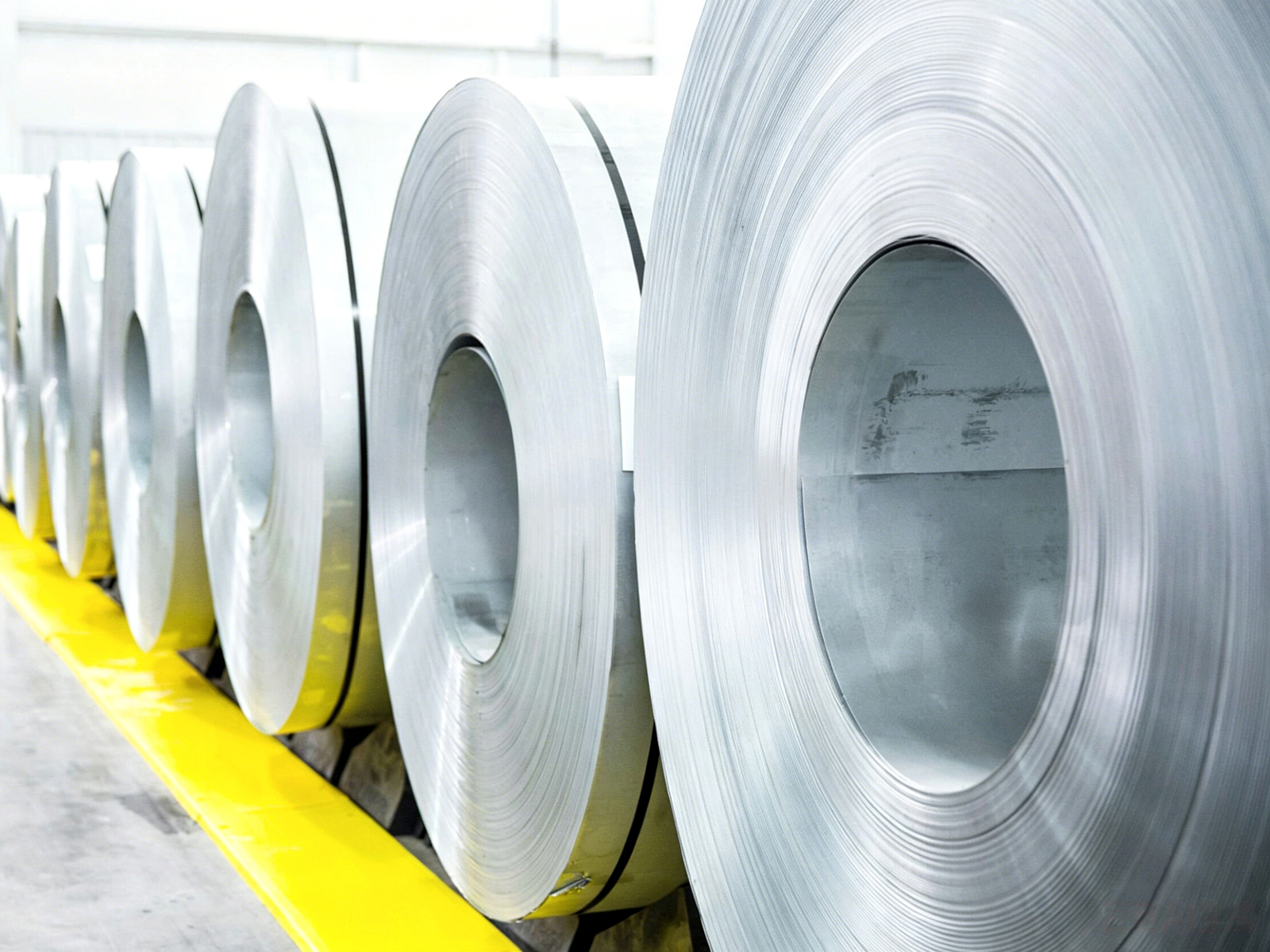
Direct engineering answer. Zr702 foil should be evaluated against the finished component, product form, governing specification, downstream process and acceptance evidence. A general property value is an orientation tool; the released drawing, current certificate and inspection plan control the final decision.
Direct engineering answer. Zr702 foil should be evaluated against the finished component, product form, governing specification, downstream process and acceptance evidence. A general property value is an orientation tool; the released drawing, current certificate and inspection plan control the final decision.
The standard industrial thickness range for Zr702 foil is 0.02–0.8 mm, covering most chemical sealing, anti-corrosion lining, electrolysis, electroplating, and precision instrumentation applications. Specifications below 0.02 mm are precision-custom or ultra-thin research-grade products, intended primarily for scientific research, ultra-precise electrochemical testing, and other special applications. Different thicknesses correspond to different processing methods, mechanical properties, corrosion allowances, and assembly logic. Procurement engineers must evaluate material condition, thickness tolerance, surface quality, and service media as a whole, so as to avoid sealing failure, corrosion perforation, or reduced processing yield caused by judging on a single thickness parameter alone.
1. Thickness Segmentation of Zr702 Foil: From Standard Specifications to Ultra-Thin Custom Products
(1) Standard Thickness Range: 0.02 mm ≤ t ≤ 0.8 mm
This is the primary range for industrial batch production of Zr702 foil. 0.02 mm is generally regarded as the conventional lower limit for stable batch production on multi-roll precision rolling mills, while 0.8 mm approaches thin-sheet products with a certain degree of structural load-bearing capacity. This range applies to chemical equipment sealing gaskets, electrolyzer electrode plates, corrosion-resistant linings, precision stamped parts, and similar applications, and supports stamping, bending, and TIG welding.
Wide products can reach 350–670 mm in width, but thickness tolerances should not be broadly written as ±0.001 mm. In practice, tolerances should be controlled in tiers by thickness range, in accordance with the applicable requirements of GB/T 21183 or ASTM B551/B551M [1]. For example, for 0.02 mm to less than 0.05 mm, a tolerance of approximately ±0.003–0.005 mm may be referenced; for 0.05–0.3 mm, approximately ±0.005 mm; and for 0.3–0.8 mm, approximately ±0.01 mm or as specified in the contract. A single extremely tight tolerance should not be applied uniformly across the full width of ultra-thin wide products.
(2) Precision Custom Range: 0.01 mm ≤ t < 0.02 mm
This range falls below the conventional 0.02 mm lower limit for stable batch production and exceeds the accuracy boundary of ordinary rolling. It requires dedicated tension control systems, multi-pass rolling with small reductions, and intermediate annealing. Products are mainly intended for high-precision electrolysis equipment, vacuum encapsulation structures, and membrane electrode assemblies.
In the ultra-thin condition, the ductility of Zr702 foil depends on adequate intermediate and final annealing; however, thickness drift primarily originates from reduction distribution, roll system rigidity, and tension control during rolling, and annealing is not the main factor that directly determines thickness drift. For applications with demanding assembly accuracy, this thickness range may provide better conformity, but it must be accompanied by strict thickness distribution inspection and surface quality testing.
(3) Ultra-Thin Research Grade: 0.005 mm ≤ t < 0.01 mm
This is the current technical limit of industrial production, serving mainly research institutions, nuclear industry laboratories, and ultra-precision sensor development. At this thickness, the ratio of oxide film thickness to substrate thickness increases significantly, and electrochemical behavior may differ from that of bulk Zr702. It should be made clear, however, that pure zirconium metal foil itself does not possess ion-selective or high-sensitivity response characteristics; any special electrochemical response requires specific media conditions and test data for support and should not be claimed as a functional property.
This specification places extremely high demands on production environment, equipment precision, cleanliness, and batch stability. It typically requires separate processing under a vacuum or inert atmosphere, should be handled on a project-customized basis, and should not be described as a stable, standard batch product.
2. Substantive Effects of Thickness on Zr702 Foil Performance
(1) Thickness and Mechanical Properties
The mechanical properties of Zr702 foil depend not only on thickness but are also significantly influenced by cold rolling reduction, annealing process, and delivery condition. Annealed Zr702 standard-thickness specimens are generally required to have a tensile strength not exceeding 380 MPa and elongation not less than 20%. As thickness decreases, specimen size effects and test scatter increase, and for ultra-thin specifications, actual measured values from the mill certificate should take priority.
Thickness Range | Delivery Condition | Tensile Strength Reference | Elongation Reference | Typical Processing Methods |
0.1 ≤ t ≤ 0.8 mm | Annealed | ≤380 MPa | ≥20% | Stamping, bending, TIG welding |
0.02 ≤ t < 0.1 mm | Annealed | ≤380 MPa | ≥20% | Precision blanking, roll forming |
0.02 ≤ t < 0.1 mm | Cold rolled | Slightly higher than annealed | Significantly reduced, typically by measured values, commonly ≥8% | Parts requiring high stiffness and minimal deformation |
0.005 ≤ t < 0.02 mm | Annealed | Approximately 300–380 MPa, affected by size effects | ≥10% for reference; acceptance based on measured values | Machining with special fixture assistance |
It should be noted that the tensile strength and elongation of ultra-thin specifications are strongly affected by sampling, gripping, edge defects, and specimen geometry, and bulk material mechanical property values should not be directly applied. During procurement, buyers should require the supplier to provide actual measured mechanical property data for the same batch, rather than only standard upper-limit values [3].
(2) Relationship Between Thickness and Corrosion Life
Zr702 exhibits excellent corrosion resistance in hydrochloric acid, dilute sulfuric acid, and many organic acids, a benefit derived from the passivation provided by its stable surface oxide film. This applies to zirconium materials of all thicknesses and is not unique to ultra-thin specifications.
Thickness mainly affects the corrosion allowance and the ability to tolerate localized corrosion, rather than changing the material’s inherent corrosion rate. The corrosion rate is determined by factors such as material, media concentration, temperature, flow rate, impurities, and local oxygen content, and is independent of thickness. A 0.02 mm thickness may offer a certain service life under mild conditions, but in hot concentrated hydrochloric acid, media containing oxidizing impurities, or systems prone to pitting or crevice corrosion, 0.02 mm still represents a very thin corrosion allowance and cannot simply be described as having an “adequate corrosion allowance.” Even when passivation is stable, ultra-thin specifications below 0.01 mm have extremely limited corrosion capacity and are unsuitable for long-term industrial pressure-retaining seals or structural components; they are better suited to short-cycle electrochemical experiments and scientific measurement.
(3) Matching Thickness to Sealing Reliability
Sealing gaskets impose two-way constraints on thickness. Excessive thickness increases the difficulty of initial preloading and may increase non-uniformity in contact pressure distribution; insufficient thickness may prevent the gasket from adequately compensating for flange surface roughness or assembly deformation. However, rebound is itself an important compensating characteristic of gasket sealing and should not simply be viewed as a negative factor.
0.05–0.3 mm is commonly used as an empirical selection range for chemical sealing structures, particularly in jacketed gaskets and flexible sealing configurations. However, this range does not have a universal “optimum” meaning; actual selection must be validated against flange pressure, gasket compression-rebound testing, operating temperature, and media corrosivity. Without supporting test or standard data, it should not be described as an absolute optimum range.
3. Thickness Selection Logic Across Industries
The thickness requirements of different downstream industries for Zr702 foil depend on service media, assembly methods, electrical conductivity requirements, stiffness requirements, and failure modes. The table below serves as a starting point for engineering selection; actual projects should be confirmed through testing and structural calculation.
Application Industry | Recommended Thickness Range | Key Considerations |
Chemical anti-corrosion (gaskets/linings) | 0.05–0.5 mm | Acid-resistant service life, sealing rebound, flange matching |
Electrolysis/electroplating (electrode plates) | 0.1–0.5 mm | Corrosion resistance, stiffness, conductive design; composite coating if necessary |
Electrolysis/electroplating (diaphragms) | 0.02–0.1 mm | Corrosion resistance, pore control, thickness uniformity |
Vacuum electronics/precision instruments | 0.01–0.05 mm | Non-magnetic, dimensional accuracy, surface cleanliness |
Specialized electrochemical/flow battery components | 0.02–0.1 mm | Corrosion resistance, electrochemical stability; not recommended as lithium battery current collectors |
Research/ultra-high-precision experiments | 0.005 ≤ t < 0.02 mm | Special electrochemical behavior, test repeatability |
(1) Chemical Anti-Corrosion Industry: Thickness and Service Conditions Jointly Determine Service Life
In non-oxidizing acids such as hydrochloric acid and dilute sulfuric acid, Zr702 generally exhibits significantly better corrosion resistance than commercially pure titanium and ordinary stainless steel. However, this assessment must be tied to specific media conditions and cannot be separated from concentration, temperature, impurities, and localized corrosion risk. Corrosion rate is independent of thickness; thickness only determines the amount of corrosion loss the material can tolerate at a given corrosion rate. A 0.05 mm thin specification has a significantly shorter life than a 0.3 mm specification under the same media conditions because its corrosion allowance is smaller, not because its corrosion rate is lower.
0.1–0.3 mm is a common selection for gaskets in chemical piping flange seals, a range that generally balances flexible deformation with corrosion allowance. Actual selection should still be based on media immersion testing or existing service data, and should account for pitting and crevice corrosion risk.
(2) Electrolysis and New Energy: Balancing Corrosion Resistance and Electrical Conductivity
Zr702 offers a clear corrosion resistance advantage in strongly corrosive, high-purity electrolysis systems, but its electrical conductivity is significantly lower than that of copper and aluminum. When used as electrolyzer electrode plates without conductive coatings, composite designs, or structural compensation, it may cause higher ohmic losses and heating. Zr702 plates are therefore better suited to applications with extremely demanding corrosion resistance that can accept some conductivity loss or that already employ composite conductive designs, and should not be broadly described as an “ideal choice.”
Zr702 foil is not recommended for current collectors in new-energy lithium batteries. Zirconium has relatively low electrical conductivity and high density, making it unsuitable as a lithium battery current collector material. It may be evaluated for special flow battery bipolar plates or electrochemical components in strong acid systems, provided that data on conductive coatings, contact resistance, and long-term durability are supplied.
(3) Precision Instruments and Aerospace: Primarily Non-Load-Bearing Components
Vacuum electronic equipment and precision sensors place high demands on the non-magnetic character and dimensional consistency of metal foils. In these applications, Zr702 can be used as shielding, support, or corrosion-resistant liner components. Where Zr702 is adopted in aerospace, it is used mainly for corrosion-resistant gaskets, thermal shields, bushings, and other non-load-bearing parts rather than thin-wall primary load-bearing structures. Zr702 has relatively low strength and should not be conflated with the structural performance of zirconium alloys or titanium alloys. For primary load-bearing thin-wall structures, high-strength titanium alloys or specialized zirconium alloys should be selected.
4. Four Technical Parameters to Confirm Before Purchasing
(1) Delivery Condition: Annealed or Cold Rolled?
Annealed Zr702 foil offers higher elongation, typically no less than 20%, and is suitable for subsequent stamping, bending, and forming operations; cold-rolled material has somewhat higher strength but reduced elongation, and is suitable for parts requiring higher stiffness, limited forming, or only flat cutting. The purchase contract should specify “Annealed” or “Cold rolled” directly, avoiding inconsistent condition designations to reduce delivery ambiguity.
(2) Surface Condition: Bright or Pickled?
Bright surfaces have lower surface roughness and are suitable for electrochemical and precision instrument applications requiring high surface cleanliness and dimensional accuracy. Pickled surfaces are primarily used to remove rolling scale, residual oil, and surface contamination layers, improving surface uniformity. It should be made clear, however, that after pickling, zirconium rapidly re-forms a natural oxide film in air or water, so a pickled surface is not an “oxide-free” surface. The surface treatment method affects the welding process window and sealing contact quality and should be specified in the contract.
(3) Thickness Tolerance and Edge Quality
Edge defects in ultra-thin zirconium foil are a common challenge across the industry. Edge cracks and burrs are related to the incoming material’s edge quality, rolling pass design, intermediate annealing process, slitting tool clearance, and tension control, and cannot be attributed to slitting or tension as single factors. During procurement, thickness tolerances should be graded by thickness range, and edge quality standards should be requested. For products below 0.02 mm or wide products, suppliers should be required to provide full-width multi-point thickness inspection data, rather than using “average thickness” alone as the acceptance basis.
(4) Standard Compliance and Inspection Reports
Zr702 foil may be specified in accordance with GB/T 21183—2007 Zirconium and zirconium alloy plates, sheets and strips, or the corresponding strip, sheet, and plate requirements of ASTM B551/B551M [1]. The standard title of ASTM B551 should include strip, sheet, and plate; it should not be written only as “strip and sheet.” For aerospace, nuclear, or high-purity chemical procurement processes, complete material certificates, chemical composition reports, mechanical property reports, surface and dimensional inspection records, and batch traceability documents are necessary delivery conditions.
5. Common Selection Pitfalls and Engineering Recommendations
(1) Pitfall 1: The Thinner, the More Cost-Effective
Ultra-thin specifications below 0.02 mm require more rolling passes, more frequent intermediate annealing, and more demanding equipment and environmental conditions, and typically have a higher cost per unit weight than standard specifications. If the actual service conditions permit 0.05–0.1 mm, forcing an ultra-thin specification to reduce weight is not recommended. Total cost, processing yield, and batch stability should all be included in the decision.
(2) Pitfall 2: Overlooking the Critical Role of Annealing in Ultra-Thin Materials
High-quality Zr702 foil production relies on alternating multi-pass cold rolling and intermediate annealing, and final continuous vacuum or inert atmosphere annealing can reduce residual stress and improve microstructural uniformity. However, there is no general basis for mass-production equipment to stably achieve ±2℃ uniformity across the full temperature zone in full-furnace, wide foil loads, and such a value should not be written into a general acceptance criterion. A more reasonable approach is to require continuous annealing temperature records and actual measured mechanical property values from the same batch, and to prioritize suppliers with continuous annealing capability.
(3) Pitfall 3: Equating Wide Capability with Thickness Uniformity
Zr702 foil up to 670 mm wide, especially in specifications below 0.02 mm, is extremely difficult to control for full-width thickness uniformity. When purchasing wide, ultra-thin specifications, a full-width ±0.001 mm tolerance should not be assumed to be stably achievable. Suppliers should be required to provide full-width cross-section thickness distribution data, tolerances should be confirmed by thickness range and width class, and actual inspection results should be used as the acceptance basis.
6. Conclusion
Thickness selection for Zr702 foil is not a single-parameter decision but an integrated matching of material properties, processing technology, service media, and supply capability. Standard specifications of 0.02–0.8 mm suit most industrial batch requirements; 0.01 mm to less than 0.02 mm is the precision-custom range; 0.005 mm to less than 0.01 mm is the ultra-thin research grade and should be customized per project, without using absolute statements such as “stable batch supply across all specifications.” Clarifying delivery condition, surface treatment, thickness tolerance, and standard compliance before purchasing is the foundation for ensuring service performance and reducing quality risk.
FAQ
(1) Q1: What is the standard thickness range of Zr702 foil, and what is the thinnest specification available?
The standard batch supply thickness for Zr702 foil is 0.02–0.8 mm. Ultra-thin research-grade specifications can be customized down to 0.005 mm, but these are non-standard custom products requiring process feasibility assessment and batch stability confirmation, and should not be regarded as standard, stable batch specifications.
(2) Q2: What is the substantive difference between annealed and cold-rolled Zr702 foil when purchasing?
The annealed condition offers higher elongation, typically no less than 20%, and is suitable for stamping and forming; the cold-rolled condition has somewhat higher strength but lower elongation and suits applications requiring higher stiffness and limited forming. The two conditions differ significantly in mechanical properties at the same thickness, so the condition requirement should be specified in advance based on the downstream processing method.
(3) Q3: Is Zr702 foil more corrosion-resistant than titanium foil? In which environments is the advantage most pronounced?
In non-oxidizing acids such as hydrochloric acid and dilute sulfuric acid, and in some organic acids, Zr702 generally offers better corrosion resistance than commercially pure titanium. Corrosion resistance, however, remains affected by media concentration, temperature, flow rate, impurities, and localized corrosion risk, and cannot be compared in isolation from service conditions. Commercially pure titanium has poor corrosion resistance in non-oxidizing acids, whereas zirconium tends to be more stable in such systems.
Contact Us
Looking for a professional Zr702 foil manufacturer or supplier? Baoji Titanium Valley Titanium-Nickel-Zirconium Materials Processing Co., Ltd. provides standard batch supply of 0.02–0.8 mm Zr702 foil/strip; ultra-thin specifications from 0.005 mm to less than 0.02 mm are customized per project, subject to feasibility assessment, minimum order quantity, and delivery time confirmation. OEM customization and complete inspection reports are supported. Please send your inquiry to: sales@titaniumvalleys.com
References
- National Technical Committee on Nonferrous Metals Standardization. GB/T 21183—2007 Zirconium and zirconium alloy plates, sheets and strips [S]. Beijing: China Standards Press, 2007.
- Chinese Society for Corrosion and Protection. Corrosion and Protection Handbook: Volume 2 Corrosion-Resistant Metallic Materials [M]. 2nd ed. Beijing: Chemical Industry Press, 2006.
- Editorial Committee of the Rare Metals Handbook. Rare Metals Handbook [M]. Beijing: Metallurgical Industry Press, 1992.
Engineering specification and verification framework
For Zr702 foil, state grade, ordered product form, condition, nominal dimensions, tolerances, surface requirement, quantity and documentation in one controlled RFQ. The applicable product-form reference is ASTM B265, subject to the current edition and project-specific requirements. When tensile evidence is required, define the test method and sampling basis; ASTM E8/E8M or ISO 6892-1 may apply where consistent with the order.
| RFQ field | Required detail | Reason |
|---|---|---|
| Material identity | Grade, form, ASTM B265, condition | Prevents unintended substitution. |
| Geometry | Nominal size, tolerance, length or coil form | Defines production and inspection scope. |
| Process context | Forming, machining, joining, etching or assembly | Relates supply condition to actual manufacture. |
| Verification | Certificate, dimensional checks, lot identity | Creates a traceable acceptance plan. |
Risk review and incoming control
Common avoidable risks include tolerance stack-up, unclear condition, surface damage, undocumented substitution and loss of lot identity after cutting. At receipt, reconcile the purchase order, packing label and certificate before release to production. Define any supplementary testing, sampling and report format before quotation rather than after shipment.
Technical FAQ
Can catalogue values approve the material?
No. Final approval must use the ordered form, condition, standard, drawing, process route and service boundary.
What should an RFQ include?
Provide the drawing where available, grade and standard, dimensions, tolerance, condition, quantity, process context, service information and documentation requirement.
Product resources and technical quotation
Review the relevant titanium foil product category. For a drawing-based review, request a technical quotation with the full specification.
References and use note
- ASTM B265, applicable edition, for the ordered product form.
- ASTM E8/E8M or ISO 6892-1 where the project specifies tensile verification.
- Project drawing, purchase specification, certificate and agreed inspection plan.
This engineering note supports procurement specification. It does not replace component design validation or the governing contractual standard.
Engineering specification and verification framework
For Zr702 foil, state grade, ordered product form, condition, nominal dimensions, tolerances, surface requirement, quantity and documentation in one controlled RFQ. The applicable product-form reference is ASTM B265, subject to the current edition and project-specific requirements. When tensile evidence is required, define the test method and sampling basis; ASTM E8/E8M or ISO 6892-1 may apply where consistent with the order.
| RFQ field | Required detail | Reason |
|---|---|---|
| Material identity | Grade, form, ASTM B265, condition | Prevents unintended substitution. |
| Geometry | Nominal size, tolerance, length or coil form | Defines production and inspection scope. |
| Process context | Forming, machining, joining, etching or assembly | Relates supply condition to actual manufacture. |
| Verification | Certificate, dimensional checks, lot identity | Creates a traceable acceptance plan. |
Risk review and incoming control
Common avoidable risks include tolerance stack-up, unclear condition, surface damage, undocumented substitution and loss of lot identity after cutting. At receipt, reconcile the purchase order, packing label and certificate before release to production. Define any supplementary testing, sampling and report format before quotation rather than after shipment.
Technical FAQ
Can catalogue values approve the material?
No. Final approval must use the ordered form, condition, standard, drawing, process route and service boundary.
What should an RFQ include?
Provide the drawing where available, grade and standard, dimensions, tolerance, condition, quantity, process context, service information and documentation requirement.
Product resources and technical quotation
Review the relevant titanium foil product category. For a drawing-based review, request a technical quotation with the full specification.
References and use note
- ASTM B265, applicable edition, for the ordered product form.
- ASTM E8/E8M or ISO 6892-1 where the project specifies tensile verification.
- Project drawing, purchase specification, certificate and agreed inspection plan.
This engineering note supports procurement specification. It does not replace component design validation or the governing contractual standard.