
What Is the Chemical Composition of Gr4 Titanium Wire, and What Makes Grade 4 Titanium Unique?
- Gr4 titanium wire
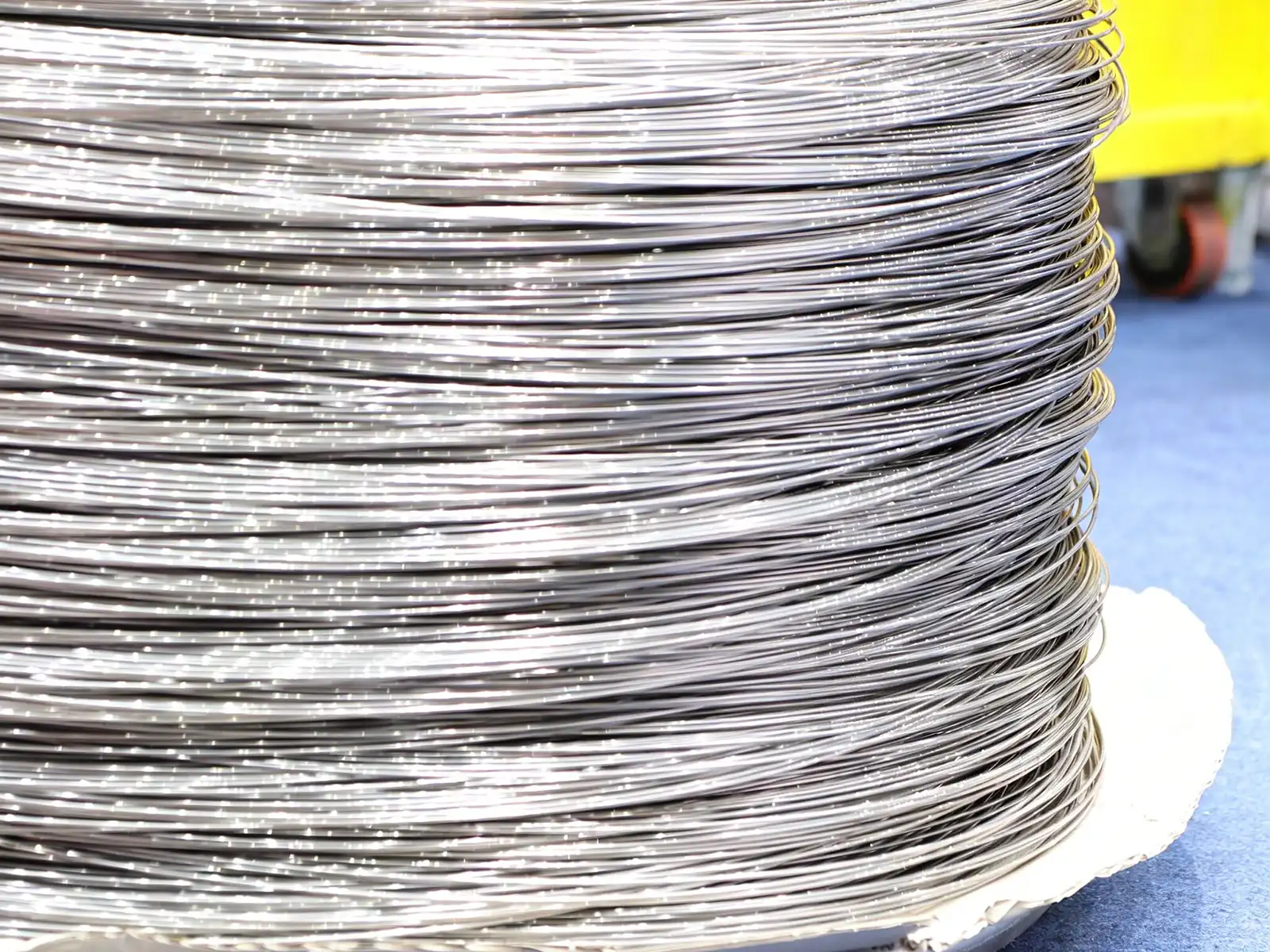
Direct engineering answer. Gr4 titanium wire should be evaluated against the finished component, product form, governing specification, downstream process and acceptance evidence. A general property value is an orientation tool; the released drawing, current certificate and inspection plan control the final decision.
Among industrial titanium materials, commercially pure titanium (CP Ti) includes several grades, and Grade 4 (Gr4) is the higher-strength level among them. Gr4 titanium wire is an α-phase industrially pure titanium wire whose composition control typically requires a titanium content of ≥ 99.0%, a maximum oxygen content of 0.40%, and iron content of ≤ 0.50%, with upper limits also set for interstitial elements such as carbon, nitrogen, and hydrogen. This article analyzes the effect of these chemical constituents on performance and explains material selection considerations in the context of standards, processes, and application scenarios.
1. The Chemical Composition of Gr4 Titanium Wire: The Significance of Controlling Each Element
Many material selection issues cannot be resolved by grade alone and should return to composition control itself. The performance advantages of Gr4 derive primarily from strict control of interstitial and impurity elements.
(1) Base Element: Titanium (Ti ≥ 99.0%)
Gr4 belongs to the commercially pure titanium (CP Ti) family, with a titanium content of not less than 99.0%. The high titanium content keeps the material in a stable α-phase microstructure, which is favorable for corrosion resistance and biocompatibility. It should be noted that the strength of Gr4 derives mainly from interstitial solid-solution strengthening by elements such as oxygen and iron, as well as cold-drawing work hardening, rather than from heat treatment strengthening.
(2) The Strengthening Role of Oxygen (O ≤ 0.40%)
Oxygen is one of the primary elements controlling the strength of Gr4. Among the commercially pure titanium grades, the maximum oxygen content of Gr4 is 0.40%, higher than Gr1’s 0.18%. As an interstitial atom entering the titanium lattice, oxygen impedes dislocation slip, thereby increasing tensile strength and hardness. This is the main reason Gr4 has higher strength than the lower-oxygen grades of the same family.
(3) Control of Iron and Other Trace Elements
Iron (Fe ≤ 0.50%) contributes somewhat to strength, and its interaction with oxygen affects the material’s mechanical properties. Nitrogen (N ≤ 0.05%), carbon (C ≤ 0.08%), and hydrogen (H ≤ 0.015%) require strict upper-limit control; excessive nitrogen and carbon can increase brittleness, while uncontrolled hydrogen is a major cause of hydrogen embrittlement, which is especially hazardous for wire processing and weld quality.
The commonly used chemical composition control ranges for Gr4 titanium wire reference ASTM B863 Grade 4 and can be cross-referenced with the corresponding industrially pure titanium grade in GB/T 3620.1.
Element | Content Requirement | Primary Engineering Function |
Titanium (Ti) | ≥ 99.0% | Base element; affects α-phase stability and corrosion resistance |
Oxygen (O) | ≤ 0.40% | Interstitial strengthening; increases strength, but excessive content reduces ductility |
Iron (Fe) | ≤ 0.50% | Contributes to strength; composition uniformity must be controlled |
Nitrogen (N) | ≤ 0.05% | Excessive content increases brittleness; must be limited |
Carbon (C) | ≤ 0.08% | Excessive content may form brittle phases; must be limited |
Hydrogen (H) | ≤ 0.015% | Controls hydrogen embrittlement risk; particularly affects processing and welding |
2. Differences Between Gr4 and Other Industrially Pure Titanium Grades: The Balance Between Strength and Weldability
(1) Comparison of Mechanical Properties Across Grades
Per the minimum mechanical property requirements for industrially pure titanium grades in ASTM B863, Gr1 has a minimum tensile strength of approximately 240 MPa, with high ductility suitable for complex forming; Gr2 is approximately 345 MPa and widely used industrially; Gr3 is approximately 450 MPa; and Gr4 has a minimum tensile strength of ≥ 550 MPa, a minimum yield strength of ≥ 485 MPa, and a minimum elongation of ≥ 15%, giving it higher strength than the other three grades. Regarding hardness, ASTM B863 does not specify a uniform hardness acceptance value for these grades. Actual hardness is influenced by wire condition, cold deformation, and test standard and should not be described by a single value such as 200–240 HB. If hardness measurement is required, it can be performed per GB/T 4340.1, but the specimen condition and acceptance value should be clearly specified in the contract or technical agreement.
Key performance comparison table for Gr1–Gr4 industrially pure titanium
Grade | Minimum Tensile Strength (MPa) | Minimum Yield Strength (MPa) | Minimum Elongation (%) | Maximum Oxygen Content (%) | Typical Application Note |
Gr1 | ≥ 240 | ≥ 170 | ≥ 24 | 0.18 | Forming-oriented; sheet, chemical vessels |
Gr2 | ≥ 345 | ≥ 275 | ≥ 20 | 0.25 | General structural parts, piping |
Gr3 | ≥ 450 | ≥ 380 | ≥ 18 | 0.35 | Medium-strength structures |
Gr4 | ≥ 550 | ≥ 485 | ≥ 15 | 0.40 | Welding, high-strength structural parts |
Note: The mechanical properties in the table are minimum values for the annealed condition, sourced from ASTM B863; actual values are affected by wire processing condition and process.
(2) Non-Heat-Treatment Strengthening Characteristics
Gr4 has a stable α-phase microstructure and cannot be further strengthened through heat treatment such as aging. Its final strength results from the combined effects of composition control, cold-drawing deformation, and the final annealing condition. Because heat treatment strengthening is not available, material performance depends more on the consistency of chemical composition and processing, making the supplier’s process control capability particularly important.
(3) Welding Performance: The Balance Between Strength and Weldability
The α-phase microstructure of Gr4 is relatively stable, and the microstructural changes in the weld heat-affected zone are comparatively controllable, making it suitable for use as titanium welding wire. However, the statement that it is compatible with both TIG and MIG welding is not accurate: welding of titanium and titanium alloys is predominantly performed with TIG (tungsten inert gas welding); MIG welding of titanium requires stringent shielding gas and weld pool control and is not a mainstream process. Whether it can be used must be judged through specific procedure qualification and actual service conditions. In addition, among commercially pure titanium filler wires, Gr2/ERTi-2 is more widely used; Gr4 is mainly used where higher weld strength matching is required and should not be described as one of the most widely used filler wires in the world.
3. Production Process of Gr4 Titanium Wire: From Composition to Wire Performance
(1) Full-Process Control from Titanium Sponge to Finished Product
The production flow can be summarized as: titanium sponge inspection → vacuum arc remelting (VAR) → ingot casting → forging/hot-rolling breakdown → skinning/pickling → multi-pass cold drawing (with intermediate annealing) → final annealing → pickling/polishing → finishing and inspection → vacuum packaging.
The primary purpose of intermediate annealing is to eliminate the work hardening produced by cold drawing and restore ductility, ensuring stable subsequent passes. Hydrogen content risk is more closely associated with hydrogen pickup during pickling or the processing environment; therefore, hydrogen should be controlled at each stage—including pickling, annealing atmosphere, and storage—rather than interpreting the primary purpose of intermediate annealing as preventing hydrogen accumulation.
(2) Multi-Pass Cold Drawing and Roll-Die Processing
The high strength of Gr4 titanium wire places demanding requirements on the cold drawing process. When roll-die cold drawing is used, it can improve grain orientation and surface roughness, reduce the tendency for sticking to the die, and be combined with lubricant coatings to control surface contamination. Finished dimensional tolerances and out-of-roundness vary with the governing standard and ordering conditions and must be agreed for each specific specification; a single value cannot be treated as a universal technical conclusion for all wire diameters and service conditions.
(3) Non-Destructive Testing and Quality Documentation
Finished wire typically requires eddy current inspection, dimensional inspection, and surface examination; ultrasonic testing is not commonly used for 0.8–3.0 mm titanium wire. Chemical composition analysis cannot be completed by a single method alone: oxygen, nitrogen, and hydrogen are usually determined by gas analysis methods such as inert gas fusion–infrared/thermal conductivity, carbon by the combustion method, and metallic elements by spectrometric methods such as ICP-OES. Shipping documents may include material certificates, tensile property reports, dimensional records, and inspection reports as required by the order. EN 10204 3.1 is an inspection certificate issued by the manufacturer’s quality department and is not equivalent to a third-party test report; if third-party testing is required, it should be separately agreed in the contract.
4. Typical Applications and Applicable Conditions of Gr4 Titanium Wire
(1) Titanium Welding Wire
Gr4 can serve as one option for titanium welding wire, mainly for structures requiring higher weld strength matching. TIG is the mainstream process for titanium welding wire; whether MIG welding is applicable should be confirmed through procedure qualification and cannot be assumed automatically. Common sizes concentrate in the φ0.8 mm to φ3.0 mm range, and supply forms include coils (spool wire) or straight lengths.
(2) Chemical Anti-Corrosion and Marine Engineering
Under combined conditions involving chloride ions, acidic media, salt spray, or alternating stress, Gr4 titanium wire can be used for components such as anode baskets, filter screens, and racks. Titanium readily forms a dense oxide film on its surface, and its pitting resistance is generally superior to that of stainless steel; however, actual service life is affected by medium concentration, temperature, flow rate, and loading. A replacement frequency reduction of more than 50% without comparative conditions should not be used as a general conclusion; evaluation should be based on specific corrosion tests and service data.
(3) Fasteners, Springs, and Precision Structural Components
Gr4 titanium wire can be used for high-strength fasteners, elastic elements, and precision structural components. Compared on the basis of minimum tensile strength, Gr4 is approximately 59% higher than Gr2, enabling reduced cross-sectional dimensions or increased load-carrying margin. Applications such as medical devices cannot assume compliance based on the Gr4 grade alone; biocompatibility and material compliance verification must be performed in accordance with standards such as ISO 10993 and ASTM F67/F136.
5. Key Parameters to Verify When Purchasing Gr4 Titanium Wire
(1) Chemical Composition Report
A chemical composition report should be requested at the time of purchase, but note that ICP-OES is mainly for metallic element analysis; oxygen, nitrogen, and hydrogen typically require gas analysis, and carbon typically requires the combustion method or infrared absorption method. The report should specify the content of each element and the test method used, and must not rely solely on a grade declaration.
(2) Dimensional Tolerances and Roundness
Wire diameter tolerance and roundness directly affect automatic wire feeding and part fit. Actual tolerances vary with wire diameter, governing standard, and ordering conditions. If the application requires high precision, the specific tolerances and inspection methods should be specified in the contract, and ex-works inspection records should be required.
(3) Supply Form and Batch Consistency
Choose coils or straight lengths according to the application. Coils are commonly used for automated welding, while cut-to-length straight wire may be used for precision part machining. For batch projects, mechanical property data from multiple batches should be requested, with attention to batch-to-batch variation, rather than relying on a single batch report.
6. Conclusion
The characteristics of Gr4 titanium wire arise from integrated control of its composition and processing. The oxygen content limit increases its strength, iron contributes to strength, and elements such as nitrogen, carbon, and hydrogen require strict control. With proper cold drawing and annealing processes, Gr4 titanium wire can be used in welding, chemical anti-corrosion, marine engineering, and high-strength structural applications. When selecting the material, chemical composition, mechanical properties, dimensions, and inspection documentation should be systematically verified in accordance with the applicable standard and service requirements.
FAQ
(1) Q1: What Are the Substantive Differences Between Gr4 Titanium Wire and Gr2 Titanium Wire in Welding Applications?
Compared on the basis of minimum tensile strength, Gr4 is approximately 59% higher than Gr2, making it suitable for structures requiring higher weld strength. For general TIG welding of titanium heat exchangers and vessels, Gr2/ERTi-2 is more commonly used; when the base material or structure requires higher strength matching, Gr4 can be evaluated.
(2) Q2: Why Does Gr4 Titanium Wire Last Longer Than Stainless Steel in Chloride Environments?
Titanium readily forms a stable, self-repairing TiO₂ oxide film in chloride-containing media, and pitting risk is generally lower than for common stainless steels. Oxygen content mainly affects the strength of titanium and cannot be directly extrapolated to mean a more stable surface passive film. Salt spray test results depend on the test standard, specimen condition, and evaluation method; for comparison, standardized tests should be conducted in accordance with standards such as GB/T 10125. [6]
(3) Q3: When Purchasing Gr4 Titanium Wire, What Core Content Does the 3.1 Material Certificate Include?
The EN 10204 3.1 certificate is an inspection document issued by the manufacturer’s quality department, typically including chemical composition, mechanical properties, dimensional inspection results, and traceability information; it is not equivalent to a third-party test report. In regulated fields such as aerospace, medical, and pressure vessels, the 3.1 certificate may be part of material acceptance, but whether it is sufficient must be confirmed against customer and specification requirements.
Contact Us
Looking for a reliable Gr4 titanium wire (Grade 4 commercially pure titanium wire, UNS R50700) manufacturer, supplier, or processing service provider? A professional titanium material company with full-process capability—from ingot casting, forging, hot rolling, multi-pass cold drawing, and intermediate annealing to final annealing, pickling, or surface finishing—can supply to standards such as ASTM B863 and GB/T 3623, with tensile strength ≥ 550 MPa, yield strength ≥ 483 MPa, and elongation ≥ 15%, covering three supply conditions: annealed, cold-worked, and hot-worked. Pickled and bright surfaces are available, as are coil and straight wire forms, and diameter tolerances can be executed at ±0.01 mm or per standard agreement. EN 10204 3.1 material certificates (with batch traceability), ASTM B863 conformity inspection reports or statements, chemical composition analysis (O, N, H by inert gas fusion; metallic elements such as Fe by ICP), tensile property reports, diameter and roundness inspection, and eddy current inspection reports can be provided; for special applications such as aerospace and medical devices, corresponding testing support can be arranged to meet biocompatibility evaluation requirements such as ISO 10993. Contact us at: sales@titaniumvalleys.com
References
- China National Nonferrous Metals Standardization Technical Committee. GB/T 3620.1—2016 Designation and composition of titanium and titanium alloys [S]. Beijing: Standards Press of China, 2016.
- China National Nonferrous Metals Standardization Technical Committee. GB/T 3623—2007 Titanium and titanium alloy wire [S]. Beijing: Standards Press of China, 2007.
- China National Steel Standardization Technical Committee. GB/T 228.1—2021 Metallic materials—Tensile testing—Part 1: Method of test at room temperature [S]. Beijing: Standards Press of China, 2021.
- China National Steel Standardization Technical Committee. GB/T 4340.1—2009 Metallic materials—Vickers hardness test—Part 1: Test method [S]. Beijing: Standards Press of China, 2009.
- China National Nonferrous Metals Standardization Technical Committee. GB/T 4698.7—2011 Methods for chemical analysis of titanium sponge, titanium and titanium alloys—Determination of oxygen and nitrogen contents [S]. Beijing: Standards Press of China, 2011.
- China National Steel Standardization Technical Committee. GB/T 10125—2021 Corrosion tests in artificial atmospheres—Salt spray tests [S]. Beijing: Standards Press of China, 2021.
Engineering specification and verification framework
For Gr4 titanium wire, state grade, ordered product form, condition, nominal dimensions, tolerances, surface requirement, quantity and documentation in one controlled RFQ. The applicable product-form reference is ASTM B863, subject to the current edition and project-specific requirements. When tensile evidence is required, define the test method and sampling basis; ASTM E8/E8M or ISO 6892-1 may apply where consistent with the order.
| RFQ field | Required detail | Reason |
|---|---|---|
| Material identity | Grade, form, ASTM B863, condition | Prevents unintended substitution. |
| Geometry | Nominal size, tolerance, length or coil form | Defines production and inspection scope. |
| Process context | Forming, machining, joining, etching or assembly | Relates supply condition to actual manufacture. |
| Verification | Certificate, dimensional checks, lot identity | Creates a traceable acceptance plan. |
Risk review and incoming control
Common avoidable risks include tolerance stack-up, unclear condition, surface damage, undocumented substitution and loss of lot identity after cutting. At receipt, reconcile the purchase order, packing label and certificate before release to production. Define any supplementary testing, sampling and report format before quotation rather than after shipment.
Technical FAQ
Can catalogue values approve the material?
No. Final approval must use the ordered form, condition, standard, drawing, process route and service boundary.
What should an RFQ include?
Provide the drawing where available, grade and standard, dimensions, tolerance, condition, quantity, process context, service information and documentation requirement.
Product resources and technical quotation
Review the relevant titanium wire product category. For a drawing-based review, request a technical quotation with the full specification.
References and use note
- ASTM B863, applicable edition, for the ordered product form.
- ASTM E8/E8M or ISO 6892-1 where the project specifies tensile verification.
- Project drawing, purchase specification, certificate and agreed inspection plan.
This engineering note supports procurement specification. It does not replace component design validation or the governing contractual standard.