
What Are the Properties, Applications, and Selection Guidelines for Gr5 Titanium Wire?
- Gr5 titanium wire
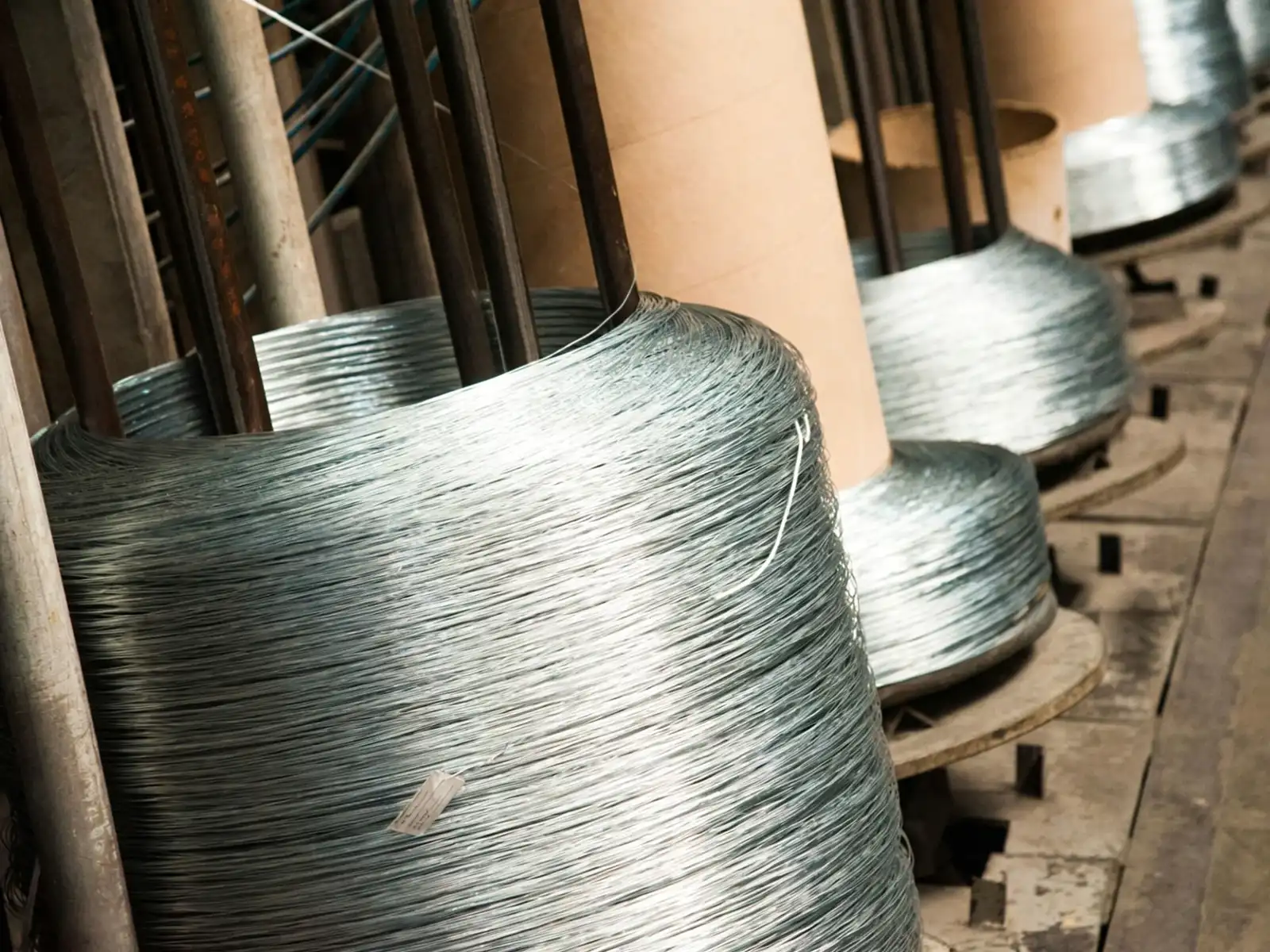
Direct engineering answer. Gr5 titanium wire should be evaluated against the finished component, product form, governing specification, downstream process and acceptance evidence. A general property value is an orientation tool; the released drawing, current certificate and inspection plan control the final decision.
Gr5 titanium wire, i.e., Ti-6Al-4V alloy wire, is one of the most widely used α+β dual-phase titanium alloy wires in global industry. It is known for its high strength, low density, good corrosion resistance, and weldability, and is widely used in aerospace, marine engineering, precision medical devices, and high-end electronics manufacturing. Compared with ordinary stainless steel and commercially pure titanium, Gr5 titanium wire offers a well-balanced combination of properties under combined service conditions—it withstands a variety of corrosive media while meeting lightweight design requirements. This article systematically reviews Gr5 titanium wire from three dimensions—material properties, core application scenarios, and key selection parameters—to help engineers and procurement decision-makers make more accurate material judgments.
1. Core Properties of Gr5 Titanium Wire
(1) Balance of High Strength and Light Weight
The density of Gr5 (Ti-6Al-4V) is approximately 4.42–4.43 g/cm³, about 56%–57% of the density of steel (based on 7.85 g/cm³ for steel). Its tensile strength typically reaches 895 MPa or higher for the same wire size and heat treatment condition, significantly higher than the typical strength of commercially pure titanium wire. This “strong but not heavy” characteristic gives it important application value in weight-sensitive applications such as aircraft structural components and aerospace fasteners. Its modulus of elasticity is approximately 110 GPa, providing sufficient rigidity while retaining moderate elastic deformation capability, making it suitable for manufacturing precision elastic elements.
(2) Corrosion Resistance: Depends on the Medium
Corrosion Medium | Gr5 Titanium Wire Performance | 304 Stainless Steel Comparison |
Seawater / salt spray environment | Excellent; typically no pitting | Prone to pitting and crevice corrosion |
Oxidizing acids and most neutral/weakly acidic environments | Stable; corrosion resistance decreases in reducing strong acids such as hydrochloric acid and hot sulfuric acid | May corrode noticeably in strong acid environments |
Chloride-containing environments | Excellent corrosion resistance under normal conditions; local corrosion risk must be evaluated at high temperatures, in concentrated chlorides, and in crevice conditions | Sensitive to stress corrosion cracking |
Low temperature (-196℃) | Generally retains good toughness | Austenitic stainless steel generally also maintains good toughness at low temperatures; evaluate based on the specific grade and condition |
Gr5 titanium wire spontaneously forms a dense TiO₂ passive film on its surface. This oxide film has a certain self-repairing capability after damage and provides good protection in most oxidizing media, although localized corrosion may still occur in strongly reducing acids or in high-temperature concentrated chlorides.
(3) Comprehensive Physical Property Data
Physical Parameter | Value |
Density | 4.42–4.43 g/cm³ (typical Gr5) |
Melting point | 1640–1660℃ |
Modulus of elasticity | 110 GPa |
Coefficient of thermal expansion (20–100℃) | 8.6×10⁻⁶/°C |
Thermal conductivity | 6.7 W/(m·K) |
Electrical resistivity | 1.7 μΩ·m |
Magnetic properties | Non-ferromagnetic/paramagnetic; extremely low magnetic susceptibility |
Its non-ferromagnetic nature (extremely low magnetic susceptibility) gives it particular value in applications sensitive to magnetic interference, such as medical imaging equipment (instruments near MRI systems), precision electronic sensors, and military equipment—capabilities that ordinary alloy steel wire cannot provide.
2. Major Applications of Gr5 Titanium Wire: A Core Material Across Industries
(1) Aerospace and High-End Transportation: Driven by Lightweighting and Reliability
In the manufacture of aero-engine casing welding, aircraft hydraulic tubing, landing gear components, and precision fasteners, Gr5 titanium wire serves both as structural forming wire and extensively as welding filler metal. Its composition closely matches the Gr5 base material, providing high weld joint strength and good crack resistance, and it is commonly used as filler for welding Ti-6Al-4V and other titanium alloy components; for titanium alloys such as TA15 (Ti-6.5Al-2Zr-1Mo-1V), matching filler metal must be selected based on specific procedure qualification. Suspension springs and fastening bolts in high-end motorsport (e.g., F1 racing cars and supercars) may also be manufactured from Gr5 titanium wire products.
(2) Chemical and Marine Engineering: A Long-Life, Low-Maintenance Engineering Choice
Deep-sea equipment, heat exchanger tube bundles, pump shafts, and valve stems are load-bearing, corrosion-resistant components that are exposed to chloride ions, acids, or high-pressure brine for long periods. Elastic elements and fasteners made from Gr5 titanium wire can help extend maintenance intervals and reduce downtime maintenance frequency under suitable service conditions; the specific improvement in service life must be assessed according to the actual medium, temperature, and structural design. For high-value equipment such as offshore oil and gas platforms and chemical reactors, this generally translates into direct economic benefits.
(3) Medical Devices and Precision Electronics: Combining Biocompatibility and Precision
Gr5 titanium wire has low toxicity, is non-ferromagnetic, and offers excellent biocompatibility, making it widely used in surgical instruments, orthopedic tools, and dental prosthetics. In consumer electronics, precision components such as high-end smartwatches, titanium jewelry, and laptop hinges are also formed from fine-diameter Gr5 titanium wire (φ0.1–φ1.0 mm). Certain precision electronics and battery manufacturing fields impose stringent requirements on the surface finish and dimensional accuracy of fine-diameter titanium wire.
3. Chemical Composition and Applicable Standards of Gr5 Titanium Wire
(1) Standard Chemical Composition (Ti-6Al-4V)
Element | Content Range |
Titanium (Ti) | Balance |
Aluminum (Al) | 5.5%–6.75% |
Vanadium (V) | 3.5%–4.5% |
Iron (Fe) | ≤ 0.40% (per ASTM B863 Gr5; some dedicated standards may require ≤0.30%) |
Oxygen (O) | ≤ 0.20% |
Carbon (C) | ≤ 0.08% |
Nitrogen (N) | ≤ 0.05% |
Hydrogen (H) | ≤ 0.015% |
Aluminum strengthens the α phase and improves elevated-temperature strength; vanadium stabilizes the β phase and improves room-temperature toughness and workability. Their synergistic effect forms the metallurgical basis of the overall performance of Gr5 alloy. Actual acceptance shall be based on the specific standard edition designated in the order.
(2) Comparison of Primary Applicable Standards
Gr5 titanium wire has corresponding governing standards in all major global markets. When purchasing, select the matching certification system according to the target market and application:
- ASTM B863: General specification for titanium and titanium alloy wire
- AWS A5.16: Specification for titanium and titanium alloy welding filler materials
- AMS 4955: Specification for titanium alloy welding filler wire (aerospace welding applications)
- AMS 4928: Specification for Ti-6Al-4V bar and forgings, applicable to certain structural components
- ASTM F136: Specification for implant-grade Ti-6Al-4V ELI alloy (extra-low interstitial grade)
(3) Quality Inspection System: Full-Process Control from Raw Material to Finished Product
Quality assurance for high-grade Gr5 titanium wire does not rely on a single inspection point but runs through the entire production process. A complete inspection program should cover: chemical composition analysis (ICP-OES), mechanical property testing (tensile/hardness), dimensional and surface inspection, nondestructive testing (eddy current testing is the primary method for fine-diameter wire, while ultrasonic testing has limited applicability to extremely fine sizes), metallographic examination, and surface finish and straightness measurement. The EN 10204 3.1 material certificate primarily demonstrates material traceability; determining aerospace-grade supply capability also requires consideration of AS9100, NADCAP, AMS, and other system and process certifications.
4. Gr5 Titanium Wire Selection Guide: Key Parameters and Procurement Decision Framework
Selection errors result not only in material cost losses but can also lead to equipment failure, project rework, and even safety incidents. The framework below helps engineers quickly lock in the appropriate specification among complex requirements.
(1) Selection Logic for Diameter and Tolerance
Application Type | Recommended Diameter Range | Recommended Tolerance Grade |
Precision springs / elastic elements | φ0.1–φ1.5 mm | ±0.01 mm or tighter |
Welding filler wire | φ1.6–φ3.2 mm | ±0.05 mm |
High-strength fastener raw material | φ3.0–φ10.0 mm | ±0.02–0.05 mm |
Fine wire for medical devices | φ0.1–φ0.5 mm | Typically ±0.005 mm; ±0.001–0.002 mm achievable for demanding applications |
Straightness requirements: ≤2/1000 may be used as a reference for general applications; precision assembly and automated feeding applications typically require ≤0.5/1000 or better, to be confirmed with the supplier. Excessive bending can affect feeding stability on automated production lines.
(2) Matching Supply Condition and Heat Treatment Condition
Gr5 titanium wire can be delivered in different heat treatment conditions, and the three primary conditions correspond to different performance orientations:
- Annealed condition: Superior ductility, suitable for subsequent forming operations and use as welding wire
- Cold worked condition: Higher strength, suitable as raw material for high-strength fasteners
- Cold worked + annealed condition: Balances strength and ductility, suitable for elastic elements and precision components
Surface treatment condition also affects service performance: welding filler wire is typically recommended with a bright, clean surface, with degreasing and drying when necessary; the pickled condition improves surface cleanliness, but the absence of hydrogen residue and contamination must be confirmed before welding; polished and anodized conditions suit the appearance and cleanliness requirements of medical devices and consumer electronics; the bright condition suits high-precision measurement and electrical contact components.
(3) Key Considerations for Large-Volume Procurement
For industrial buyers with large annual consumption, the following four dimensions determine the long-term stability of the supply chain:
Batch consistency: The fluctuation range of chemical composition and mechanical properties between different batches directly affects the process stability of downstream automated production. Suppliers with stable melting, rolling breakdown, and subsequent cold-drawing/cold-rolling finishing lines have an advantage in this dimension.
Customization responsiveness: Non-standard diameters, special tolerances, special coil weights, and cut-to-length requirements test the supplier’s flexible manufacturing capability.
Completeness of quality documentation: EN 10204 3.1 certificates, third-party test reports, raw material traceability records, and system certifications such as AS9100 and NADCAP are the basic threshold for entering aerospace and medical supply chains.
Delivery lead times and capacity assurance: Suppliers with total titanium production capacity at the ten-thousand-tonne level and dedicated titanium wire finishing lines can better guarantee supply stability during project peaks.
5. Conclusion
Gr5 titanium wire has become an important wire material for cross-industry high-end manufacturing thanks to its high strength, low density, good corrosion resistance, and broad application adaptability. From precise control of chemical composition to compliance matching of governing standards, from exact selection of diameter specifications to proper matching of supply conditions, every step directly affects the performance and reliability of the final product. Selecting a professional supplier with complete production capability and a strict quality system is key to reducing procurement risk and improving material applicability.
FAQ
(1) Q1: How should I choose between Gr5 titanium wire and Gr2 commercially pure titanium wire?
Gr5 (Ti-6Al-4V) typically has more than twice the strength of Gr2 commercially pure titanium, making it suitable for high-load structural components and precision elastic elements; Gr2 commercially pure titanium offers better ductility and is easier to weld, making it suitable for applications requiring high formability and low loads, such as chemical linings and medical implants. The two materials have different roles and are not simple substitutes for one another.
(2) Q2: What are the key considerations when welding with Gr5 titanium wire?
Welding must be performed under strict inert gas shielding (argon or helium) to prevent embrittlement caused by oxygen and nitrogen contamination at high temperatures. The wire surface must be clean and free of oil, and annealed coil wire is recommended. Joint mechanical properties can approach those of the base metal; whether post-weld stress-relief annealing is performed should be determined based on the welding procedure, joint design, and service conditions.
(3) Q3: How can I determine whether a supplier’s Gr5 titanium wire meets aerospace-grade requirements?
Key criteria include: whether the supplier holds AS9100 aerospace quality system certification and NADCAP special process certification; whether it can provide EN 10204 3.1 material certificates and complete heat/lot chemical composition and mechanical property reports; whether the product conforms to applicable specifications such as ASTM B863, AMS 4955/AMS 4928; and whether nondestructive testing personnel hold the appropriate qualifications. Missing key quality systems or inspection records can pose quality risks.
Contact Us
For further technical consultation or purchase inquiries, please contact Titanium Valley (Baoji Titanium Valley Titanium Nickel Zirconium Materials Processing Co., Ltd.). The company has an annual production capacity of over 10, 000 tonnes of titanium and titanium alloy materials, backed by dedicated cold-drawing/cold-rolling finishing lines for titanium wire, and can supply custom specifications and quality documentation. Inquiries: sales@titaniumvalleys.com
References
- Standardization Administration of China. GB/T 3620.1—2016 Titanium and titanium alloy designations and chemical composition[S]. Beijing: China Standards Press, 2016.
- Standardization Administration of China. GB/T 3623—2007 Titanium and titanium alloy wire[S]. Beijing: China Standards Press, 2007.
- Zhang Xiyan, Zhao Yongqing, Bai Chenguang. Titanium alloys and applications[M]. Beijing: Chemical Industry Press, 2005.
- Wang Jinyou, Ge Zhiming, Zhou Yanbang. Titanium alloys and their applications[M]. Beijing: Metallurgical Industry Press, 1998.
- China Welding Society of Chinese Mechanical Engineering Society. Welding handbook, Volume 2: Welding of materials[M]. Beijing: China Machine Press, 2007.
Engineering specification and verification framework
For Gr5 titanium wire, state grade, ordered product form, condition, nominal dimensions, tolerances, surface requirement, quantity and documentation in one controlled RFQ. The applicable product-form reference is ASTM B863, subject to the current edition and project-specific requirements. When tensile evidence is required, define the test method and sampling basis; ASTM E8/E8M or ISO 6892-1 may apply where consistent with the order.
| RFQ field | Required detail | Reason |
|---|---|---|
| Material identity | Grade, form, ASTM B863, condition | Prevents unintended substitution. |
| Geometry | Nominal size, tolerance, length or coil form | Defines production and inspection scope. |
| Process context | Forming, machining, joining, etching or assembly | Relates supply condition to actual manufacture. |
| Verification | Certificate, dimensional checks, lot identity | Creates a traceable acceptance plan. |
Risk review and incoming control
Common avoidable risks include tolerance stack-up, unclear condition, surface damage, undocumented substitution and loss of lot identity after cutting. At receipt, reconcile the purchase order, packing label and certificate before release to production. Define any supplementary testing, sampling and report format before quotation rather than after shipment.
Technical FAQ
Can catalogue values approve the material?
No. Final approval must use the ordered form, condition, standard, drawing, process route and service boundary.
What should an RFQ include?
Provide the drawing where available, grade and standard, dimensions, tolerance, condition, quantity, process context, service information and documentation requirement.
Product resources and technical quotation
Review the relevant titanium wire product category. For a drawing-based review, request a technical quotation with the full specification.
References and use note
- ASTM B863, applicable edition, for the ordered product form.
- ASTM E8/E8M or ISO 6892-1 where the project specifies tensile verification.
- Project drawing, purchase specification, certificate and agreed inspection plan.
This engineering note supports procurement specification. It does not replace component design validation or the governing contractual standard.