
Is Gr1 Titanium Wire Magnetic? An Analysis of Its Magnetic Properties
- Gr1 Titanium Wire
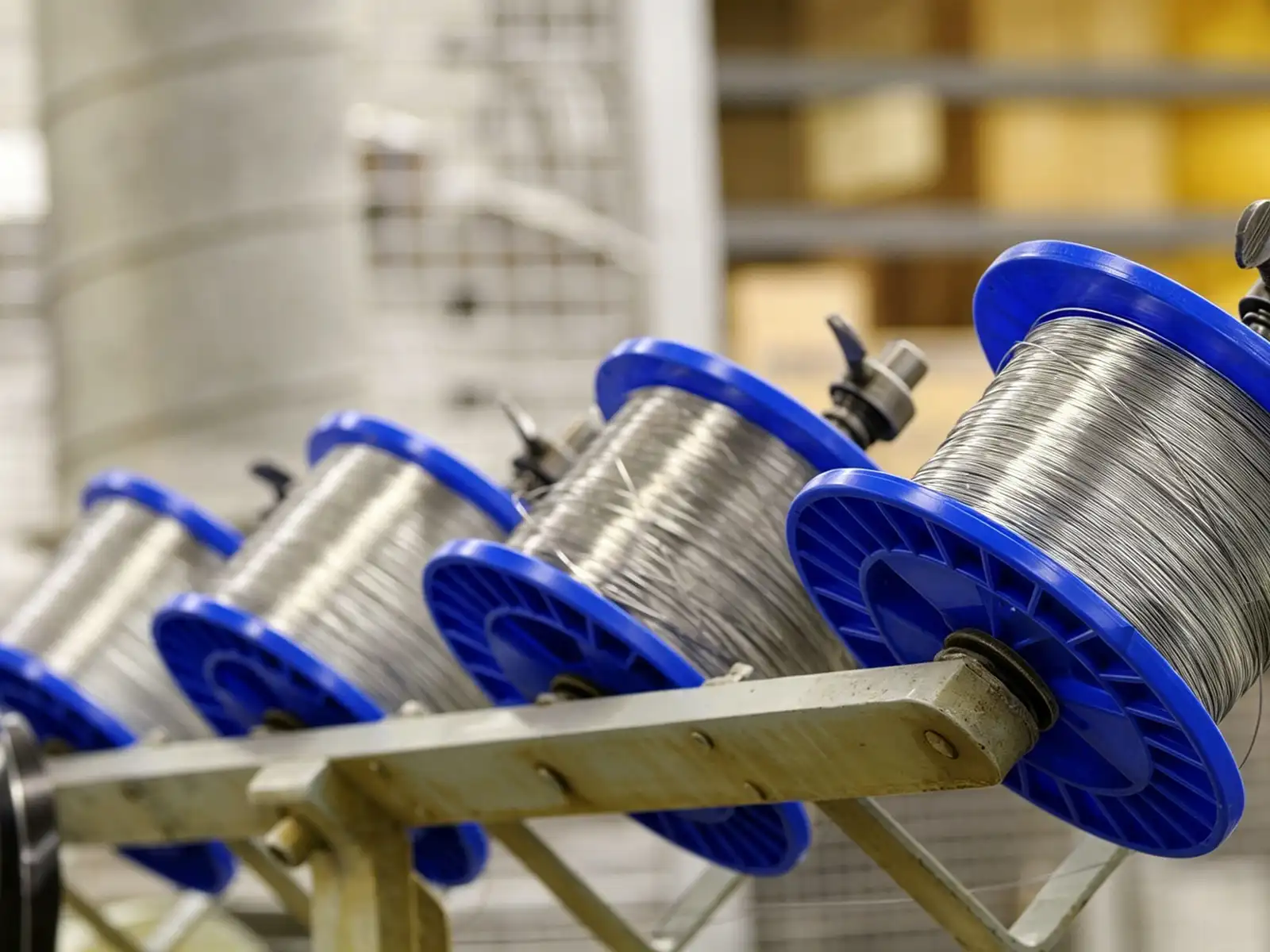
Direct engineering answer. Gr1 Titanium Wire should be evaluated against the finished component, product form, governing specification, downstream process and acceptance evidence. A general property value is an orientation tool; the released drawing, current certificate and inspection plan control the final decision.
Many engineers and procurement professionals ask the same question when selecting Gr1 titanium wire (commercially pure Grade 1 titanium wire): Is titanium wire magnetic? The answer is clear: Gr1 titanium wire is not ferromagnetic; it is a weakly paramagnetic material. In everyday engineering applications, it can be treated as a “non-magnetic” material. The atomic structure of titanium causes its electron spins to nearly completely cancel, and the volume magnetic susceptibility of pure titanium at room temperature is approximately +1.8×10⁻⁴ (SI, dimensionless); expressed as cgs mass susceptibility, it is approximately +3.2×10⁻⁶ cm³/g. Regardless of the unit system used, its magnetic response is far lower than that of ferromagnetic metals such as iron and nickel. This property gives Gr1 titanium wire a natural advantage in electromagnetic-environment-sensitive applications such as precision electronic equipment, medical implant devices, and MRI-compatible structural components, making it one of the ideal wire materials for replacing stainless steel and nickel alloys. Note: Magnetic susceptibility in the SI system is commonly expressed as volume susceptibility χ_V, which is dimensionless; in the cgs system, mass susceptibility χ_g with units of cm³/g is commonly used. The parameters for titanium wire discussed in this article preferentially use SI volume susceptibility to avoid confusion with cgs mass susceptibility.
1. The Magnetic Nature of Titanium: Why Is Titanium Wire Essentially Non-Magnetic?
(1) Physical Explanation at the Atomic Level
Titanium (Ti) is element 22 with the electron configuration [Ar] 3d² 4s². Its 3d orbitals contain two unpaired electrons, which theoretically should produce a weak magnetic moment. However, titanium’s crystal field effects and electron-electron interactions result in an extremely small net magnetic moment and very low macroscopic susceptibility. The room-temperature volume susceptibility of pure titanium is approximately +1.8×10⁻⁴ (SI, dimensionless), corresponding to a relative permeability μ_r≈1.00018. Compared with ferromagnetic metals (such as iron and nickel, whose relative permeability at low fields can reach hundreds to thousands), titanium’s magnetic response is lower by several orders of magnitude, which is why it is commonly classified as a “non-magnetic” material in engineering.
(2) Paramagnetism vs. Ferromagnetism: Fundamental Differences
Magnetic type | Representative metals | Typical magnetic characteristic parameter | After removal of the external field |
Ferromagnetism | Iron, nickel, cobalt | Ferromagnetic; μ_r approximately 10²~10⁵ at low fields | Retains remanence |
Paramagnetism | Titanium, aluminum, platinum | χ_V approximately 10⁻⁶~10⁻⁴ | Magnetism disappears immediately |
Diamagnetism | Copper, gold, silver | χ_V approximately −10⁻⁶~−10⁻⁵ | Slight repulsion of the magnetic field |
Titanium is weakly paramagnetic: it develops an extremely weak induced magnetization in an external magnetic field and returns to a zero-magnetization state once the field is removed. It does not attract ferromagnetic particles and does not disturb the surrounding magnetic field distribution.
(3) Direct Effect of Purity on Magnetism
Gr1 titanium wire has a titanium content of ≥99.5%, with iron (Fe) strictly controlled to ≤0.20% and oxygen (O) ≤0.18%. Iron is the primary element that can introduce ferromagnetic impurities. When the Fe content exceeds a certain threshold and forms a TiₓFeᵧ second phase, the material’s susceptibility rises significantly. High purity is the key metallurgical guarantee that keeps the magnetism of Gr1 titanium wire extremely low.
2. The Engineering Significance of Gr1 Titanium Wire’s Magnetic Properties: Which Industries Really Care?
(1) Medical Devices and MRI Compatibility
In magnetic resonance imaging (MRI) systems, the main magnetic field strength is typically 1.5 T to 3.0 T. Any ferromagnetic metal implant can produce severe image artifacts and even present a displacement risk in a strong magnetic field. The weak paramagnetism of Gr1 commercially pure titanium wire fully meets the MRI conditional safety evaluation requirements of ASTM F2503 and the domestic YY/T 0987 series of standards, and it is widely used in scenarios such as orthopedic fixation wires, dental restoration wires, and minimally invasive surgical guide wires.
(2) Precision Electronics and Sensors
Application scenario | Specific non-magnetic requirement | Corresponding advantage of Gr1 titanium wire |
Geomagnetic sensor springs | No interference with geomagnetic signal acquisition | χ_V≈+1.8×10⁻⁴, μ_r≈1.00018, extremely low signal noise |
High-frequency shielding supports | Avoid eddy currents and magnetic field distortion | Resistivity of approximately 0.55 μΩ·m, low eddy-current losses |
MEMS micro-elastic elements | No magnetic interference at micron-scale dimensions | Can be drawn to ultra-fine wire of φ0.06 mm |
Electrochemical analysis electrodes | Non-magnetic to avoid electrode polarization | High-purity titanium resists electrochemical corrosion |
(3) Combined Advantages in Marine and Chemical Environments
In marine engineering, equipment must not only resist salt-spray corrosion but also produce no magnetic interference near shipboard equipment with strong electromagnetic fields. Gr1 titanium wire, with its dual properties of “non-magnetic + superior resistance to chloride-ion corrosion,” is the preferred material for deep-sea exploration structural wires and seawater pipeline lashing wires. Its corrosion resistance is markedly superior to 316L stainless steel, and it does not carry the risk that stainless steel’s austenitic phase transforms to martensite during cold working and thereby becomes magnetic.
3. How Does Processing Affect the Magnetic Stability of Titanium Wire?
(1) Effect of Cold Drawing Deformation on Magnetism
Pure titanium undergoes strain hardening during cold drawing, with increased lattice distortion and higher dislocation density. Unlike austenitic stainless steel, titanium does not undergo a martensitic transformation during deformation, so cold drawing does not introduce a ferromagnetic phase. This is the fundamental advantage of titanium wire over stainless steel wire in magnetic stability. Even after multiple cold-drawing passes down to ultra-fine diameters of φ0.1 mm, the volume susceptibility remains at approximately +1.8×10⁻⁴ (SI).
(2) Relationship Between Annealing and Magnetism
Annealing (typically performed in a vacuum or inert atmosphere at 650℃ to 800℃) is used to relieve the internal stresses introduced by cold drawing and to restore ductility. Annealing does not alter titanium’s electronic structure and therefore has no significant effect on susceptibility. The magnetic behavior of annealed (M-condition) Gr1 titanium wire is highly consistent with that of cold-drawn wire, with both remaining in the weakly paramagnetic range.
(3) Key Role of Vacuum Melting and Impurity Control
Baoji Titanium Valley uses vacuum melting (VM) technology to prepare Gr1 titanium billets, ensuring that the introduction of ferromagnetic impurities such as iron and nickel during melting is minimized. Combined with an Italian Danieli continuous rolling line, the process from cast billet to finished wire is more than 90% automated, avoiding cross-contamination from manual handling. This combination of metallurgy and equipment ensures the magnetic purity of Gr1 titanium wire at the source.
4. Magnetic Comparison of Gr1 Titanium Wire with Other Common Metal Wires
When selecting materials, understanding how the magnetic properties of Gr1 titanium wire compare with those of competing materials helps engineers make more accurate judgments.
Material | Magnetic type | Typical magnetic parameter | Magnetic change after cold working | MRI compatibility |
Gr1 commercially pure titanium wire | Weakly paramagnetic | χ_V≈+1.8×10⁻⁴ (SI) | No change | ✅ Compatible |
304 stainless steel wire | Weakly paramagnetic; locally ferromagnetic after cold working | Annealed μ_r≈1.02~1.05; after cold working μ_r can rise significantly and must be measured | Significantly increased magnetism | ❌ Not compatible |
316L stainless steel wire | Weakly paramagnetic; may increase slightly with cold working | Annealed μ_r≈1.01~1.05; typical values must be measured per heat | Slight increase | ⚠️ Partially compatible |
Nickel wire | Ferromagnetic | Ferromagnetic; typical μ_r≈100~600 | Strongly ferromagnetic | ❌ Not compatible |
Copper wire | Diamagnetic | χ_V≈−9.6×10⁻⁶ (SI) | No change | ✅ Compatible |
Aluminum wire | Weakly paramagnetic | χ_V≈+2.2×10⁻⁵ (SI) | No change | ✅ Compatible |
> Note: χ_V is the volume susceptibility, applicable to weakly paramagnetic/diamagnetic materials; μ_r is the relative permeability, applicable to ferromagnets or cold-working-sensitive austenitic stainless steel. The two quantities are characterized differently and should not be directly mixed in the same column for comparison.
As the table shows, Gr1 titanium wire is one of the most magnetically stable categories of metal wire. In particular, it does not undergo the abrupt magnetic change caused by phase transformation after cold working, which 304 stainless steel cannot match. For applications requiring magnetic stability over the entire service life, the reliability of Gr1 titanium wire is significantly higher than that of austenitic stainless steel.
Also noteworthy is that the non-magnetic property of Gr1 titanium wire works in synergy with its other excellent properties: a density of only 4.51 g/cm³ (approximately 57% of stainless steel), corrosion resistance covering seawater, organic acids, and weak alkaline media, and stable service over a wide temperature range from -253℃ to 300℃. This combination of “non-magnetic + lightweight + corrosion-resistant” attributes makes it uniquely irreplaceable in precision structural design.
5. How Do You Verify the Magnetic Performance of Gr1 Titanium Wire When Purchasing?
(1) Conventional Testing Methods
The following methods are commonly used to verify that titanium wire meets non-magnetic requirements:
Vibrating sample magnetometer (VSM) testing is the most accurate method; it directly measures the material’s susceptibility and hysteresis loop and is suitable for laboratory or third-party certification scenarios. Magnetic flux meters are suitable for online sampling inspection on production lines; they are easy to operate and can quickly determine whether abnormal ferromagnetic inclusions are present. For medical-grade applications, displacement force and torque testing in an MRI environment must also be performed in accordance with ASTM F2052 and ASTM F2213, or the corresponding domestic MRI compatibility evaluation standards.
(2) Key Parameters in Material Certificates
When purchasing, special attention should be paid to the following data in the raw material inspection report (EN 10204 3.1 material certificate):
- Fe content ≤ 0.20% (directly affects susceptibility)
- Ni content: not listed separately in the Gr1 standard, but confirm that no nickel alloying treatment was applied
- Traceability of vacuum-melted heat numbers
(3) Effect of Specification Selection on Magnetic Testing
Ultra-fine titanium wire (e.g., φ0.06 mm to φ0.3 mm) has a small volume, so VSM testing requires accumulating sufficient sample mass (typically ≥50 mg) to obtain accurate readings. Baoji Titanium Valley can provide customers with samples from the same batch, together with a complete heat-number traceability system, ensuring that the test data correspond one-to-one with the delivered products.
6. Conclusion
The weak paramagnetism of Gr1 titanium wire is an intrinsic property of its atomic structure, further stabilized by high-purity melting and strict impurity control. Whether cold drawn or annealed, its magnetic behavior remains highly consistent, giving it irreplaceable engineering value in magnetism-sensitive fields such as medical, electronics, and marine applications.
FAQ
(1) Q1: Can Gr1 titanium wire be attracted by an ordinary magnet?
No. Gr1 titanium wire is a weakly paramagnetic material; the volume susceptibility of pure titanium is approximately +1.8×10⁻⁴ (SI, dimensionless), and an ordinary permanent magnet exerts almost no attraction on it. In practice, titanium wire can be treated as a non-magnetic material and will not be attracted by a magnet.
(2) Q2: Does the magnetism of titanium wire increase after multiple cold-drawing passes?
No. Titanium does not undergo a martensitic transformation during cold drawing, and its crystal structure remains stable, so the volume susceptibility changes almost not at all before and after processing. This is fundamentally different from the case of 304 stainless steel, whose magnetism increases significantly after cold working, and is the core advantage of titanium wire in magnetism-sensitive applications.
(3) Q3: What specific magnetic requirements apply to titanium wire for medical implants?
Medical implants generally must comply with the MRI conditional labeling standard of ASTM F2503 and the displacement force testing requirements of ASTM F2052. Gr1 commercially pure titanium wire, with its extremely low susceptibility and absence of a ferromagnetic phase, satisfies the compatibility requirements of 1.5 T and 3.0 T MRI environments,
and is one of the mainstream choices for medical wire materials.
Contact Us
Baoji Titanium Valley Titanium-Nickel-Zirconium Materials Processing Co., Ltd. (Titanium Valley) is a professional manufacturer, supplier, and production facility specializing in high-end commercially pure titanium, titanium alloy, nickel, and zirconium wire. For Gr1 titanium wire samples, quotations, or technical support, please contact: sales@titaniumvalleys.com
References
- Zhang Xiyan, Zhao Yongqing, Bai Chenguang. Titanium Alloys and Their Applications [M]. Beijing: Chemical Industry Press, 2005.
- China Materials Engineering Canon Editorial Committee. China Materials Engineering Canon: Vol. 4 Nonferrous Metals Materials Engineering [M]. Beijing: Chemical Industry Press, 2006.
- Standardization Administration of China. GB/T 3623—2007 Titanium and titanium alloy wire [S]. Beijing: Standards Press of China, 2007.
- Standardization Administration of China. GB/T 13810—2017 Wrought titanium and titanium alloy for surgical implants [S]. Beijing: Standards Press of China, 2017.
- China Food and Drug Administration. YY/T 0987.1—2016 Surgical implants — Magnetic resonance imaging safety — Part 1: Test methods [S]. Beijing: Standards Press of China, 2016.
Engineering specification and verification framework
For Gr1 Titanium Wire, state grade, ordered product form, condition, nominal dimensions, tolerances, surface requirement, quantity and documentation in one controlled RFQ. The applicable product-form reference is ASTM B863, subject to the current edition and project-specific requirements. When tensile evidence is required, define the test method and sampling basis; ASTM E8/E8M or ISO 6892-1 may apply where consistent with the order.
| RFQ field | Required detail | Reason |
|---|---|---|
| Material identity | Grade, form, ASTM B863, condition | Prevents unintended substitution. |
| Geometry | Nominal size, tolerance, length or coil form | Defines production and inspection scope. |
| Process context | Forming, machining, joining, etching or assembly | Relates supply condition to actual manufacture. |
| Verification | Certificate, dimensional checks, lot identity | Creates a traceable acceptance plan. |
Risk review and incoming control
Common avoidable risks include tolerance stack-up, unclear condition, surface damage, undocumented substitution and loss of lot identity after cutting. At receipt, reconcile the purchase order, packing label and certificate before release to production. Define any supplementary testing, sampling and report format before quotation rather than after shipment.
Technical FAQ
Can catalogue values approve the material?
No. Final approval must use the ordered form, condition, standard, drawing, process route and service boundary.
What should an RFQ include?
Provide the drawing where available, grade and standard, dimensions, tolerance, condition, quantity, process context, service information and documentation requirement.
Product resources and technical quotation
Review the relevant titanium wire product category. For a drawing-based review, request a technical quotation with the full specification.
References and use note
- ASTM B863, applicable edition, for the ordered product form.
- ASTM E8/E8M or ISO 6892-1 where the project specifies tensile verification.
- Project drawing, purchase specification, certificate and agreed inspection plan.
This engineering note supports procurement specification. It does not replace component design validation or the governing contractual standard.