
How Strong Is Ti-15V-3Al-3Cr-3Sn Titanium Foil? A Practical Performance Guide
- Ti-15V-3Al-3Cr-3Sn Titanium Foil
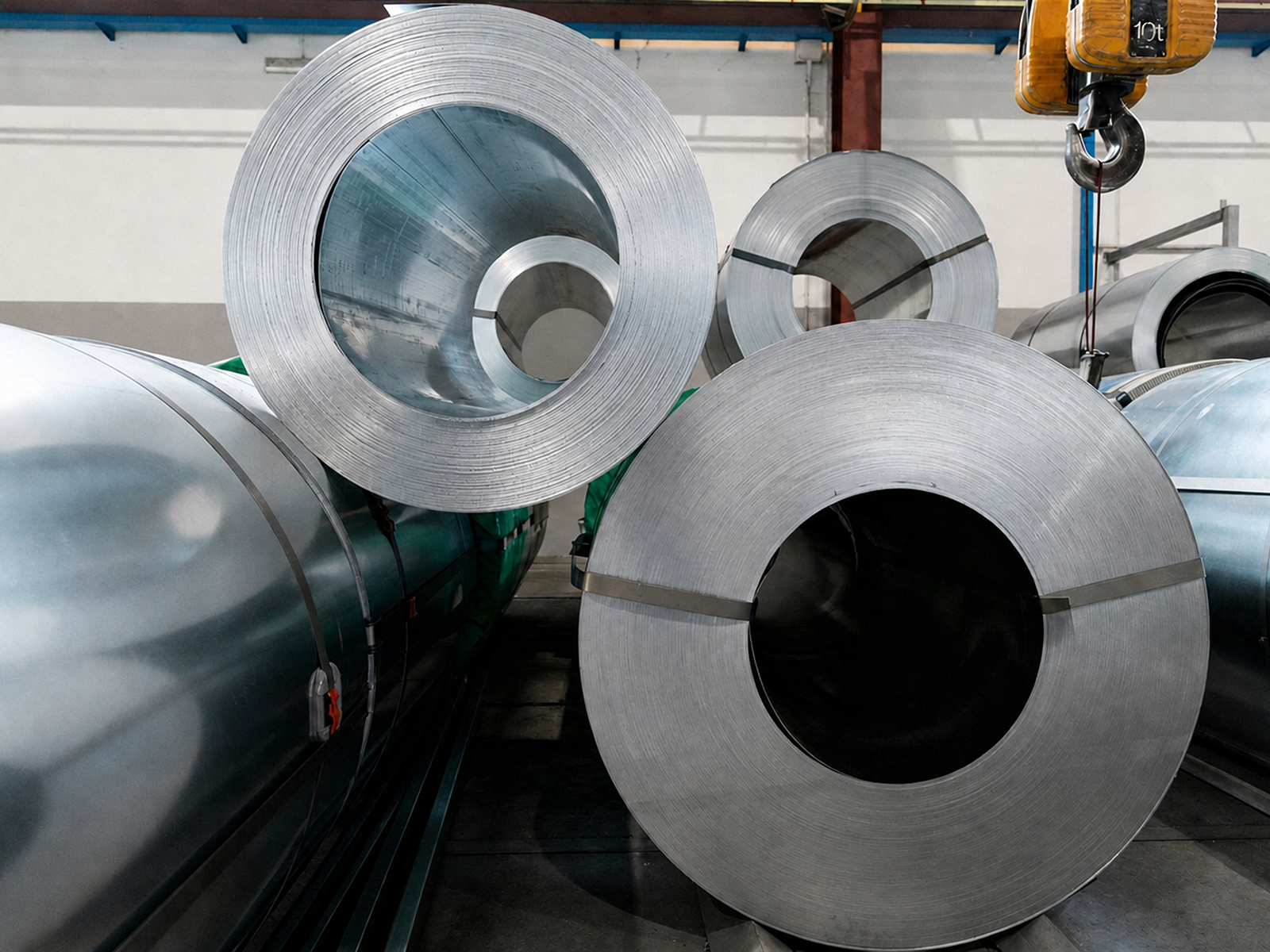
Direct engineering answer. Ti-15V-3Al-3Cr-3Sn Titanium Foil should be evaluated against the finished component, product form, governing specification, downstream process and acceptance evidence. A general property value is an orientation tool; the released drawing, current certificate and inspection plan control the final decision.
Curious about just how strong Ti-15V-3Al-3Cr-3Sn titanium foil really is? The typical engineering characteristics of this near-beta titanium alloy foil are “good ductility in the beta-annealed condition and a marked increase in strength after aging.” In the beta-annealed condition, it offers excellent cold forming capability and can be used for complex stamping and bending; after aging treatment, the tensile strength can be significantly increased to meet load-bearing requirements in aerospace, precision instrumentation, and other applications. Compared with Gr5 titanium alloy, its cold formability is generally superior, and its strength can be adjusted through the heat treatment schedule. This article provides the key data and boundary conditions needed for engineering material selection across five areas: material properties, heat treatment and forming, comparative benchmarking, typical applications, and procurement considerations.
1. Overview and Physical Properties of Ti-15V-3Al-3Cr-3Sn Titanium Foil
Ti-15V-3Al-3Cr-3Sn is a near-beta titanium alloy with a nominal composition of Ti-15V-3Al-3Cr-3Sn (by mass). Its microstructure is predominantly the body-centered cubic (BCC) beta phase. Compared with alpha+beta titanium alloys, this phase structure gives it good cold forming capability in the beta-annealed condition. It should be noted, however, that the differences in atomic size among the alloying elements V, Cr, Al, and Sn introduce significant lattice distortion and strengthening effects; it should not simply be regarded as a low-distortion material.
(1) Microstructure and Strengthening Characteristics
The engineering advantage of this alloy comes from a microstructural evolution path of “beta-phase matrix + alpha-phase precipitation during aging.” In the beta-annealed condition, the metastable beta phase is retained, making the material relatively soft with good ductility; after aging treatment, fine alpha phase precipitates, increasing strength while reducing ductility. This process is somewhat similar to the age-hardening of aluminum alloys, but titanium alloys exhibit different engineering characteristics in terms of heat resistance, corrosion resistance, and specific strength.
(2) Key Physical Properties
Property | Typical Value or Range |
Density | 4.76 g/cm³ |
Melting range | Approximately 1600–1700℃ (alloy melting range; verify by actual measurement for the specific heat/lot) |
Magnetic properties | Non-magnetic |
Elastic modulus | Approximately 83 GPa |
Poisson’s ratio | Approximately 0.33 |
It should be noted that the density of Ti-15V-3Al-3Cr-3Sn is approximately 4.76 g/cm³, higher than the approximately 4.43 g/cm³ of Ti-6Al-4V. It therefore cannot simply be regarded as a “low-density titanium alloy” from which a specific-strength advantage is inferred. The actual specific strength must be calculated based on the strength data for the specific heat treatment condition.
2. Heat Treatment Schedules and Mechanical Properties: Segmented Control of Beta-Annealed and Aged Conditions
The engineering value of Ti-15V-3Al-3Cr-3Sn lies mainly in the fact that complex cold forming can be completed in the beta-annealed condition, with the final service strength obtained through a subsequent aging treatment. This is a case of “segmented control of the formed and aged conditions” and does not mean that strength and ductility can be adjusted completely independently. The rule that aging increases strength while decreasing ductility still applies.
(1) Mechanical Behavior in the Beta-Annealed Condition
In the beta-annealed condition (heated to approximately 790–815℃ and rapidly cooled; the specific temperature depends on the heat/lot and thickness), Ti-15V-3Al-3Cr-3Sn titanium foil typically exhibits a tensile strength range of 800–1000 MPa and an elongation of generally 15%–25%. Actual values are affected by thickness, annealing temperature, holding time, cooling method, prior cold reduction, and test standard, and a single value should not be cited without reference to the heat treatment schedule. For example, 0.1–1.0 mm foil/strip, when rapidly cooled and tested per GB/T 228.1 or ASTM E8, may achieve strength and ductility within the above ranges; however, each specific heat/lot must still be verified by actual testing.
(2) Strengthening Behavior After Aging Treatment
After aging treatment, fine, uniformly dispersed alpha phase precipitates in the beta matrix, producing a strengthening effect. The typical strength range is 1100–1400 MPa, with elongation generally decreasing to 5%–12%. Different aging temperatures and holding times can adjust the balance between strength and ductility, but the following data should be used only as literature references and must not be used directly as process specifications.
Aging Temperature | Holding Time | Reference Tensile Strength | Reference Elongation |
480℃ | 8–16 h | 1250–1400 MPa | 5–8% |
510℃ | 8–12 h | 1150–1300 MPa | 8–12% |
540℃ | 6–10 h | 1000–1200 MPa | 10–15% |
Note: The data in the table only indicate the general trends of “strength tending to decrease and ductility tending to increase as temperature and time increase.” Actual performance is significantly affected by prior cold reduction, heating rate, furnace load, furnace temperature uniformity, cooling method, and other factors, and the data cannot be used directly as a heat treatment process card. Process trials and verification should be carried out before each production batch.
(3) Engineering Significance of Cold Forming Capability
In ultra-thin gauges of 0.02–1.0 mm, Ti-15V-3Al-3Cr-3Sn titanium foil can still be cold formed by bending, deep drawing, blanking, and other processes. Compared with Gr5/Ti-6Al-4V, its cold formability in the beta-annealed condition is generally better, making it suitable for thin-wall structural parts that require integrated forming. This does not mean that forming is unlimited; the forming limits are still affected by thickness, die clearance, lubrication, and heat treatment condition, and the minimum bend radius and springback compensation should be confirmed through process trials.
3. Comparative Performance of Ti-15V-3Al-3Cr-3Sn Foil Against Mainstream Titanium Alloy Foils
In practical material selection, data for alloys in different heat treatment conditions should not be compared directly. The following comparison specifies conditions wherever possible, but the specific grade and thickness must still be verified by actual testing.
(1) Comparison with Commercially Pure Titanium Foils
Comparison Item | Gr1 Titanium Foil | Gr2 Titanium Foil | Gr4 Titanium Foil | Ti-15V-3Al-3Cr-3Sn Titanium Foil |
Comparison condition | Annealed | Annealed | Annealed | Beta-annealed / aged |
Tensile strength | ~240 MPa | ~345 MPa | ~550 MPa | Beta-annealed: 800–1000 MPa; aged: 1100–1400 MPa |
Elongation | >24% | >20% | >15% | Beta-annealed: 15–25%; aged: 5–12% |
Cold formability | Excellent | Good | Fair | Good to excellent in the beta-annealed condition |
Strength adjustability | None | None | Limited | Adjustable through aging |
Note: The strengths listed for Ti-15V-3Al-3Cr-3Sn are adjustable ranges rather than single delivery-condition values. The commercially pure titanium series values are typical annealed-condition values; therefore, the two should not be treated as exactly equivalent conditions for direct comparison.
(2) Comparison with Gr5 (Ti-6Al-4V) Foil
Gr5/Ti-6Al-4V is typically supplied in the mill-annealed or annealed condition. Its cold formability is limited by its alpha+beta crystal structure and relatively high strength level, not because it is delivered in an already age-hardened condition. Typical annealed thin-sheet tensile strength is approximately 900–1000 MPa, with elongation of about 10%–14%.
Ti-15V-3Al-3Cr-3Sn has a typical tensile strength of approximately 800–1000 MPa in the beta-annealed condition, with elongation of about 15%–25%. Although its strength is close to that of annealed Gr5, its cold formability is generally superior. After aging, its tensile strength can rise to 1100–1400 MPa, but elongation decreases to 5%–12%. Forming parameters such as minimum bend radius, springback angle, and limiting drawing ratio must therefore be determined by actual testing for the specific thickness, heat treatment condition, and tooling; they cannot be judged by alloy designation alone. [3]
(3) Decision Logic for Material Selection
Evaluation is recommended across three dimensions:
- Forming complexity: for complex cold stamping, deep drawing, and multi-pass bending, prioritize beta-annealed Ti-15V-3Al-3Cr-3Sn or the commercially pure titanium series.
- Service strength: if only moderate annealed-condition strength is required, Gr5 may be more cost-effective; if complex forming followed by age hardening is needed, Ti-15V-3Al-3Cr-3Sn is more suitable.
- Environmental compatibility and physical requirements: requirements such as non-magnetic behavior, corrosion resistance, and temperature resistance should be included in the evaluation, with corrosion testing and magnetic property measurement performed where necessary.
4. Typical Applications of Ti-15V-3Al-3Cr-3Sn Titanium Foil in Precision Manufacturing
(1) Aerospace Thin-Wall Structural Parts
Ti-15V-3Al-3Cr-3Sn sheet/foil is commonly used in aerospace for thin-wall parts that combine complex cold forming with age hardening. Its formability in the beta-annealed condition is superior to Gr5, and aged strength can meet load-bearing requirements. It should be noted, however, that its density is higher than that of Ti-6Al-4V, so “low density” cannot simply be used as a basis for weight reduction; the weight-saving effect must be evaluated through specific wall-thickness and load calculations. [1][4]
In terms of standards, supply within China can be negotiated per GB/T 3621 and GB/T 3622; for export or compliance with international specifications, sheet/strip standards such as AMS 4914 can be referenced, with the latest revision and the purchaser’s technical requirements prevailing. The original AMS 4983/4984 should not be applied to foil/strip without verification.
(2) Electronic Components and EMI Shielding Materials
Ti-15V-3Al-3Cr-3Sn titanium foil can be produced continuously in wide widths and precision slit, which helps reduce the number of lap seams in large-area shielding assemblies. It must be clearly understood, however, that the electrical conductivity of titanium alloys is significantly lower than that of copper and aluminum, so EMI shielding effectiveness is not a natural advantage of titanium alloys. If the foil is intended for non-magnetic, corrosion-resistant, high-strength shielding structures, the following key parameters should be requested from the supplier:
- Bulk conductivity or resistivity;
- Surface contact resistance;
- Shielding effectiveness at different frequencies (SE/dB);
- The effect of joint/seam configuration, grounding design, and oxide layer condition on shielding performance.
Thickness consistency or wide-width continuous production alone cannot prove reliable shielding effectiveness, nor can it substitute for conductivity and contact resistance testing.
(3) Precision Sensors and Elastic Elements
Elastic sensing elements for sensors require not only thickness consistency and flatness control but also attention to the following parameters:
- Elastic modulus stability, especially its temperature coefficient;
- Micro-yield strength;
- Low-load fatigue performance;
- Elastic hysteresis;
- Residual stress level;
- Surface integrity and micro-defects.
Although beta-annealed Ti-15V-3Al-3Cr-3Sn has good cold formability, its micro-yield behavior may be less stable than in the aged condition. When used for elastic elements, it generally requires aging treatment, together with stricter requirements for microstructural uniformity and dimensional stability. Thickness tolerance is only a basic condition and cannot by itself guarantee sensor accuracy and reliability.
5. Key Technical Parameters to Consider When Purchasing and Using Ti-15V-3Al-3Cr-3Sn Titanium Foil
(1) Standard Specification Quick Reference
Parameter | Specification Range |
Thickness | Standard 0.02–1.0 mm; 0.005–0.02 mm are customized gauges requiring evaluation of width and tolerances |
Width | 15–680 mm; specific width-thickness combinations must be confirmed against the specification |
Length | Customized per coil, strip, or cut-to-length sheet requirements |
Supply form | Coil / strip / cut-to-length sheet |
Surface condition | Bright / matte |
Applicable standards | Domestic: GB/T 3621, GB/T 3622; international: AMS 4914 and others, per the latest revision |
Note: Not all thicknesses can be supplied in the 680 mm width, and not all widths can reach the ultra-thin gauges. Tolerance class, flatness, and shape requirements should be provided to the supplier before requesting a quote.
(2) Engineering Requirements for Surface and Cleanliness
Ultrasonic cleaning can remove machining oils and loose contaminants. After cleaning, the surface dyne level can typically reach above 40 mN/m, but this result is affected by the initial surface condition, roughness, cleaning agent type, test method, and ambient humidity. A single dyne value should not be used as a stable acceptance criterion for all surface conditions.
It is recommended to specify the following as well:
- Surface roughness Ra/Rz;
- Dyne level or contact angle test method;
- Surface contamination level requirements;
- Packaging, storage period, and oxidation protection measures.
(3) Process Matching Points to Confirm Before Purchasing
When purchasing Ti-15V-3Al-3Cr-3Sn titanium foil, at least the following items should be confirmed:
- Delivery condition: beta-annealed, cold-rolled, or aged; whether it matches the subsequent forming and heat treatment;
- Performance reports: whether chemical composition, tensile properties, hardness, thickness tolerance, and surface condition reports are provided for the specific heat/lot;
- Aging process: if subsequent aging is required, whether a recommended aging curve and expected strength/ductility ranges are provided, along with the effects of heating rate and cooling method;
- Standard revisions: the specific revisions and supplementary requirements of GB/T 3621, GB/T 3622, AMS 4914, or others;
- Transport protection: whether coil/strip is packaged with oxidation and scratch protection.
6. Conclusion
Ti-15V-3Al-3Cr-3Sn titanium foil’s core engineering value lies in completing complex cold forming in the beta-annealed condition and then increasing service strength through aging treatment. This alloy is not superior to Ti-6Al-4V in density, so any specific-strength advantage must be calculated for the specific heat treatment condition. Its true advantages are reflected in the combination of “good formability + adjustable age hardening + non-magnetic behavior + corrosion resistance,” rather than simply low density or low distortion. When selecting the material, the thickness, condition, heat treatment schedule, and test standard should be specified, with actual measured data for the specific heat/lot as the basis.
FAQ
(1) Q1: Can Ti-15V-3Al-3Cr-3Sn Titanium Foil Undergo Secondary Cold Forming After Aging Treatment?
Not recommended. After aging treatment, strength increases and ductility decreases, and large-scale cold forming can easily cause cracking. In engineering practice, complex forming operations should be completed in the beta-annealed condition, with aging treatment performed as the final heat treatment operation.
(2) Q2: Is Ti-15V-3Al-3Cr-3Sn Titanium Foil Suitable for Marine Corrosion Environments?
Titanium alloys generally have good compatibility with chloride ion environments, and Ti-15V-3Al-3Cr-3Sn may also be suitable for certain marine or chemical environments. However, corrosion resistance is affected by media concentration, temperature, flow velocity, galvanic effects, and other factors, and cannot be judged in general terms without reference to the service conditions. Corrosion testing or reference to similar applications in the same environment should be performed before actual selection.
(3) Q3: How Is Thickness Consistency Ensured for 0.02 mm Ultra-Thin Ti-15V-3Al-3Cr-3Sn Titanium Foil?
Thickness consistency depends on precision rolling mills, closed-loop thickness control, and slitting control, but equipment capability alone is not sufficient. Flatness, thickness profile, residual stress, and surface defects should also be inspected. The wider and thinner the material, the more difficult the control. The tolerance class and sampling locations should be agreed with the supplier at the time of purchase.
7. Purchasing Recommendations
For supplier information, please contact sales@titaniumvalleys.com. It is recommended to prioritize companies with the capability to supply to GB/T 3621, GB/T 3622, or AMS 4914, and which can provide actual measured data for the specific heat/lot and heat treatment process references. When requesting a quote, chemical composition, mechanical properties, thickness tolerance, surface condition, and standard compliance reports should be required.
References
- Zhang Xiyan, Zhao Yongqing, Bai Chenguang. Titanium Alloys and Their Applications [M]. Beijing: Chemical Industry Press, 2005.
- Zhao Yongqing, Hong Quan, Ge Peng. Metallographic Atlas of Titanium and Titanium Alloys [M]. Changsha: Central South University Press, 2011.
- China Mechanical Engineering Society, et al. China Materials Engineering Canon: Volume 4, Nonferrous Metal Materials Engineering [M]. Beijing: Chemical Industry Press, 2006.
- National Technical Committee on Nonferrous Metals Standardization. GB/T 3621-2022 Titanium and titanium alloy sheets and plates [S]. Beijing: Standards Press of China, 2022.
- National Technical Committee on Nonferrous Metals Standardization. GB/T 3622-2012 Titanium and titanium alloy strip and foil [S]. Beijing: Standards Press of China, 2012.
Engineering specification and verification framework
For Ti-15V-3Al-3Cr-3Sn Titanium Foil, state grade, ordered product form, condition, nominal dimensions, tolerances, surface requirement, quantity and documentation in one controlled RFQ. The applicable product-form reference is ASTM B265, subject to the current edition and project-specific requirements. When tensile evidence is required, define the test method and sampling basis; ASTM E8/E8M or ISO 6892-1 may apply where consistent with the order.
| RFQ field | Required detail | Reason |
|---|---|---|
| Material identity | Grade, form, ASTM B265, condition | Prevents unintended substitution. |
| Geometry | Nominal size, tolerance, length or coil form | Defines production and inspection scope. |
| Process context | Forming, machining, joining, etching or assembly | Relates supply condition to actual manufacture. |
| Verification | Certificate, dimensional checks, lot identity | Creates a traceable acceptance plan. |
Risk review and incoming control
Common avoidable risks include tolerance stack-up, unclear condition, surface damage, undocumented substitution and loss of lot identity after cutting. At receipt, reconcile the purchase order, packing label and certificate before release to production. Define any supplementary testing, sampling and report format before quotation rather than after shipment.
Technical FAQ
Can catalogue values approve the material?
No. Final approval must use the ordered form, condition, standard, drawing, process route and service boundary.
What should an RFQ include?
Provide the drawing where available, grade and standard, dimensions, tolerance, condition, quantity, process context, service information and documentation requirement.
Product resources and technical quotation
Review the relevant titanium foil product category. For a drawing-based review, request a technical quotation with the full specification.
References and use note
- ASTM B265, applicable edition, for the ordered product form.
- ASTM E8/E8M or ISO 6892-1 where the project specifies tensile verification.
- Project drawing, purchase specification, certificate and agreed inspection plan.
This engineering note supports procurement specification. It does not replace component design validation or the governing contractual standard.