
What Is Nickel 200 Nickel Wire? A Comprehensive Guide to Pure Nickel Wire
- Nickel 200 Nickel Wire
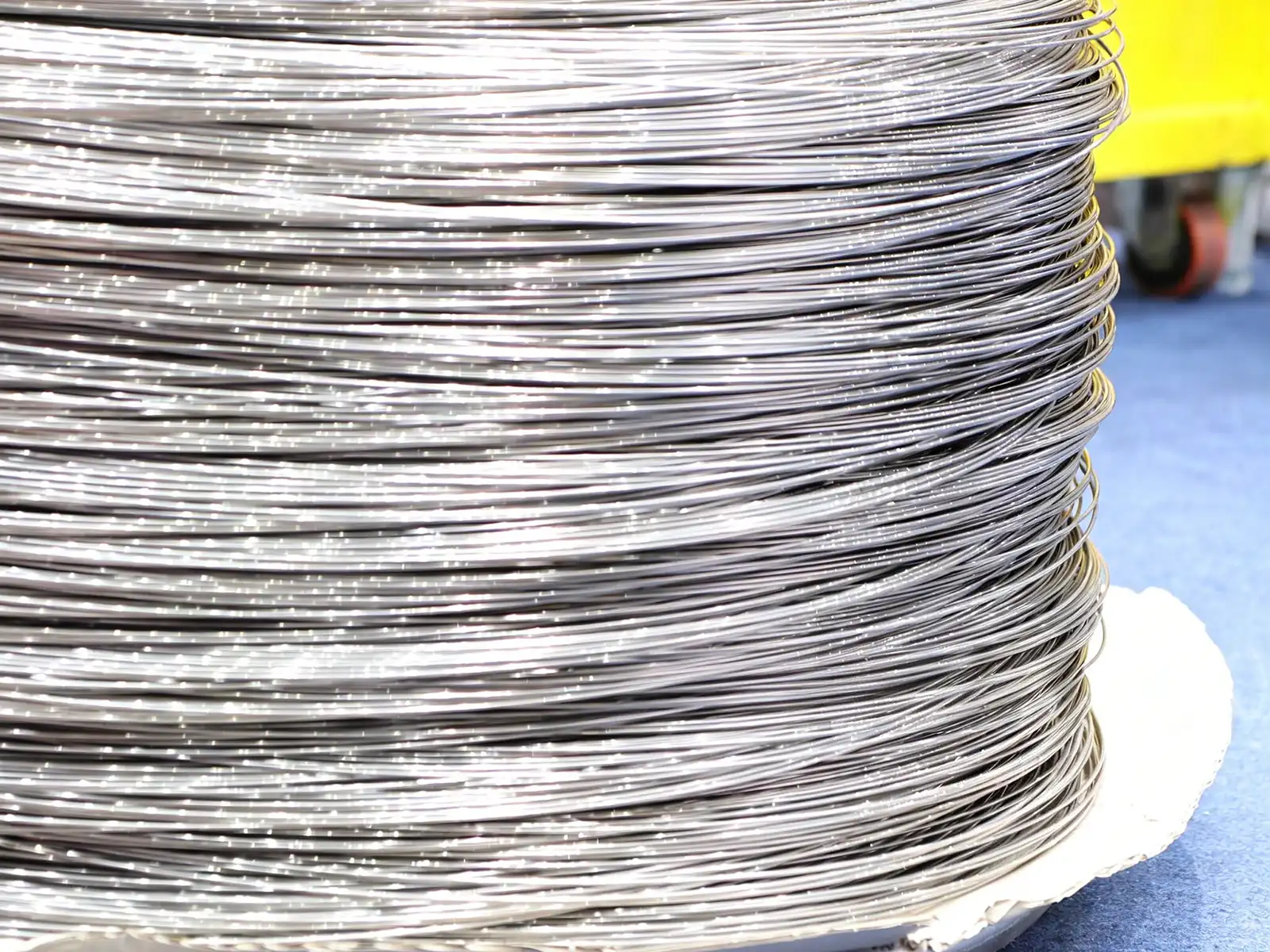
Direct engineering answer. Nickel 200 Nickel Wire should be evaluated against the finished component, product form, governing specification, downstream process and acceptance evidence. A general property value is an orientation tool; the released drawing, current certificate and inspection plan control the final decision.
Pure nickel wire (Nickel 200 Wire, UNS N02200) is a high-purity industrial nickel wire with a nickel content typically no lower than 99.0%, and is designated by material number 2.4060 in Europe. The wire is primarily governed by GB/T 26018 (Nickel and Nickel Alloy Wire), while its chemical composition commonly references the requirements of ASTM B160/UNS N02200. Its main advantages lie in resistance to alkali corrosion, electrical and thermal conductivity, and low-temperature toughness, giving it applications in chemical corrosion-resistant parts, electrical conductive connections, non-implantable medical device components, and high-temperature industrial use. It should be noted, however, that Nickel 200 is a ferromagnetic material and must not be used in magnetic-field-sensitive applications such as MRI or precision non-magnetic sensors; nor should it be broadly regarded as “irreplaceable” or suitable for all medical implant applications.
1. Core Composition and Physical Properties of Nickel 200 Nickel Wire
(1) Chemical Composition: Purity as a Core Competitive Advantage
The chemical composition of Nickel 200 / UNS N02200 is commonly based on the requirements of ASTM B160/B160M and GB/T 26018. Under the customary ASTM B160 provisions for UNS N02200, Ni+Co must be no lower than 99.0%, not 99.5%; iron, copper, manganese, silicon, carbon, sulfur, and other elements each have corresponding upper limits, while phosphorus is generally not separately limited.
Element | Ni+Co | Fe | Cu | Mn | Si | C | S | P |
Content (wt%) | ≥99.0 | ≤0.40 | ≤0.25 | ≤0.35 | ≤0.35 | ≤0.15 | ≤0.01 | Generally not limited by the standard |
The low-impurity design helps reduce the risk of process media contamination and improves welding reliability. However, “≥99.5%” is not a universal ASTM B160 requirement for N02200; purchasing decisions should be based on the actual standard, heat/batch numbers, and material certificate data.
(2) Physical Parameters: Engineering Significance of Density, Melting Point, and Thermal Conductivity
At room temperature the density is approximately 8.90 g/cm³ and the melting range is typically about 1435–1446℃. Near room temperature the thermal conductivity is commonly taken as approximately 70 W/(m·K) or higher, and the temperature must be specified; the resistivity at 20℃ is approximately 6.84×10⁻⁸ Ω·m (i.e., 6.84 μΩ·cm). In engineering calculations, thermal conductivity and resistivity values should be used at the corresponding temperature rather than substituting a single point value without a stated temperature.
(3) Magnetic Characteristics and Suitability for Magnetic-Field-Sensitive Applications
Nickel 200 is not non-magnetic. Pure nickel is a ferromagnetic material with pronounced magnetism at room temperature and a Curie temperature of approximately 358℃. Therefore, N02200 should not be selected for magnetic-field-sensitive applications such as MRI equipment, precision non-magnetic sensors, magnetic shielding, or non-magnetic guidewires. If the service conditions require non-magnetic properties, titanium and titanium alloys, copper alloys, austenitic stainless steel, or specially designed non-magnetic nickel-based alloys should be evaluated and verified by actual testing.
2. Mechanical Properties and Processing Advantages of Nickel 200 Nickel Wire
(1) Mechanical Properties in the Annealed Condition: The Balance of Strength and Ductility
Typical tensile properties of annealed wire are provided for reference below; actual values are governed by ASTM B160, GB/T 26018, and the material certificate:
Property | Value | Remarks |
Tensile strength | ≥350 MPa | Example minimum for annealed condition |
Yield strength | ≥130 MPa | Example minimum for annealed condition |
Elongation | ≥30% | Gauge length 50 mm or per standard |
Hardness | Brinell hardness is not recommended for evaluating wire; annealed bar may be referenced at 85–95 HB | Vickers HV preferred for fine wire |
This combination of moderate strength and high elongation means the material can bear a certain level of loading while being cold-drawn and cold-bent into complex shapes without readily cracking, making it suitable for forming precision springs, non-implantable medical elastic components, and special-shaped connectors.
(2) Cold Working Response: Stability of Multi-Pass Drawing Processes
Nickel 200 can be processed by multi-pass cold drawing with intermediate annealing. For fine-gauge wire (e.g., φ0.1–3.0 mm) supplied on spools or as cut-to-length straight wire, diameter tolerances can be controlled to ±0.01 mm or better; however, this tolerance is not automatically applicable across all diameters and lengths. Straightness better than 1 mm/m is typically applicable only to cut-to-length straight products, and the diameter, length, and measurement method must be agreed upon. Larger sizes above φ4 mm should be specified separately as bar or rod and must not simply adopt fine-wire tolerances.
(3) Weldability: Reliability from Low Impurity Levels
Impurities such as sulfur are limited, which helps reduce the risk of weld hot cracking. In processes such as TIG welding, electron beam welding, and laser welding, Nickel 200 generally exhibits good weld pool fluidity and joint strength, but quality still depends on filler wire selection, shielding gas, and heat input control. Although phosphorus is generally not separately limited under ASTM B160, actual values should be confirmed via the material certificate.
3. In-Depth Analysis of the Corrosion Resistance of Nickel 200 Nickel Wire
(1) Strong Alkaline Environments: Nearly Unmatched Resistance
In strongly alkaline media such as sodium hydroxide and potassium hydroxide, Nickel 200 typically exhibits excellent corrosion resistance. Its surface forms a dense nickel oxide/nickel hydroxide film that remains stable in alkaline solutions free of oxidizing impurities and at temperatures within the material’s applicable range. In the chlor-alkali industry, pure nickel is primarily used for cathodes, corrosion-resistant conductive components, caustic filter screens, and conveying parts—not as a general-purpose anode material.
(2) Performance in Reducing Acids and Salt Solutions
In reducing acids at room temperature, such as dilute hydrochloric acid (e.g., concentration approximately ≤5%, static and free of air/oxidizers), the corrosion rate of N02200 is typically low; however, in hot hydrochloric acid, higher concentrations, aerated solutions, or media containing oxidizing ions, the corrosion rate rises significantly. For organic acids, the specific acid type, temperature, water content, and whether the system is aerated must be evaluated. In neutral salt environments such as seawater and salt spray, good performance can be expected at room temperature. Hot oxidizing acids (such as concentrated nitric acid) and high-temperature sulfur-bearing atmospheres (>315℃) are not applicable.
(3) Relationship Between Corrosion Resistance and Service Temperature
From room temperature up to approximately 315℃ in sulfur-free environments, the overall corrosion resistance of Nickel 200 is most reliable; above this temperature or when sulfides are present in the atmosphere, there is a risk of sulfur embrittlement failure. For equipment operating long-term in high-temperature corrosive environments, Nickel 201 (the low-carbon version) should be prioritized for evaluation, as its further-reduced carbon content lowers the tendency for grain boundary carbide precipitation at elevated temperatures and provides greater overall stability.
Corrosive environment | Typical conditions | Nickel 200 performance |
Strong alkali NaOH/KOH | High concentration, room temperature to around boiling, no oxidizing impurities | Excellent |
Dilute hydrochloric acid | Room temperature, low concentration, static | Good/Usable |
Hot hydrochloric acid | High temperature, high concentration, aerated | Not applicable/Use with caution |
Seawater / salt spray | Room temperature | Good |
Hot oxidizing acid | e.g., concentrated nitric acid | Not applicable |
High-temperature sulfur-bearing atmosphere | >315℃ | Not applicable |
4. Key Application Scenarios for Nickel 200 Nickel Wire
(1) Core Consumables in the Chemical and Electrochemical Industries
In the chlor-alkali industry, electrorefining, and electroplating processes, pure nickel wire is mainly used for cathodes, corrosion-resistant conductive racks, filter screens, and connecting components. High purity helps minimize the introduction of impurity ions during electrochemical processes and reduces the material selection risk for related components. Anodes or strongly oxidizing electrochemical environments should be selected based on the actual media and should not default to pure nickel.
(2) Precision Conductors in the Electronics and Electrical Industries
N02200 may be used for transformer coils, battery tabs, heating elements, and precision resistance wire. Its low resistivity and high thermal conductivity help stabilize heat generation and dissipation under current. In lithium battery systems, pure nickel is mostly used for tabs, connector strips, nickel straps, or conductive connection parts; since the positive electrode current collector is typically aluminum foil, pure nickel wire should not be directly described as a positive electrode current collector.
(3) Corrosion-Resistant Conductive Components in Medical Devices and Precision Machinery
In the medical device field, Nickel 200 can be used for corrosion-resistant elastic components that are non-implantable and have no MRI compatibility requirements, such as endoscope spring tubes, conductive components for electrosurgical instruments, and steam-sterilizable assemblies. Because pure nickel is magnetic and poses nickel ion release and biocompatibility risks, it is not suitable as a permanent implant stent material; nor should pure nickel be chosen for MRI-compatible non-magnetic guidewires. All medical uses require biocompatibility evaluation according to the device classification.
5. How to Select a Qualified Nickel 200 Nickel Wire Supplier
(1) Process Capability and Batch Consistency
When evaluating a supplier, do not focus only on a single equipment brand; instead, assess whether it has a stable source of raw bar/rod stock, multi-pass cold drawing, protective atmosphere/vacuum annealing, in-line diameter gauging, surface treatment, and finished-product inspection capabilities. The supplier should be able to provide batch-consistency data on wire diameter tolerance, chemical composition, and mechanical properties, such as SPC control charts or process capability reports.
(2) Completeness of Quality Certifications and Inspection Systems
A compliant supplier should provide quality certificates meeting the requirements of EN 10204 3.1 or the corresponding standards such as GB/T 26018 and ASTM B160, covering chemical composition, tensile properties, dimensions, and surface condition. For export products, the applicability of standards must be confirmed for the destination market rather than simply citing inapplicable standards such as ASTM B166 and ASTM F72.
(3) Size Coverage and Technical Services
Different industries have widely varying requirements for nickel wire sizes and surface finishes: the medical industry requires ultra-fine wire with high surface finish, the chemical industry requires corrosion-resistant surfaces, and the battery industry has special requirements for dimensional consistency and coil weight. Suppliers can provide surface conditions such as bright, semi-bright, pickled, and polished finishes. The conventional diameter range for wire is typically φ0.1 mm to φ6.0 mm; larger sizes should be negotiated separately as bar or rod and should not be included in the default wire specifications.
6. Conclusion
Nickel 200 pure nickel wire offers practical advantages in alkali resistance, electrical and thermal conductivity, and low-temperature toughness, with value in chemical, electronics, energy, and medical device components. However, it is not an “irreplaceable” material and is particularly unsuitable for non-magnetic, permanent implant, hot oxidizing acid, or high-temperature sulfur-bearing environments. The correct approach is to make material decisions only after verifying the concentration, temperature, magnetic, and biocompatibility requirements of the service conditions against the applicable standards and material certificates.
FAQ
(1) Q1: What is the difference between Nickel 200 and Nickel 201, and how should they be selected?
Nickel 201 is the low-carbon version of Nickel 200, with a carbon content not exceeding 0.02%. It is specifically designed for high-temperature service above 316℃ and effectively suppresses the embrittlement caused by grain boundary carbide precipitation. If the operating temperature exceeds 315℃ for extended periods, Nickel 201 should be preferred. Both grades are pure nickel with similar magnetic characteristics, and neither addresses the non-magnetic requirement.
(2) Q2: Is Nickel 200 nickel wire suitable for hydrofluoric acid or nitric acid environments?
Nickel 200 is not suitable for strongly oxidizing acid environments such as hot concentrated nitric acid, where corrosion resistance decreases significantly. It offers some corrosion resistance in hydrofluoric acid, but this must be evaluated against the specific concentration, temperature, and oxygen content, and corrosion testing is recommended in advance—materials should never be substituted based on experience alone.
(3) Q3: Does the surface condition of Nickel 200 nickel wire affect its performance?
Yes, significantly. A bright surface suits precision electronics and medical components; a pickled surface suits corrosion-resistant chemical components; a polished surface offers a low coefficient of friction, suiting spring and guidewire applications. Different surface conditions directly affect corrosion resistance, electrical uniformity, and compatibility with downstream processes, so selection should be based on a comprehensive assessment of the end-use conditions.
7. About Us
Titanium Valley is a professional Nickel 200 Wire manufacturer, supplier, and factory specializing in high-precision titanium, nickel, and zirconium wire processing. We support custom specifications and stable volume supply to meet global high-end industrial needs. Please contact us for samples and quotations at: sales@titaniumvalleys.com
References
- China Nonferrous Metals Standardization Technical Committee. GB/T 26018—2010, Nickel and Nickel Alloy Wire. Beijing: Standards Press of China, 2010.
- China Nonferrous Metals Standardization Technical Committee. GB/T 4435—2010, Nickel and Nickel Alloy Bars. Beijing: Standards Press of China, 2010.
- China Nonferrous Metals Standardization Technical Committee. GB/T 2054—2013, Nickel and Nickel Alloy Plate. Beijing: Standards Press of China, 2013.
- Wei Baoming. Theory and Application of Metal Corrosion. Beijing: Chemical Industry Press, 1984.
Engineering specification and verification framework
For Nickel 200 Nickel Wire, state grade, ordered product form, condition, nominal dimensions, tolerances, surface requirement, quantity and documentation in one controlled RFQ. Confirm the specification and edition applicable to the ordered grade and wire form. When tensile evidence is required, define the test method and sampling basis; ASTM E8/E8M or ISO 6892-1 may apply where consistent with the order.
| RFQ field | Required detail | Reason |
|---|---|---|
| Material identity | Grade, form, agreed specification and condition | Prevents unintended substitution. |
| Geometry | Nominal size, tolerance, length or coil form | Defines production and inspection scope. |
| Process context | Forming, machining, joining, etching or assembly | Relates supply condition to actual manufacture. |
| Verification | Certificate, dimensional checks, lot identity | Creates a traceable acceptance plan. |
Risk review and incoming control
Common avoidable risks include tolerance stack-up, unclear condition, surface damage, undocumented substitution and loss of lot identity after cutting. At receipt, reconcile the purchase order, packing label and certificate before release to production. Define any supplementary testing, sampling and report format before quotation rather than after shipment.
Technical FAQ
Can catalogue values approve the material?
No. Final approval must use the ordered form, condition, standard, drawing, process route and service boundary.
What should an RFQ include?
Provide the drawing where available, grade and standard, dimensions, tolerance, condition, quantity, process context, service information and documentation requirement.
Product resources and technical quotation
Review the relevant nickel product category. For a drawing-based review, request a technical quotation with the full specification.
References and use note
- Applicable specification and edition for the ordered wire.
- ASTM E8/E8M or ISO 6892-1 where the project specifies tensile verification.
- Project drawing, purchase specification, certificate and agreed inspection plan.
This engineering note supports procurement specification. It does not replace component design validation or the governing contractual standard.