
What Should Global Buyers Know About Gr2 Titanium Bar Suppliers?
- Gr2 Titanium Bar
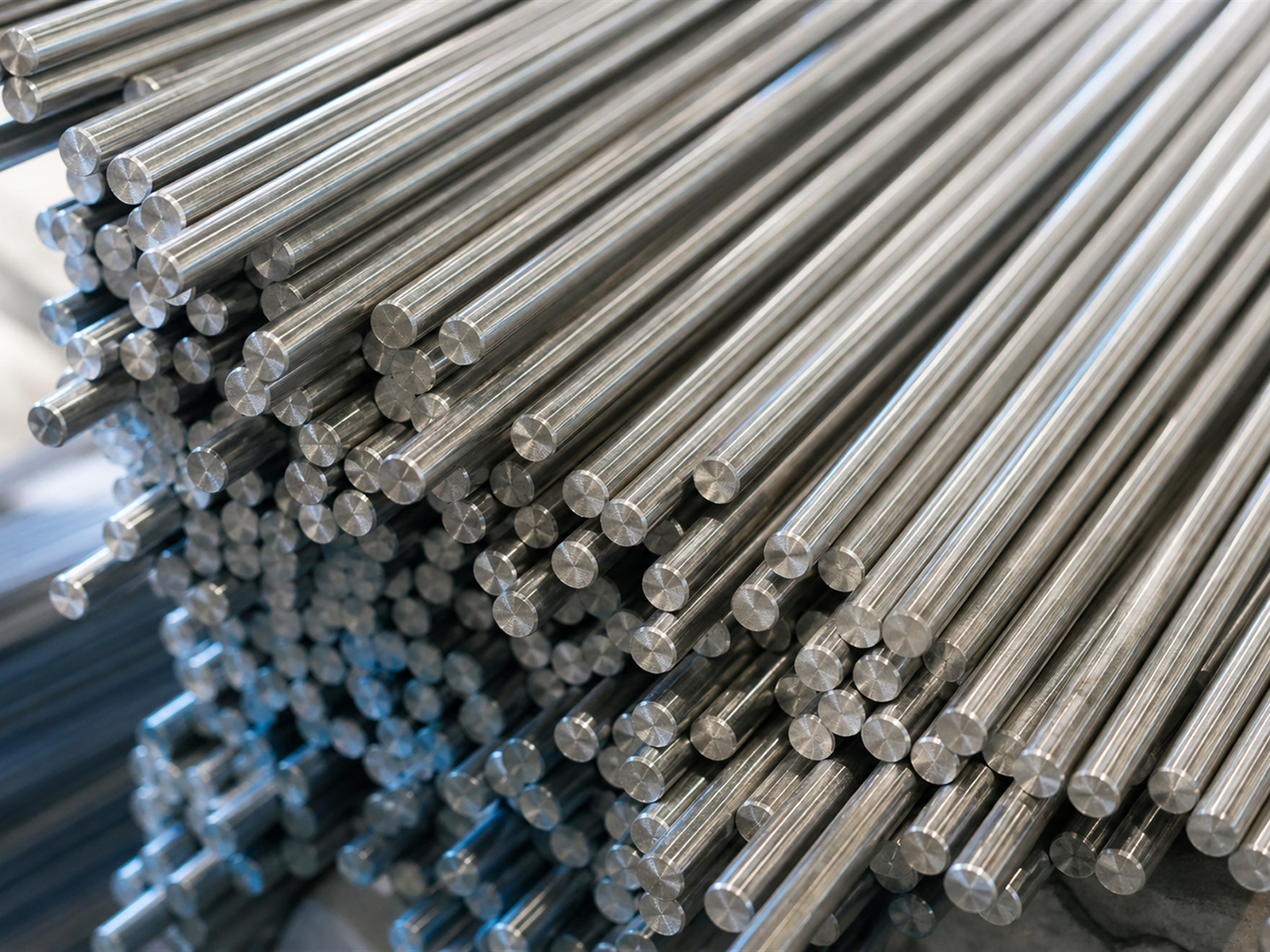
In chemical corrosion protection, marine engineering, medical devices, and new energy applications, Grade 2 (Gr2) titanium bar has become one of the key alternatives to stainless and carbon steel thanks to its balanced strength and good chloride corrosion resistance. Under ASTM B348, Grade 2 uses titanium as the balance and does not directly specify a titanium content of ≥99.2%; its properties are controlled mainly by oxygen, iron, carbon, nitrogen, hydrogen, and residual elements. Gr2 has a density of about 4.51 g/cm³, roughly 57% of 316L stainless steel, along with good corrosion resistance and ductility. For buyers in high-end manufacturing markets such as the United States, Germany, Japan, and South Korea, choosing the right supplier affects not only material performance but also production efficiency, compliance costs, and supply chain stability. This article walks through the core technical points that global buyers need to focus on when purchasing Gr2 commercially pure titanium bar—from material characteristics and specification selection to supplier evaluation and typical applications.
Topic hub: For the main Titanium GR2 rod selection framework, see Titanium GR2 rod guide. For form-specific availability, review the relevant product category and send a technical RFQ with grade, dimensions, condition and documentation requirements.
Topic hub: For the main the Titanium GR2 rod selection framework, see the Titanium GR2 rod guide. For form-specific availability, review the relevant product category and send a technical RFQ with grade, dimensions, condition and documentation requirements.
1. Core Material Characteristics of Gr2 Titanium Bar: The Data Buyers Need to Read
(1) Chemical Composition and Mechanical Properties
The chemical composition of Gr2 titanium bar is controlled by standards such as ASTM B348, with the key elements as follows:
Element | Content Limit (Mass Fraction) |
Titanium (Ti) | Balance |
Oxygen (O) | ≤0.25% |
Iron (Fe) | ≤0.30% |
Carbon (C) | ≤0.08% |
Nitrogen (N) | ≤0.03% |
Hydrogen (H) | ≤0.015% |
Residual elements, individual | ≤0.10% |
Residual elements, total | ≤0.40% |
Oxygen content is the key variable in tuning Gr2’s mechanical properties: higher oxygen increases strength but reduces ductility. Per ASTM B348, annealed Grade 2 bar has a minimum tensile strength of typically 345 MPa, a minimum yield strength of 275 MPa, and elongation after fracture ≥20%. Grade 1 has a minimum tensile strength of typically 240 MPa, so Gr2 is about 44% stronger than Gr1 while retaining good cold-working properties, and it is often regarded as a balance point between strength and toughness.
(2) Physical Characteristics and Engineering Value
Gr2 titanium bar has a density of about 4.51 g/cm³, weighing approximately 57% of 316L stainless steel for the same volume. Taking a pump shaft as a rotating component example, replacing it with Gr2 titanium bar reduces the component’s weight by about 40% relative to stainless steel—but the overall equipment weight reduction must be calculated by combining all replaced components and structural optimization and cannot be extrapolated from a single shaft. Gr2’s relative permeability is typically close to 1.00005–1.0001, essentially non-magnetic, making it suitable for MRI-adjacent structural parts, precision instrument mounts, and other magnetic-field-sensitive applications.
(3) Corrosion Resistance Mechanism and Service Boundaries
Gr2 titanium bar naturally forms a dense TiO₂ oxide film on its surface with self-healing capability. Even after minor surface scratching, the film repairs quickly upon exposure to air or water. In neutral chloride environments (such as seawater and brine), oxidizing acids, and most alkaline liquors and organic acids, Gr2 corrodes at low rates; in non-oxidizing reducing acids such as hydrochloric acid and sulfuric acid, however, titanium’s corrosion resistance is not outstanding, and service corrosion testing should be performed before selection. Compared with 316L stainless steel, Gr2 generally offers a significant service life advantage in oxidizing chloride-containing environments, but the specific multiplier depends on media composition, temperature, flow rate, impurity content, and structural design and should not be simplified out of context to a fixed 3–5×.
2. Gr2 Titanium Bar Specification Selection: Dimensions, Surface Condition, and Cutting Tolerances
(1) Size Specifications and Applicable Scenario Comparisons
Specification Type | Diameter or Width Across Flats Range | Typical Applications |
Cold-drawn polished bar | φ4–φ30 mm | Precision machining, medical devices, instrumentation |
Hot-rolled bar (standard stock) | φ8–φ100 mm | Chemical equipment, pump bodies, agitator shafts |
Forged bar (custom) | φ100–φ300 mm | Heavy chemical reactors, offshore platform structural parts |
Square bar | 6×6–80×80 mm | Valves, flanges, fasteners |
Hexagonal bar | Width across flats 6–80 mm | Fasteners, connectors |
Conventional hot-rolled bar generally covers up to φ100 mm; larger sizes of φ100 mm and above are mostly forged bar and should be discussed as custom orders. Inch sizes (1/4″, 1/2″, 1″, 2″, 3″) are also available from standard stock, suiting equipment procurement for the U.S. and Canadian markets.
(2) Selection Logic for Surface Condition and Heat Treatment State
Annealed bar undergoes recrystallization annealing, resulting in lower internal stress and suiting subsequent welding and cold forming. Hot-worked and cold-worked conditions cannot simply be grouped together: hot-worked material differs from cold-worked material in grain size and residual stress; cold-worked material gains strength through cold deformation, but with reduced ductility and higher residual stress. Buyers should specify the condition according to the subsequent process and mechanical requirements.
For surface treatment, turned or ground surfaces offer high dimensional accuracy and suit precision fitting; pickled surfaces remove oxide scale, but degreasing, cleaning, and removal of foreign metal contamination are still required before welding—pickling does not substitute for pre-weld preparation.
(3) Procurement Considerations for Length and Cutting Tolerances
The standard supply lengths of Gr2 titanium bar vary with condition and production line. Hot-worked bar is typically available in 3000–6000 mm or longer; small-diameter cold-worked/annealed bar may be supplied as straight lengths or coils, commonly in the 300–3000 mm range. RFQs should specify the standard length, available cut-to-size lengths, and packaging form.
For saw-cut lengths, a cutting allowance of 3–5 mm per cut is typically reserved; precision cutting tolerances can generally be held within ±0.5 mm, subject to agreement in the contract. For bulk procurement, confirm the cut-length scheme in advance to reduce end scrap and lower overall procurement cost.
3. Key Factors in Evaluating Gr2 Titanium Bar Supplier Capability
(1) Production Processes and Equipment Level
A typical production flow is: high-purity titanium sponge → vacuum melting → forging breakdown → hot rolling/cold drawing → annealing → pickling or turned/ground surface → straightening → precision cutting → non-destructive testing. The number of melting passes should be determined by the final application, product standard, and material specification; not all Gr2 bar requires at least two vacuum melts. Every process step should have traceable quality records. Equipment level affects dimensional accuracy and consistency, but equipment brand alone does not directly equate to quality assurance; suppliers should provide actual process capability data such as dimensional tolerance statistics and batch property variability records.
(2) Quality Certifications and Testing Capability
Compliant buyers typically look for: ASTM B348 (bar and billet specification), the ISO 9001 quality management system, and aerospace specifications where applicable. Bar for aerospace applications may need to reference standards such as AMS 4921, rather than applying AMS 4902 directly to Gr2 bar.
The Mill Test Certificate (MTC) is usually issued by the manufacturer and should include the heat/lot number, chemical composition, mechanical properties, and heat treatment condition. The concept of a “third-party MTC” is not accurate and should not be listed alongside ASTM, AMS, and ISO as a certification system. Where necessary, a third-party laboratory can be separately engaged for incoming inspection.
(3) Supply Capability and Delivery Reliability
Supply reliability should be evaluated comprehensively based on the supplier’s regular inventory, stocked product range, historical delivery performance, and project management records; a single capacity figure should not be used as a hard indicator. Purchase contracts should specify delivery batches, delivery milestones, acceptance criteria, and breach liability. For multi-specification combined procurement, partial shipment and packaging support capabilities often matter more than capacity promotion. Suppliers can be asked to provide recent delivery records or customer references for similar products, but vague clauses such as “capacity commitment certificates” should be avoided.
4. Typical Application Scenarios of Gr2 Titanium Bar: From Chemical Corrosion Protection to New Energy
(1) Chemical Corrosion Protection and Marine Engineering
This is the most mainstream application area for Gr2 titanium bar. Typical bar products include reactor agitator shafts, conductive structural parts for chlor-alkali electrolytic cells, pump shafts, valve stems, and fasteners. Heat exchanger tube sheets are usually made from plate or forgings, and desalination system piping is mainly titanium tube—neither is a typical bar application. In marine atmospheres, seawater splash zones, and chloride-containing environments, Gr2 generally offers significantly better corrosion resistance than stainless steel, but specific selection must also weigh strength, cost, processability, and service temperature and cannot simply be concluded out of context as “far superior to duplex stainless steel.”
(2) Medical Devices and Food Industry
Thanks to its good biocompatibility, Gr2 titanium bar is commonly used for non-load-bearing surgical instruments, surgical tools, connectors, and certain medical device structural parts. Load-bearing bone plates and bone screws typically use Ti-6Al-4V ELI, dental implants commonly use Grade 4 or Ti-6Al-4V, and Gr2 is used more for non-load-bearing parts or surgical instruments. Any metal implant releases extremely small amounts of ions in the body; titanium’s release rate is extremely low, but it cannot be described as completely “releasing no metal ions.” In food machinery and beverage and beer equipment, shafts, rods, and fasteners made from Gr2 titanium bar withstand acidic cleaning solutions and meet hygiene regulatory requirements.
(3) New Energy and Hydrogen Industry
In electrolytic hydrogen production equipment, Gr2 titanium bar can be used for conductive bars, structural supports, and certain connectors; electrode substrates are typically plate, mesh, or porous structures, which are not typical bar forms. In solid-state hydrogen storage and liquid hydrogen storage and transport equipment, commercially pure titanium has good low-temperature toughness, but the claim of “absolutely no brittle fracture at -253℃” lacks uniform data support and should be evaluated per specific standards and impact testing requirements. Driven by European and American hydrogen policies, titanium demand in this field is rising.
5. Common Misconceptions and Risk Mitigation When Purchasing Gr2 Titanium Bar
(1) Confusing the Application Boundaries of Gr1 and Gr2
The main difference between Gr1 and Gr2 is the oxygen content limit. Gr1 has a lower oxygen content limit, better ductility, but lower strength; Gr2 has a slightly higher oxygen content limit and higher strength, with corrosion resistance similar to Gr1. Using Gr1 for load-bearing parts, or Gr2 in ultra-thin forming processes demanding extremely high ductility, are both typical selection mistakes.
(2) Ignoring the Impact of Surface Contamination on Weld Quality
Titanium is sensitive to oxygen, nitrogen, hydrogen, and iron contamination. Even with a pickled surface, degreasing, cleaning, and removal of foreign metal contamination are still required before welding, and argon-shielded welding procedures must be followed. When oil, oxide scale, or foreign metal contamination is present on the surface, the weld zone may become hardened and embrittled.
(3) Material Risks Behind Low-Bid Competition
The market contains cases where secondary materials, mixed-size materials, or untraceable remelt stock are passed off as standard Gr2 material. Remelt stock is not inherently non-conforming: if it is remelted in a compliant manner and its composition and properties fully meet the ASTM B348 Gr2 requirements, it is qualified material; the real risks are untraceable sources and poor quality consistency. Buyers should require heat-number-traceable MTCs and engage third-party laboratories for incoming inspection. Incoming inspection should not only verify oxygen and iron contents but also cover at least carbon, nitrogen, hydrogen, and total residual elements, with tensile testing as required. Accurate determination of oxygen, nitrogen, and hydrogen requires specialized methods such as inert gas fusion/thermal conductivity; ordinary spectrometric analysis is not applicable.
6. Conclusion
Gr2 titanium bar achieves a good balance among strength, ductility, and corrosion resistance and is a commercially pure titanium grade worth prioritizing in many industrial fields. However, material selection should compare Gr1, Gr2, Gr4, and other grades under specific service conditions and should not label Gr2 as “best value” outside of actual usage conditions. Selecting the right specification, recognizing the right standard, and verifying traceable data are the core paths for global buyers to reduce procurement risk.
FAQ
(1) Q1: Compared with 316L stainless steel, how large is the corrosion life gap for Gr2 titanium bar?
In neutral or oxidizing environments containing chloride ions, Gr2 titanium bar often demonstrates a longer service life than 316L stainless steel, but the specific gap is related to media composition, temperature, flow rate, impurity content, and structural design. It cannot be simplified out of context to a fixed 3–5×. Before purchasing, corrosion testing based on actual service conditions or a review of comparable service cases is recommended.
(2) Q2: When buying Gr2 titanium bar in bulk, how can the authenticity of the material be verified?
Require heat-number-traceable Mill Test Certificates (MTCs) from the supplier and verify that the chemical composition and mechanical properties conform to ASTM B348 Gr2. After delivery, a third-party laboratory can be engaged for chemical composition analysis and tensile testing. Oxygen, nitrogen, and hydrogen require specialized methods such as inert gas fusion/thermal conductivity; conventional spectrometric analysis does not apply to these elements.
(3) Q3: Is Gr2 titanium bar suitable for electrode components in electrolytic hydrogen production equipment?
Gr2 titanium bar can be used for conductive bars, structural supports, and certain connectors in electrolytic hydrogen production equipment. However, electrode substrates are typically plate, mesh, or porous structures, which are not typical bar forms. In addition, titanium is not strongly corrosion-resistant in non-oxidizing acids such as hydrochloric acid and sulfuric acid, and the internal environment of a PEM electrolysis hydrogen production system cannot simply be equated with immersion in liquid sulfuric acid or hydrochloric acid; selection should be evaluated against the specific design and operating conditions.
Contact Us
If you are looking for a Gr2 titanium bar supplier, please contact Titanium Valley. We supply Gr2 titanium bar conforming to ASTM B348 (UNS R50400), along with mill certificates, test reports, and OEM custom services. Send your inquiry to: sales@titaniumvalleys.com
References
- Standardization Administration of China. GB/T 3620.1-2016 Designation and chemical composition of titanium and titanium alloys [S]. Beijing: Standards Press of China, 2016.
- Standardization Administration of China. GB/T 2965-2007 Titanium and titanium alloy bars [S]. Beijing: Standards Press of China, 2007.
- Zou Wuzhuang, ed. Titanium Handbook [M]. Beijing: Metallurgical Industry Press, 2012.
- Zhang Xiyan, Zhao Yongqing, Bai Chenguang. Titanium Alloys and Their Applications [M]. Beijing: Chemical Industry Press, 2005.
- Zeng Liying, Qi Yunlian, Wang Xiangdong, et al. Research status and development trends of biomedical titanium alloys [J]. Materials Review, 2006, 20(4): 61-64.
Published by: Titanium Valleys
Technical review: General Manager of the Production Department
Quality review: Quality Inspection Department
Last reviewed: October 20, 2026