
What Should Engineers and Procurement Professionals Know About Gr2 Titanium Foil?
- Gr2 titanium foil
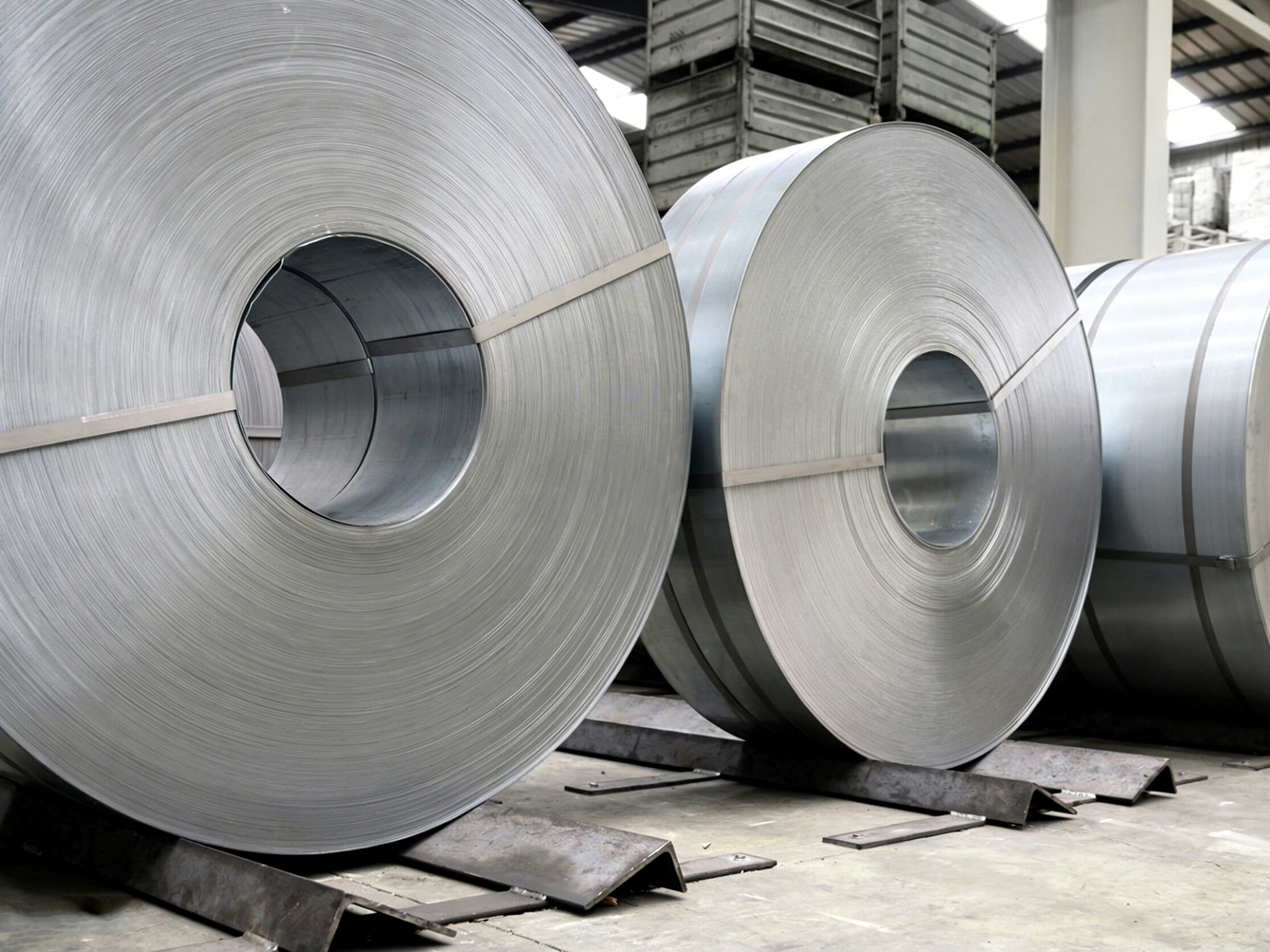
As one of the most widely used grades of commercially pure titanium, Gr2 Titanium Foil (Grade 2 titanium foil) plays an important role in aerospace, chemical process corrosion protection, new energy electrodes, and precision electronics. Its chemical composition is controlled with titanium as the balance and the principal impurities meeting the requirements of ASTM B265 Grade 2; in industry it is often approximated as Ti ≥ 99.2%. With a tensile strength of no less than 345 MPa and an elongation of no less than 20%, it provides a good match between strength and workability. This article introduces the key properties and engineering applications of Gr2 titanium foil from four perspectives: material characteristics, production process, application scenarios, and selection considerations.
1. Core Material Characteristics of Gr2 Titanium Foil: Balancing Strength, Corrosion Resistance, and Workability
(1) Composition and Mechanical Property Matching
The chemical composition of Gr2 titanium foil is controlled to ASTM B265 Grade 2: Ti as the balance, with Fe ≤ 0.30%, O ≤ 0.25%, N ≤ 0.03%, C ≤ 0.08%, and H ≤ 0.015%; in industry it is often approximated as Ti ≥ 99.2%. This composition places it at an intermediate strength level among the Gr1 to Gr4 commercially pure titanium grades. Compared with Grade 1, Gr2 achieves higher tensile strength (≥ 345 MPa) and yield strength (275–410 MPa) through a slightly higher oxygen content, although its elongation is lower than Grade 1, retaining good ductility of ≥ 20%. It is therefore a grade with a relatively balanced combination of strength and formability.
(2) Engineering Parameters: Density, Thermal Stability, and Electrical Resistivity
With a density of 4.51 g/cm³, roughly 60% that of steel, Gr2 offers direct weight-reduction value in thin-wall aerospace component design. In oxidizing atmospheres and thin-wall applications without sustained heavy loading, Gr2 can typically be used long-term up to approximately 300–350℃; short-term high-temperature exposure can withstand higher temperatures, but above about 425℃ the risk of oxidation and property degradation increases markedly, so titanium foil is not recommended for direct use in load-bearing high-temperature industrial furnace linings. Its electrical resistivity of approximately 56 μΩ·cm is significantly higher than copper and aluminum, so “superior electrical conductivity” should not be used as a selection criterion. In electrochemical electrodes, Gr2 is primarily used as a corrosion-resistant substrate, with the actual conductive function usually provided by a surface coating or plating.
(3) Side-by-Side Comparison with Grade 1 Titanium Foil
Comparison Dimension | Grade 1 Titanium Foil | Grade 2 Titanium Foil (Gr2 Titanium Foil) |
Impurity content | Lower | Slightly higher, still commercially pure titanium |
Tensile strength | Relatively lower | ≥ 345 MPa, higher |
Elongation | Superior | ≥ 20%, good |
Corrosion resistance | Excellent; exceptions include reducing strong acids and hydrofluoric acid | Equivalent; the same exceptions apply |
Typical applications | Superplastic forming, extremely thin-wall components | General structural components, balancing formability and strength |
This comparison shows that Gr2 titanium foil is better suited to engineering applications that require moderate strength support while also demanding formability and corrosion resistance.
2. Complete Guide to the Production Process: From Titanium Ingot to Precision Thin Strip
(1) Key Steps from Melting to Cold Rolling
The complete process for Gr2 titanium foil can be summarized as:
Titanium ingot melting → Forging → Hot rolling breakdown → Multi-pass cold rolling + intermediate annealing + descaling/pickling → 20-high precision cold rolling → Degreasing/cleaning → Continuous in-line annealing of the finished product → Final surface cleaning/pickling (as applicable) → Skin passing → Slitting → Inspection and packaging. Among these, 20-high precision cold rolling is the critical step that determines thickness accuracy. The 750 mm 20-high precision mill has a maximum rolling speed of 400 m/min and a maximum rolling force of 3500 kN. Within specific thickness and width ranges, combined with on-line thickness gauging and closed-loop control, thickness tolerances on the order of ±0.001 mm can be achieved for selected specifications; for wider or thinner specifications, tolerances must be confirmed on the basis of the specific thickness, width, and inspection standard.
(2) Effect of Annealing on Microstructure and Properties, and Surface Cleanliness Control
The continuous annealing line has a maximum operating temperature of 1100℃ and a temperature control accuracy of ±2℃. This temperature represents the equipment capability and does not express the actual annealing temperature for Gr2. The typical recrystallization/softening annealing temperature for Gr2 is approximately 650–760℃, and annealing should be performed under a protective atmosphere or in vacuum to avoid oxidation and oxygen embrittlement. Intermediate annealing is also required between multi-pass cold rolling operations to achieve full softening and controlled microstructure. Ultrasonic cleaning or degreasing lines are used to remove rolling oil and contaminants; after cleaning, the surface wetting tension can reach 40 dyne/cm or higher. When a final cleaning is performed after annealing, this parameter can serve as a surface quality control basis before the finished product is delivered.
(3) Skin Passing, Slitting, and Optional Surface Condition Control
The high-precision skin-pass line has a maximum speed of 150 m/min and is used to improve strip flatness and reduce residual stress. The slitting line can precision-slit strip in the 0.02–1.0 mm thickness range, with width tolerance held within ±0.1 mm. For thinner gauges, grinding is not recommended as it causes thickness loss and destroys flatness; grinding or polishing is only suitable for thicker gauges or special functional surfaces. Cold-rolled bright, mirror, and matte/satin finishes are surface topography requirements that should be achieved through the rolling process, skin-pass roll systems, or dedicated surface treatment, and should be distinguished from cleaning operations such as degreasing and pickling.
3. Primary Application Scenarios for Gr2 Titanium Foil
(1) Chemical Process Corrosion Protection and Marine Engineering
Gr2 titanium foil spontaneously forms a dense TiO₂ passivation film on its surface. In seawater, neutral or oxidizing chloride solutions, and many oxidizing acid environments, its corrosion resistance is generally superior to most stainless steels. However, in hydrofluoric acid, fluoride-containing acid media, and certain high-temperature reducing strong acids (such as hot hydrochloric acid and sulfuric acid), Gr2 may undergo severe corrosion, so it cannot be broadly characterized as “resistant to dilute acids.” Applications such as chemical equipment linings, thin-wall tube components in desalination plants, and electrolytic electrode substrates all share the common requirement of reducing joint welds and minimizing corrosion weak points. Wide-width specifications (up to 680 mm) can reduce the number of welds, but large chemical equipment inevitably still requires joint welds and cannot be regarded as seamless large-area coverage.
(2) New Energy and Electrochemical Applications
Application Scenario | Key Performance Requirements | Match for Gr2 Titanium Foil |
Hydrogen production electrode (water electrolysis) | Corrosion-resistant substrate, surface coating activity | Good corrosion resistance, can serve as coating substrate; lower electrical conductivity than copper and aluminum |
Fuel cell bipolar plate | Ultra-thin, high flatness | Minimum 0.02 mm thickness, precisely controlled flatness |
Lithium battery structural components | Lightweight, non-ferromagnetic | Density 4.51 g/cm³, non-ferromagnetic/paramagnetic |
Sodium-ion battery current collector | Chemical stability, batch consistency | Stable annealing process ensures uniformity |
In the current new energy industry chain, Gr2 titanium foil is being validated in some hydrogen energy and energy storage equipment as a corrosion-resistant substrate solution, but specific applications must be determined in conjunction with design requirements, cost, and actual validation results.
(3) Typical Applications in Aerospace, Precision Instrumentation, and Medical Devices
In the aerospace field, the overweight, difficult forming, and poor consistency of thin, large-area components are long-standing engineering challenges. With its high specific strength and good ductility, Gr2 titanium foil is well suited to processing methods such as stamping, bending, TIG welding, and laser welding. Under suitable welding procedures, matched filler materials, and shielding gas conditions, thin-sheet weld joint strength typically reaches more than 90% of the base metal; welding of very thin foil is influenced by heat input, tooling, and gap control, and must be confirmed through procedure qualification. Aerospace thin sheet/foil procurement typically requires AMS 4902 or airframe manufacturer/airworthiness material specifications in addition to ASTM B265. In the precision instrumentation field, the dimensional stability of ultra-thin foil is the basis of batch consistency; custom thicknesses can cover ≥ 0.005 mm, but tolerances must be confirmed according to thickness, width, and the applicable inspection standard. In the medical device field, if the material is used in implantable devices or long-term contact with human tissue, procurement should not be based solely on the industrial standard ASTM B265; requirements such as ASTM F67, ISO 5832-2, and the ISO 13485 quality management system should also be considered.
4. Key Selection Considerations for Engineers and Procurement Professionals
(1) Precise Matching of Specifications
The standard thickness range for Gr2 titanium foil is 0.02–1.0 mm; custom thicknesses support ≥ 0.005 mm, suitable for precision scenarios such as microelectronics and optics, but the applicable width, thickness tolerance, and inspection method must be confirmed with the supplier. Width ranges from 15 to 680 mm, and length is customized to customer requirements. Surface conditions available include cold-rolled bright, mirror, or matte/satin finishes; delivery tempers available include annealed, cold-worked, or hot-worked, executed according to ASTM B265, JIS H4600, or the technical agreement between the supplier and the buyer.
(2) International Standard Systems and Certification Requirements
The corresponding standards for Gr2 titanium foil in major global markets are as follows:
Region | Designation | Applicable Standard |
United States | Grade 2 / UNS R50400 | ASTM B265 |
Japan | Class 2 | JIS H4600 |
Europe/Germany | 3.7035 | DIN 17850 / ISO 7209 or corresponding EN/AMS titanium specifications |
Russia | ВТ1-0 (VT1-0) | GOST 19807 |
United Kingdom | Grade 2 | BS ISO 7209 |
For supply chains serving North American aerospace, European high-end manufacturing, and Japanese precision electronics, ASTM B265, AMS 4902 (aerospace), JIS H4600, and DIN 17850/ISO 7209 are common requirements. The ability to provide complete third-party inspection reports is the baseline threshold for evaluating supplier qualifications.
(3) Key Points for Evaluating Supplier Qualifications and Manufacturing Capability
When evaluating a Gr2 titanium foil supplier, price alone should not be the deciding factor. The following dimensions deserve greater attention: whether annual capacity can support stable large-volume delivery, for example on the order of approximately 3, 000 tons per year; whether the supplier has the capability for stable volume production of ultra-thin, wide-width material; whether the production line is equipped with a 20-high precision mill and a continuous annealing line; whether OEM custom processing and full-process quality traceability can be provided; and whether mature surface cleaning, annealing, and slitting process controls are in place. These capabilities ultimately manifest in batch consistency and delivery reliability.
5. Conclusion
With its balanced mechanical properties, good corrosion resistance, and broad processing adaptability, Gr2 titanium foil has an extensive application base in the chemical, new energy, aerospace, and medical industries. Engineers should weigh corrosion resistance, allowable temperature, and welding conditions comprehensively during the material selection stage; procurement professionals should focus on standard conformity, batch consistency, and supply stability. Mastering the above helps reduce material selection risk and improve project implementation quality.
FAQ
(1) Q1: How Should Gr2 and Gr1 Titanium Foil Be Chosen in Actual Procurement?
Gr2 has a higher tensile strength (≥ 345 MPa) and is suitable for general industrial components requiring structural support; Gr1 has superior elongation and is suitable for superplastic forming and extremely thin-wall components. The two grades have comparable corrosion resistance, but neither is suitable for hydrofluoric acid or certain high-temperature reducing strong acids. The choice depends on the priority trade-off between strength and formability.
(2) Q2: What Is the Minimum Custom Thickness for Gr2 Titanium Foil, and Are Non-Standard Specifications Supported?
The standard thickness range is 0.02–1.0 mm, and custom thicknesses support ≥ 0.005 mm for precision scenarios such as microelectronics and optics. However, for extremely thin 0.005 mm-class gauges, the thickness tolerance must be confirmed separately against width, flatness, and the applicable inspection standard, and ±0.001 mm cannot simply be assumed. Width ranges from 15 to 680 mm, and length is customized as required.
(3) Q3: How Can You Verify That a Supplier’s Gr2 Titanium Foil Conforms to ASTM B265?
The supplier can be required to provide a Mill Test Report containing chemical composition analysis, mechanical property test data, and the corresponding heat/batch numbers; third-party organizations such as SGS and BV can also be commissioned to conduct independent sampling inspection to verify conformity.
Contact Us
Looking for a reliable Gr2 Titanium Foil manufacturer, supplier, or factory? Please send your inquiries to: sales@titaniumvalleys.com
References
- Zhang Xiyan, Zhao Yongqing, Bai Chenguang. Titanium Alloys and Their Applications [M]. Beijing: Chemical Industry Press, 2005.
- Leyens C, Peters M. Titanium and Titanium Alloys [M]. Translated by Chen Zhenhua, et al. Beijing: Chemical Industry Press, 2005.
- Editorial Committee of the China Materials Engineering Canon. China Materials Engineering Canon, Vol. 4, Nonferrous Metals Materials Engineering [M]. Beijing: Chemical Industry Press, 2006.
- Wang Jinyou, Ge Zhiming, Zhou Yanbang. Titanium Alloys for Aerospace Applications [M]. Shanghai: Shanghai Scientific & Technical Publishers, 1985.
Published by: Titanium Valleys
Technical review: General Manager of the Production Department
Quality review: Quality Inspection Department
Last reviewed: October 20, 2026