
What Are the Key Characteristics of TB13 Titanium Alloy Bars?
- TB13 Titanium Alloy
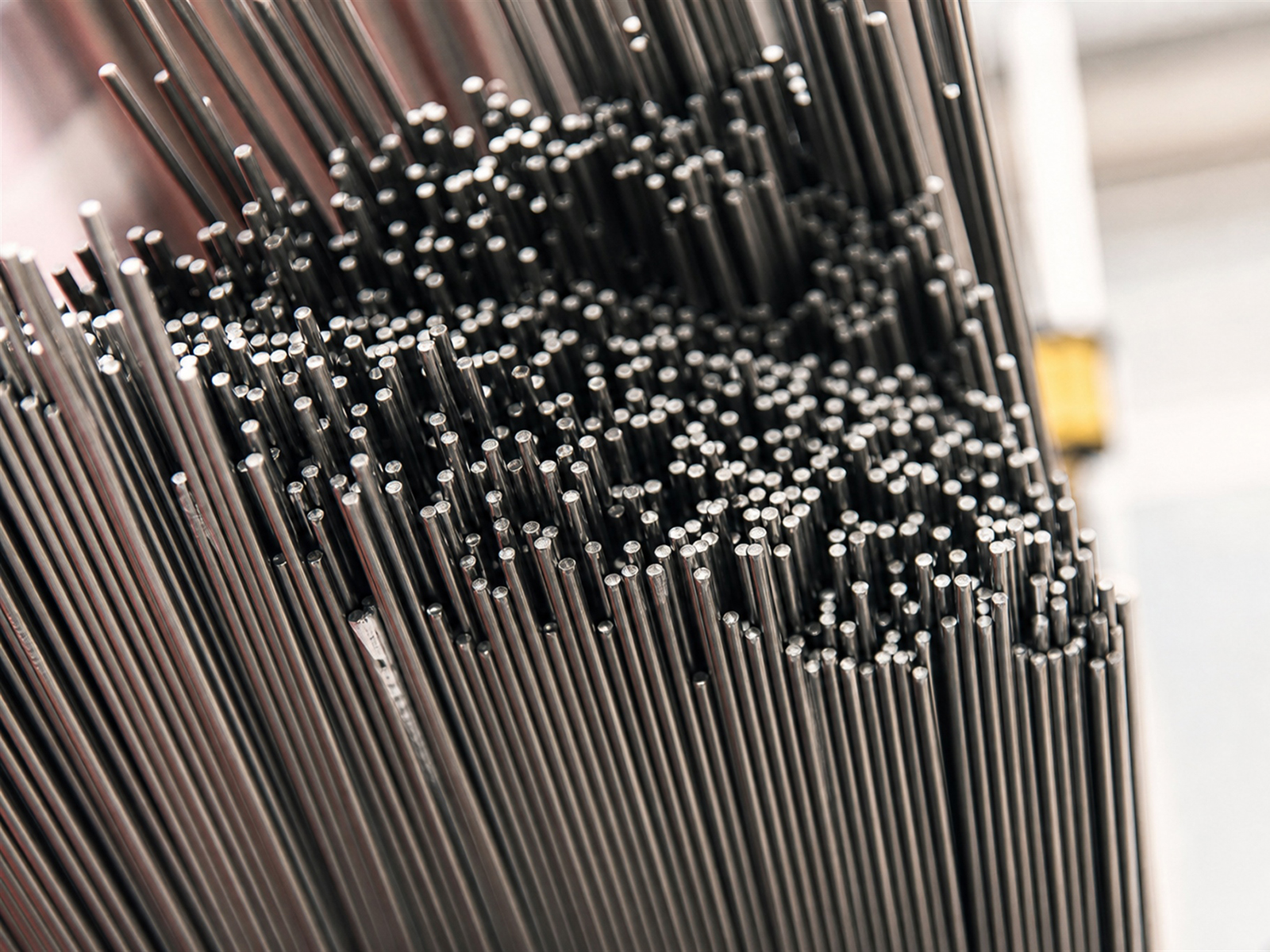
In applications such as eyewear manufacturing, precision elastic components, and certain aerospace structural parts, TB13 titanium alloy bars are considered for material selection primarily not for a single strength or density indicator but for their overall engineering characteristics. TB13 is a near-beta titanium alloy with a nominal composition of Ti-4Al-22V. Fast cooling after beta-phase-region treatment (M condition) produces a predominantly beta-phase structure, with possible retention of small amounts of alpha phase or precipitate phases depending on the heat treatment condition.
The primary value of this alloy lies in combining superelasticity, cold-workability, low nickel content, corrosion resistance, and generally non-magnetic behavior within a single bar. For applications that simultaneously emphasize lightweight design, elastic recovery, corrosion resistance, and low sensitization risk, TB13 bars offer a technical route that reduces material system complexity. The following analysis covers material physical properties, processing behavior, chemical stability, and heat treatment response.
1. Core Physical Properties of TB13 Titanium Alloy Bars: The Synergistic Effect of Superelasticity and Low Elastic Modulus
(1) The Fundamental Origin of Superelasticity
The superelasticity of TB13 does not rely primarily on macroscopic geometric elastic deformation, but rather stems from reversible martensitic transformation in the beta-phase matrix under applied stress, typically stress-induced transformation to α″ (double-prime) martensite. After unloading, the α″ martensite transforms back to the beta phase, allowing macroscopic deformation to recover reversibly. This mechanism can store and release elastic strain energy within a limited strain range, but it is sensitive to strain amplitude, temperature, and stress state, and cannot be understood as infinitely reversible or unconditional.
(2) Effect of Elastic Modulus on Structural Design
The elastic modulus of TB13 is about 70–80 GPa, lower than that of TC4 at approximately 114 GPa. Under the same stress, TB13 bars can produce greater elastic deformation, giving them an advantage in parts such as spring clips, snap fasteners, and eyeglass temples that require low stiffness and a large elastic deflection range. The low modulus is also meaningful for structures requiring sustained light forces, such as orthodontic archwires and orthotic elastic supports; however, for long-term orthopedic implants, because this alloy contains vanadium, biocompatibility must be evaluated separately and cannot be inferred directly from the low modulus alone.
(3) The Origin and Engineering Significance of Non-Magnetic Behavior
The principal alloying elements in TB13, Ti, Al, and V, are all non-ferromagnetic, and its macroscopic relative magnetic permeability is close to 1, so it typically behaves as paramagnetic or non-magnetic in the engineering sense under conventional magnetic testing. This characteristic is useful for precision parts in electronics and instrumentation where magnetic field interference must be avoided. However, the magnetic behavior of the finished part can be affected by cold-work residual stress, precipitated phases, and surface contamination, so magnetic testing of final parts is still advisable when necessary.
(4) Relationship Between Superelasticity and Fatigue Life
A deformation mechanism dominated by reversible transformation helps reduce local plastic accumulation and may provide some inhibition of fatigue crack initiation, but it cannot be directly inferred that fatigue life will necessarily exceed that of conventional high-strength alloys. Actual fatigue performance is affected by surface quality, notches, heat treatment condition, load amplitude, and corrosive environment. For critical load-bearing or high-frequency cycling parts, high-cycle and low-cycle fatigue testing should be performed for verification, and life guarantees should not be made based solely on the material class.
2. Processing Performance of TB13 Titanium Alloy Bars: Cold Deformability and Its Impact on Production Efficiency
(1) Cold Forming Capability and Its Boundary Conditions
TB13 exhibits relatively high room-temperature ductility in the beta-phase-region-treated (M) condition. In engineering trials, the total cold deformation of small-size round bars or wire can reach about 80%, but this figure is not a single-pass limit and may not apply to large-cross-section or shaped-cross-section products. Cold deformability is affected by cross-section size, pass distribution, lubrication conditions, and surface defect control, and the practical upper limit should be confirmed through trial production.
Performance indicator | TB13 titanium alloy | TC4 (Ti-6Al-4V) | Stainless steel 316L |
Cold deformation limit (approximate) | Approx. 80% (M condition, small-size total deformation) | Approx. 15%–25% | Relatively high, typically ≥60% |
Elastic modulus (GPa) | ~70–80 | ~114 | ~193 |
Density (g/cm³) | ~4.75 | ~4.43 | ~8.0 |
Nickel content | No nickel added; trace impurity | No nickel added | 10–14 (intentionally alloyed) |
Salt spray corrosion resistance | Good (qualitative) | Good (qualitative) | Fair to good (qualitative) |
Note: The data in the table are typical values or approximate engineering comparisons, not standard specification values. The cold deformation limit is closely related to material condition, cross-section size, processing route, and lubrication conditions; salt spray corrosion resistance is a qualitative comparison in general environments and cannot be used directly for engineering design judgments.
(2) Suitability for Bending and Precision Machining
Compared with certain alpha+beta high-strength titanium alloys, beta titanium alloys generally have a lower work-hardening exponent during cold deformation, making bending springback and dimensional control relatively easier to manage. However, workability is affected by heat treatment condition, grain size, precipitate distribution, and tooling and cooling conditions, and cannot be judged by grade alone. Small-sample process validation should be performed before mass production to obtain stable dimensional tolerance and yield data.
(3) Relationship Between the Typical Production Process and Cold Forming
A typical process flow for TB13 bars is: vacuum arc remelting (VAR) → multi-heat forging breakdown → hot rolling forming → beta-phase-region treatment (M condition) → cold drawing/cold rolling/precision rotary swaging finishing → intermediate annealing/straightening → surface treatment → nondestructive testing → final inspection. Improving cold deformation efficiency depends not only on the ductility in the M condition but also on matching intermediate annealing, straightening, and surface treatment steps to ensure dimensional stability and surface quality.
3. Chemical Stability of TB13 Titanium Alloy Bars: An Engineering Assessment of Corrosion Resistance, Low Nickel Content, and Biocompatibility
(1) Nickel Content in the Composition Design and Allergy Risk
The alloying system of TB13 uses Al and V as the principal additions and intentionally adds no nickel; nickel exists only as a trace impurity. This composition design helps reduce the risk of sensitization such as allergic contact dermatitis, but whether the finished product satisfies the nickel release limits of EU REACH or EN 1811 depends on surface condition, wear patterns, and test conditions, and should be confirmed by third-party testing rather than claimed from the composition table alone.
Element | Content range (typical/internal control reference) | Functional role |
Ti | Balance | Matrix phase, provides the basis for low density and corrosion resistance |
Al | 3.0–4.5 | Alpha stabilizer, increases strength |
V | 20.0–23.0 | Core beta-stabilizing element, imparts superelasticity and hardenability |
Fe | ≤0.20 | Impurity maximum control |
O | ≤0.15 | Interstitial element, affects ductility, fatigue, and elastic recovery |
H | ≤0.015 | Content limited to prevent hydrogen embrittlement |
Note: The ranges in the table are compiled from the TB13 nominal composition and engineering technical references, serving as typical or internal control references and not replacing standards or technical agreements. Oxygen content is sensitive to high elasticity, fatigue life, and cold-workability; in practice, stricter internal control values should be set in procurement according to target performance.
(2) Corrosion Resistance Mechanism and Practical Service Limitations
The corrosion resistance of titanium alloys comes from a dense TiO₂ passive film that forms spontaneously on the surface. TB13 performs well in sweat, salt spray, dilute acids, and most organic solvents, but the passive film is not stable under all conditions. Pitting or crevice corrosion can still occur in hot chlorides, strongly reducing acids, confined crevices, or with surface scratches or contamination. Absolute statements such as “no localized corrosion will occur” should not be used in engineering applications.
(3) Engineering Boundaries of Biocompatibility in the Medical Field
The low nickel content and corrosion resistance of TB13 provide a favorable basis for biocompatibility, and it can be a candidate material for short-term or temporary contact applications such as orthodontic archwires and orthotic elastic supports. However, the alloy contains vanadium, and the dissolution and toxicity risks of vanadium ions under long-term tissue contact or implantation must be assessed in accordance with the biological evaluation standards for medical devices. “Nickel-free” should not be directly equated with “excellent biocompatibility.”
4. Heat Treatment Response and Property Adjustment Range of TB13 Titanium Alloy Bars
(1) Property Differences Between the Beta-Phase-Region-Treated (M) Condition and the Aged Condition
TB13 bars are commonly delivered in the beta-phase-region-treated (M) condition. This condition is obtained by holding in the beta-phase region and then fast cooling; the structure is predominantly beta phase, with high ductility and relatively low strength, facilitating subsequent cold forming. After aging, fine alpha phase precipitates in the beta matrix, strength increases, and the elastic energy storage density correspondingly rises. For this reason, manufacturing commonly adopts the process route of “form first, then strengthen by aging.”
(2) Effect of Aging Parameters on Mechanical Properties and Verification Requirements
Aging temperature and holding time are the core variables controlling strength and elongation. In general, the tensile strength of the M condition is mostly about 850–950 MPa with relatively high elongation; after suitable aging, the tensile strength can be raised to about 1150–1350 MPa, while elongation is typically reduced to about 6%–10%. These values are substantially affected by composition batch, cross-section size, and the temperature uniformity of the aging equipment. Low-temperature long-duration aging tends to produce fine, uniform alpha phase, while higher-temperature short-duration aging causes faster growth of precipitates; however, actual precipitation behavior is also related to the alloy’s TTT curve and the specific temperature window, and cannot be simplified to “fine at low temperature, coarse at high temperature.” For critical parts, the process window should be defined through aging trials and tensile testing.
(3) Effect of Heat Treatment on Elastic Properties
Excessive aging increases the volume fraction of alpha phase and suppresses reversible transformation, reducing superelastic recovery capability. Therefore, for products whose primary function is elastic, such as eyeglass spring clips and elastic snap fasteners, a balance should be struck between strength and superelasticity rather than simply pursuing maximum strength.
5. Typical Application Landscape of TB13 Titanium Alloy Bars: A Cross-Field Candidate from Eyewear to Aerospace
(1) Eyewear and Wearable Accessories
TB13 offers a certain degree of engineering fit for components such as eyeglass hinges, temples, and nose bridge supports: dimensional accuracy after cold drawing is high, surface treatment adaptability is good, and elastic recovery is relatively stable. However, claims such as “penetration depth far exceeding other beta titanium grades” lack supporting public market data, and material selection should still be based on comparison of specific elastic behavior, fatigue, processing cost, and surface requirements.
(2) Precision Elastic Components and Connectors
Parts such as spring clips, precision snap fasteners, and instrument connector springs often fail through fatigue fracture or elastic deterioration. The low elastic modulus and reversible transformation mechanism of TB13 allow it to store more elastic strain energy within a limited strain range and exhibit lower plastic accumulation after cyclic deformation. However, specific fatigue life still needs to be verified by testing with actual part geometry, surface condition, and load spectrum.
(3) Candidate Applications in Medical, Electronics, and Aerospace Fields
Medical: orthodontic archwires and orthotic elastic supports can exploit its low modulus and sustained-light-force characteristics, but biocompatibility evaluation per medical device requirements is necessary.
Electronics: generally non-magnetic with good precision workability, suitable for micro-switches and precision structural components; however, the magnetic behavior and surface cleanliness of finished parts should be verified.
Aerospace: its relatively high specific strength makes it a possible candidate for lightweight structural components, but aerospace applications require material qualification, fatigue/damage-tolerance, batch consistency, and process repeatability data, and cannot be judged by specific strength alone.
6. Conclusion
The value of TB13 titanium alloy bars lies in integrating superelasticity, cold-workability, corrosion resistance, and low nickel content into one product, which is of engineering significance for elastic components, eyewear parts, and certain high-value structural components. However, material selection must not rely solely on grade concepts or single data points; rational judgments should be based on verification results covering specific size, heat treatment condition, surface quality, fatigue, and corrosion resistance.
FAQ
(1) Q1: What are the differences in elastic properties between TB13 titanium alloy bars and TC4 (Ti-6Al-4V)?
TB13 is a near-beta titanium alloy with an elastic modulus of about 70–80 GPa, providing superelastic recovery through reversible stress-induced α″ martensitic transformation; TC4 is an alpha+beta alloy with an elastic modulus of about 114 GPa and higher strength, but a smaller cold working window and superelastic recovery inferior to TB13. The two have functional differences in their application scenarios and cannot simply replace each other.
(2) Q2: After TB13 bars are delivered in the beta-phase-region-treated (M) condition, does the customer need to perform aging treatment?
It depends on the final application. If the part relies on high elasticity and good cold formability, such as temples formed directly, it can be used in the M condition; if higher strength is required, such as for load-bearing structural components, aging treatment should be performed after forming. Whether the M condition can be used directly should be confirmed through process validation in light of the product’s loading, tolerances, fatigue, and subsequent processing requirements, and should not be judged by strength indicators alone.
(3) Q3: Does TB13 titanium alloy bar comply with the EU REACH regulatory requirements for nickel release?
TB13 does not use nickel as an alloying element, and nickel is typically present only as a trace impurity. Under normal use conditions, its nickel release is usually far below the limits of the REACH regulation and EN 1811; however, for exported products, third-party laboratory product-level testing is still recommended to obtain a report that can be used for compliance submissions.
7. Accessing Technical Data and Supply Information
For technical data, available sizes, or samples of TB13 titanium alloy bars, contact the materials processing company: sales@titaniumvalleys.com. When making an inquiry, it is recommended to include the service conditions, size, condition, and acceptance standard to facilitate engineering communication.
References
- National Technical Committee on Nonferrous Metals Standardization. Designation and chemical composition of titanium and titanium alloys: GB/T 3620.1-2016 [S]. Beijing: Standards Press of China, 2016.
- Zhang Xiyan, Zhao Yongqing, Bai Chenguang. Titanium Alloys and Their Applications [M]. Beijing: Chemical Industry Press, 2005.
- Zhao Yongqing, Chen Yongnan, Zhang Xuemin, et al. Phase Transformations and Heat Treatment of Titanium Alloys [M]. Changsha: Central South University Press, 2012.
- National Technical Committee on Biological Evaluation of Medical Devices. Biological evaluation of medical devices – Part 1: Evaluation and testing within a risk management process: GB/T 16886.1-2022 [S]. Beijing: Standards Press of China, 2022.