
What Are the Key Advantages of Using Gr12 Titanium Wire in the Chemical Industry?
- GR12 Titanium Wire
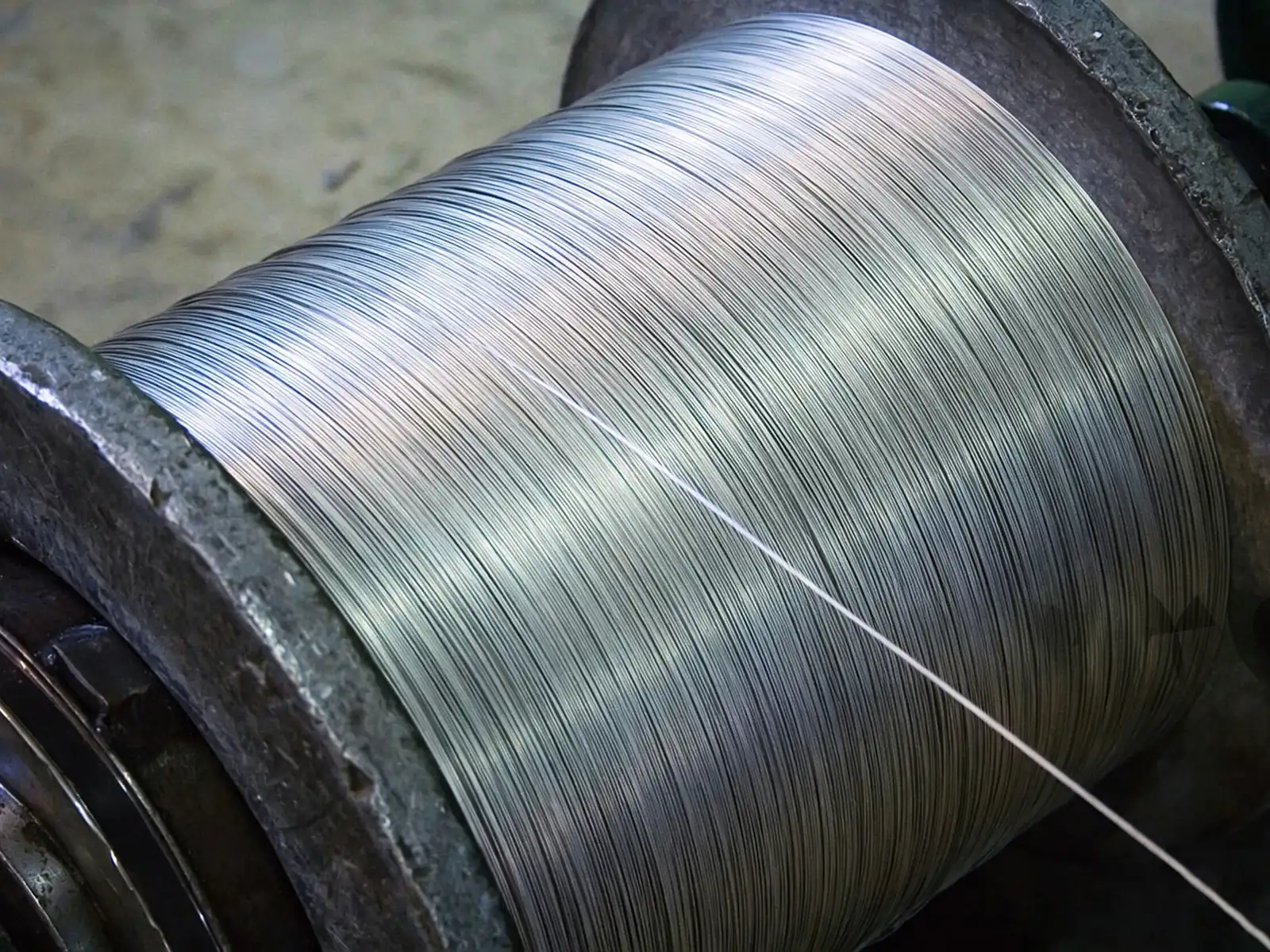
Chemical processing equipment frequently encounters complex corrosive environments, including reducing acids such as hydrochloric and sulfuric acid, chloride-bearing industrial water/hot chloride solutions, and wet sour gas streams containing coexisting H₂S/CO₂. The suitability of different materials varies widely: ordinary austenitic stainless steels risk pitting and crevice corrosion in chloride-containing media; commercially pure titanium generally resists chloride pitting but still has limitations in reducing acids and crevice conditions. Gr12 titanium wire (Ti-0.3Mo-0.8Ni), alloyed with molybdenum and nickel, is primarily used to improve the corrosion resistance of commercially pure titanium in reducing acids and chloride crevice environments. This article discusses its applicability boundaries in the chemical industry from the perspectives of composition, corrosion behavior, processing and welding, and material selection and acceptance.
1. The Alloy Design Logic of Gr12 Titanium Wire: What Are the Roles of Mo and Ni?
Corrosion failure in chemical service is often not uniform dissolution but localized corrosion such as pitting and crevice corrosion. The composition design of Gr12 focuses on improving localized corrosion resistance and corrosion resistance in reducing media.
(1) Passivation Strengthening Mechanism of Molybdenum (Mo)
The Mo content is controlled at 0.20%–0.40%. In chloride-containing environments, Mo helps improve the repair capability and stability of the passive film, reducing the tendency for crevice corrosion initiation and propagation. Its effect is analogous to how Mo improves localized corrosion resistance in stainless steels, but the oxide film on the titanium matrix has different characteristics, so it cannot be directly equated with the molybdenum mechanism in stainless steels.
(2) Protective Role of Nickel (Ni) in Reducing Media
The Ni content is controlled at 0.60%–0.90%. Ni exists mainly in solid solution in the titanium matrix and, within certain temperature and concentration ranges, reduces the cathodic hydrogen depolarization tendency in reducing media, improving the corrosion resistance of Gr12 titanium wire in dilute hydrochloric acid, dilute sulfuric acid, or wet acidic environments containing H₂S/CO₂. The effect of Ni is influenced by media temperature, concentration, impurities, and flow velocity and cannot simply be understood as effective against all reducing acids.
(3) Control of Impurities and Interstitial Elements: Fe, O, C, N, H
Interstitial and impurity elements must be strictly controlled: O ≤ 0.25%, N ≤ 0.03%, H ≤ 0.015%, C ≤ 0.08% (per the common Gr12 specification; the exact grade standard confirmed between the parties prevails). Excessive levels of these elements can impair ductility, toughness, or weldability. Vacuum melting and batch chemical composition testing keep bulk wire within statistically controlled limits and reduce processing variability.
Table 1: Main Chemical Composition Control Ranges and Functions of Gr12 Titanium Wire
Element | Typical Control Range | Function/Control Purpose |
Ti | Balance | Matrix element |
Mo (molybdenum) | 0.20%–0.40% | Alloying element; improves passive-film stability and crevice corrosion resistance in chloride environments |
Ni (nickel) | 0.60%–0.90% | Alloying element; improves corrosion resistance in reducing acids and wet acidic environments |
Fe (iron) | ≤ 0.30% | Impurity element; limited to maintain microstructural stability and ductility/toughness |
O (oxygen) | ≤ 0.25% | Interstitial element; balances strength and ductility; excessive levels reduce ductility |
C (carbon) | ≤ 0.08% | Interstitial impurity; excessive levels may affect weldability and toughness |
N (nitrogen) | ≤ 0.03% | Interstitial impurity; excessive levels may increase strength and reduce ductility/toughness |
H (hydrogen) | ≤ 0.015% | Interstitial impurity; prevents hydrogen embrittlement |
2. Corrosion Behavior and Applicability Boundaries of Gr12 Titanium Wire in Chemical Environments
(1) Chloride Solutions and Chlorine-Containing Environments
Seawater, brine, chlor-alkali plants, and welded tube-to-tubesheet joints in heat exchangers routinely come into contact with high-chloride media. Relative to Grade 1/Grade 2 commercially pure titanium, the main advantage of Gr12 in chloride environments is improved resistance to crevice corrosion, while commercially pure titanium also generally performs well against pitting in chlorides. Compared with 304/316L stainless steels, Gr12 usually shows better localized corrosion resistance in chloride-containing media, but specific comparisons must account for temperature, pH, chloride content, and crevice geometry, and cannot be generalized as vastly superior to commercially pure titanium in all hot chloride scenarios.
(2) Reducing Acids and Complex Acidic Process Media
Gr12 offers better corrosion resistance than commercially pure titanium in reducing acids such as dilute hydrochloric and dilute sulfuric acid, but the advantage holds only within specific concentration, temperature, and impurity ranges. For example, the advantage may appear in dilute hydrochloric/sulfuric acid at ambient temperature and low concentration, but it must be re-evaluated as concentration and temperature increase. Media in wet-process phosphoric acid, titanium dioxide production lines, and organic synthesis reactors often contain oxidizing constituents or mixed acids and cannot be simply classified as “strongly reducing acid service”; before material selection, corrosion testing should be performed or similar service cases referenced, based on the actual media composition, temperature, flow velocity, and oxidation-reduction potential.
(3) Crevice Corrosion and High-Temperature Sulfur-Bearing Gas Environments
Crevice locations such as flange sealing faces and tube-to-tubesheet joints in chemical equipment pose a more common risk to commercially pure titanium. Gr12 typically outperforms the same-class commercially pure titanium in chloride crevice corrosion tests or service cases. For high-temperature corrosive gases such as desulfurization flue gas, Gr12 can remain stable within certain temperature and media ranges, but “no embrittlement” and “no performance degradation” are not unconditional; temperature, media composition, and service life must be specified and evaluated per equipment design codes.
Table 2: Comparison of Gr12 and Grade 2 Commercially Pure Titanium in Typical Chemical Corrosion Environments
Media/Environment Category | Grade 2 Commercially Pure Titanium Performance | Gr12 (Ti-0.3Mo-0.8Ni) Performance |
Chloride-containing neutral/near-neutral solutions, pitting | Generally good pitting resistance | Good pitting resistance; main advantage in crevice corrosion |
Crevice corrosion in chloride-containing solutions | Higher crevice corrosion risk | Clearly improved crevice corrosion resistance |
Low-temperature, low-concentration dilute hydrochloric/sulfuric acid | Corrosion rate may be relatively high; narrow application window | Lower corrosion rate within certain low-temperature and low-concentration ranges; testing required outside these ranges |
Wet acidic environments containing H₂S/CO₂ | Moderate probability of localized corrosion | Combined effect of Mo and Ni generally provides better corrosion resistance; evaluate per partial pressure, pH, and temperature |
High-temperature sulfur-bearing gases / desulfurization flue gas | Usable within applicable range; note the temperature limit | Generally more stable within the same applicable boundaries, but statements must not be unconditional |
Note: “low temperature, low concentration” in the table is a qualitative boundary and cannot replace service-specific corrosion testing; actual selection should consider temperature, concentration, pH, chloride content, flow velocity, and structural configuration.
3. Processing, Welding, and Wire Product Characteristics of Gr12 Titanium Wire
(1) Weldability and Filler Wire Gauges
Gr12 titanium wire has good weldability and is commonly used as filler for welding Gr12 equipment (Chinese designation TA10). Common filler wire diameters cover φ0.8, 1.0, 1.2, 1.6, 2.0, 2.4, and 3.0 mm, suitable for manual TIG and automated welding. Weld quality depends on base metal cleanliness, shielding gas purity, and welding parameters and is not determined by the wire alone.
(2) Ductility, Formability, and Wire Feeding Stability
Gr12 maintains good ductility at moderate strength, making it suitable for bending, coiling, and tube threading operations. For filler wire and continuous wire, wire diameter precision and straightness, such as ≤ 2/1000, affect the stability of automatic wire feeding. This straightness criterion should be one of the acceptance items between the parties.
(3) Dimensional Precision and Surface Condition Consistency
Production on a continuous rolling line should apply closed-loop control to key process parameters, including dimensions, ovality, surface condition, and in-line inspection signals, to reduce within-batch and between-batch variation. Surface conditions including pickled, bright, shot-blasted, and passivated are available; specific requirements must be agreed in the order.
4. Typical Applications of Gr12 Titanium Wire in the Chemical Industry
(1) Heat Exchanger Tube Bundle Welding
Gr12 titanium wire can serve as filler material for welding Gr12 heat exchanger tubes to tubesheets. These joints are sensitive to crevice corrosion and chloride-bearing cooling water/process media, and the crevice corrosion resistance of Gr12 can reduce failure risk near the weld and heat-affected zone. Relevant heat exchanger tubing may alternatively be selected per GB/T 3625—2007. Wire gauge generally matches tube wall thickness and joint configuration.
(2) Flue Gas Desulfurization (FGD) Systems
In wet desulfurization systems, materials come into contact with sulfur-bearing flue gas, condensing acidic liquids, and chlorides. Gr12 can be used for structural wire or weld filler in areas such as absorber inlet ducts, nozzles, and mist eliminator supports. Suitability depends on flue gas temperature, acid dew point, chloride content, and anticorrosion design, and it cannot simply replace all stainless steels.
(3) Pipe Linings, Valves, and Sealing Components
Wire for chemical piping linings, valve sealing components, gaskets, and instrumentation is typically fine gauge and requires good cold formability, dimensional precision, and corrosion resistance. Gr12 structural/functional wire can cover φ0.5–φ6.0 mm per order; this range belongs to the non-weld-filler wire series and differs from the standard filler wire diameter range of φ0.8–φ3.0 mm. The distinction should be clearly stated when requesting quotes or designing.
Table 3: Typical Chemical Applications and Recommended Wire Diameter Ranges
Typical Chemical Application Scenario | Recommended Wire Diameter | Primary Property Requirement |
Heat exchanger tube bundle welding | φ1.6, φ2.0, φ2.4 mm | Weldability; resistance to chloride crevice corrosion |
FGD system structural components | φ2.0–φ6.0 mm | Resistance to acidic condensate corrosion; formability |
Pipe lining connectors | φ1.0–φ3.0 mm | Crevice corrosion resistance; ductility |
Wire for valve/sealing components | φ0.5–φ2.0 mm | Cold formability, dimensional precision, corrosion resistance |
Hydrometallurgical reactor systems | φ1.0–φ4.0 mm | Resistance to reducing/mixed acids; localized corrosion resistance |
5. Technical Quality Considerations in Material Selection and Procurement
(1) Traceability of Chemical Composition and Mechanical Properties
Each batch of wire should be accompanied by a chemical composition report covering eight elements (Ti, Mo, Ni, Fe, O, C, N, H) as well as the specified mechanical property data. Dimensions, tolerances, and acceptance can be performed per ASTM B863 or GB/T 3623—2007; chemical composition can reference GB/T 3620.1—2016 or a mutually agreed specification. For export projects, the accepted standard edition and acceptance rules should be confirmed in advance.
(2) Non-Destructive Testing and Dimensional Precision Control
Wire production should be equipped with in-line eddy current or ultrasonic inspection to screen out internal defects; wire diameter precision, straightness (such as ≤ 2/1000), and surface finish should serve as quality acceptance indicators. In-line inspection records can serve as traceability evidence.
(3) Continuous Length and Weld-Free Coil Supply
Automated welding and forming lines have high requirements for continuous wire length. Continuous length/weld-free coils, such as 500–3000 m per coil, vary by order and are more suitable for automatic wire feeding than straight bar cut-to-length products; if straight bar products require fixed lengths, this should be separately agreed in the order.
6. Conclusion
Through Mo-Ni alloying, Gr12 titanium wire improves the corrosion resistance of commercially pure titanium in certain reducing acids and chloride-containing crevice environments while maintaining good processing and welding compatibility. Material selection in the chemical industry should combine the specific media composition, temperature, flow velocity, and structural configuration, relying on corrosion testing or similar service cases rather than making absolute judgments based on the material grade alone.
FAQ
(1) Q1: Where does the main difference in corrosion resistance between Gr12 titanium wire and Grade 2 commercially pure titanium wire lie in chloride environments?
Commercially pure titanium generally has good pitting resistance in chloride environments but is prone to crevice corrosion at crevices; Gr12, via Mo and Ni alloying, primarily improves crevice corrosion resistance and achieves lower corrosion rates in certain reducing acids. It cannot be simply stated as vastly superior to Grade 2 in all hot chloride scenarios. Selection should consider temperature, pH, chloride content, and structural configuration.
(2) Q2: Which standards can be used for acceptance of Gr12 titanium wire, and is it suitable for export projects?
Gr12 titanium wire is typically supplied and accepted per ASTM B863 Titanium and Titanium Alloy Wire or GB/T 3623—2007 Titanium and Titanium Alloy Wire; chemical composition can reference the requirements of ASTM B348/B863 or GB/T 3620.1—2016. Note that ASTM B348 is the standard for titanium and titanium alloy bar/billet and does not address wire dimensional tolerances; AMS 4928 is usually for Ti-6Al-4V materials and does not apply to Gr12; ISO 5832 is for surgical implants and is not appropriate for chemical-industry Gr12 titanium wire. Export projects should clarify the accepted standards, editions, and additional inspection items in the inquiry or contract.
(3) Q3: When chemical equipment manufacturers procure Gr12 titanium wire, how should they evaluate supplier capacity and quality stability?
It is recommended to focus on: whether the supplier has continuous rolling or equivalent wire production lines, whether weld-free continuous coils can be supplied, whether in-line non-destructive inspection records exist, and whether traceable quality inspection reports are issued for each batch. These indicators help distinguish manufacturers with stable quality systems from ordinary trading-type suppliers.
Contact Us
Titanium Valley is a manufacturer and supplier focused on precision processing and supply of titanium, nickel, and zirconium materials, with an annual capacity of 20, 000+ tons of titanium bar and wire, and can provide customized production and batch supply of Gr12 titanium wire for chemical industry customers worldwide. Please contact: sales@titaniumvalleys.com
References
- National Technical Committee on Nonferrous Metals Standardization. GB/T 3620.1—2016 Designation and Composition of Titanium and Titanium Alloys [S]. Beijing: China Standards Press, 2016.
- National Technical Committee on Nonferrous Metals Standardization. GB/T 3623—2007 Titanium and Titanium Alloy Wire [S]. Beijing: China Standards Press, 2007.
- National Technical Committee on Nonferrous Metals Standardization. GB/T 3625—2007 Titanium and Titanium Alloy Tubes for Heat Exchangers and Condensers [S]. Beijing: China Standards Press, 2007.
- Zhang Xiyan, Zhao Yongqing, Bai Chenguang. Titanium Alloys and Their Applications [M]. Beijing: Chemical Industry Press, 2005.
- Editorial Committee of China Materials Engineering Canon. China Materials Engineering Canon, Volume 4: Nonferrous Metals Materials Engineering (Part I) [M]. Beijing: Chemical Industry Press, 2006.