
Industrial Buyer’s Guide: What Should Buyers Know About Ti-15V-3Al-3Cr-3Sn Titanium Foil?
- Ti-15V-3Al-3Cr-3Sn Titanium Foil
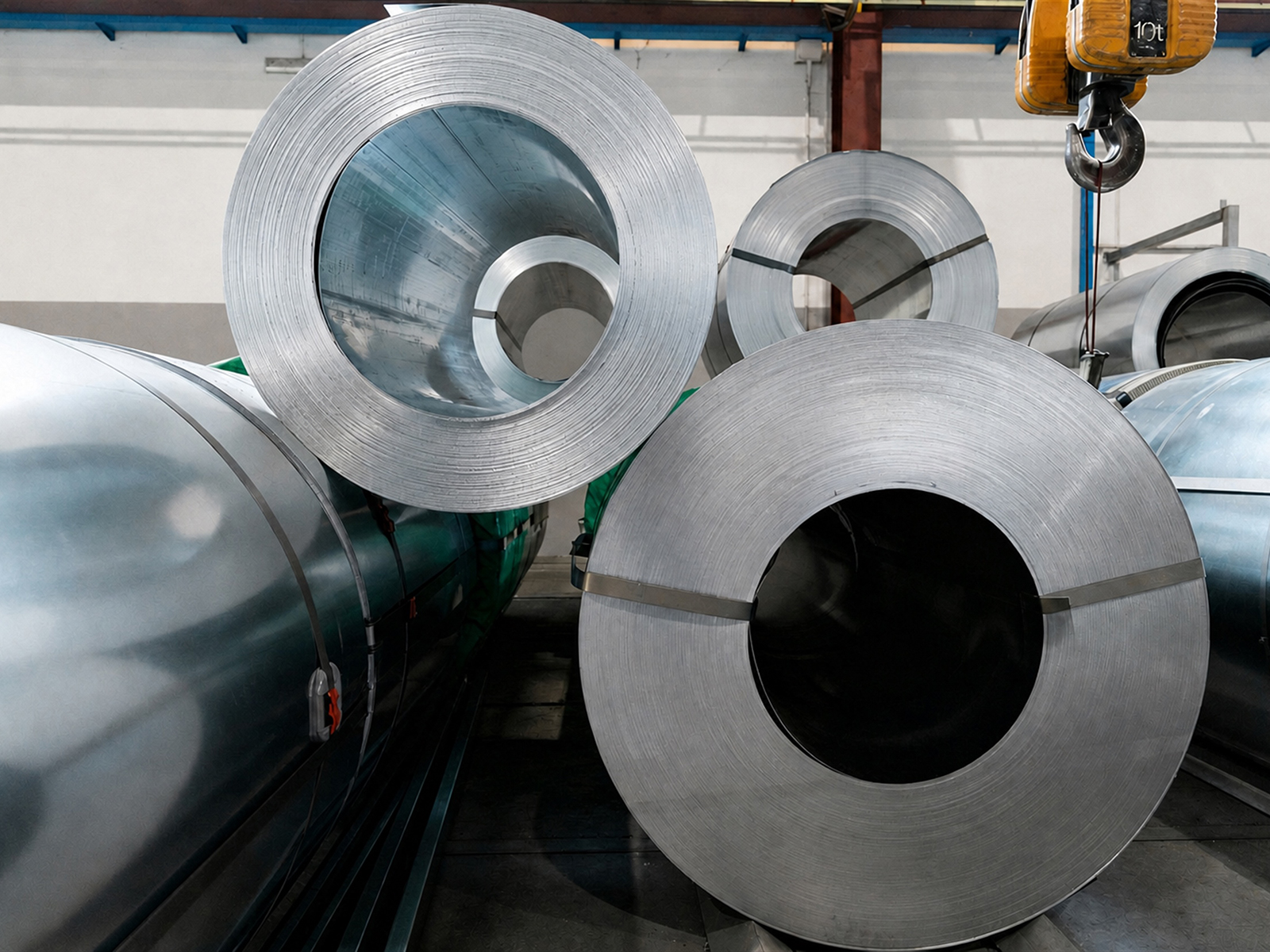
In aerospace, precision electronics, and high-end manufacturing, Ti-15V-3Al-3Cr-3Sn titanium foil attracts attention for its good formability in the annealed condition and high strength after aging. Compared with α+β titanium alloys such as Gr5, this near-β titanium alloy can maintain lower strength before forming and then gain strength through aging after forming. This article explains its material characteristics, dimensional specifications, production process, typical applications, and procurement verification points for reference by procurement and engineering personnel.
1. Core Characteristics of Ti-15V-3Al-3Cr-3Sn Titanium Foil
(1) Near-β Microstructure and Cold Formability
Ti-15V-3Al-3Cr-3Sn is a near-β titanium alloy. In the annealed condition, the alloy retains a relatively high proportion of β phase, and its cold formability is generally superior to Ti-6Al-4V. However, cold formability depends not only on the β phase structure but also on interstitial element content, grain size, texture, and rolling process. Therefore, the specific forming limit should be measured at the target thickness and condition and cannot be directly inferred from the alloy grade alone.
(2) Aging Strengthening Mechanism
Aging treatment causes fine α-phase particles to precipitate in the β matrix, increasing tensile strength and hardness. The typical strengthening response depends on aging temperature, holding time, and prior processing condition. In industry, aging is commonly performed in the 480℃ to 620℃ range, and the actual schedule should be determined through process trials. The advantage of this alloy lies in staged property control: lower strength is maintained during the forming stage, and load-bearing capacity is increased after aging.
(3) Comparison with Other Titanium Foils
Comparison Item | Gr1 Titanium Foil | Gr5 Titanium Foil | Ti-15V-3Al-3Cr-3Sn Titanium Foil |
Alloy Type | Commercially pure titanium | α+β type | Near-β type |
Cold Formability | Good | Poor | Fairly good |
Strength Level | Low | High | High |
Strength Adjustability | Low | Limited | Relatively high |
Typical Application | Extreme forming parts | General structural parts | Aerospace thin-wall structural parts |
The table presents a qualitative comparison and does not represent specific values. Actual selection should combine product thickness, condition, and process validation results.
2. Dimensional Specifications, Physical Properties, and Standard References
(1) Standard Supply Specifications
Standard supply capability and custom specifications should be stated separately.
Parameter Item | Standard Supply Range | Remarks |
Thickness | 0.02–1.0 mm | 0.005 mm is a custom gauge requiring a separate quality agreement |
Width | 15–680 mm | Wider gauges require evaluation of joining and flatness |
Supply Form | Coils, strip, cut-to-length sheet | Cut lengths negotiable |
Surface Condition | Bright, matte | Selected per downstream process |
Typical physical properties are as follows:
Item | Typical Value/Description |
Density | Approx. 4.76 g/cm³, with slight variation by heat/lot and hot-working condition |
Liquidus Temperature | Typical range approx. 1700–1750℃, subject to heat/lot measurement; the pure titanium melting point of 1668℃ must not be used |
Magnetic Properties | Nonmagnetic; however, nonmagnetic properties do not equate to high electromagnetic shielding effectiveness |
For custom gauges with a thickness of 0.005 mm, buyers should require the supplier to specify: the pinhole rate, such as the permitted count per square meter; the thickness tolerance, such as ±10% or ±0.0005 mm, subject to mutual agreement; surface integrity, with no through-thickness pinholes, cracks, folds, or obvious scratches; and the yield rate or minimum order quantity. Otherwise, the stable delivery capability for that gauge cannot be assessed.
(2) Surface Condition and Wetting Tension
A bright surface suits parts with appearance quality or reflectivity requirements; a matte surface is more favorable for coating adhesion, bonding, and lamination. Surface wetting tension can be tested per ASTM D2578 or ISO 8296, with recommended test conditions of 23℃ ±2℃ and 50% ±10% relative humidity, and samples cleaned by ultrasonic washing and dried before testing. Typical values can be controlled above 40 mN/m, but the value degrades with surface roughness, storage time, and contamination, and cannot be quoted independently of the test method and storage conditions.
(3) Material Designation and Standard References
The UNS number for Ti-15V-3Al-3Cr-3Sn is R58153. R56400 corresponds to Ti-6Al-4V/Gr5 and should not be cited in Ti-15V-3Al-3Cr-3Sn procurement documents.
Common standards may include:
- ASTM B265: general specification for titanium and titanium alloy strip, sheet, and plate; the applicable grade and condition must be verified.
- ASTM E8/E8M: standard test methods for tension testing of metallic materials.
- ASTM D2578: standard test method for wetting tension of plastic films and sheets; by mutual agreement it may be used for surface wetting tension evaluation.
Material-specific specifications for aerospace or other special applications should state the standard number, product form, delivery condition, and acceptance requirements in the contract. If a supplier claims compliance with a particular company or association specification, the original standard text or verifiable certificates should be requested.
3. Production Process and Equipment Capability
(1) Production Flow and Thin-Gauge Process Requirements
The production flow can be summarized as: vacuum melting → forge ingot breakdown → hot rolling breakdown → intermediate annealing → multi-pass cold rolling → intermediate annealing/stress-relief annealing → finish rolling → ultrasonic cleaning → continuous annealing → temper rolling → slitting → inspection and packaging.
Producing foil of 0.05 mm and thinner typically requires multiple cold-rolling/intermediate-annealing cycles rather than simply reducing the final pass reduction. Intermediate annealing eliminates work hardening, and stress-relief annealing controls flatness and residual stress. Without these intermediate steps, stable production of 0.02 mm and thinner gauges is difficult.
(2) Key Equipment and Process Temperatures
A 750 mm 20-high precision mill provides high flatness control capability, with a maximum rolling speed of 400 m/min and maximum rolling force of 3500 kN. However, these parameters represent only equipment capability and do not mean every gauge is produced at the maximum speed or force.
The continuous annealing line uses multi-zone electric heating with a maximum equipment temperature of 1100℃. The softening annealing temperature for Ti-15V-3Al-3Cr-3Sn is typically far below 1100℃, commonly referencing the 760℃ to 790℃ range, with the exact value determined by thickness, furnace temperature uniformity, and target microstructure. Aging temperatures are generally in the 480℃ to 620℃ range. Therefore, the 1100℃ equipment capability indicates only equipment redundancy, not the process setpoint temperature.
The annealing protective atmosphere should be supported by measured data: a recommended dew point no higher than -40℃ and residual oxygen no higher than 50 ppm. Protective atmosphere and vacuum measures apply mainly to the furnace zone; open processes such as ultrasonic cleaning and slitting cannot achieve “full-process vacuum or inert gas protection,” so measures such as fast turnaround, drying, and surface protection should be used to reduce oxidation risk.
The ultrasonic cleaning line has a maximum speed of 30 m/min, while the mill has a maximum speed of 400 m/min; the two cannot be compared directly. Cleaning is typically an offline or batch operation with adjustable speed, and actual capacity should be calculated based on the most constrained process.
(3) Surface and Dimensional Control
Slitting width tolerance can be controlled within ±0.1 mm, but edge quality for very thin gauges must also consider burrs, folds, and tearing. Surface defect rates should be assessed from same-batch inspection data rather than descriptions such as “stable yield rate.” For oxidation prevention, the surface contamination layer thickness or the increase in oxygen content should be tracked. Suppliers may be asked to provide post-annealing surface contamination layer inspection data consistent with the material specification.
4. Typical Application Scenarios and Engineering Suitability
(1) Aerospace Thin-Wall Structural Components
Ti-15V-3Al-3Cr-3Sn titanium foil is suitable for thin-wall structural parts that require cold forming followed by strengthening. Stamping, bending, or stretching is typically completed in the annealed condition, with strength increased through subsequent aging. Forming limits, minimum bend radius, and springback should be determined experimentally for the specific thickness and condition. Without validation, conclusions such as “fundamentally solves” should not be used.
(2) Electronic Device Shielding Structures
Electromagnetic shielding effectiveness depends primarily on the conductivity, thickness, and structural continuity of the material. Titanium alloys have lower conductivity than copper and aluminum, and nonmagnetic properties do not by themselves produce high shielding effectiveness. The use of Ti-15V-3Al-3Cr-3Sn titanium foil in electronic device housings or shielding support structures is based more on specific strength, corrosion resistance, dimensional stability, and formability. For shielding scenarios centered on conductivity, the actual shielding effectiveness of conductive materials versus titanium foil should be compared.
(3) Precision Instruments and Sensors
Annealed Ti-15V-3Al-3Cr-3Sn has good ductility and can be processed into small parts with complex cross-sections. However, thin foil still requires control of springback, surface scratches, and dimensional drift during processing. Batch consistency should rely on process capability data rather than the alloy grade alone.
(4) Composite Materials and Laminated Structures
Grinding can improve surface uniformity, but it is mainly suitable for thicker gauges of 0.1 mm and above. For 0.02 mm-level foil, grinding may cause thickness loss, localized deformation, and scratching and is generally not recommended as a routine practice. For ultra-thin gauges, cleaning, leveling, and surface condition control can be used to meet lamination interface requirements. Laminated interface strength must also be verified through peel or shear testing.
(5) Corrosion-Resistant Chemical Components
A width of 680 mm can reduce the number of welds to some extent, but in chemical equipment lining applications this width is not particularly large, and large equipment still requires joining. “Wide-width supply” should not be equated with “one-piece forming.” Fewer welds help reduce the risk of corrosion initiation sites, but corrosion resistance depends mainly on the alloy surface oxide film and the media environment, which should be distinguished from forming advantages.
5. Procurement Verification Points and Quality Assessment
(1) Verification of Key Equipment Capability
Buyers should not merely review equipment parameters; suppliers should be asked to provide:
- Thickness tolerance inspection reports for the same thickness gauge;
- Width tolerance and edge quality inspection records;
- Process capability index (Cpk) data, especially for gauges of 0.05 mm and thinner;
- Annealing curves, protective atmosphere dew point, and residual oxygen records.
These records can serve as the basis for assessing stable delivery capability.
(2) Quality System and Process Traceability
Aerospace customers should verify that the supplier has a complete traceability system from melt batch number, intermediate annealing, and cold rolling through to finished product. Quality documents should include tensile properties, surface condition, dimensional inspection, and non-destructive or surface contamination inspection results. System certification is a basic prerequisite but should not replace review of specific heat/lot data.
(3) Customization Responsiveness and Capacity Assessment
Standard thickness is 0.02–1.0 mm; a custom thickness of 0.005 mm requires individual evaluation. A plant’s total capacity may be, for example, 3, 000 tons/year, but this figure typically represents total titanium material capacity, not capacity dedicated to Ti-15V-3Al-3Cr-3Sn foil. Buyers should ask the supplier to clarify the actual monthly delivery capability, minimum order quantity, and typical lead time for this alloy foil.
6. Conclusion
The main value of Ti-15V-3Al-3Cr-3Sn titanium foil lies in its controllable performance profile of forming in the annealed condition and strengthening by aging. When purchasing, attention should be paid to material standards, UNS numbers, actual process temperatures, and thin-gauge quality agreements, avoiding the application of pure titanium data or incorrect grades to this alloy. Final procurement decisions should rest on clearly defined standards, verifiable data, and traceable processes.
FAQ
(1) Q1: What are the typical mechanical property ranges of Ti-15V-3Al-3Cr-3Sn titanium foil before and after aging?
Tensile strength in the annealed condition is typically 700–950 MPa with an elongation of about 12%–20%. After typical aging, tensile strength can rise to 1100–1300 MPa with an elongation of about 4%–8%. Specific values depend on thickness, aging schedule, and prior cold reduction, and range values should not be used directly as acceptance criteria.
(2) Q2: When procuring the 0.02 mm ultra-thin gauge, how can a supplier’s thickness control capability be judged?
Require the supplier to provide evidence of a 20-high precision mill and closed-loop thickness control system, along with same-batch thickness tolerance reports and the process capability index Cpk. For gauges of 0.05 mm and thinner, focus should be on continuous production data rather than a single passing sample.
(3) Q3: What are the differences between Ti-15V-3Al-3Cr-3Sn titanium foil and Gr5 in chemical corrosion environments?
Both typically form stable oxide films in chloride and oxidizing media, but specific corrosion resistance depends on media concentration, temperature, and flow conditions. The main advantage of Ti-15V-3Al-3Cr-3Sn lies in reducing some welds and improving structural continuity, not inherently higher corrosion resistance than Gr5. In reducing acidic media, both require corrosion test evaluation.
Contact Us
Titanium Valley email: sales@titaniumvalleys.com
To learn about the specification suitability, quality standards, and production capability of Ti-15V-3Al-3Cr-3Sn titanium foil, please provide the target thickness, width, usage volume, and acceptance criteria.
References
- Wang Jinyou, Ge Zhiming, Zhou Yanbang. Titanium Alloys and Their Applications. Beijing: Chemical Industry Press, 2005.
- Zhang Xiyan, Zhao Yongqing, Bai Chenguang. Titanium Alloys and Applications. Beijing: Chemical Industry Press, 2005.
- Zhao Yongqing, Xin Shewei, Chen Yongnan. Titanium Alloy Materials and Processes. Beijing: Metallurgical Industry Press, 2014.