
How Is Nickel 200 Nickel Wire Manufactured?
- Nickel 200 Nickel Wire
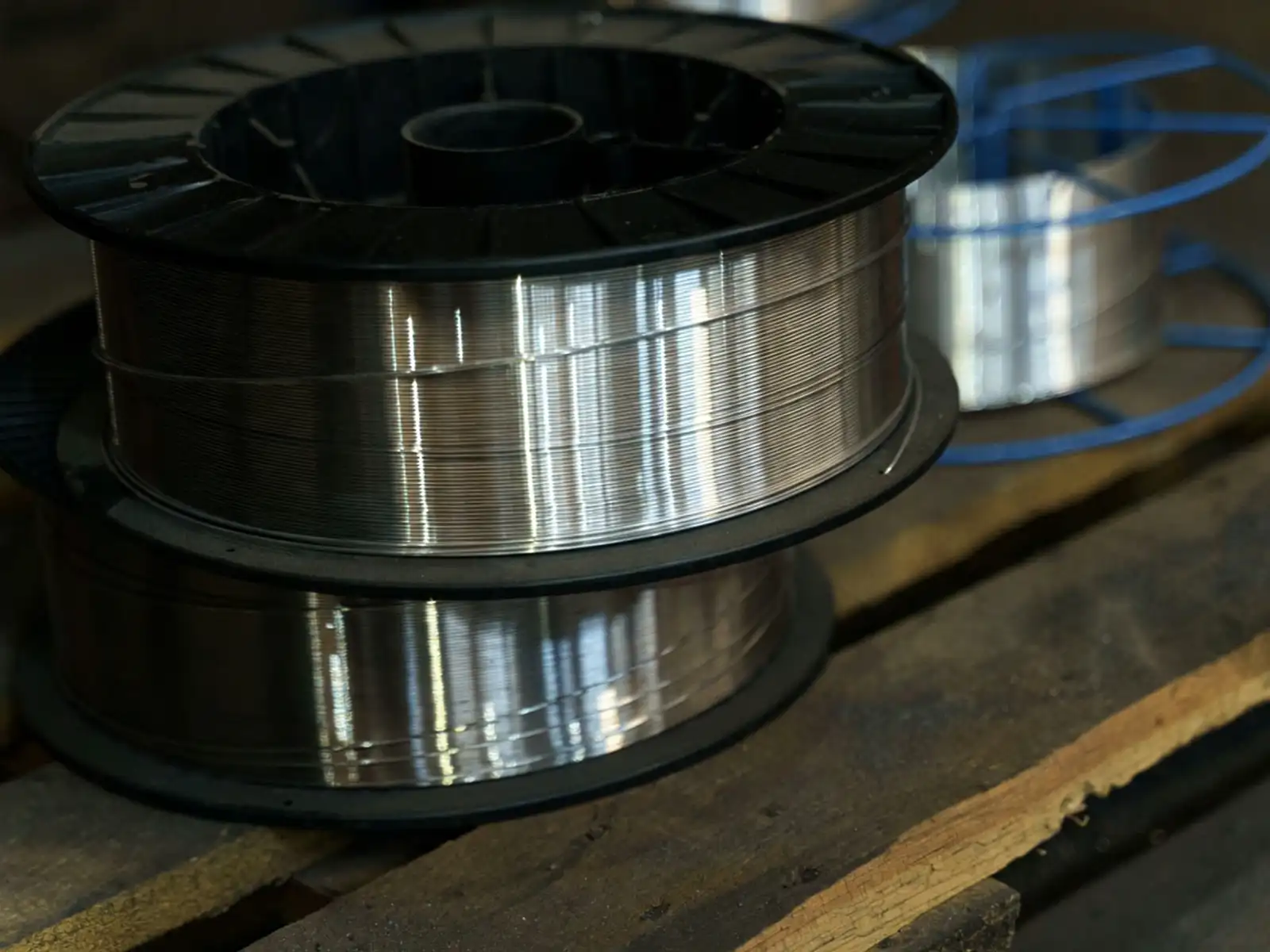
From nickel ingot to finished product, Nickel 200 commercially pure nickel wire must pass through raw material melting and casting, hot rolling or continuous rolling, cold drawing, annealing, surface treatment, and quality inspection. These process stages interact with one another and ultimately determine the wire’s dimensional accuracy, mechanical properties, surface condition, and corrosion resistance. This article describes the key control points of each stage in manufacturing order.
1. Raw Material Preparation: Selection Criteria for Commercially Pure Nickel Ingots
(1) Chemical Composition Control
The chemical composition of Nickel 200 is typically governed by ASTM B160 or the agreement between supplier and buyer. Common Nickel 200 limits in ASTM B160 are as follows: Ni+Co≥99.0%, Fe≤0.40%, Cu≤0.25%, Mn≤0.35%, Si≤0.35%, C≤0.15%, S≤0.010%; P is normally controlled as a residual element or per the parties’ agreement. Compared with descriptions such as “a nickel content of not less than 99.5%” and “Fe≤0.10%, Cu≤0.10%,” the ranges above are closer to the conventional requirements for standard products. If a customer requires tightened limits, they should be specified separately in the purchase specification.
Element | Common ASTM B160 limit (wt%) | Control significance |
Ni+Co | ≥99.0 | Ensures the matrix purity and corrosion resistance of commercially pure nickel |
Fe | ≤0.40 | Excessive levels affect corrosion resistance, magnetic properties, and thermoelectric potential stability |
Cu | ≤0.25 | Affects composition consistency and corrosion resistance |
Mn | ≤0.35 | Related to deoxidation and workability |
Si | ≤0.35 | Affects surface scale condition and workability |
C | ≤0.15 | Controls the risk of carbide precipitation; Nickel 201 can be selected for high-temperature service |
S | ≤0.010 | Prevents hot brittleness |
P | Per agreement/residual | Primarily addresses the risk of cold brittleness or weld cracking |
(2) Metallurgical Quality Requirements for Nickel Ingots
Raw nickel ingots must not only meet chemical composition requirements but also have a uniform as-cast structure, low inclusion content, and good internal soundness. Segregation, shrinkage porosity, coarse grains, or localized inclusions can cause wire breakage during cold drawing. High-quality nickel ingots are typically produced with electrolytic nickel cathodes as the primary raw material, melted under vacuum or cast under a controlled atmosphere to minimize the adverse effects of oxygen, nitrogen, and residual elements.
(3) Incoming Material Inspection and Traceability System
Each incoming batch of raw material should be re-tested for chemical composition and checked for appearance and dimensions, and a batch traceability record should be established. For stable bulk supply, complete raw material traceability and inspection records support the issuance of material certificates meeting EN 10204 3.1 requirements. It should be noted that the essence of an EN 10204 3.1 certificate is inspection documentation, traceability, and proof of delivery condition; it cannot simply be equated with a statement that all incoming material has passed full inspection.
2. Core Forming Processes: Rolling and Cold Drawing
Rolling and cold drawing are the two core forming operations for Nickel 200 nickel wire, and they progressively convert the as-cast structure into wire with precise dimensions and a controlled surface.
(1) Continuous Rolling: From Nickel Ingot to Wire Rod
After heating, nickel ingots or continuously cast billets enter the hot rolling or continuous rolling stage, where the large-cross-section billet is first broken down and then rolled into wire rod suitable for cold drawing. Conventional wire rod diameters mostly range from φ8 mm to φ25 mm, with the exact size depending on the finished product specification and the cold drawing pass design. The advantage of continuous rolling is more uniform deformation and comparatively thinner scale, providing a stable rod basis for subsequent cold drawing.
(2) Multi-Pass Cold Drawing: Dimensional and Microstructural Control
Cold drawing is the key operation that progressively reduces the wire rod to the target size. Commercially pure nickel work-hardens rapidly, so the reduction per pass must be distributed properly, die angles and drawing speed controlled, and intermediate annealing arranged when necessary. The tolerances of precision cold-drawn finished wire can typically be controlled to ±0.01 mm or better, and straightness can reach ≤1 mm/m, though these depend on size, condition, and processing parameters. The conventional finished wire diameter range is φ0.1 mm–φ10 mm; special sizes require separate evaluation.
(3) Die Materials and Lubrication Practice
Cold drawing dies are typically made of carbide or polycrystalline diamond (PCD) and are used with dedicated drawing lubricants. The lubricant not only reduces friction but also lessens the tendency of commercially pure nickel to weld or gall against the die. Galling/welding is a relatively common surface quality issue in the cold drawing of commercially pure nickel; an unstable lubrication system directly affects surface finish and yield.
Process | Primary process/equipment | Quality focus |
Hot rolling/continuous rolling | Multi-pass reduction to φ8–25 mm wire rod | Microstructural uniformity, scale thickness |
Cold drawing | PCD/carbide dies, progressive reduction per pass | Dimensional accuracy, wire breakage rate, surface galling |
Intermediate annealing | Scheduled according to cold-work reduction | Restores plasticity, controls grain size |
3. Heat Treatment and Microstructure Control
After cold drawing, the nickel wire accumulates internal work-induced stress, grains are elongated in the drawing direction, and dislocation density increases. Heat treatment can adjust the microstructure and mechanical properties so that soft, half-hard, and other delivery conditions are met.
(1) Annealing
Soft-condition Nickel 200 nickel wire generally requires recrystallization annealing to restore ductility. The mechanical properties after annealing vary with wire diameter, cold-work reduction, annealing temperature, and standard requirements, and cannot be used as fixed guaranteed values independent of size. Taking room-temperature tensile testing as an example, typical reference ranges for annealed Nickel 200 wire are approximately: tensile strength of 380–520 MPa, yield strength of 105–205 MPa, and elongation ≥40%. Specific values should follow the corresponding size and the material report.
(2) Atmosphere Protection and Oxidation Control
Commercially pure nickel has some oxidation resistance at high temperature, but annealing must still avoid obvious temper color and scale. Scale not only affects appearance but also interferes with subsequent drawing, welding, and surface treatment. Nickel 200 wire is usually annealed under hydrogen, cracked-ammonia, or vacuum atmospheres, with emphasis on controlling the furnace dew point and oxygen content to achieve stable surface quality.
(3) Stress-Relief Annealing and Custom Conditions
For products such as precision springs and medical guide wires that demand close matching of mechanical properties, combinations of stress-relief annealing or controlled cold-work reduction can be used in addition to full annealing to achieve different strength and ductility levels. It should be made clear that Nickel 200 has no precipitation-hardening or aging-strengthening mechanism, so the term “aging treatment” should not be used to describe strength optimization.
4. Surface Treatment: Bright Annealing, Pickling, and Polishing
Surface condition is an important specification dimension for Nickel 200 nickel wire. Different applications impose different requirements on surface reflectivity, roughness, and cleanliness.
(1) Bright Surface
A bright surface is obtained by protective-atmosphere annealing or bright annealing; the surface is free of temper color and has good reflectivity. Such products suit applications such as electronic components and medical devices with high cleanliness and appearance requirements, and they are also easier to weld in subsequent processing.
(2) Pickled Surface
A pickled surface uses chemical methods to remove surface scale and expose the natural metal color, with a matte appearance. It suits products that subsequently require electroplating, coating, or further cold working.
(3) Polished and Semi-Bright Surfaces
A polished surface further reduces surface roughness by mechanical or electrochemical means and is mainly used for precision machinery and medical implant-type products. A semi-bright surface lies between bright and pickled finishes, with a moderate surface finish and a balanced combination of cost and appearance.
Surface condition | Appearance characteristics | Typical application areas |
Bright | High reflectivity, no temper color | Electronic components, medical guide wires |
Pickled | Matte metallic color | Electrolytic electrode plates, chemical processing equipment |
Polished | Ultra-low roughness | Precision springs, implantable devices |
Semi-bright | Between bright and pickled | General industrial applications |
5. Full-Process Quality Control and Inspection System
The quality of Nickel 200 nickel wire depends not only on equipment capability but also on quality control throughout the entire process of rolling, drawing, heat treatment, and surface treatment.
(1) In-Line Dimensional Inspection and Process Control
Cold drawing and rolling lines are typically equipped with laser diameter gauges and in-line eddy current testing to continuously monitor wire diameter variation, surface defects, and internal discontinuities. When an anomaly is detected, the system can automatically alarm and trigger process adjustments, intercepting nonconforming products during the process rather than allowing them to accumulate until final inspection.
(2) Final Inspection Items
Before shipment, each batch must complete inspection of chemical composition, mechanical properties, dimensions, and surface quality. For export or high-requirement applications, material certificates can be issued to EN 10204 3.1. The purpose of this certificate is to provide inspection documentation, traceability, and proof of delivery condition, rather than to replace a performance pass judgment on its own.
(3) Batch Consistency and Physical Property Stability
Batch-to-batch performance variation directly affects downstream product yield. For users with continuous production, consistency of physical properties such as annealed room-temperature electrical resistivity of about 6.9×10⁻⁸ Ω·m, thermal conductivity of about 70 W/(m·K) (20℃), and density of about 8.9 g/cm³ is often more important than a single batch passing. Specific data should follow the material report and the applicable standard.
6. Conclusion
Nickel 200 nickel wire manufacturing is a systematic process in which raw materials, rolling, cold drawing, heat treatment, surface treatment, and quality inspection work together. Accurately understanding the influence of each operation on dimensions, surface, and mechanical properties supports more rational decisions during material selection by accounting for size, condition, and actual service environment.
FAQ
(1) Q1: What are the main differences between Nickel 200 wire and Nickel 201?
The core difference between Nickel 200 and Nickel 201 is carbon content. The carbon maximum for Nickel 201 is typically 0.02%, while that for Nickel 200 is typically 0.15%. At higher service temperatures, Nickel 201 effectively reduces the embrittlement risk caused by grain-boundary carbide precipitation, making it more suitable for long-term high-temperature service.
(2) Q2: What is the minimum customizable diameter for Nickel 200 nickel wire?
The conventional standard finished diameter range is φ0.1 mm–φ10 mm. Smaller diameters such as ultra-fine wire can be customized, but the minimum customizable diameter depends on material condition, tolerances, and surface requirements. Please provide the target diameter, tolerance, and surface condition for a technical assessment to confirm the practical manufacturable range.
(3) Q3: How can the quality reliability of a supplier be assessed when purchasing Nickel 200 wire?
The supplier can be evaluated from three aspects: first, whether it can provide complete EN 10204 3.1 material certificates and traceable quality records; second, whether it provides inspection reports for chemical composition, mechanical properties, and dimensions; and third, whether batch-to-batch performance data are stable. Suppliers with mass production capability and complete quality records are generally more worthwhile for long-term cooperation.
Contact Us
For information on Nickel 200 nickel wire specifications, custom processing, or technical parameters, contact the manufacturer at sales@titaniumvalleys.com.
References
- General Administration of Quality Supervision, Inspection and Quarantine of the People’s Republic of China; Standardization Administration of China. GB/T 6516-2010 Electrolytic nickel. Beijing: Standards Press of China, 2010.
- General Administration of Quality Supervision, Inspection and Quarantine of the People’s Republic of China; Standardization Administration of China. GB/T 2054-2013 Nickel and nickel alloy plates. Beijing: Standards Press of China, 2013.
- Huang Boyun, Li Chenggong, Shi Likai, et al., eds. China Materials Engineering Canon, Vol. 4: Nonferrous Metals Materials Engineering. Beijing: Chemical Industry Press, 2006.
- Zeng Zhengming, ed. Practical Handbook of Nonferrous Metals Materials. Beijing: China Machine Press, 2009.
Published by: Titanium Valleys
Technical review: General Manager of the Production Department
Quality review: Quality Inspection Department
Last reviewed: October 20, 2026