
How Are TB13 Titanium Alloy Bars Manufactured? A Complete Process Guide
- TB13 Titanium Alloy
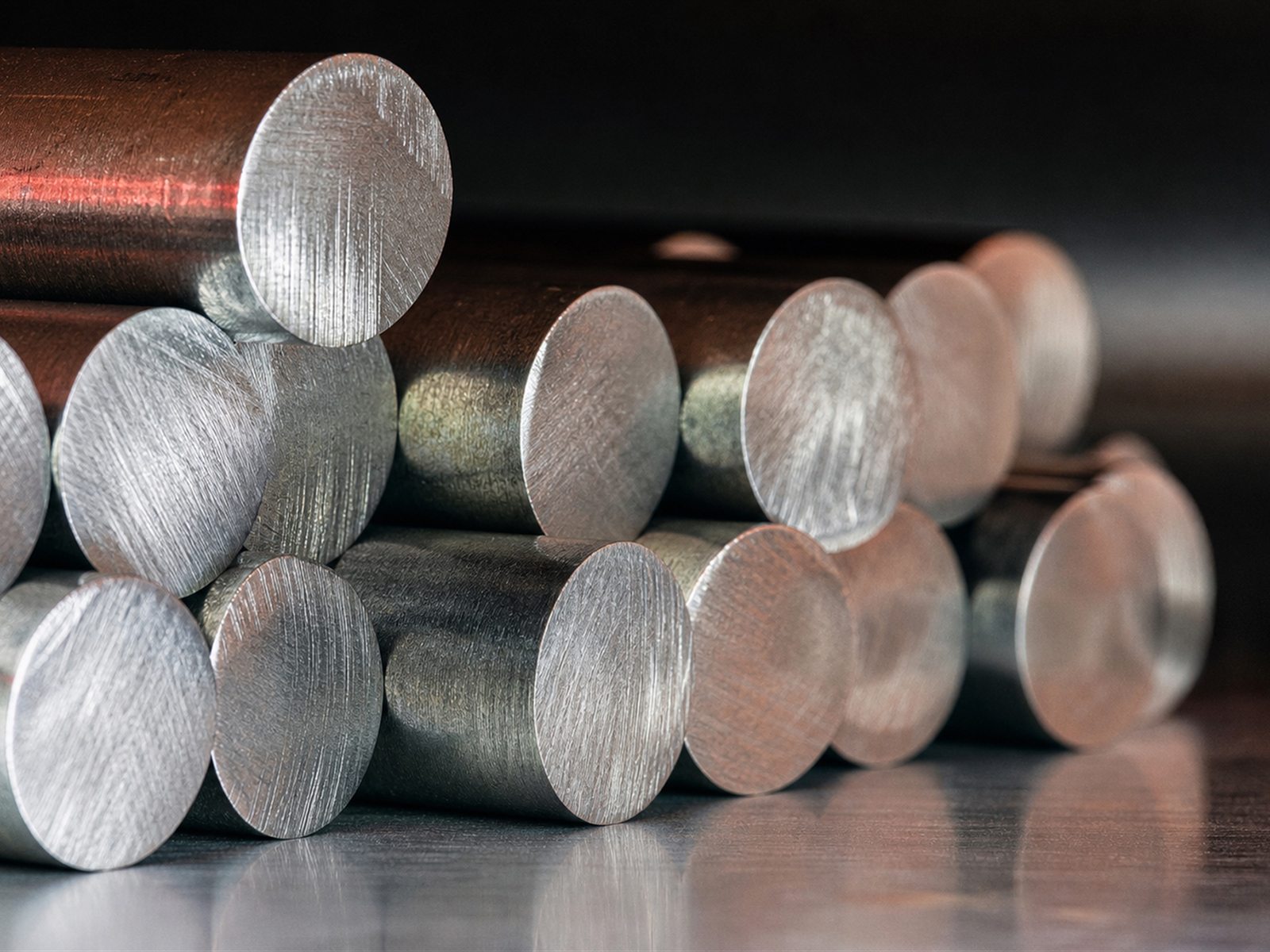
The manufacture of Ti-4Al-22V titanium alloy bars is a complete system that runs from raw material blending through finished product inspection. Its nominal composition is Ti-4Al-22V, with a controlled standard composition range of Al 3.0%–4.5%, V 20.0%–23.0%, balance Ti, and tight limits on impurities such as Fe, C, N, H, and O. Through the core stages of vacuum melting, forging breakdown, hot rolling or extrusion forming, beta-phase-region treatment with aging, and finishing, the process ultimately produces a metastable beta titanium alloy bar with high springback, high specific strength, and good cold-workability. The entire flow is closely interconnected, and the parameter control of the key operations directly determines the final mechanical performance of the bars.
1. Raw Material Preparation and Electrode Melting: Controlling Composition and Purity at the Source
(1) Aligning the Controlled Chemical Composition with the Nominal Composition
The controlled standard composition of Ti-4Al-22V is: Al 3.0%–4.5%, V 20.0%–23.0%, balance Ti, with strictly controlled impurity maxima of Fe ≤ 0.20%, C ≤ 0.10%, N ≤ 0.05%, H ≤ 0.015%, and O ≤ 0.20%. The high vanadium content is key to obtaining a metastable beta structure after beta-phase-region treatment; any deviation in the proportions can affect the beta transus temperature and subsequent mechanical performance.
(2) Electrode Compaction Process
After the raw materials are uniformly blended, the mixture is compacted into electrode blocks that serve as the consumable electrodes for subsequent vacuum arc remelting (VAR). Electrode density and geometric consistency directly influence arc stability during melting, which in turn affects macrosegregation control in the ingot.
(3) Vacuum Arc Remelting (VAR)
Ti-4Al-22V typically requires two or even three vacuum arc remelting cycles to improve the uniformity of alloying element distribution and to reduce the risk of shrinkage and inclusions, keeping them within the ranges allowed by the standard. Each remelt is performed in a high-vacuum environment, which limits pickup of interstitial elements such as nitrogen, hydrogen, and oxygen from the gas phase, thereby reducing the adverse effects of gaseous impurities on material toughness and fatigue performance.
2. Forging Breakdown and Bar Forming: Hot Working from Ingot to Bar
(1) Multi-Heat Forging Breakdown
The ingot is first forged initially above the beta-phase region, and then forged in multiple passes in the alpha+beta two-phase region; repeated upsetting and drawing out with compressive deformation progressively refines the grains, reduces as-cast segregation, and improves microstructural uniformity. The high vanadium content significantly lowers the beta transus temperature, so the hot working temperature range must be strictly controlled based on measured transformation temperatures rather than assuming a wide hot working window.
(2) Hot Rolling, Precision Rolling, or Hot Extrusion of Bars
After heating, the forged billet enters hot rolling, precision rolling, or hot extrusion. Bar rolling/precision rolling lines with controlled temperature and draft schedules can control pass reductions and forming temperatures fairly accurately, ensuring bar dimensional tolerances and surface quality. Ti-4Al-22V bars are available in various cross-sectional shapes, including round, square, and hexagonal bars, to meet different downstream processing needs.
(3) Cold Drawing and Finishing
For bars requiring tighter dimensional tolerances or better surface finish, cold drawing is an indispensable downstream operation. Ti-4Al-22V has good cold-work ductility, and with rational pass reduction rates and intermediate annealing, a large total cold deformation can be achieved; however, the reduction per pass must be controlled to avoid cracking or surface damage from excessive local deformation.
Overview of Core Manufacturing Operations for Ti-4Al-22V Titanium Alloy Bars
Process stage | Primary purpose | Key control points |
Vacuum arc remelting | Homogenization of composition, reduction of gaseous impurities | Vacuum level, number of remelts, current stability |
Forging breakdown | Break up the as-cast structure, refine grains, reduce segregation | Heating temperature, deformation per pass, forging ratio, finish forging temperature |
Bar hot rolling/extrusion | Forming and dimensional control | Heating temperature, reduction, exit speed/extrusion ratio |
Intermediate heat treatment/beta treatment | Eliminate work hardening, adjust microstructure | Treatment temperature, holding time, cooling method |
Cold drawing and finishing | Improve dimensional accuracy and surface quality | Die angle, lubrication, pass reduction, intermediate annealing |
Final aging/stress-relief treatment | Optimize mechanical properties or stabilize dimensions | Aging temperature, holding time, furnace temperature uniformity |
Finishing and inspection | Surface cleaning, defect screening | Straightening, surface quality, nondestructive testing parameters |
3. Heat Treatment: The Key Step to Unlocking Performance Potential
(1) Beta-Phase-Region Treatment (M Condition)
The common delivery condition for commercial Ti-4Al-22V bars is the M condition, achieved by holding above the beta transus temperature and then fast cooling to obtain a metastable beta structure. In this condition the bars have good ductility and cold-workability, suitable for subsequent bending, stamping, and machining operations.
(2) Aging Strengthening Treatment
Depending on the actual application requirements, users can age M-condition bars to substantially increase tensile strength and hardness through the precipitation of finely dispersed alpha phase. In high-vanadium metastable beta titanium alloys, low-temperature aging may first form the transitional omega phase; if its morphology or content is not properly controlled, brittleness may occur. The aging schedule should therefore be selected with reference to the transformation behavior, either avoiding or controlling omega-phase precipitation or using step aging to promote fine alpha-phase precipitation.
(3) Effect of Heat Treatment Parameters on Properties
Heat treatment condition | Typical tensile strength, room-temperature longitudinal | Elongation | Primary application scenarios |
M condition (beta-treated state) | Approx. 850–950 MPa | Typically ≥15% | Elastic components, eyeglass frames, cold-formed parts |
M condition + aging (typical schedule, e.g., 500℃ × 8–16 h) | Approx. 1250–1350 MPa | Approx. 6%–10% | Aerospace structural components, high-strength fasteners, precision elastic load-bearing parts |
Note: Actual values will vary with bar size, aging schedule, specimen sampling location, and test conditions, and measured values should prevail.
4. Finishing, Inspection, and Delivery: Quality Consistency Control
(1) Surface Finishing
After rolling or cold drawing, bars require straightening, cropping of ends, turning, polishing, and other surface treatments to remove scale, scratches, and portions that are out of dimensional tolerance. The bar surface condition directly affects downstream users’ processing yield, particularly for applications with high surface quality requirements such as eyeglass frames and precision elastic components.
(2) Nondestructive Testing
Ultrasonic inspection and eddy current testing are common nondestructive testing methods for Ti-4Al-22V bars, used to screen internal defects and surface/near-surface defects. Under a complete quality system, traceability from the finished product back to the original melt heat can be achieved through the linkage of heat/batch number management, process records, nondestructive testing data, and material certificates; nondestructive testing data alone cannot independently guarantee traceability.
(3) Mechanical Property and Chemical Composition Acceptance
Samples must be taken from each batch of bars for tensile testing and chemical composition analysis. Main alloying elements and principal impurities can be analyzed by methods such as ICP-OES or XRF; interstitial and light elements such as C, N, O, and H require dedicated analytical methods such as combustion, inert gas fusion, or thermal conductivity methods. Through heat/batch number management and process quality control, the performance data of every batch can be traced back to the original melt heat.
5. Process Outcomes: Performance Characteristics and Typical Application Scenarios
(1) Superelasticity and Cyclic Stability
The superelasticity of Ti-4Al-22V is mainly related to the reversible stress-induced transformation that occurs in the metastable beta matrix under stress and the reversible recovery after unloading, rather than being determined solely by a single-phase beta structure. Within specified strain amplitudes and numbers of cycles, the alloy can exhibit relatively high recoverable strain and small residual deformation; however, cyclic stress amplitude, temperature, surface damage, and corrosive media all affect the actual superelastic response, which cannot be simply described as free of permanent deformation.
(2) Low Density and High Specific Strength
The density of Ti-4Al-22V is approximately 4.7 g/cm³, far lower than the roughly 7.9 g/cm³ of stainless steel. After a typical aging schedule, the room-temperature longitudinal tensile strength can be raised to about 1300 MPa, with the exact value depending on the aging schedule and size. Its high specific strength enables lightweight design in aerospace structural components, medical devices, and high-end wearable equipment [3].
(3) Nickel-Free, Non-Ferromagnetic Behavior and Biocompatibility
Ti-4Al-22V contains no nickel, which can reduce the risk of sensitization upon skin contact; however, biocompatibility is also affected by combined factors such as surface condition, ion release, and cellular and tissue response, and should be evaluated in the context of the specific application. In addition, the alloy is non-ferromagnetic with a very low magnetic susceptibility, making it suitable for components around instruments that are sensitive to magnetic interference.
Quick Reference: Typical Application Scenarios for Ti-4Al-22V Bars
Application field | Representative products | Core requirements |
High-end eyewear manufacturing | Frames, temples, hinges | High springback, low elastic modulus, lightweight, nickel-free anti-allergy |
Medical and orthodontic | Orthodontic wires, elastic supports, surgical instruments | Biocompatibility to be verified, non-ferromagnetic, corrosion resistant |
Aerospace structures | High-strength fasteners, lightweight structural components | High specific strength, fatigue resistance |
Precision elastic components | Spring clips, connectors, miniature springs | Low elastic modulus, high springback, good cold-workability |
Electronics and consumer products | Watch bands, watch cases, smart wearable accessories | Lightweight, corrosion resistant, capable of high-quality surface finishing |
6. Conclusion
Manufacturing Ti-4Al-22V titanium alloy bars requires systematic control of key parameters such as melting vacuum and current, forging temperature and deformation, hot rolling/extrusion temperature, cold drawing pass reduction, beta treatment, and aging temperature and holding time. Only through precise process coordination and inspection can the target properties be obtained consistently. Understanding these process principles helps purchasers, designers, and engineers make more accurate material selection decisions.
FAQ
(1) Q1: Can Ti-4Al-22V titanium alloy bars be used directly for forming operations in the as-delivered condition?
When delivered in the M condition (beta-treated state), Ti-4Al-22V generally has good cold forming capability and can be directly bent, stamped, and machined. However, depending on the specific surface condition and dimensional tolerance requirements, cold-drawn or as-delivered bars may still require preprocessing such as straightening, stress relieving, or surface cleaning.
(2) Q2: How does the machinability of Ti-4Al-22V compare with that of Ti-6Al-4V (TC4) bars?
In the M condition, Ti-4Al-22V generally has higher elongation and lower elastic modulus, and its cold forming behavior is superior to that of Ti-6Al-4V. However, titanium alloys in general have relatively poor machinability, low thermal conductivity, and rapid tool wear, so it cannot be simply concluded that Ti-4Al-22V is easier to machine. Its cutting behavior is closely related to tooling, cooling, cutting parameters, and post-processing conditions.
(3) Q3: Does the superelasticity of Ti-4Al-22V bars degrade over time in actual service?
Under specified strain amplitudes, cycle counts, and service conditions, the superelasticity of Ti-4Al-22V generally shows good cyclic stability; however, cyclic fatigue, service temperature, surface damage, and corrosive media may all affect the superelastic recovery capability. Verification under actual service conditions is required before application, and no performance degradation under all conditions should be assumed.
Contact Us
If you are looking for a supplier of Ti-4Al-22V (TB13) titanium alloy bars, please contact Titanium Valley. We supply Ti-4Al-22V titanium alloy bars conforming to the relevant standards, along with material certificates, test reports, and OEM customization services. Please send your inquiry to: sales@titaniumvalleys.com
References
- Zhang Xiyan, Zhao Yongqing, Bai Chenguang. Titanium Alloys and Their Applications. Beijing: Chemical Industry Press, 2005.
- Chen Zhenhua. Titanium and Titanium Alloys. Beijing: Chemical Industry Press, 2005.
- Wang Jinyou, Ge Zhiming, Zhou Bangxin. Titanium Alloys for Aerospace Applications. Shanghai: Shanghai Scientific & Technical Publishers, 1985.
Published by: Titanium Valleys
Technical review: General Manager of the Production Department
Quality review: Quality Inspection Department
Last reviewed: October 20, 2026