
What Factors Affect the Performance and Durability of Gr5 Titanium Foil?
- Gr5 Titanium Foil
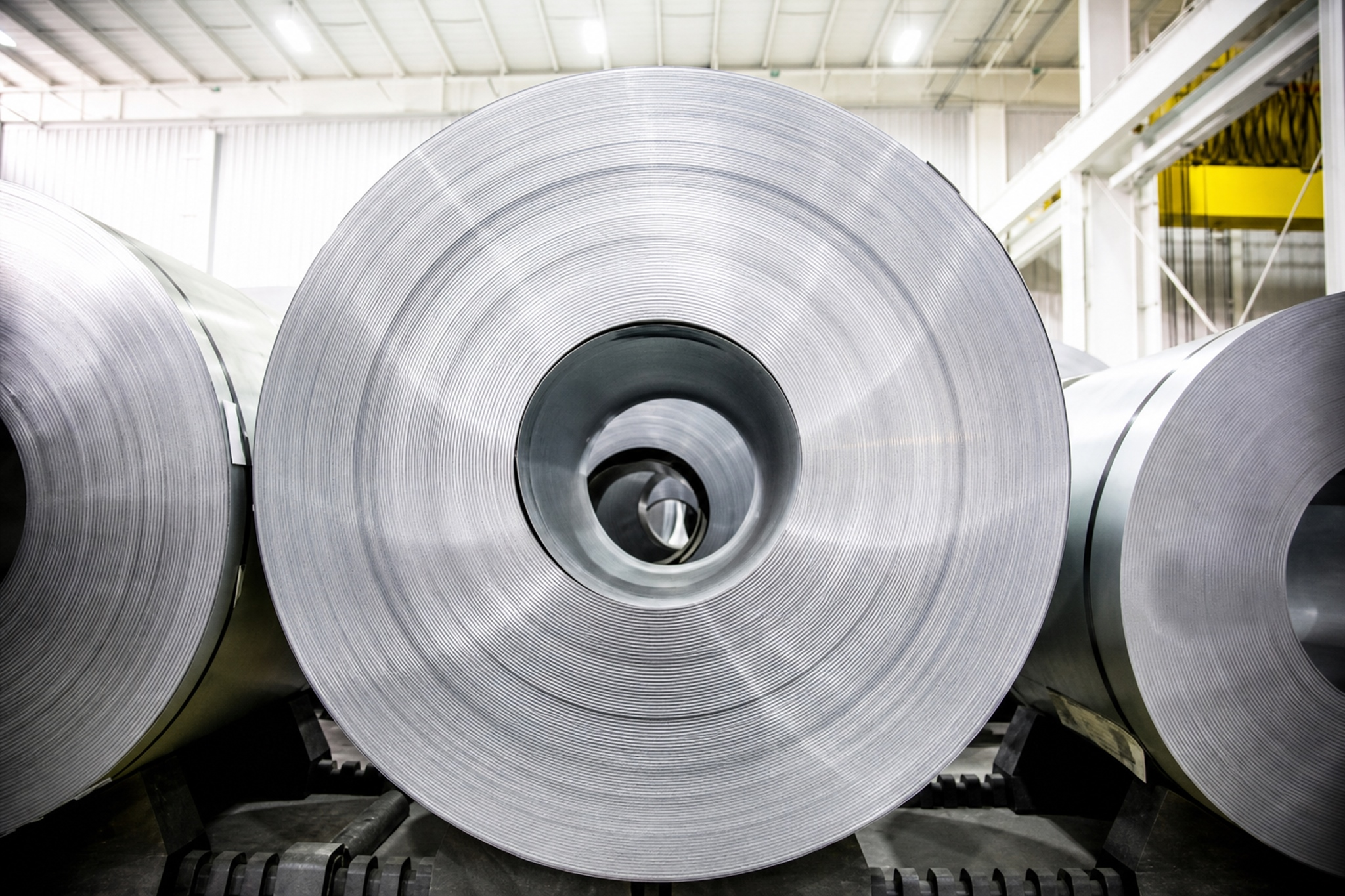
The core factors affecting the performance and durability of Gr5 titanium foil span multiple dimensions: precise control of the alloy composition directly determines the material’s strength base; the production process—particularly multi-pass precision cold rolling and controlled-atmosphere annealing—influences the uniformity and stability of the microstructure; thickness accuracy and flatness control determine dimensional consistency; and surface cleanliness affects downstream processing and actual in-service performance. In addition, temperature, corrosive media, and cyclic loading conditions in the service environment significantly influence the long-term reliability of Ti-6Al-4V foil. Understanding the interplay among these factors is a prerequisite for the selection and application of high-performance titanium foil.
1. Alloy Composition and Impurity Control: The Foundation of Performance
(1) The Synergistic Role of Aluminum and Vanadium
Aluminum (Al, approx. 5.5–6.75%) acts as an α-phase stabilizer, increasing the strength of the α phase and improving high-temperature performance; vanadium (V, approx. 3.5–4.5%) acts as a β-phase stabilizer, helping to stabilize the β phase and improving the alloy’s response to processing and heat treatment. A proper element balance enables Gr5 to achieve high strength and good overall ductility in the annealed condition. Referring to the typical requirements for annealed Gr5 in ASTM B265, the tensile strength is not less than about 895 MPa, the yield strength is not less than about 828 MPa, and elongation is generally not less than 10%. The actual mechanical properties of foil are also affected by thickness, processing condition, annealing schedule, and test method, so purchasing should be based on the specific product standard and quality documentation.
(2) The Control Window for Impurity Elements
Element | Maximum Content | Primary Effect |
Fe | ≤ 0.30% | Excess levels reduce ductility and affect rolling stability |
O | ≤ 0.20% | Increasing oxygen content raises strength but significantly reduces elongation |
H | ≤ 0.015% | Excess hydrogen increases susceptibility to hydrogen embrittlement and reduces fatigue life |
N | ≤ 0.05% | Nitride inclusions affect surface quality and fracture toughness |
C | ≤ 0.08% | Carbide or carbon-bearing phase segregation affects microstructural uniformity and ductility |
The values above should be treated as references for common standard ranges rather than uniform acceptance values for all Gr5 foil. Different product standards, thickness specifications, and purchasing requirements may vary, so the applicable standard and corresponding chemical composition requirements should be clearly defined at the time of purchase. Within the acceptable composition range, control of the interstitial elements O, N, H, and C is especially important for the overall performance of thin-gauge materials. Taking oxygen as an example, its content affects both strength and ductility; abnormal hydrogen content may increase the risk of hydrogen-related damage under certain environmental and stress conditions. Therefore, for high-end thin foil products, confirming that the primary alloying elements meet specification is not sufficient—the batch-to-batch stability of interstitial elements must also be considered.
(3) Uniformity of the α+β Two-Phase Microstructure
A uniform α+β two-phase microstructure is an important basis for stable mechanical properties in Gr5 titanium foil. If heat treatment or rolling process control is improper, grain growth, microstructural inhomogeneity, or localized property variations can occur, increasing anisotropy and batch-to-batch scatter. Controlled-atmosphere annealing reduces the risk of surface oxidation and contamination during high-temperature processing. By properly controlling annealing temperature, holding time, and cooling schedule, microstructural uniformity can be improved, keeping strength, ductility, and subsequent formability within a stable range. This is a key production step in manufacturing high-quality Ti-6Al-4V foil.
2. Production Processes: Key Control Points from Rolling to Annealing
(1) Multi-Pass Precision Cold Rolling and Tension Control
Process Item/Parameter | Effect on Performance |
Reduction per Pass | Excessive reduction tends to cause edge cracking and strip breaks; insufficient reduction lowers production efficiency |
Tension Matching | Non-uniform tension causes cross-width thickness deviation and flatness warping |
Roll Accuracy and Roll Assembly Condition | Affects thickness tolerance and surface quality; internal control for thin gauges can reach the ±0.001 mm level, with tolerance ranges relaxed accordingly as thickness increases |
Intermediate Annealing Schedule | Restores ductility and prevents cracking from accumulated work hardening; annealing temperature, holding time, and cooling rate jointly affect microstructural uniformity |
Multi-pass cold rolling usually requires the reduction to be allocated rationally according to material thickness, equipment capability, and target condition. With its multiple back-up rolls, a 20-high precision rolling mill supports control of thickness and flatness in thin-gauge materials, but the equipment type itself does not directly determine final product quality. The actually achievable thickness, width, and tolerances should still be verified against the specific equipment, material condition, and product standard.
(2) Controlled-Atmosphere Annealing and Microstructural Control
Annealing is an important step in Gr5 foil production. Vacuum or high-purity inert gas shielding reduces the risk of oxidation and surface contamination during high-temperature processing. The annealing schedule must be set according to the material’s prior processing condition and final delivery condition. Temperature uniformity, holding time, and cooling process all affect grain structure, hardness, elongation, and subsequent formability. For continuous coils, temperature consistency along the full coil length must also be managed to reduce batch-level and within-coil property variations.
(3) Precision Slitting and Flatness Control
Ultra-thin, wide titanium alloy foil is prone to burrs, edge rollover, and edge deformation during slitting. Matching the knife clearance, slitting speed, and strip tension appropriately can reduce the incidence of edge defects. Leveling and flattening operations primarily improve flatness and relieve some residual stress. For high-precision foil, suppliers should also inspect the edge condition after slitting to prevent edge defects from becoming potential initiation sites for subsequent stamping, bending, or fatigue failure.
3. Thickness Accuracy, Dimensional Consistency, and Surface Condition
(1) The Engineering Significance of Thickness Tolerances
For ultra-thin gauges on the order of 0.03 mm, some high-end applications may require a thickness tolerance of ±0.001 mm or tighter; for gauges around 0.8 mm, the same absolute tolerance should not be used as the acceptance criterion. The actual tolerance should be determined based on thickness, width, product standard, and the supplier’s process capability. Thickness variations can alter local stress distribution, but fatigue crack initiation is also influenced by surface roughness, notches, residual stress, load level, and material microstructure. Therefore, for parts subjected to cyclic loading, thickness accuracy, surface quality, and edge integrity should be considered together. On-line thickness gauges, closed-loop feedback control, and regular roll-assembly calibration help improve thickness consistency in thin-gauge materials, but the final tolerance level should still be confirmed by actual product inspection.
(2) Uniformity Across the Width
Cross-width thickness uniformity of wide foil is an equally important quality indicator. Roll stiffness, roll profile control, roll bending, tension, and rolling parameters all affect the transverse thickness distribution. The multi-back-up-roll configuration of a 20-high rolling mill improves rolling stability, but it should not be assumed that using a 20-high mill necessarily eliminates cross-width thickness variation. For a given width and thickness combination, actual product data must still be verified.
(3) Surface Condition and Functional Requirements
Surface Condition | Characteristics | Typical Applications |
Pickled Surface | Uniform matte finish, removes thicker oxide scale, natural oxide film on surface; typical Ra 0.8–1.6 μm (reference value) | Chemical electrodes, corrosion-resistant linings |
Bright Surface | Low roughness, high finish; typical Ra ≤0.4 μm (reference value) | Precision electronics, semiconductor equipment |
Satin/Matte Surface | Moderate roughness, suited to coatings; typical Ra 0.4–1.2 μm (reference value) | Aerospace structural components, medical devices |
Surface roughness should not be set as a fixed value independent of the specific processing technology and product standard. For foil requiring welding, coating, or precision forming, the surface condition, roughness range, and inspection method should be defined at the purchasing stage. Surface condition affects not only weld and coating adhesion but also fatigue crack initiation and long-term durability. For thin-gauge Ti-6Al-4V foil, surface scratches, creases, localized contamination, and edge defects should all be included within the scope of quality control.
4. Service Environment: Temperature, Corrosion, and Fatigue
(1) The Boundaries of Temperature Effects on Performance
Ti-6Al-4V offers good intermediate-temperature properties, but as temperature rises, its strength, ductility, oxidation behavior, and long-term stability all change. In engineering practice, about 300℃ is commonly used as a reference temperature for many long-term service scenarios, but it is not a uniform long-term service limit for all parts. When temperature rises further under sustained loading, factors such as strength loss, creep, and surface oxidation must be given priority consideration. Whether short-term exposure to higher temperatures is acceptable depends on the temperature level, duration, load, environment, and part design requirements. Therefore, in aerospace thermal-protection foil and other high-temperature applications, the allowable service temperature should be determined according to the specific operating conditions and design specifications, rather than simply using a single temperature value as the material limit.
(2) Adaptability to Corrosive Environments
Gr5 titanium foil has good corrosion resistance. Its surface forms a stable passive film, giving it good corrosion resistance in marine atmospheres, seawater, and a variety of common corrosive environments. However, corrosion resistance is not determined by alloy grade alone. Medium composition, temperature, flow velocity, redox conditions, and surface condition all affect actual corrosion behavior. In specific acidic, reducing, or high-temperature media, material evaluation should be based on the specific service conditions rather than concluded solely from the grade’s general corrosion performance.
(3) Fatigue Loading and Life Expectancy
Ti-6Al-4V has good fatigue properties, but fatigue life depends strongly on material condition, surface quality, notches, residual stress, load ratio, and environmental conditions. Under specific experimental conditions on smooth specimens, the fatigue strength can reach a certain fraction of the tensile strength, but this ratio cannot be used directly to predict the fatigue life of actual foil parts. For ultra-thin foil, surface scratches, slitting burrs, and localized defects can significantly reduce fatigue performance, so cleanliness, surface treatment, and edge quality control during production are particularly important.
5. Batch-to-Batch Consistency and the Inspection System
(1) Batch-to-Batch Microstructural Stability
The stability of the annealing equipment and process parameters affects the microstructure, hardness, and ductility of every coil. When temperature, holding time, or cooling conditions vary, material properties may fluctuate accordingly. Therefore, for continuous coils, furnace temperature uniformity, process records, and the property distribution across different batches should be monitored, rather than inferring changes in elongation or strength directly from a single temperature fluctuation value.
(2) Long-Term Capability for Thickness Tolerance Control
Under large-volume supply conditions, maintaining thickness consistency in ultra-thin gauges requires coordinated efforts among on-line thickness gauging, closed-loop adjustment, roll maintenance, and process data analysis. Suppliers can demonstrate the stability of critical dimensional parameters through Cp, Cpk, or other statistical process control data. However, process capability indices must be based on sufficient historical data, sound statistical conditions, and clearly defined specification limits; an isolated Cpk number cannot serve as sole proof of quality.
(3) Inspection System and Delivery Documentation
High-end customers typically require complete material certificates, chemical composition, mechanical properties, dimensional inspection, and surface quality records. For special applications, third-party inspection or additional microstructural and hardness testing may be required. For ultra-thin foil on the order of 0.03 mm, not all conventional sheet inspection items are applicable. For example, some non-destructive testing methods may be limited by material thickness, so a reasonable inspection plan should be selected according to the actual gauge and application requirements. Complete quality records, batch traceability, and a stable inspection process are important criteria for judging a supplier’s process consistency and long-term supply capability.
6. Conclusion
The performance and durability of Gr5 titanium foil are determined jointly by alloy composition, production process, dimensional accuracy, surface condition, service environment, and batch-to-batch consistency. These factors interact and together form the basis for reliable service of the material under demanding conditions. When selecting and purchasing material, in addition to fundamental parameters such as tensile strength, yield strength, and thickness tolerance, the supplier’s rolling capability, heat treatment control, surface quality, inspection system, and batch stability should be comprehensively assessed. For ultra-thin and high-precision gauges in particular, actual capability should be confirmed through sample validation and small-batch trial production rather than relying solely on advertised parameters.
FAQ
(1) Q1: How Large Is the Strength Difference Between Gr5 Titanium Foil and Gr2 Commercially Pure Titanium Foil?
The tensile strength of annealed Gr5 is typically significantly higher than that of Gr2. Referring to common standard requirements, the minimum tensile strength of Gr5 is approximately 895 MPa, while that of Gr2 is generally about 345 MPa and above. Actual strength is affected by product thickness, processing condition, and the specific standard, so the load-carrying capacity of the two materials should not simply be compared with a fixed multiple.
(2) Q2: How Do You Select the Surface Condition of Gr5 Titanium Foil?
The selection should be based on downstream processing and the final service environment. A pickled surface suits downstream processing that requires a clean surface; a bright surface suits precision parts with high surface-finish requirements; a satin/matte surface may be chosen according to subsequent coating, forming, or assembly requirements. For welding or coating applications, the surface roughness, cleanliness, and inspection method should be defined at the purchasing stage.
(3) Q3: Can Gr5 Titanium Foil Be Used Long-Term in Environments Above 300℃?
300℃ should not be treated as a uniform service upper limit. Ti-6Al-4V may still be used in certain engineering applications above this temperature, but strength loss, creep, oxidation, load, and duration must all be considered. The specific allowable service temperature should be determined according to the actual part design, environmental conditions, and applicable specifications.
Contact Us
For Gr5 titanium foil processing or material selection support, please contact Baoji Titanium Valley Nickel Zirconium Material Processing Co., Ltd. at sales@titaniumvalleys.com.
References
1. ASTM B265/B265M, Standard Specification for Titanium and Titanium Alloy Strip, Sheet, and Plate.
2. ASTM E8/E8M, Standard Test Methods for Tension Testing of Metallic Materials.
3. ASM Handbook, Volume 2: Properties and Selection: Nonferrous Alloys and Special-Purpose Materials.
4. Titanium: A Technical Guide, Matthew J. Donachie, Jr.