
What Are the Properties, Uses, and Key Advantages of Nickel 200 Bars?
- Nickel 200 Bars
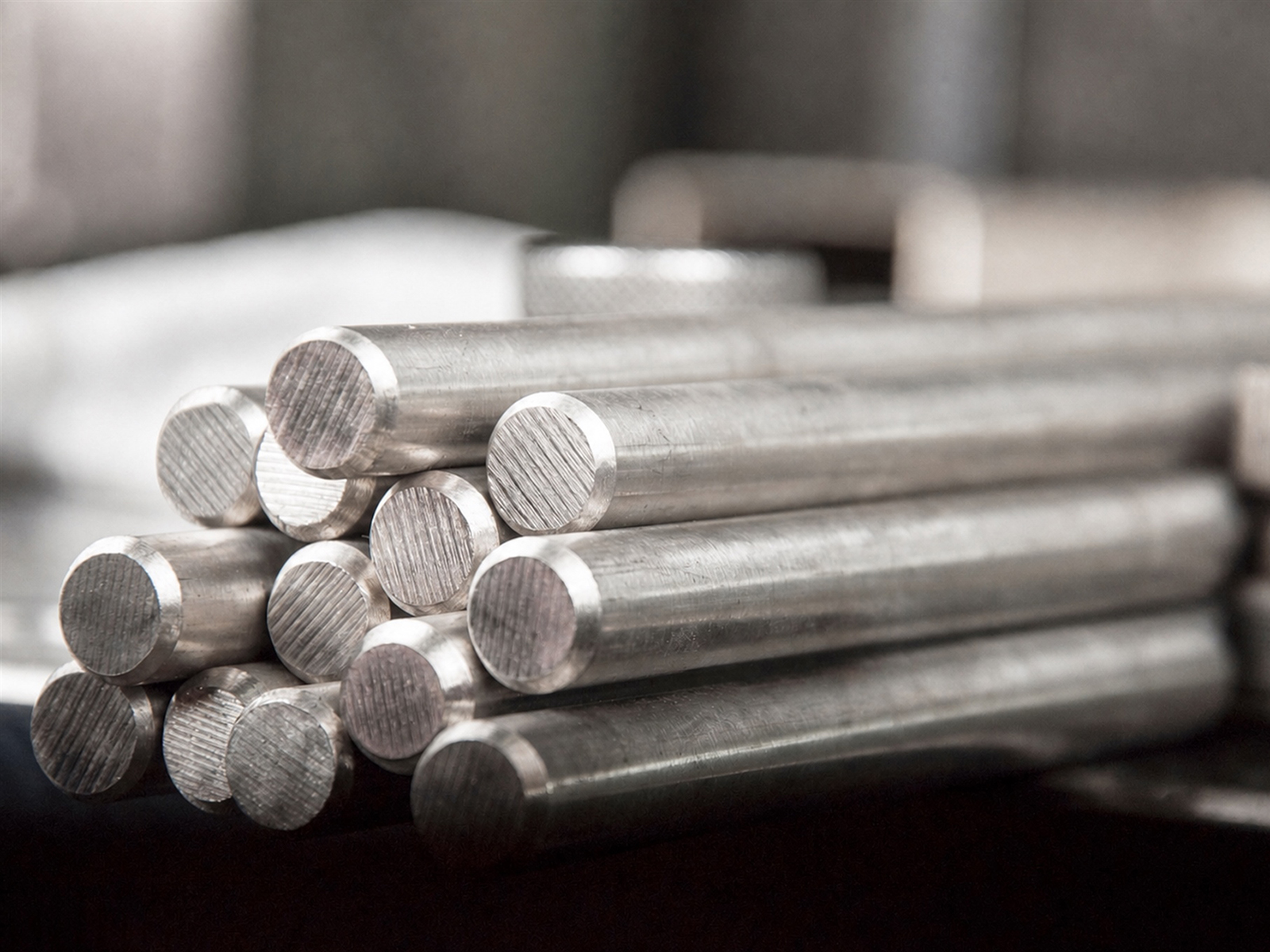
Ni200 bars (UNS N02200 / W.Nr. 2.4060) are commercially pure nickel alloy bars with a nickel content of not less than 99.0%, typically produced to ASTM B160. Owing to this extremely high nickel purity, they exhibit good corrosion resistance in strong alkaline media, reducing environments, and neutral conditions. At the same time, they combine good electrical and thermal conductivity with excellent ductility and weldability, and hold important applications in the chemical, electronics, battery, marine engineering, and precision manufacturing sectors. For engineers and buyers seeking long-lasting, high-purity, clean materials, this is a metal whose selection must be properly matched to the service boundary conditions.
1. Core Composition and Material Characteristics of Ni200 Bars
(1) Chemical Composition: The Basis of High Purity
Element | Content requirement |
Nickel (Ni + Co) | ≥ 99.0% |
Iron (Fe) | ≤ 0.40% |
Carbon (C) | ≤ 0.15% |
Manganese (Mn) | ≤ 0.35% |
Silicon (Si) | ≤ 0.35% |
Copper (Cu) | ≤ 0.25% |
Sulfur (S) | ≤ 0.01% |
Phosphorus (P) | ≤ 0.015% |
These requirements are consistent with the composition minimums for Ni200 specified in ASTM B160. The actual nickel + cobalt content of commercial bars is normally at or above the ≥99.0% threshold, and the measured values for each batch should be confirmed by the material test certificate. Harmful impurities such as sulfur and phosphorus are tightly controlled, and this clean alloy composition is the core basis for the long-term stability of Ni200 in corrosive media.
(2) Mechanical Properties: Balancing Strength and Ductility
In the annealed condition (M temper), Ni200 bars typically exhibit moderate tensile strength and high elongation. Typical annealed properties are: tensile strength of about 380–550 MPa, yield strength of about 105–310 MPa, and elongation of about 40%–60%. This means the material can bear a certain level of mechanical load while still deforming readily in hot and cold working without easy cracking.
The cold-worked condition (Y temper) substantially raises strength and hardness, with typical tensile strength reaching about 550–900 MPa and elongation correspondingly decreasing to about 10%–25%; this condition suits finished components requiring tighter dimensional precision and higher mechanical load capacity.
2. These are typical ranges; actual properties are governed by the material test certificate and the specific delivery condition.
(1) Physical Properties: Electrical Conductivity, Thermal Conductivity, and Magnetic Characteristics
Physical property | Typical parameter (annealed condition) |
Density | ≈ 8.89 g/cm³ |
Electrical resistivity | ≈ 0.069–0.070 μΩ·m (6.9–7.0 μΩ·cm, 20℃) |
Thermal conductivity | ≈ 82–91 W/(m·K) (room temperature) |
Magnetic properties | Ferromagnetic, relative permeability up to several hundred; Curie temperature ≈ 358℃ |
Pure nickel is ferromagnetic at room temperature; its annealed relative permeability can reach several hundred, so it is not a low-permeability or non-magnetic material. Above its Curie point of approximately 358℃, the ferromagnetism weakens markedly. Consequently, Ni200 is not suitable for precision applications requiring low magnetic interference or non-magnetic behavior.
3. Manufacturing Processes and Delivery Conditions of Ni200 Bars
(1) Standard Manufacturing Flow: Full-Chain Control From Raw Material to Finished Product
The complete Ni200 bar manufacturing process is as follows: raw material and electrode preparation → vacuum arc remelting (VAR) → ingot breakdown forging → rolling → heat treatment (M temper) → finishing → non-destructive testing → inspection and delivery
The VAR remelting process effectively removes gaseous inclusions and segregation, ensuring compositional uniformity of the ingot—a critical step for the consistent quality of high-purity nickel materials.
(2) Bar Processing Forms and Supply Specifications
4. Typical forms of Ni200 bars include:
5. Round bars: suitable for shafts, fasteners, electrode bars, and similar parts;
6. Square/hexagonal bars: suitable for irregular machined parts such as valves and pump bodies;
7. Forged bar stock: used in heavy-duty applications such as large flanges and reactor components.
8. Delivery conditions are classified as hot-worked (R), annealed (M), and cold-worked (Y), allowing flexible selection based on the customer’s specific service conditions.
(1) Dimensional and Surface Quality Control
Precision processing determines the dimensional tolerances, roundness, and surface condition of the bars. The bright turning process can further improve surface finish to satisfy high-cleanliness applications in food, pharmaceutical, and precision instrumentation. Every batch is subject to non-destructive testing (NDT) and rigorous outgoing inspection, and is supplied with a material test certificate (MTC) confirming conformance to ASTM B160 and other international standards.
9. Core Performance Advantages of Ni200 Bars
(1) Exceptional Alkali Corrosion Resistance: The Last Line of Defense in the Chemical Industry
Ordinary carbon steels and stainless steels are highly prone to corrosion perforation and leakage in hot, high-concentration NaOH or KOH environments. Ni200 bars exhibit good chemical inertness in strong alkaline media, enabling long-term stable service under the demanding conditions of the chlor-alkali industry, substantially extending equipment service life and reducing the maintenance costs associated with frequent component replacement.
(2) Good Electrical and Thermal Conductivity: Balancing Energy Efficiency and Corrosion Resistance
Ni200 has a room-temperature thermal conductivity of approximately 82–91 W/(m·K) and an electrical resistivity of about 0.069–0.070 μΩ·m (6.9–7.0 μΩ·cm). Its resistivity is higher than that of copper (about 0.017 μΩ·m) and aluminum (about 0.027 μΩ·m), but clearly lower than that of common stainless steel alloys. Ni200 therefore retains practical value in structural components that must combine alkali corrosion resistance with electrical and thermal conductivity, and can be used in heating tubes, heat exchange components, cathode connection parts, and similar applications.
(3) Magnetic Characteristics: The Risk of Magnetic Interference Must Be Properly Assessed
Ni200 pure nickel is ferromagnetic at room temperature, with a relative permeability that can reach several hundred and a Curie temperature of about 358℃. This means it is not suitable for precision devices requiring low magnetic interference or non-magnetic behavior. For applications involving magnetically sensitive instruments, strong magnetic fields, or strict residual magnetism limits, non-magnetic or low-permeability materials should be selected. Where only the corrosion resistance and conductivity of pure nickel are required, the magnetic effects should be managed through structural design, shielding, or alternative materials.
(4) Excellent Hot and Cold Workability: Reducing Manufacturing Cost
Ni200 combines good hot and cold workability, withstanding rolling, forging, drawing, turning, drilling, and other processes, while its high elongation makes it unlikely to crack or be scrapped during processing, effectively reducing material loss in manufacturing.
(5) Stable Weldability: Reliable Joint Quality
Ni200 can be welded by TIG, MIG, electron beam, and other processes. The weld region and base material are well matched in performance, and joints are unlikely to develop hot cracks or strength loss, making it particularly suited to chemical process equipment and pressure vessel fabrication requiring complex welded structures.
10. Typical Application Environments of Ni200 Bars
(1) Chemical Processing and the Chlor-Alkali Industry: The Core Application Sector
Application area | Typical components |
Chlor-alkali electrolysis equipment | Cathodes, alkali-resistant structural components, heating tubes, heat exchangers |
Fine chemicals | Reactors, valves, pump bodies, agitators |
Oil and gas | H₂S-resistant piping, downhole tools |
Ni200 has better corrosion resistance than ordinary stainless steels in strong alkaline media such as NaOH and KOH, making it a commonly used corrosion-resistant structural material in the chlor-alkali industry. It should be noted that chlor-alkali electrolytic cell anodes are typically titanium-based anodes coated with noble metal oxides; Ni200 is more commonly used as cathodes or alkali-resistant structural components.
(2) Electronics and Electrical Applications: The Dual Value of Purity and Conductivity
Ni200 pure nickel bars (Ni ≥ 99.0%) can be used for resistance heating wire, thermocouple protection tubes, electron tube anodes, rectifier tube grids, and electronic packaging leads. In the cathode current collectors of nickel-metal hydride and nickel-cadmium batteries as well as battery case connectors, it combines conductivity with corrosion resistance, making it one of the more widely used materials in the precision electronics and battery industries.
(3) Marine Engineering and Shipbuilding: Chloride Environments Require Careful Evaluation
Heat exchanger components in desalination systems, reverse osmosis (RO) unit parts, marine fasteners, and underwater monitoring equipment connectors all require resistance to chloride ion attack. Ni200 may offer a certain degree of stability in neutral environments with low chloride, weak oxidizing power, and no crevices, but under high-chloride, strongly oxidizing conditions, or where crevices, deposits, or microbial fouling are present, the pitting and crevice corrosion resistance of pure nickel is limited.
In marine applications, therefore, Ni200 should not be broadly treated as a seawater-corrosion-resistant material; instead, careful evaluation is required considering chloride concentration, flow velocity, temperature, and cathodic protection measures.
(4) Food, Pharmaceutical, and Precision Machinery Applications
Ni200 has good corrosion resistance in weakly acidic food media such as acetic acid and citric acid, and can be used for grinding rolls, press rolls, and mixing components in food processing equipment. Nickel, however, is a common skin sensitizer, and food-contact materials must strictly comply with the nickel release limits of standards such as GB 4806.9.
In the medical device field, pure nickel is generally not used as a material for implants or long-term contact with human tissue owing to sensitization risk; it is used with caution only in non-implants, short-term contact parts, or components with specific requirements for conductivity or magnetic properties, subject to relevant regulations and biocompatibility assessment.
In precision automation equipment, Ni200 bars can also be used for high-precision shafts, sensor spindles, and wear-resistant components, with surface quality and dimensional stability meeting high-end manufacturing requirements.
11. Applicable and Non-Applicable Service Conditions for Ni200 Bars
12. Every material has its boundaries. A clear understanding of the applicable range of Ni200 helps engineers and buyers make accurate material selection decisions.
(1) Optimal Applicable Service Conditions
13. Hot, high-concentration caustic environments (NaOH, KOH)
14. Reducing chemical media
15. Electrochemical electrolysis and electroplating service (cathode side, conductive connectors, etc.)
16. Structural components without strict magnetic restrictions, or components that must combine corrosion resistance with electrical and thermal conductivity
17. Food-contact applications requiring high cleanliness and compliance with nickel release limits
(1) Service Conditions Requiring Careful Evaluation
Ni200 has notable performance limitations in the following environments, and special attention is required during material selection:
18. Hot oxidizing acids (e.g., hot nitric acid): insufficient corrosion resistance; not recommended;
19. Sulfur-bearing atmospheres above 315℃: risk of sulfur embrittlement failure;
20. Strongly oxidizing chloride salts: may cause pitting; not suitable for direct use.
(1) Alternative Material Options
In the limited service conditions above, consider Ni201 (low-carbon pure nickel, suitable for higher temperatures) or nickel-based alloys such as Inconel 625 and Hastelloy C-276, which offer a wider range of applicability in strongly oxidizing or sulfur-bearing environments.
21. Conclusion
With its high-purity composition, good alkali corrosion resistance, electrical and thermal conductivity, and processing and welding performance, Ni200 pure nickel bars have important applications in the chemical, electronics, electrochemical, and precision manufacturing sectors. A correct understanding of its material characteristics, magnetic properties, and application boundaries is a prerequisite for long-term reliable equipment operation and lower overall maintenance costs.
FAQ
(1) Q1: What Is the Difference Between Ni200 and Ni201 Bars, and How Do I Choose Between Them?
Ni200 has a carbon content limit of 0.15%, while Ni201 controls carbon below 0.02%. In applications above 315℃, low-carbon Ni201 effectively avoids the risk of intergranular corrosion and is better suited to high-temperature service; in room-temperature and moderate-temperature alkaline environments, Ni200 offers better cost-effectiveness.
(2) Q2: What Is the Performance Difference Between Annealed and Cold-Worked Ni200 Bars, and How Should the Condition Be Specified at Purchase?
The annealed condition (M) offers lower strength with excellent ductility, suited to subsequent processing; the cold-worked condition (Y) provides higher hardness and strength, suited to finished parts requiring tighter dimensional precision and higher load capacity. Ni200 pure nickel, however, is ferromagnetic, and the annealed relative permeability can reach several hundred; it is not a low-permeability or non-magnetic material. At purchase, the delivery condition and magnetic requirements should be clearly specified according to the end use.
(3) Q3: Do Ni200 Pure Nickel Bars Meet the Cleanliness Requirements of the Food and Medical Device Industries?
Ni200 has low impurity content and good processability, but it should not simply be described as ‘non-toxic’ or ‘biocompatible.’ Nickel is a common skin sensitizer. Food-contact applications must comply with the nickel release limits of standards such as GB 4806.9; in medical devices, pure nickel is generally avoided for implants or long-term contact with human tissue. Even non-implants and short-contact components require evaluation against specific regulations and biocompatibility criteria.
Contact Us
Titanium Valley is a professional manufacturer, supplier, and mill for Ni200 pure nickel bars, offering custom specifications and batch supply in conformance with ASTM B160. For technical support or quotations, please contact: sales@titaniumvalleys.com
References
Standardization Administration of China. GB/T 4435-2010 Nickel and nickel alloy rods [S]. Beijing: Standards Press of China, 2010.
Standardization Administration of China. GB 4806.9-2016 National food safety standard – Metal materials and articles for food contact [S]. Beijing: Standards Press of China, 2016.
- Editorial Board of the China Materials Engineering Canon. China Materials Engineering Canon, Vol. 4: Nonferrous Metal Materials Engineering [M]. Beijing: Chemical Industry Press, 2006.
- Zhu Zufang. Corrosion Resistance of Nonferrous Metals and Its Applications [M]. Beijing: Chemical Industry Press, 1995.
Published by: Titanium Valleys
Technical review: General Manager of the Production Department
Quality review: Quality Inspection Department
Last reviewed: October 20, 2026