
What Are the Properties, Applications, and Selection Guidelines of Gr4 Titanium Foil?
- Gr4 Titanium Foil
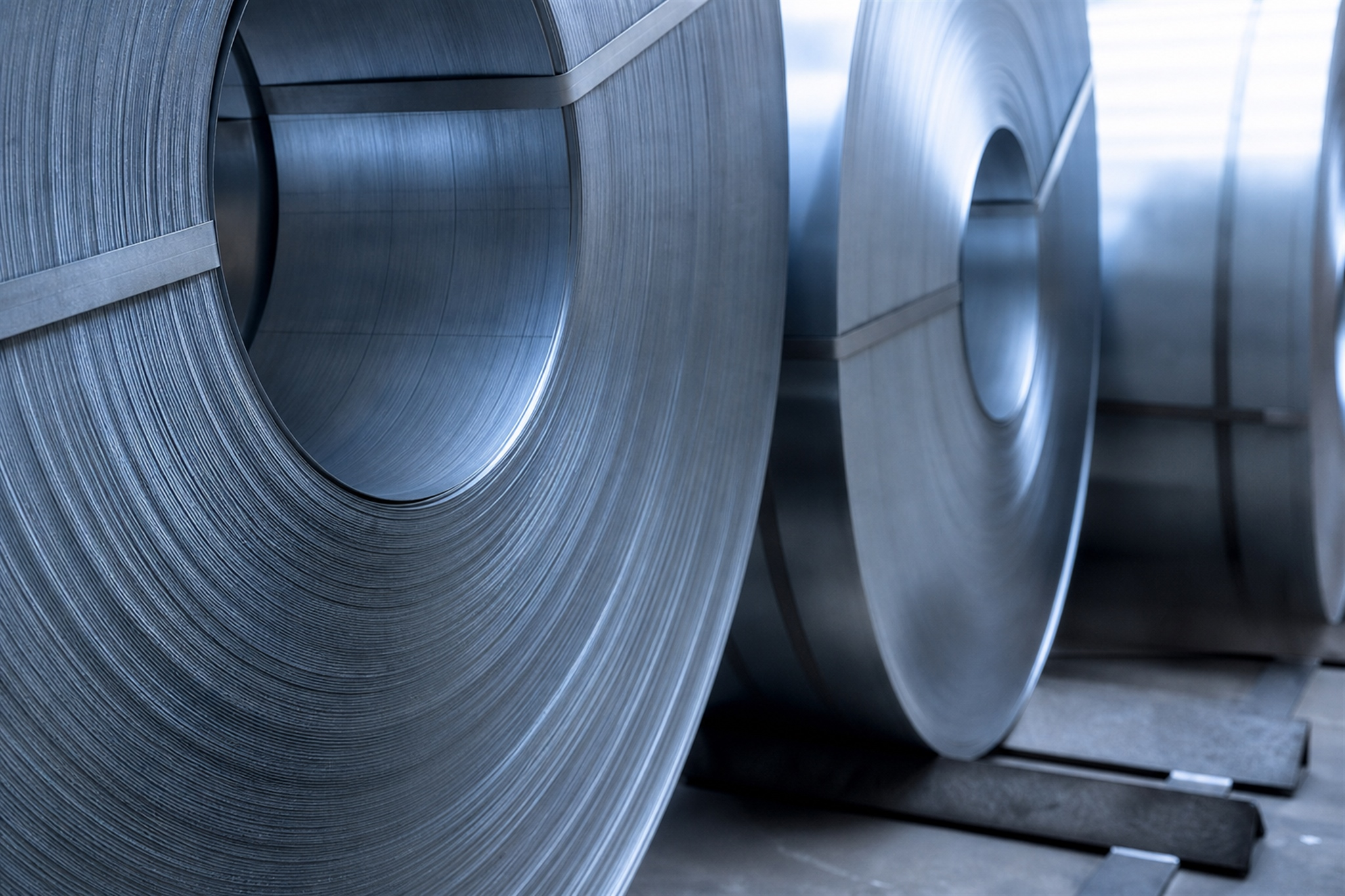
Within the industrial-purity titanium system, Gr4 titanium foil is the thin strip material with the highest strength grade. Compared with Gr1 and Gr2, it offers a significant advantage in tensile strength (≥550 MPa) and yield strength (≥480 MPa, with a typical range of 480–655 MPa), while retaining commercial-purity titanium’s good corrosion resistance in oxidizing and chloride-bearing media and its non-magnetic character. Thickness covers 0.02–1.0 mm, width reaches 680 mm, and density is only 4.51 g/cm³, about 60% of steel. This combination of high strength, light weight, and good corrosion resistance is attracting growing attention in aerospace, chemical process equipment, new-energy batteries, and precision electronics. This article provides a systematic reference for procurement engineers and technical decision-makers across four dimensions: material properties, typical applications, manufacturing processes, and selection considerations.
Cluster link: For the grade-level overview, see Grade 4 titanium overview.
1. Why Is Gr4 Titanium Foil Unique Among the Commercial-Purity Titanium Grades?
Understanding the value of Gr4 titanium foil must begin with the material itself. Commercial-purity titanium is divided into several grades according to impurity content (mainly oxygen, iron, and nitrogen); the higher the impurity content, the greater the strength and the lower the ductility. Gr4 exploits this relationship to push strength to the upper level of industrial-purity titanium while preserving the fundamental characteristics of the metal.
(1) Mechanical Properties: A Balance Between High Strength and Moderate Ductility
Property | Gr1 | Gr2 | Gr4 |
Tensile strength | ≥240 MPa | ≥345 MPa | ≥550 MPa |
Yield strength | 170–310 MPa | 275–450 MPa | ≥480 MPa; typical range 480–655 MPa |
Elongation | ≥24% | ≥20% | ≥15% |
Note: The lower limit of Gr4 yield strength in the table follows the commonly quoted ASTM B265 Grade 4 value; the upper limit is a common typical value and is not a mandatory standard range. The Gr1 lower limit is compiled from the commonly used ASTM B265 Gr1 minimum of about 170 MPa [1].
The tensile strength of Gr4 is about 60% higher than that of Gr2, approaching the level of certain low-alloy titanium alloys yet at significantly lower cost. An elongation of ≥15% means it can still withstand a certain degree of stamping and bending without application restrictions caused by brittle cracking.
(2) Physical Properties: Combined Advantages of Light Weight, Non-Magnetic Behavior, and Heat Resistance
Gr4 titanium foil has a density of 4.51 g/cm³ and is more than 40% lighter than stainless steel of equivalent strength. Its melting point is approximately 1668℃. The common long-term continuous service temperature limit for industrial-purity titanium is about 300℃ (slightly higher for short-time or intermittent duty). Room-temperature electrical resistivity is approximately 42–55 μΩ·cm [3], and the material is non-magnetic. These properties give it a natural competitive advantage in precision sensor encapsulation, load-bearing medical device components, and electromagnetic-compatibility-sensitive applications, where the non-magnetic requirement can be met without additional treatment.
(3) Corrosion Resistance: Long-Term Stability in Compatible Media
The surface of Gr4 titanium foil spontaneously forms a dense oxide film (TiO₂) in air, providing generally good corrosion resistance in seawater, salt spray, chloride-bearing media, and oxidizing acids such as nitric acid. In reducing acids such as hydrochloric and sulfuric acid, however, good corrosion resistance is typically achievable only under specific conditions—for example, at lower concentrations and temperatures or in the presence of oxidizing agents or anodic polarization [4]. In oxidizing/chloride-bearing service where chloride ion concentrations are high and pH fluctuates sharply, the corrosion rate of Gr4 is generally far lower than that of 304/316L stainless steel, making it a common candidate for chemical-process linings and marine structural materials.
2. Main Application Fields of Gr4 Titanium Foil: Industry Coverage Under High-Strength Requirements
The unique properties of Gr4 titanium foil enable it to perform critical structural and functional roles in multiple high-end industries. The following summarizes its core application logic from an industry perspective.
Industry | Typical applications | Core requirements |
Aerospace | Honeycomb core material, thin-wall sealing gaskets, lightweight structural parts | High strength + lightweight |
Chemical processing | Electrolytic cell anode foil, corrosion-resistant structural linings | Corrosion resistance + high strength |
New energy/battery | Current collectors, tab systems, flexible shielding materials | Stable conductivity + ultra-thin, wide foil |
Marine engineering | Desalination modules, marine sensing electrodes | Salt-spray resistance + long service life |
Precision manufacturing | Weld strip, connecting materials, high-precision structural support layers | Dimensional accuracy + batch consistency |
(1) Aerospace: A High-Strength Load-Bearing Material in Lightweight Structures
Aerospace imposes extremely demanding requirements on specific strength (strength/density). Gr4 titanium foil can be used in large-area honeycomb core structures, thin-wall sealing gaskets, and cabin connection components. Its tensile strength of above 550 MPa, combined with a low density of 4.51 g/cm³, enables the dual objectives of structural weight reduction and safety margin while meeting the material standard requirements of ASTM B265 Gr4.
(2) Chemical Processing and Marine Engineering: A Candidate Material for Titanium-Compatible Corrosive Media
Anode foils in electrolytic cells operating for extended periods at high current density in specific oxidizing/chloride-bearing acid electrolytes (concentration, temperature, and load must be verified against actual service conditions) require simultaneously high strength and corrosion resistance. Gr4 titanium foil delivers markedly better service life in such titanium-compatible environments than ordinary stainless steel, and also outperforms Gr1/Gr2, whose strength is insufficient. Marine sensing electrodes and deep-sea structural components likewise benefit from its stable chemical behavior under high-salinity, high-pressure conditions.
(3) New Energy and Electronics: Functional Expansion Enabled by Ultra-Thin, Wide Foil
Battery tabs and current collectors require uniform material thickness, high surface cleanliness, and stable electrical conductivity consistency. Wide Gr4 titanium foil (up to 680 mm) covers the one-piece processing requirements of large modules, with thickness down to 0.02 mm; combined with a high-cleanliness surface (surface dyne value ≥40 mN/m), it satisfies the stringent requirements of precision electrode systems.
3. Analysis of Gr4 Titanium Foil Manufacturing Processes: Where Does the Precision Come From?
(1) Multipass Precision Cold Rolling on a 20-High Mill: The Key to Thickness Accuracy
A 750 mm 20-high precision rolling mill is used, with a maximum rolling speed of 400 m/min and a maximum rolling force of 3500 kN. By distributing the rolling force across multiple sets of backup rolls, the 20-high configuration effectively suppresses roll deflection, ensuring a high level of thickness uniformity for ultra-thin strip during high-strength rolling: for thin-gauge titanium foil (for example, the 0.02–0.10 mm range), uniformity on the order of ±0.001 mm can be achieved, while thicker gauges should be governed by the applicable standard or mutually agreed specification. This is a level of precision that conventional four-high or six-high mills cannot practically attain.
(2) Seven-Zone Electrically Heated Continuous Annealing: The Key to Microstructure Uniformity and Property Stability
Annealing parameter | Technical specification |
Number of heating zones | 7 zones, independently controlled |
Maximum equipment operating temperature | 1100℃ (equipment capability) |
Actual Gr4 annealing temperature | Approx. 650–760℃ |
Control-point accuracy | ±2℃ (control thermocouple) |
Strip temperature uniformity | To be verified for each gauge; in engineering practice typically controlled within ±5℃ |
Operating mode | Continuous, non-stop annealing |
Continuous annealing removes the residual stresses accumulated during cold rolling, restores ductility, and ensures uniform microstructure throughout the coil. It should be noted that the ±2℃ in the table refers to the control-point accuracy of the heating zones; the actual temperature uniformity of continuously annealed strip is affected by gauge and line speed and is typically controlled within ±5℃ on an engineering basis, subject to verification for the specific gauge [3].
(3) High-Precision Slitting and Surface Treatment: Achieving Final Specifications and Functional Surfaces
The slitting line can handle strip in the 0.02–1.0 mm thickness range, with width tolerance controlled to within ±0.1 mm. The ultrasonic cleaning line removes oil and particulate contamination, providing the foundation for downstream surface quality; achieving a surface dyne value of ≥40 mN/m (40 dyn/cm) also requires degreasing, surface treatment, and inspection. The grinding line improves surface uniformity and texture consistency, providing a reliable process foundation for both bright-finish and matte-finish product forms.
4. Gr4 Titanium Foil Buying Guide: How to Evaluate Suppliers and Product Quality?
(1) Key Technical Parameter Verification Checklist
Before sending an inquiry or initiating technical discussions, it is recommended to clearly define the following parameter ranges:
- Thickness and tolerance: standard range 0.02–1.0 mm; tolerance should be agreed by thickness range—thin gauges can achieve on the order of ±0.001 mm, while thicker gauges follow the applicable standard/agreement
- Width and slitting accuracy: maximum 680 mm, slitting tolerance ±0.1 mm
- Mechanical properties: tensile strength ≥550 MPa, yield strength ≥480 MPa (common typical range 480–655 MPa), elongation ≥15%
- Chemical composition: Ti: balance; Fe ≤0.50%; O ≤0.40%; N ≤0.05%; C ≤0.08%; H ≤0.015%; other residual elements controlled in accordance with ASTM B265 and GB/T 3620.1 [2]
- Delivery condition: annealed (M) or cold-worked (Y), selected according to the subsequent processing steps
- International standards: ASTM B265 Gr4 / JIS H4600 Class 4 / GB/T 3621 TA4 (for reference)
(2) Supplier Capability Assessment Dimensions
Price comparison alone often leads to hidden costs such as batch-to-batch instability and large dimensional deviations. The following dimensions help identify suppliers that are truly capable of high-end delivery:
Equipment: whether equipped with a 20-high precision rolling mill (≥18-high as the benchmark), whether the control-point accuracy of the continuous annealing line reaches ±2℃ and the strip/furnace temperature uniformity is within ±5℃ (to be verified for specific gauges), and whether the ultrasonic cleaning line can verify surface cleanliness.
Certification: whether valid material standard compliance/mill test reports and mechanical property test reports are held, and whether a complete quality traceability system is in place.
(3) Gr4 vs. Gr2: When Is It Worth Paying a Premium for Higher Strength?
Decision factor | Choose Gr2 | Choose Gr4 |
Load level | Low-to-moderate-strength structures | Moderate-to-high-strength structural parts |
Corrosive environment | General corrosive media | Titanium-compatible corrosive media combined with moderate-to-high loads |
Forming complexity | Deep drawing, complex bending | Moderate stamping, bending |
Weight-reduction requirement | General | Strict lightweight targets |
Fatigue life requirement | Standard | Long-term cyclic load service |
When structural components face both titanium-compatible corrosive media and moderate-to-high loads, the strength reserve and corrosion stability of Gr4 titanium foil can significantly extend equipment service life, with overall cost often below that of schemes requiring frequent replacement of Gr2 components.
5. Conclusion
Gr4 titanium foil exhibits an outstandingly high strength grade within the industrial-purity titanium system and is one of the preferred candidate materials for complex service combining corrosion with moderate-to-high loads in titanium-compatible media. From lightweight aerospace structural parts to corrosion-resistant linings in chemical equipment, from precision electrode sheets in new-energy batteries to sensor electrodes in marine engineering, its application boundaries continue to expand. When loads exceed its strength limit or the environment is unsuitable (e.g., strong reducing acids), titanium alloys or other materials should be evaluated. The key to rational selection is matching the actual service conditions and verifying supplier equipment and standard-conformance capability, rather than pursuing the lowest price alone.
FAQ
(1) Q1: What Are the Main Differences Between Gr4 Titanium Foil and Titanium Alloys Such as Ti-6Al-4V?
Gr4 is an industrial-purity titanium that contains no alloying elements; titanium is present as the balance, and processing cost is typically lower than for Ti-6Al-4V. Ti-6Al-4V offers higher strength (≥895 MPa) and suits extremely high load-bearing applications. Gr4 generally provides good corrosion resistance in most low-to-moderate-temperature corrosive environments involving oxidizing/chloride-bearing media, but it is not superior to Ti-6Al-4V in every medium, so evaluation should be based on the specific service conditions.
(2) Q2: Can Gr4 Titanium Foil Be Welded, and What Should Be Considered During Welding?
Gr4 titanium foil can be welded, and the TIG (tungsten inert gas) process is recommended; the weld area must be shielded by argon to prevent high-temperature oxidation. Compositional matching between the base metal and filler metal (typically Gr4 or Gr2 filler wire) is critical to weld strength and corrosion resistance, and a post-weld stress-relief anneal is recommended.
(3) Q3: When Purchasing Gr4 Titanium Foil, How Can Conformance with ASTM B265 Be Verified?
Require the supplier to provide a mill certificate issued by the manufacturer, covering chemical composition (including measured values of Ti, Fe, O, N, C, and H), mechanical properties (tensile strength, yield strength, elongation), and heat/lot traceability information. Where conditions permit, a receiving inspection can be commissioned to organizations such as SGS or TÜV, with test reports issued by the third party.
6. Purchasing Support and Supplier Liaison
Please contact: sales@titaniumvalleys.com
References
- National Technical Committee on Nonferrous Metals Standardization. GB/T 3621-2022 Titanium and titanium alloy plates and sheets [S]. Beijing: Standards Press of China, 2022.
- National Technical Committee on Nonferrous Metals Standardization. GB/T 3620.1-2016 Designation and chemical composition of titanium and titanium alloys [S]. Beijing: Standards Press of China, 2016.
- Huang Boyun, Li Chenggong, Shi Likai, et al. China Materials Engineering Canon, Vol. 4: Nonferrous Metal Materials Engineering (Part 1) [M]. Beijing: Chemical Industry Press, 2006.
- Zhang Xiyan, Zhao Yongqing, Bai Chenguang, et al. Titanium Alloys and Applications [M]. Beijing: Chemical Industry Press, 2005.
Published by: Titanium Valleys
Technical review: General Manager of the Production Department
Quality review: Quality Inspection Department
Last reviewed: October 20, 2026