
What Are the Key Characteristics of Gr12 Titanium Bars?
- Gr12 Titanium Bars
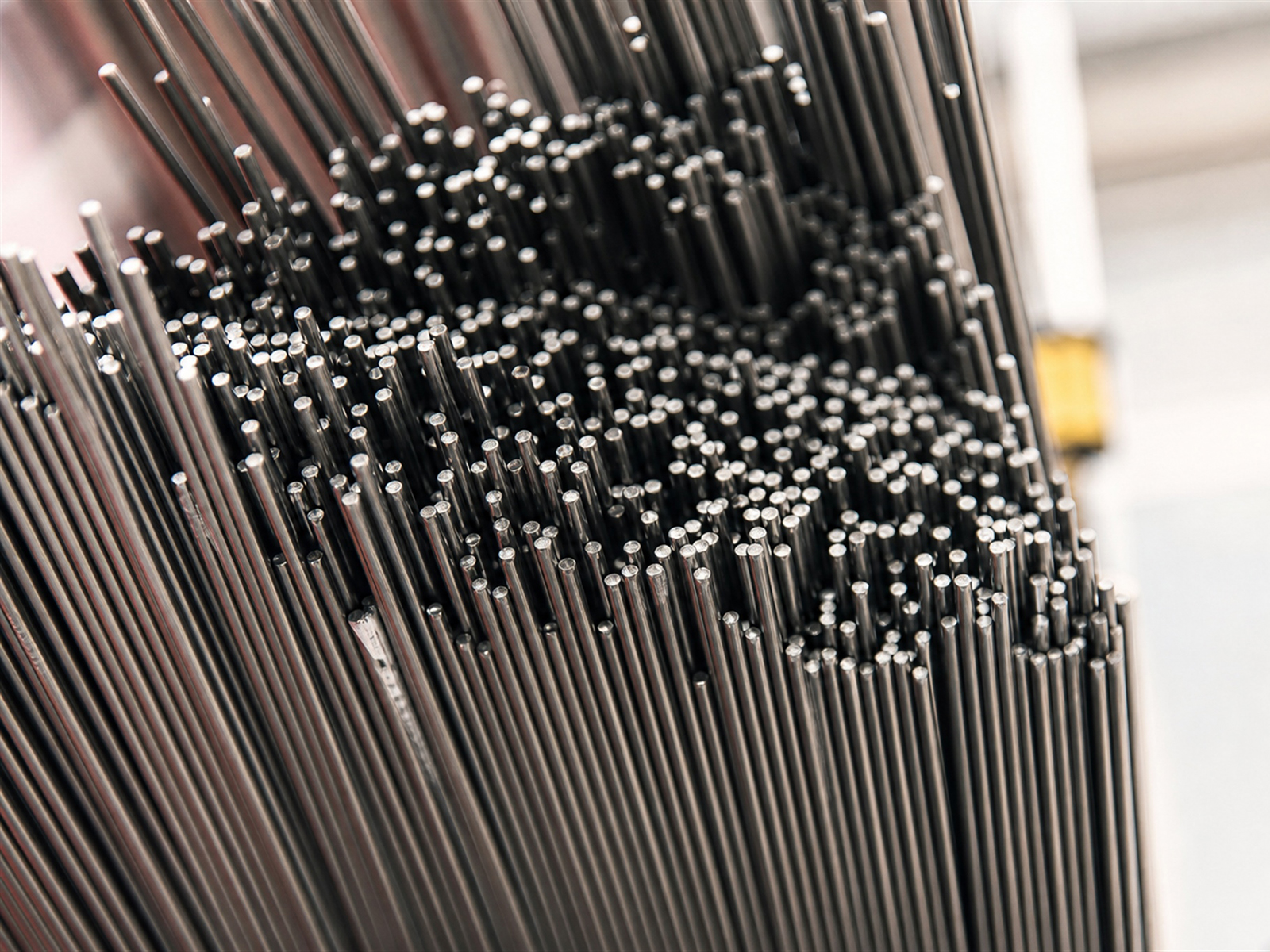
Gr12 titanium bars (Ti-0.3Mo-0.8Ni, UNS R53400) constitute a near-alpha corrosion-resistant titanium alloy bar. Through the addition of trace molybdenum (Mo) and nickel (Ni), they retain the lightweight properties of commercially pure titanium while improving resistance to localized corrosion in chloride-containing neutral or mildly acidic media and exhibiting a certain tolerance to low-concentration reducing acids. Compared with commercially pure titanium, their room-temperature strength is higher, while good weldability and machinability are maintained. In corrosive service conditions such as chemical processing, seawater desalination, environmental desulfurization, and energy equipment, Gr12 titanium bars can be considered a candidate replacement for stainless steel or commercially pure titanium; however, material selection must weigh the medium type, concentration, temperature, pressure, and cost comprehensively.
1. Corrosion Resistance Characteristics of Gr12 Titanium Bars
(1) Pitting and Crevice Corrosion Resistance
Gr12 titanium bars contain 0.20%–0.40% molybdenum. The role of molybdenum is generally considered to be improving the stability of the passive film in chloride-containing media and reducing susceptibility to pitting and crevice corrosion, rather than simply increasing the density of the oxide film. Compared with commercially pure titanium grades Gr1 and Gr2, Gr12 typically exhibits better pitting and crevice corrosion resistance in seawater, chloride solutions, and high-chloride chemical media. This advantage leads to its frequent use in bar-type components such as marine fasteners, pump shafts, and chemical connecting parts.
(2) Improved Corrosion Resistance in Reducing Acids
The nickel content (0.60%–0.90%) gives Gr12 a certain level of corrosion resistance in reducing acid environments such as low-concentration sulfuric acid and hydrochloric acid from room temperature to moderate temperature. In reducing media, commercially pure titanium may corrode rapidly because its surface passive film is destroyed; the presence of nickel in Gr12 may alter surface electrochemical behavior or promote passivation, although the specific mechanism depends on concentration, temperature, and medium flow conditions. Accordingly, this alloy is more suitable for pickling equipment, electrolytic cells, reactor vessel connecting parts, and fasteners in dilute acid, low-temperature, or moderate-temperature service, and should not be promoted for strong reducing acid environments at arbitrary concentrations.
(3) Uniform Corrosion and Long-Term Stability
In moderately low-concentration sulfuric acid, hydrochloric acid, and chloride-containing solutions at intermediate temperatures, Gr12 titanium bars can typically maintain low corrosion rates, reducing wall thinning and material loss. However, the actual corrosion rate is affected by medium concentration, temperature, flow velocity, pH, and impurities, and should be confirmed through corrosion testing or on-site coupon data. Material life also depends on design, stress level, and maintenance.
Corrosion Type | Commercially Pure Titanium (Gr2) | Gr12 Titanium Bar | 316L Stainless Steel |
Pitting Resistance | Moderate | Good | Fair |
Crevice Corrosion Resistance | Moderate | Good | Poor (high-chloride environments) |
Resistance to Reducing Acids | Weak | Moderate (limited to low concentration/low temperature) | Generally not resistant to reducing acids such as hydrochloric acid |
Uniform Corrosion in Chlorides | Good | Good | Moderate (high localized corrosion risk) |
2. Mechanical Properties and Processing Suitability of Gr12 Titanium Bars
(1) Higher Strength Than Commercially Pure Titanium With Good Ductility
The room-temperature tensile properties of Gr12 titanium bars typically satisfy, per standard: tensile strength of not less than 483 MPa, yield strength of not less than 345 MPa, and elongation of not less than 18%. “Not less than” denotes the minimum value specified by the standard, and actual typical values may be higher. Compared with Gr2 commercially pure titanium, Gr12 offers higher strength while retaining a certain amount of plasticity. It can be used to manufacture components under moderate loads such as fasteners, shafts, and connecting parts. If used in pressure-bearing structural components, fatigue performance, impact toughness, fracture toughness, and applicable design codes must also be evaluated; tensile properties alone are insufficient to support material selection.
(2) Controllable Machinability
Compared with high-strength titanium alloys such as Ti-6Al-4V, Gr12 has moderate hardness, lower cutting forces, and relatively slower tool wear. In conventional operations such as turning, milling, and drilling, dimensional accuracy is easier to control. However, actual machining quality is also influenced by tool selection, cutting fluid, cutting parameters, and fixture rigidity; process validation is recommended before batch production.
(3) Hydrogen Embrittlement Resistance and Service Conditions
Whether titanium alloys undergo hydrogen embrittlement in hydrogen-containing media depends on the surface oxide film state, temperature, pH, hydrogen partial pressure, and stress level. The presence of nickel in Gr12 may indirectly reduce hydrogen absorption risk by affecting the surface hydrogen evolution reaction or the passive film characteristics, but it should not be overstated as a standalone hydrogen permeation inhibitor. For pickling, hydrogenation, and cathodic protection service, hydrogen embrittlement safety should still be confirmed through material testing and operating monitoring.
3. Intermediate-Temperature Stability, Weldability, and Heat Treatment Characteristics of Gr12 Titanium Bars
(1) Stability at Intermediate Temperatures
Within the intermediate temperature range (typically ≤315℃), the microstructure of Gr12 titanium bars is relatively stable, with no significant phase transformation or rapid oxidation. Under long-term high-temperature exposure, surface oxidation and property degradation of titanium alloys may still depend on temperature, time, and atmosphere; this temperature limit is therefore primarily an empirical upper bound, and specific applications should reference the design temperature and service-life requirements. Within this range, Gr12 can be used for components such as heat exchanger tube sheets, evaporator supports, and connecting parts that serve in corrosive fluids at intermediate temperatures.
(2) Welding Performance
Gr12 titanium bars can be joined using inert-gas-shielded welding processes such as TIG. With adequate argon shielding, clean groove preparation, and proper back shielding, weld joints are relatively uniform, heat-affected zone property degradation is limited, and weld-to-base-metal compatibility is good. Welding quality is highly dependent on shielding gas practice and welder technique, and must be confirmed through welding procedure qualification and joint non-destructive examination.
(3) Annealed Condition and Heat Treatment Processes
The standard delivery condition of Gr12 titanium bars is typically annealed (Annealed / M Condition). Annealing may be performed in vacuum or an inert atmosphere to relieve processing stresses and homogenize the microstructure. Vacuum annealing is not the only option, but it offers advantages in avoiding surface oxidation and hydrogen contamination. A properly designed annealing schedule helps stabilize mechanical properties and reduce batch-to-batch variation.
Property | Gr12 Titanium Bar (Annealed) | Gr2 Commercially Pure Titanium | Ti-6Al-4V |
Tensile Strength (MPa) | ≥483 | ≥345 | ≥895 |
Yield Strength (MPa) | ≥345 | ≥275 | ≥828 |
Elongation (%) | ≥18 | ≥20 | ≥10 |
Weldability | Good | Good | Fair (requires strict shielding and process control) |
Machinability | Low to Medium | Low | High |
Note: The values in the table are common minimum requirements or typical ranges from standards such as ASTM/GB/T; actual values are governed by the specific standard edition and measured product data.
4. Chemical Composition System and Quality Control Points for Gr12 Titanium Bars
(1) Chemical Composition Control
The chemical composition of Gr12 titanium bars is: Mo 0.20%–0.40%, Ni 0.60%–0.90%, Fe≤0.30%, O≤0.25%, C≤0.08%, N≤0.03%, H≤0.015%, balance titanium. In addition, residual elements typically total ≤0.40%, with individual residual elements ≤0.10%. Upper-limit control of interstitial elements such as oxygen, nitrogen, and hydrogen has a significant effect on plasticity and hydrogen embrittlement susceptibility, making it a key quality control focus.
(2) Production Process and Non-Destructive Testing
The production route generally includes: raw material/electrode preparation → vacuum arc remelting (VAR) → forging or hot rolling/drawing → annealing → finishing → non-destructive testing → inspection and warehousing. Bar forming may use hot forging, hot rolling, or drawing, rather than being described generally as “rolled forming.” Non-destructive testing typically uses ultrasonic testing (UT) or eddy current testing (ET); the specific method and acceptance levels are executed per ASTM B348, GB/T 2965, or as agreed between the parties.
(3) Test Reports and Traceability
Each batch of Gr12 titanium bars should be supplied with a material test certificate (MTC) including chemical composition, tensile properties, hardness, non-destructive testing results, and dimensional records. These data serve to meet standard delivery requirements and customer acceptance, support batch traceability, and reduce the risk of nonconforming material entering a project.
5. Primary Application Scenarios and Industry Value of Gr12 Titanium Bars
(1) Acid-Resistant Components in Chemical and Petrochemical Applications
In service conditions such as low-concentration sulfuric acid, low-concentration hydrochloric acid, or chloride-containing chemical media, Gr12 titanium bars can be used for bar-type components such as heat exchanger tube sheets, pump shafts, valve stems, agitator shafts, and fasteners. Compared with 316L stainless steel, they pose a lower risk of pitting and crevice corrosion in high-chloride environments; however, they are not necessarily suitable for strongly reducing acid environments such as hot, concentrated hydrochloric acid. Reactor linings typically use titanium sheet or titanium-clad plate, while bars are mainly used for connecting parts and load-bearing components.
(2) Marine Engineering and Seawater Desalination
Gr12 titanium bars exhibit good crevice corrosion and pitting resistance in seawater and can be used for bar-type components such as seawater condenser channel head and flange fasteners, pump shafts, and valve stems. Seawater pipelines themselves mostly use titanium pipe or clad pipe. Under high chloride content, microbial attachment, and wet-dry cyclic conditions, Gr12 can maintain a relatively stable surface condition, but long-term performance should still be confirmed through actual operation or coupon data.
(3) Energy, Environmental Protection, and Precision Manufacturing
In nuclear power plant heat-exchange systems, flue gas desulfurization (FGD) units, wastewater treatment equipment, and precision instrument components, Gr12 titanium bars can be selectively used in intermediate-temperature, corrosive-media, or high-humidity environments. The applicable temperature is generally limited to about 315℃ or below, and the specific components should clearly define service temperature and medium conditions. For nuclear and energy applications, selection should follow specific equipment codes, material permits, and operating boundaries, and should not be generalized as “high-temperature components.”
Industry | Typical Applications | Key Requirement Match |
Chemical/Petrochemical | Pump shafts, valve stems, fasteners, tube sheets | Chloride corrosion resistance; low-concentration reducing acids |
Marine Engineering | Flange fasteners, pump shafts, valve stems | Crevice corrosion resistance; seawater resistance |
Nuclear/Energy | Intermediate-temperature heat exchanger fittings | Intermediate-temperature stability; weldability |
Environmental Equipment | FGD tower fittings, wastewater treatment components | Resistance to complex acid/alkali media |
Precision Manufacturing | Instrument parts, precision structural components | Machining accuracy; property consistency |
6. Conclusion
Gr12 titanium bars, built on the Ti-0.3Mo-0.8Ni alloy system, offer good overall performance in chloride-containing media, low-concentration reducing acids, and intermediate-temperature service. Their practical value must be verified against medium concentration, temperature, pressure, cost, and manufacturing process. They are a bar material worth considering under specific demanding conditions rather than a universal replacement for all corrosive environments.
FAQ
(1) Q1: How much greater is the corrosion resistance of Gr12 titanium bars compared with Gr2 commercially pure titanium?
Through the addition of molybdenum and nickel, Gr12 is generally superior to Gr2 in chloride-containing media and low-concentration reducing acid environments. However, the degree of improvement must be evaluated through corrosion testing for the specific medium, concentration, temperature, and flow velocity, and cannot be stated as a blanket figure.
(2) Q2: Is Gr12 titanium bar suitable for long-term service in seawater environments?
In seawater, Gr12 generally exhibits good resistance to pitting and crevice corrosion. This is mainly attributed to titanium’s own passive film and molybdenum’s suppression of localized corrosion; nickel is not a key alloying element for seawater corrosion resistance. Gr12 can be used for bar-type components in seawater systems, but long-term performance must be evaluated in conjunction with the design and actual operating conditions.
(3) Q3: How do you determine whether batch quality is consistent when purchasing Gr12 titanium bars?
Request a complete material test certificate (MTC) from the supplier, verify the chemical composition of Mo, Ni, O, H, N, and other elements, and review mechanical property and non-destructive testing reports to confirm compliance with ASTM B348 or GB/T 2965 and similar standards, while understanding the melting batch, heat treatment batch, and traceability system.
Contact Us
Looking for a reliable Gr12 titanium bar manufacturer, supplier, or processing plant? Titanium Valley (Baoji Titanium Valley Nickel Zirconium Material Precision Processing Co., Ltd.) operates dedicated titanium alloy bar and wire production lines, offering custom sizes, standard delivery conditions, and complete quality inspection reports. Contact us at: sales@titaniumvalleys.com
References
- National Technical Committee on Nonferrous Metals Standardization. GB/T 3620.1—2016 Designation and chemical composition of titanium and titanium alloys [S]. Beijing: China Standards Press, 2016.
- National Technical Committee on Nonferrous Metals Standardization. GB/T 2965—2018 Titanium and titanium alloy bars and forging billets [S]. Beijing: China Standards Press, 2018.
- Zhang Xiyan, Zhao Yongqing, Bai Chenguang. Titanium Alloys and Their Applications [M]. Beijing: Chemical Industry Press, 2005.
- Huang Boyun, Li Chenggong, Shi Likai, et al. China Materials Engineering Canon, Volume 4: Nonferrous Metals Materials Engineering [M]. Beijing: Chemical Industry Press, 2006.
- Li Xianjun, Zhang Qidong, Wang Jianhua. Application of Titanium in the Chemical Industry [J]. Titanium Industry Progress, 2003, 20(5): 36-40.
- Gao Zeng, Niu Jitai, Cheng Donghai, et al. Research Progress on Hydrogen Embrittlement Susceptibility of Titanium Alloys [J]. Materials Reports, 2014, 28(5): 117-121.