
What Are the Characteristics of Gr2 Titanium Wire: Strength, Flexibility, and Corrosion Resistance?
- Gr2 Titanium Wire
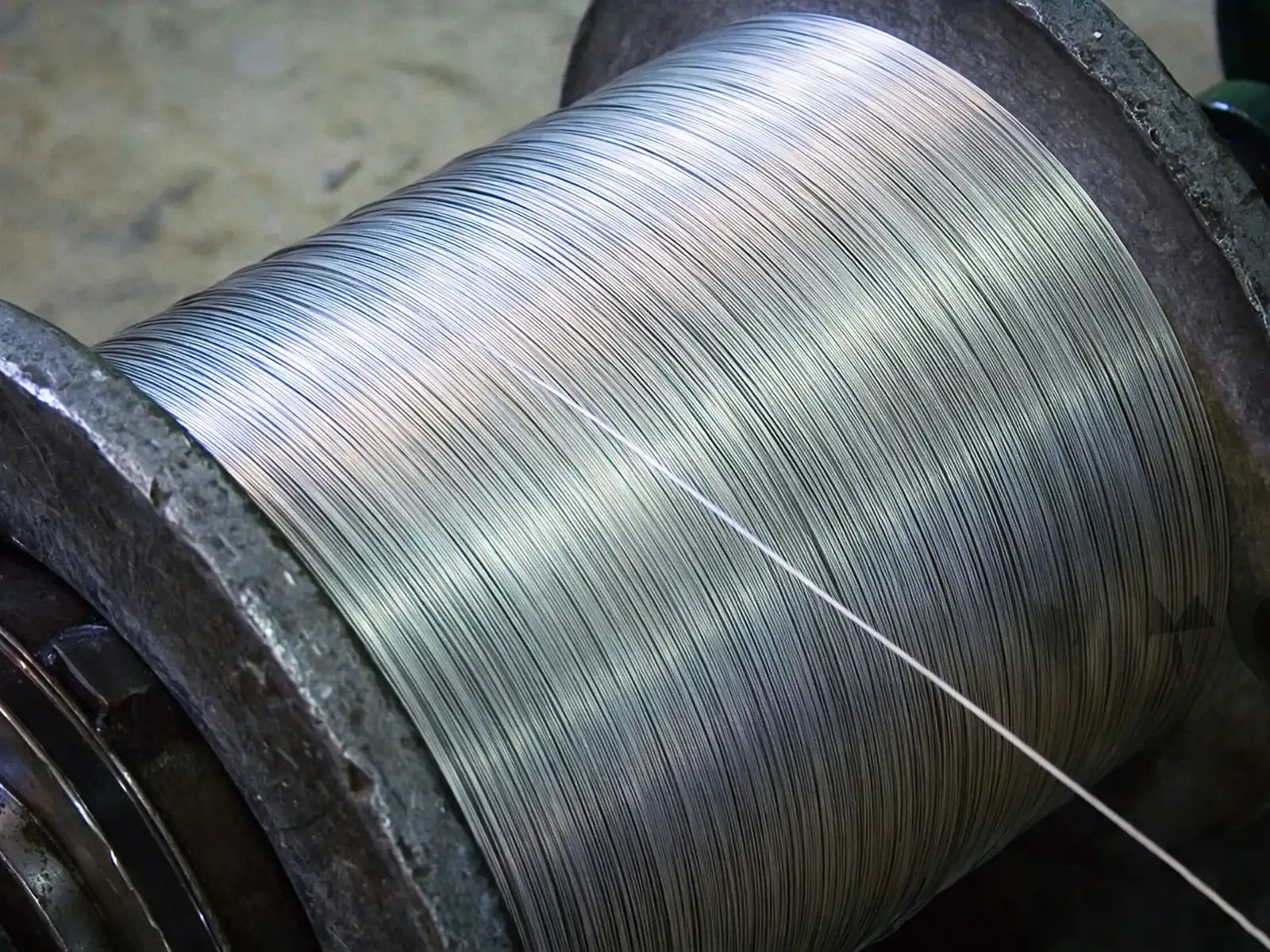
In industrial material selection, Gr2 titanium wire (Grade 2 Titanium Wire) is one of the most widely used commercially pure titanium wire products. Per standards such as ASTM B863 Gr2 / GB/T 3620.1 TA2, its nominal titanium content is generally not less than 99.2%, with the actual chemical composition governed by the applicable standard. Gr2 titanium wire achieves a well-balanced combination of tensile strength, ductility and formability, and corrosion resistance. Compared with Grade 1, it offers higher strength; compared with Grade 4, it retains better plasticity and weldability. It is therefore frequently regarded as a candidate material with stable overall performance in the chemical, marine, medical, and electronics industries.
1. Mechanical Strength of Gr2 Titanium Wire: Standards, Conditions, and Engineering Significance
(1) Strength Ranges in Three Conditions
Heat Treatment Condition | Tensile Strength (MPa) | Yield Strength (MPa) | Elongation (%) | Hardness HV | Applicable Scenarios |
Annealed (M) | 400–500 | 275–420 | 15–20 | 140–200 | Secondary forming, welding, winding |
Half-hard (Y2) | 480–620 | 300–480 | 8–12 | 180–240 | Fasteners, load-bearing structural components |
Hard (Y) | 550–750 | 450–650 | 5–8 | 220–300 | High-strength elastic components, wear applications |
Note: The data in the table are typical values for common industrial products. Actual delivery properties must be determined per standards such as GB/T 3623 and ASTM B863, in combination with wire diameter and agreement between the supplier and the customer. Annealed elongation may be higher in fine-gauge wire, and the table lower limits should not be used as the sole material-selection constraint.
(2) Effect of Cold Drawing on Strength
Taking roller-die cold drawing as an example, as the deformation per pass increases, grains elongate or become fibrous along the drawing direction, dislocation density rises, and work hardening is introduced, increasing strength and the yield-to-tensile ratio. Intermediate annealing is subsequently applied to eliminate work hardening and restore plasticity. For parts subjected to shear or torsion, such as fasteners and elastic elements, this microstructure control helps improve shear and fatigue resistance, but the degree of improvement must be quantified against pass reduction and the final heat treatment condition, rather than being asserted simply as “improved shear resistance.”
(3) Straightness Control for Automatic Welding Wire Feed Sizes
Using common automatic welding wire-feed sizes such as φ1.2 mm as the baseline, the straightness tolerance is controlled within 2‰, meaning that the bending sagitta does not exceed 2 mm over a reference length of 1000 mm. Excessive straightness deviation affects the wire-feeding stability at the gun contact tip, causing weld pool fluctuation and degraded weld quality. Therefore, for Gr2 titanium wire used in automatic wire feeding, straightness control affects welding consistency more than diameter tolerance alone.
2. Flexibility of Gr2 Titanium Wire and Ultra-Fine Diameter Forming
(1) Forming Capability of Ultra-Fine Diameter Products
Diameter Size | Typical Application Fields | Forming Challenges |
φ0.1 mm | Precision instruments, medical implants | Wire-break risk, tolerance uniformity |
φ0.2 mm | Sensor leads, electronic shielding | Surface oxide layer control |
φ0.3–0.4 mm | Eyewear frame elastic hinges | Bending springback control |
φ0.5–1.0 mm | Dental restorations, surgical instruments | Biocompatibility and surface cleanliness |
The stable forming of Gr2 titanium wire at the φ0.1 mm size results primarily from the combined effects of billet microstructure uniformity, multi-pass cold drawing, intermediate annealing, die precision, and lubrication practice, rather than from vacuum melting alone. Vacuum melting provides only the basis of the initial billet microstructure; the subsequent drawing and annealing steps have a more direct influence on ultra-fine wire quality.
(2) Design Logic of Intermediate Annealing
During cold drawing, each pass increases dislocation density and produces work hardening. Intermediate annealing is arranged between critical passes primarily to eliminate work hardening, restore plasticity, and control residual stress, preventing embrittlement or fracture in subsequent drawing. This process design helps the wire retain sufficient plasticity reserve while maintaining dimensional accuracy, meeting the requirements of secondary precision processing.
(3) Bending Radius and Springback Control for Coiled Wire
When coil wire is unwound on automated production lines, the amount of bending springback directly affects feeding accuracy. Owing to its relatively stable elastic modulus and uniform cross-section roundness, Gr2 titanium wire exhibits predictable and highly repeatable springback behavior. Taking the φ6.5 mm product as an example, ovality is controlled within 0.15%–0.20% of the nominal diameter, better than the approximately 0.3% level commonly seen in the market, helping to reduce feed deviation in precision equipment.
3. Corrosion Resistance Mechanism and Boundary Conditions of Gr2 Titanium Wire
(1) Self-Healing Mechanism of the Passive Film
Corrosive Environment | Gr2 Titanium Wire Performance | 304 Stainless Steel Performance |
Seawater/salt spray | Surface passivation; good long-term resistance to chloride-ion corrosion | Pitting may occur relatively early under demanding conditions such as chlorides, crevices, and scratches; actual corrosion time depends on salinity, temperature, flow velocity, and surface condition and cannot be generalized |
Organic acid media | Good tolerance in most organic acids | Varies with acid type, concentration, and temperature; mild corrosion may occur |
Oxidizing acids (e.g., nitric acid) | Stable passive film; good tolerance | Passivable in most oxidizing acids, but sensitized structures may pose intergranular corrosion risk |
Low temperature (-253℃) | No embrittlement | 304 austenitic stainless steel generally retains good low-temperature toughness; low-temperature toughness is not the main difference between the two materials |
When the passive film is locally damaged, titanium can repassivate within a relatively short time at ambient temperature in oxygen-containing or trace-moisture environments; however, the repair rate is influenced by temperature, oxygen content, medium conductivity, and surface condition, and should not be described in absolute “millisecond” terms.
(2) Relationship Between Service Temperature Range and Corrosion Stability
Under long-term operating temperatures of approximately ≤300℃, the passive film of Gr2 titanium wire generally remains stable. Short-term service can tolerate up to about 450℃. Above this temperature, oxidation may accelerate with the risk of localized film thickening or spalling, requiring oxygen-exclusion or protective measures. For chemical heat exchangers, electrolytic cells, and other continuously high-temperature corrosive applications, the temperature boundary should be clearly defined at the design stage to avoid premature material degradation.
(3) Correlation Between Salt Spray Testing and Actual Service Conditions
The 480-hour neutral salt spray test (NSS) is more appropriate as a type test or periodic sampling check than as a per-batch out-of-factory test. Results may be rated per standards such as GB/T 6461, with the absence of obvious pitting, red rust, or mass loss beyond the agreed limit as the determination criteria. These results are useful for horizontal comparison of material corrosion resistance, but cannot be linearly extrapolated to specific equipment life. In coastal chemical or deep-sea equipment, Gr2 titanium wire can typically extend replacement cycles, but design life should be evaluated comprehensively on the basis of actual medium, temperature, flow velocity, design codes, and long-term operating data.
4. Primary Application Scenarios of Gr2 Titanium Wire
(1) Service Conditions in Medical and Aerospace Applications
When Gr2 commercially pure titanium wire is used in surgical implants, dental restorations, and surgical instruments, biocompatibility is typically referenced to the corresponding commercially pure titanium grades in ASTM F67, ISO 5832-2, or GB/T 13810, rather than ASTM F136. ASTM F136 is primarily for Ti-6Al-4V ELI alloy implant material and does not apply to Gr2 commercially pure titanium; this distinction should be made accurately in material-selection documents.
(2) Corrosion-Resistant Fasteners and Elastic Components in Chemical and Marine Engineering
Electrolytic cells, reaction vessels, and heat exchangers in the chemical industry often operate in oxidizing acids, chloride-containing media, or wet-dry cycled environments. Elastic components and fasteners made of Gr2 titanium wire generally offer better chloride-ion corrosion resistance in these environments than 304/316 stainless steel. However, in strongly reducing acids (such as concentrated hydrochloric acid), Gr2 titanium wire cannot simply replace Hastelloy; evaluation must account for concentration, temperature, and other medium factors.
(3) Fine-Diameter Applications in Precision Electronics and the Eyewear/Optics Industries
Ultra-fine Gr2 titanium wire of φ0.1–0.3 mm can be used for sensor leads, high-frequency component shielding, and precision springs. In the eyewear industry, elastic hinges and thin frame rods require high bending fatigue life, springback consistency, and surface quality, for which Gr2 titanium wire can serve as a candidate material. In actual selection, verification should cover surface roughness, straightness, tension, and batch consistency of the wire.
5. Production Process and Quality Control Points for Gr2 Titanium Wire
(1) Precision Advantages of the Continuous Rolling Line
Production uses short-stress continuous rolling mills arranged alternately in horizontal/vertical orientations, equipped with automated control systems to reduce dimensional variation between batches. Taking the φ6.5 mm product as an example, ovality can be controlled within 0.15%–0.20% of the nominal diameter, better than the approximately 0.3% level commonly seen in the market. This control capability helps reduce material loss in downstream drawing and improves finished dimensional consistency.
(2) Full-Process Quality Inspection System
Inspection Item | Inspection Method | Acceptance Criteria |
Chemical composition | Spectrometric analysis (OES) or wet chemical methods | Complies with the corresponding grade per ASTM B863 Gr2 / GB/T 3620.1 TA2 |
Mechanical properties | Tensile and hardness testing | Determined by delivery condition: annealed 400–500 MPa; half-hard 480–620 MPa; hard 550–750 MPa |
Dimensional accuracy | Laser diameter gauge | Controlled in size segments: φ0.1–0.3 mm: ±0.001 mm; φ0.3–1.0 mm: ±0.005 mm; φ1.0–3.0 mm: ±0.01 mm; φ3.0–10.0 mm: ±0.03 mm |
Surface quality | Eddy current testing as primary; ultrasonic testing may supplement for φ3 mm and above | Free of continuous defects such as cracks, laps, and inclusions |
Corrosion resistance verification | Neutral salt spray test (480 h) as a type test or periodic sampling check | Rated per GB/T 6461; no obvious pitting, red rust, or mass loss beyond the agreed limit; not included as a routine per-batch out-of-factory item |
The line has a high overall automation rate, and each batch of delivered product can be supplied with an EN 10204-3.1 material test certificate (MTR) to meet the compliance and traceability requirements of high-end customers.
(3) Custom Processing Capability and Delivery Forms
The diameter range covers φ0.1 mm to φ10 mm, available in both straight rods and coils. Surface processes may include pickling, bright drawing, annealing, and anodizing; final surface conditions may be bright, matte, or anodized colored. The color of anodized titanium is generally determined by the oxide film thickness and typically appears as interference colors; the specific color should be confirmed against an actual color card rather than described with non-typical terms such as “space gray/silver.”
Titanium Valley’s overall titanium and titanium alloy material production capacity exceeds 20, 000 tons/year, including approximately 10, 000 tons/year of commercially pure titanium wire. Large-volume custom orders can be accepted in a single run, and sample validation, standard conformity documents, and batch delivery can be provided per customer requirements.
6. Conclusion
Gr2 titanium wire, based on commercially pure titanium, achieves a well-balanced combination of strength, flexibility, and corrosion resistance. From φ0.1 mm precision wire to conventional structural wire, its primary application value lies in the fact that the annealed condition suits complex forming, cold-worked conditions meet higher strength requirements, and surface self-passivation provides an advantage in oxidizing and chloride-containing environments. Overall, Gr2 titanium wire is suitable for multi-service applications requiring corrosion resistance, formability, and reliability.
FAQ
(1) Q1: What are the main differences between Gr2 and Gr1 titanium wire in terms of strength and applications?
Gr2 titanium wire has a higher tensile strength (approximately 400–500 MPa) than Gr1 (approximately 240–370 MPa), while retaining good ductility. Gr1 is better suited to scenarios with extremely high formability requirements, whereas Gr2 offers a more balanced trade-off between strength and plasticity with broader applicability, making it the more frequently used industrially pure titanium grade.
(2) Q2: How corrosion resistant is Gr2 titanium wire in acidic media, and can it replace Hastelloy?
Gr2 titanium wire performs well in most organic acids, oxidizing acids, and chloride-containing environments, but has limited tolerance to strongly reducing acids (such as concentrated hydrochloric acid). Whether it can replace Hastelloy must be determined on the basis of medium concentration, temperature, flow velocity, and test data; it cannot be substituted simply on the basis of material category.
(3) Q3: How are the wire-break rate and dimensional uniformity ensured for ultra-fine Gr2 titanium wire (e.g., φ0.1 mm)?
Ultra-fine wire requires multi-pass cold drawing, intermediate annealing, die precision, and in-line diameter gauging on the basis of uniform billet microstructure. Taking φ0.1 mm as an example, the diameter tolerance can be controlled within ±0.001 mm, but more critical are the within-batch range, ovality, and surface defect level, which together determine the wire-break rate and precision-use performance.
Contact Us
Looking for a reliable Gr2 titanium wire manufacturer, supplier, or plant? Titanium Valley offers Gr2 commercially pure titanium wire in all sizes with 3.1 material certificates, supporting small-batch samples and large-volume customization. Send your inquiry to: sales@titaniumvalleys.com
References
- Standardization Administration of China. GB/T 3620.1—2007 Designation and chemical composition of titanium and titanium alloys. Beijing: China Standards Press, 2007.
- Standardization Administration of China. GB/T 3623—2007 Titanium and titanium alloy wires. Beijing: China Standards Press, 2007.
- Standardization Administration of China. GB/T 13810—2017 Wrought titanium and titanium alloy for surgical implants. Beijing: China Standards Press, 2017.
- Standardization Administration of China. GB/T 6461—2002 Methods for corrosion testing of metallic and other inorganic coatings on metallic substrates—Rating of test specimens and manufactured articles subjected to corrosion tests. Beijing: China Standards Press, 2002.
Published by: Titanium Valleys
Technical review: General Manager of the Production Department
Quality review: Quality Inspection Department
Last reviewed: October 20, 2026