
What Are the Characteristics and Advantages of Commercially Pure Titanium (Gr1) Bars?
- Gr1 Titanium Bars
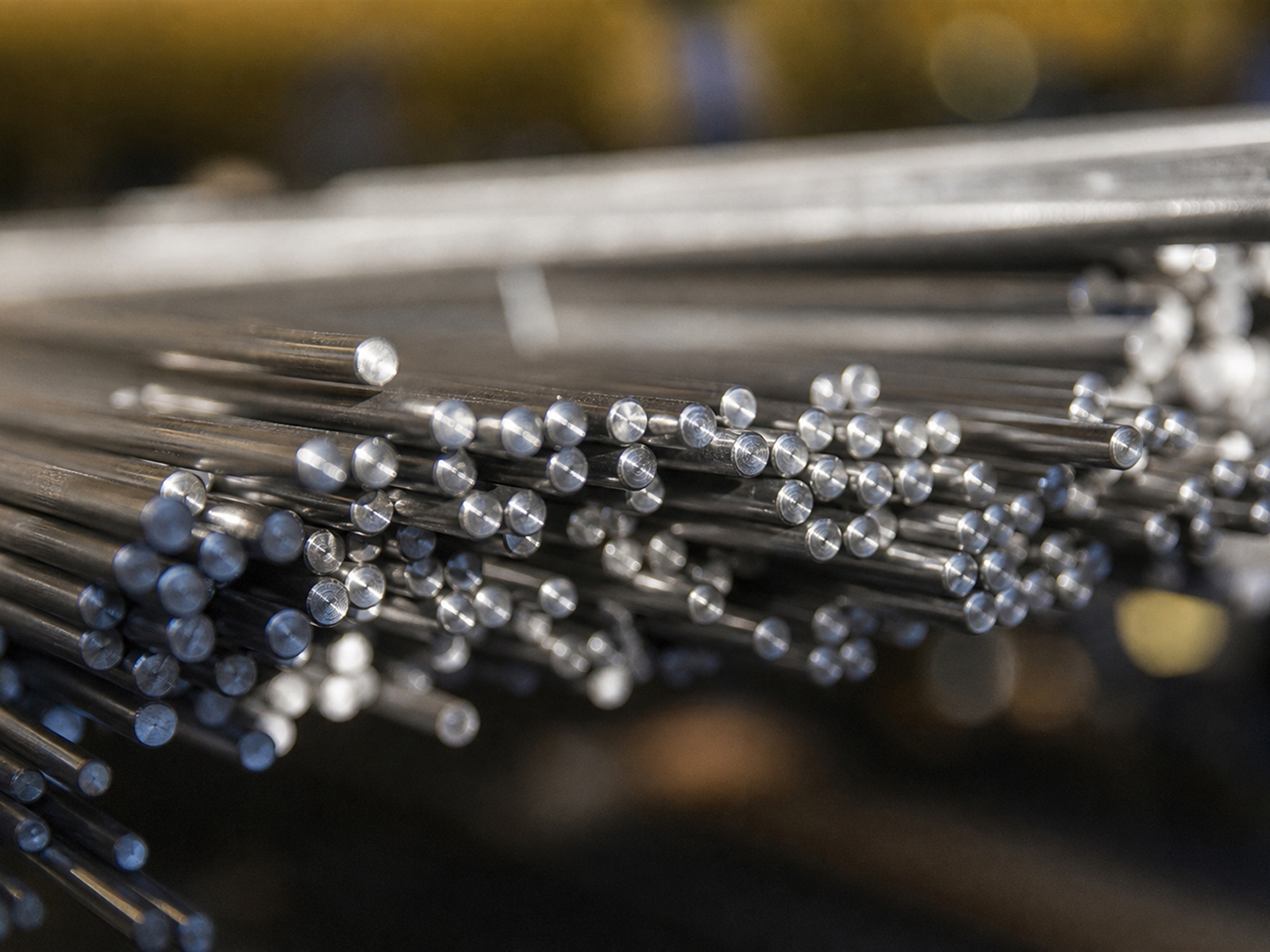
In the field of industrial metal materials, Grade 1 commercially pure titanium (Gr1 Titanium Rod) is one of the industrial titanium products with the highest purity and best ductility among the commercially pure titanium grades. It has a single-phase α microstructure, a titanium content of generally not less than 99.5%, extremely low levels of impurities such as iron, oxygen, nitrogen, carbon, and hydrogen, and highly stable chemical behavior. For this reason, Gr1 CP titanium bar holds an important position in chemical corrosion protection, medical devices, precision electronics, and non-load-bearing/corrosive-environment parts in aerospace. Whether it is chemical piping required to remain in prolonged contact with strongly corrosive media or surgical instruments requiring very high biocompatibility, Gr1 CP titanium bar provides a stable, reliable, and long-lasting material foundation. This article systematically reviews the core characteristics and engineering advantages of Gr1 CP titanium bar from multiple perspectives, including material composition, mechanical properties, surface condition, and typical applications.
1. Material Composition and Metallurgical Characteristics of Gr1 Commercially Pure Titanium Bar
(1) Chemical Composition: Extremely Low Impurities Define the Material’s Baseline
Gr1 CP titanium bar is referred to as the “industrially purest titanium” precisely because of its strict chemical composition control. According to ASTM B348, the limits for its principal impurity elements are as follows (ASTM B348 does not directly specify a minimum titanium content; instead, it indirectly ensures the balance purity of titanium by limiting the total of impurities):
Element | Content Limit |
Titanium (Ti) | Balance (by difference) |
Iron (Fe) | ≤ 0.20% |
Oxygen (O) | ≤ 0.18% |
Nitrogen (N) | ≤ 0.03% |
Carbon (C) | ≤ 0.08% |
Hydrogen (H) | ≤ 0.015% |
The control of oxygen content is especially critical—oxygen is the primary interstitial strengthening element in titanium and its alloys. The lower the oxygen content, the higher the material’s ductility, but the tensile strength decreases correspondingly. Gr1 keeps the oxygen content at the lowest level among all commercially pure titanium grades, thereby achieving the best ductility in this family of grades.
(2) Metallurgical Processing: The Precision Route from Titanium Sponge to Finished Bar
Gr1 bar production begins with high-purity titanium sponge, which is typically melted by vacuum arc remelting (VAR). Materials requiring higher compositional uniformity and metallurgical quality can be melted twice or more in VAR to produce a chemically homogeneous ingot. The ingot is then forged into billets, hot-rolled or forged into bar, and finished through stress-relief annealing, pickling, turning or grinding, straightening, precision cutting, and non-destructive testing. Multi-pass hot working combined with annealing treatments ensures the uniformity of the bar microstructure and avoids defects such as coarse grains or localized segregation.
(3) Microstructure: The Engineering Significance of the Single-Phase α Structure
Gr1 titanium bar exhibits a typical equiaxed α grain structure with no β-phase precipitation and clean grain boundaries. In the annealed condition, this single-phase structure gives the material good macroscopic mechanical uniformity and process stability. However, because α-titanium has a hexagonal crystal structure, cold working may produce texture and a degree of anisotropy, which should be evaluated against the process route in deep drawing or multi-directional forming. Overall, this microstructure also contributes positively to maintaining toughness in the weld heat-affected zone.
2. Core Mechanical Properties and Processing Characteristics of Gr1 Commercially Pure Titanium Bar
(1) Mechanical Indicators: A Precise Balance of Low Strength and High Ductility
The mechanical property indicators of Gr1 CP titanium bar are lower than those of other titanium alloy grades (such as Gr5/Ti-6Al-4V), but this is precisely where its process value lies:
Property | Standard Minimum–Typical Range |
Ultimate Tensile Strength (UTS) | ≥ 240 MPa (typical upper limit approx. 345 MPa) |
Yield Strength (YS) | ≥ 170 MPa (typical upper limit approx. 275 MPa) |
Elongation | ≥ 24% |
Reduction of Area | ≥ 30% |
An elongation of ≥24% means the material can undergo significant plastic deformation before fracture, which is critical for complex forming processes such as deep drawing, tube bending, and stamping—and is the core reason that other high-strength titanium alloys cannot readily replace it.
(2) Cold Working and Weldability: A Wide Process Window with Low Loss
Gr1 CP titanium bar supports a variety of cold working methods, including cold drawing, cold rolling, bending, and stamping, with excellent post-processing surface quality and minimal dimensional springback. For welding, both TIG welding and electron beam welding can produce high-quality joints. Grain coarsening in the titanium weld heat-affected zone is common, but with a sound welding procedure the degree of coarsening can be controlled within an acceptable range, and joint strength can reach over 90% of the base metal. This characteristic is highly favorable for chemical piping requiring field welding, medical device frames, and vacuum chamber structural components.
(3) Machining Considerations: The Tendency to Adhere to the Cutting Tool Requires Specific Handling
The main challenges in machining titanium are its low thermal conductivity (approx. 16 W/m·K) and strong affinity with cutting tools, which readily produce built-up edge. When machining Gr1 titanium bar, lower cutting speeds (linear speed controlled at 40–60 m/min) are recommended, using sharp carbide tools with ample cutting fluid cooling. This effectively suppresses heat accumulation and tool wear and significantly improves surface finish and dimensional consistency.
3. Surface Conditions and Size Specifications of Gr1 Commercially Pure Titanium Bar
(1) Comparison of Four Surface Conditions: Precise Matching by Application
Gr1 CP titanium bar can be supplied with four primary surface conditions according to customer requirements prior to shipment, each corresponding to different application scenarios:
Surface Condition | Process Description | Surface Roughness | Typical Applications |
Black Bar (Hot-Rolled/Forged) | With oxide scale, relatively rough surface | Ra > 6.3 | Above φ20, for subsequent turning |
Turned Bar | Turned after hot working, free of oxide scale | Ra 3.2–6.3 | Above φ10, for direct assembly/welding |
Polished Bar (Cold-Drawn/Precision Ground) | Precision polished, high dimensional accuracy | Ra ≤ 1.6 | φ4–φ50, precision shafts, molds |
Pickled Bar | Pickled to remove oxide scale, revealing the natural metal surface | Ra 3.2–12.5, retains prior machining marks | Chemical corrosion protection, welded assemblies |
Different surface conditions correspond to different dimensional tolerances: black bar has a wider tolerance (e.g., φ50 ±1.0 mm), while polished bar can achieve ±0.05 to ±0.2 mm (h7/h8, IT7/IT8 grades), covering the entire chain of requirements from rough-machining blanks to precision mating parts.
(2) Size Range: From Small-Diameter Precision Bars to Large-Diameter Forgings
Standard stock sizes for round bar are φ8–φ200 mm, cold-drawn/polished precision bar φ4–φ50 mm, and large-diameter forged bar up to φ100–φ300 mm (custom). Square bar and hexagonal bar are available in sizes from 6×6 mm to 80×80 mm, with inch sizes (1/4″ to 3″) also available to meet North American and European market demand. For length, annealed bar is supplied at 300–3000 mm, and hot-worked/cold-worked bar up to 6000 mm, with fixed-length and multiple-length cutting supported.
(3) The Engineering Significance of Dimensional Tolerances and Delivery Conditions
The choice of tolerance grade directly affects downstream assembly cost. The ±0.05 mm accuracy of polished bar can eliminate the customer’s secondary rough-turning operation, especially in precision instruments, vacuum chambers, and medical devices where close fit requirements are strict, directly reducing machining hours and scrap rates. This demonstrates how material-side precision optimizes cost across the entire chain.
4. Corrosion Resistance Mechanisms and Applications of Gr1 Commercially Pure Titanium Bar
(1) The Natural Oxide Film: A Self-Healing Passivation Barrier
When Gr1 titanium bar comes into contact with air or water at room temperature, a dense, stable TiO₂ oxide film, approximately 2–10 nm thick, is rapidly formed on the surface. This film is chemically highly inert and can resist attack by a variety of acids (such as dilute nitric acid, most organic acids, and phosphoric acid), alkalis, saline solutions, and chloride ions. However, titanium does not resist hydrofluoric acid, hot concentrated sulfuric acid, hot hydrochloric acid, and other strong reducing media. More importantly, when the oxide film undergoes localized damage, the film can self-repair within milliseconds as long as trace oxygen or water is present in the environment, giving the material long-lasting, low-maintenance corrosion resistance.
(2) Engineering Performance in Typical Corrosive Environments
In seawater, Gr1 titanium bar generally does not suffer pitting or crevice corrosion during long-term immersion under normal conditions such as ambient temperature and flowing seawater, making it suitable for desalination plants, marine piping, and ocean monitoring instruments. However, under special conditions such as high temperature, high-concentration halogens, or tight crevices with depleted oxygen, crevice corrosion risk still deserves attention. In chlor-alkali chemical environments, its resistance to chloride ions is significantly superior to 316L stainless steel, making it especially suitable for components in direct contact with strongly corrosive media, such as electrolytic cell electrode plate supports and titanium fixtures. When used for titanium anode rods, the electrical conductivity of CP titanium is insufficient, so a titanium-clad copper composite structure is typically used to reduce resistance. It is an ideal base material for orthodontic devices, surgical instruments, and pharmaceutical equipment.
(3) Inapplicable Scenarios: Define the Boundaries to Avoid Misuse
The mechanical strength of Gr1 CP titanium bar is relatively limited, and it is not suitable for strength-critical applications such as high-speed rotating engine parts, heavy-load drive shafts, or high-impact structural components. In such service conditions, Gr5 (Ti-6Al-4V) or higher-strength alloys should be preferred. Understanding a material’s capability boundaries is an equally important dimension of engineering material selection.
5. Titanium Valley’s Production Capability and Quality Assurance
Baoji Titanium Valley Nickel Zirconium Material Precision Processing Co., Ltd. The rolling line achieves internationally advanced levels on core parameters including speed control, tension coordination, and temperature windows, enabling high-consistency batch production that effectively eliminates batch-to-batch variations in mechanical properties.
(2) End-to-End Quality Control: From Raw Materials to Final Inspection
Each batch of Gr1 titanium bar must pass four quality inspection gates before shipment: chemical composition analysis (spectrometry), mechanical property testing (tensile/hardness), ultrasonic non-destructive testing, and visual surface inspection. Material Test Certificates (MTC) and third-party test reports are provided with each shipment. The material meets standards for pure titanium bar such as ASTM B348 and can, on request, reference applicable specifications such as AMS 4900, with traceability to the heat number.
(3) Customization Capability: Full-Chain Response from Specifications to Lead Times
For high-end market customers in North American aerospace and medical, German high-end manufacturing, and Japanese precision electronics, Titanium Valley provides full-chain customization services covering diameter, length, surface condition, and packaging, supporting small-batch sampling and large-volume industrial supply in parallel, with flexible and controllable delivery lead times.
6. Conclusion
With its ultra-high purity, outstanding ductility, natural corrosion resistance, and good welding and cold working characteristics, Gr1 CP titanium bar continues to deliver irreplaceable value across chemical, marine, medical, electronic, and other high-end industrial fields. Selecting the right surface condition and size tolerance is a key step in reducing total processing cost across the product life cycle.
FAQ
(1) Q1: What Are the Core Differences Between Gr1 and Gr2 Commercially Pure Titanium Bar?
Gr1 has a lower oxygen content (≤0.18%) and higher elongation (≥24%), making it suitable for scenarios with demanding ductility and cold working requirements. Gr2 offers slightly higher strength but slightly lower formability. Both are commercially pure titanium with similar corrosion resistance, so material selection should combine the actual strength and deformation requirements of the specific service condition.
(2) Q2: Can Gr1 Titanium Bar Be Used Directly in Medical Implants?
Gr1 offers outstanding biocompatibility and is non-magnetic, so it can be used as blank material for surgical instruments, dental equipment, and non-load-bearing medical structural parts. If used in load-bearing parts for long-term implantation (such as bone screws or joints), whether its strength meets the specific load requirements must be evaluated, upgrading to a higher-strength grade if necessary, and medical device certification procedures must be strictly followed.
(3) Q3: Gr1 Titanium Bar Severely Adheres to the Tool During Machining. What Practical Advice Can You Offer?
The low thermal conductivity of titanium concentrates cutting heat at the tool-tip zone, which is the root cause of built-up edge. We recommend carbide tools (PVD-coated preferred), lower cutting speeds (40–60 m/min), higher feed rates, and abundant water-based cutting fluid, avoiding dry cutting while keeping the tool consistently sharp. This significantly reduces built-up edge formation and improves both surface quality and tool life.
7. Contact Us Now
Titanium Valley — a professional manufacturer, supplier, and factory of Gr1 commercially pure titanium bar, offering batch customization and rapid quotation service. sales@titaniumvalleys.com. Please send us your inquiry regarding specifications, certifications, and lead times; we will respond within 24 hours.
References
- National Technical Committee on Nonferrous Metals Standardization. GB/T 2965—2017 Titanium and titanium alloy bars. Beijing: Standards Press of China, 2017.
- National Technical Committee on Nonferrous Metals Standardization. GB/T 3620.1—2016 Titanium and titanium alloys – Designation and chemical composition. Beijing: Standards Press of China, 2016.
- Zou Wuzhuang (ed.). Titanium Handbook. Beijing: Metallurgical Industry Press, 2012.
- Zhang Xiyan, Zhao Yongqing, Bai Chenguang, et al. Titanium Alloys and Their Applications. Beijing: Chemical Industry Press, 2005.