
Why Choose Gr1 Titanium Rods for Corrosion-resistant Applications?
- Gr1 Titanium Rods
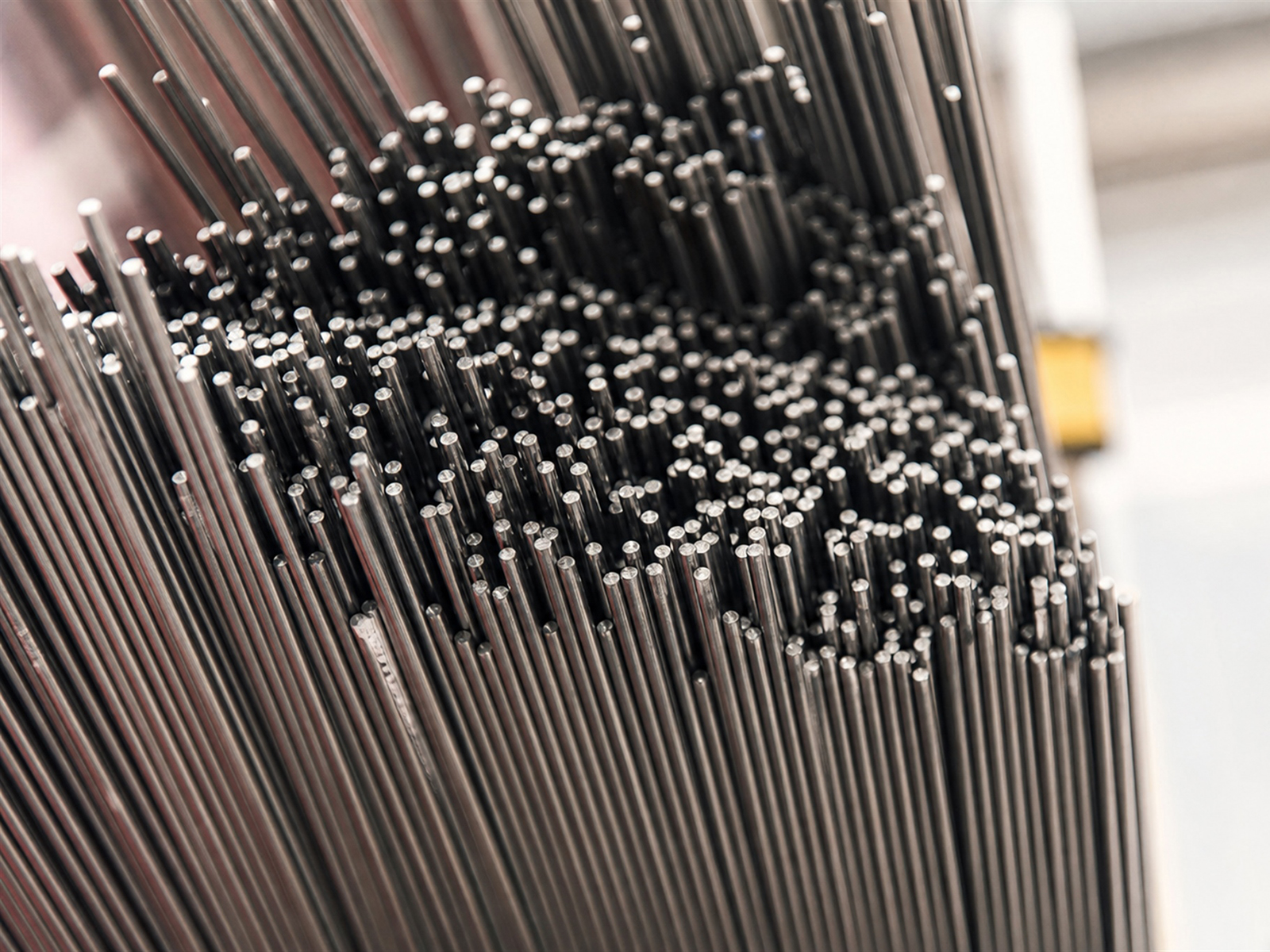
In fields such as chemical engineering, offshore engineering, and medical devices, equipment faces increasingly severe corrosion challenges. Ordinary metal materials rapidly fail in harsh environments with acids and bases, salt spray, and chloride ions, leading to frequent replacement and downtime maintenance, significantly increasing operational costs. Gr1 titanium bars, as the highest-purity grade of industrial pure titanium, have become an ideal choice for corrosion-resistant applications due to their naturally formed dense oxide film, ultra-low impurity content, and excellent plastic processing performance. This material can not only operate stably for long periods in extreme corrosive environments but also offers multiple advantages such as lightweight, non-magnetic, and biocompatibility, helping companies achieve cost reduction and efficiency enhancement throughout the full lifecycle of their equipment. Choosing Gr1 titanium bars means choosing a proven and reliable corrosion protection technology path.
1. What Should You Know About Material Characteristics and Corrosion Resistance Mechanism of Gr1 Titanium Rod?
(1) What Should You Know About Ultra-high Purity Ensures Chemical Stability?
The titanium content of Gr1 titanium bars is ≥ 99.5%, making it the highest purity titanium grade used in industrial applications. Compared with other grades, impurities such as iron, oxygen, carbon, nitrogen, and hydrogen in Gr1 are strictly controlled at extremely low levels (Fe ≤ 0.20%, O ≤ 0.18%, C ≤ 0.08%). This ultra-high purity ensures chemical stability at the molecular level and reduces the tendency for electrochemical corrosion caused by impurities. When exposed to media such as sulfuric acid, hydrochloric acid, hypochlorite, and seawater, Gr1 titanium bars remain inert, preventing pitting, crevice corrosion, or stress corrosion cracking.
(2) What Should You Know About Self-healing Protective Mechanism of Natural Oxide Film?
The surface of titanium spontaneously forms a dense TiO2 oxide film with a thickness of about 2-7 nanometers. This film has extremely high stability and self-healing ability. When the surface is slightly scratched or mechanically damaged, the oxide film can quickly regenerate in the presence of oxygen or moisture, continuously providing corrosion protection. This passive protection mechanism enables Gr1 titanium rods to maintain excellent corrosion resistance under conditions such as dynamic fluids and abrasive wear, without the need for additional coatings or cathodic protection.
(3) What Should You Know About Broad PH Tolerance Range?
Type of corrosive medium | Suitable pH range | Typical application environment |
Oxidizing acids (such as nitric acid) | pH 1-14 | Chemical reaction kettle, pickling tank |
Weakly reducing acid (such as dilute hydrochloric acid) | pH 3-14 | Seawater desalination, condenser |
Alkaline solution | pH 7-14 | Electroplating equipment, alkaline cleaning system |
Salt solution (chloride) | full pH range | Marine engineering, salt spray environment |
Gr1 titanium rods exhibit excellent resistance to most acids, alkalis, and salt solutions. Especially in environments with high chloride content, traditional materials such as stainless steel are prone to pitting corrosion failure, while Gr1 titanium rods can serve stably for long periods, making them the preferred material for coastal facilities, offshore platforms, and chemical pipelines.
2. What Should You Know About Performance of Gr1 Titanium Rods in Typical Corrosive Environments?
(1) What Should You Know About Marine Environment and Chloride Corrosion?
Seawater contains about 3.5% salt, of which chloride ions are the main factor causing metal corrosion. The corrosion rate of conventional carbon steel in seawater can reach 0.1-0.3 mm per year, and even 316 stainless steel can experience pitting corrosion after long-term immersion. The corrosion rate of Gr1 titanium rods in seawater is less than 0.001 mm per year, which is almost negligible. This performance makes it widely used in heat exchanger tube sheets and condenser tube bundles of seawater desalination equipment, as well as fasteners and support structures of offshore platforms.
(2) What Should You Know About Multi-media Composite Corrosion in Chemical Processes?
Chemical production often involves complex conditions such as alternating acids and bases, temperature fluctuations, and multi-component mixing. Gr1 titanium rods are capable of handling:
- Oxidizing acidic environment: In strong oxidizing media such as nitric acid and chromic acid, the oxide film is more stable, and the corrosion rate is extremely low.
- Organic acid environment: Organic acids such as acetic acid and citric acid have almost no corrosive effect on titanium materials.
- Wet chlorine gas environment: Wet chlorine gas in the chlor-alkali industry is highly corrosive to most metals, but Gr1 titanium rods can withstand wet chlorine gas at temperatures below 150℃.
Operating condition type | Corrosion Rate of Common Materials | Gr1 Titanium Rod Corrosion Rate | Life Expectancy Comparison |
5% sulfuric acid (80℃) | Carbon steel: 5-10 mm/year | <0.01 mm/year | Extend by more than 500 times |
Seawater (room temperature) | 316L Stainless Steel: 0.05 mm/year | <0.001 mm/year | Extend by more than 50 times |
10% sodium hydroxide (60℃) | Carbon steel: 1-3 mm/year | <0.005 mm/year | Extend by more than 200 times |
(3) What Should You Know About High-Temperature Oxidation and Environmental Aging?
Although the strength of Gr1 titanium rods is relatively low and unsuitable for high-stress, high-temperature scenarios, their oxidation resistance is better than stainless steel in oxidative atmospheres below 300℃. The surface oxide film can remain intact at high temperatures, preventing further oxidation. This makes Gr1 titanium rods suitable for applications such as chemical flue gas treatment and environmental desulfurization equipment, where long-term exposure to corrosive high-temperature gases is required.
3. How the Advantages of Machinability Improve the Reliability of Corrosion-resistant Applications?
(1) What Should You Know About Outstanding Plasticity Ensures Complex Forming?
The elongation of Gr1 titanium rods is ≥ 24%, making it the most ductile among all industrial pure titanium grades. This high ductility allows it to withstand complex processing techniques such as cold bending, cold stretching, and deep drawing without causing cracks or stress concentration. When manufacturing stirring shafts for chemical reactors, U-tubes for heat exchangers, and bent clamps for medical devices, Gr1 titanium rods can be formed in one piece, reducing welded joints and minimizing potential corrosion weak points.
(2) What Should You Know About Excellent Welding Performance Ensures Joint Integrity?
Titanium welding needs to be carried out under the protection of inert gas to prevent high-temperature oxidation. Gr1 titanium rods are suitable for various processes such as TIG welding, plasma arc welding, and electron beam welding, with the weld metal having similar chemical composition and corrosion resistance as the base material. After proper welding, the corrosion rate of the welded joint is basically consistent with that of the base material, and it will not become a weak point in the system. This is crucial for equipment that requires extensive welding, such as chemical pipelines and pressure vessels.
(3) What Should You Know About Various Surface Treatments Meet Different Working Condition Requirements?
Surface condition | Feature | Applicable Scenarios |
Pickling rod | Remove oxide scale, revealing the metallic color, pollution-free | Chemical anti-corrosion pipelines, welded assemblies |
car light stick | Turning machining, surface roughness Ra 3.2-6.3 | Valve shaft, pump body components |
Polishing Rod | Precision polishing, Ra ≤ 1.6, dimensional tolerance H7/H8 | Medical device shafts, precision molds |
Black leather stick | Hot worked condition, with scale | Blank requiring subsequent machining |
By selecting an appropriate surface treatment method, the corrosion resistance and service life of Gr1 titanium rods in specific applications can be further enhanced. Acid pickling can remove iron ion contamination introduced during processing, ensuring the purity of the surface oxide film; a polished surface reduces the retention of media in microscopic pits, lowering the risk of crevice corrosion.
4. What Should You Know About Life-cycle Economic Analysis?
(1) What Should You Know About Balancing Initial Investment and Long-term Returns?
The unit price of Gr1 titanium rods is about 3-5 times that of stainless steel, but their service life can be extended by 10-50 times. Taking a set of chemical heat exchangers as an example, stainless steel tube bundles may need to be replaced every 2-3 years, while Gr1 titanium rod bundles can operate stably for more than 20 years. Considering replacement costs, downtime losses, and labor expenses, the total lifecycle cost of titanium is often lower than that of traditional materials.
(2) What Should You Know About Implicit Benefits Brought by Reduced Maintenance Frequency?
Equipment failure caused by corrosion not only requires part replacement, but can also lead to:
- Unplanned downtime: affects production continuity and causes order delays
- Safety hazard: Corrosion leaks may cause personal injury and environmental pollution
- Inspection costs: regular non-destructive testing and wall thickness measurements are required
After using Gr1 titanium rods, the equipment maintenance cycle has been greatly extended, and the frequency of inspections has decreased. Enterprises can allocate more resources to production optimization rather than dealing with failures.
(3) Why Is the Added Value of Lightweight Design Important?
Titanium has a density of 4.51 g/cm³, about 57% that of steel. Using Gr1 titanium rods in marine engineering and mobile devices can significantly reduce structural weight, lower transportation costs, ease installation, and reduce energy consumption. In the aerospace field, this weight reduction advantage is even more critical, as saving 1 kilogram of weight can save a large amount of fuel costs.
5. What Should You Know About Key Considerations for Choosing High-Quality Gr1 Titanium Bars?
(1) What Should You Know About the Impact of Manufacturing Process on Performance?
High-quality Gr1 titanium rods need to go through multiple strict processes:
- Raw material purity control: Using high-purity titanium sponge, it is remelted multiple times in a vacuum self-consuming electric arc furnace to ensure uniform distribution of impurities.
- Forging and hot rolling: Obtain a uniform and fine microstructure by controlling the forging ratio and hot rolling temperature
- Annealing: Eliminates machining stress, improves plasticity and corrosion resistance
- Surface finishing: pickling, turning, or polishing to remove surface defects and contamination
Manufacturers using advanced production lines can achieve precise control of process parameters, ensuring that the performance of each batch of products is stable and consistent.
(2) What Should You Know About Quality Certification and Traceability?
Gr1 titanium bars that meet the ASTM B348 standard should be provided with complete material certificates, including chemical composition analysis, mechanical performance tests, and non-destructive testing reports. For high-demand fields such as medical and aerospace, they also need to meet professional standards like AMS 4901 and ISO 5832. A traceable batch management system can quickly identify issues in case of quality problems, ensuring user rights.
(3) What Should You Know About Customized Service Capability?
Different application scenarios have differentiated requirements for the specifications, surface condition, and mechanical properties of Gr1 titanium rods. Suppliers with custom processing capabilities can provide:
- Non-standard sizes: diameter φ4-φ300 mm, length 300-6000 mm, or customized according to drawings
- Special surface treatments: anodizing, sandblasting, laser marking
- Precision tolerance: ± 0.05 mm dimension control, meeting the requirements of automated assembly
Choosing manufacturers with a complete processing chain can shorten delivery times and reduce intermediate costs.
6. What Is the Conclusion?
Gr1 titanium rods, with their ultra-high purity, self-healing oxide film, wide pH adaptability, and excellent processing performance, demonstrate irreplaceable advantages in corrosion-resistant applications. From chemical equipment to marine engineering, from medical devices to precision electronics, this material helps users solve long-standing corrosion problems and achieve cost reduction and efficiency improvement throughout the entire lifecycle of equipment. Choosing suppliers that meet international standards, have advanced processes, and provide comprehensive services is key to ensuring the full performance of Gr1 titanium rods.
FAQ
Q1: What are the differences in corrosion resistance between Gr1 titanium rods and Gr2 titanium rods?
Gr1 titanium rods have higher purity and lower impurity content, performing better in ultra-pure media and biomedical fields. Gr2 titanium rods have slightly higher strength (oxygen content 0.25%), and their corrosion resistance is comparable to Gr1 in general chemical environments, but Gr1 has superior plasticity and welding performance.
Q2: Can Gr1 titanium bars be used in a strongly reducing acidic environment?
Gr1 titanium bars have excellent corrosion resistance to oxidizing acids and neutral salt solutions, but in strong reducing acids such as concentrated sulfuric acid and concentrated hydrochloric acid, especially in the absence of oxidizers, hydrogen embrittlement or corrosion may occur. In such conditions, special corrosion resistance tests are required, or materials more resistant to reducing media, such as tantalum or zirconium, should be selected.
Q3: How to verify the material authenticity of a Gr1 titanium rod?
Official suppliers should provide a material certificate that complies with ASTM B348 standards, including chemical composition spectral analysis, tensile test data, and non-destructive testing reports. Users can have a reinspection conducted by a third-party testing agency, or use portable spectrometers on-site to verify the titanium content and the proportion of impurity elements, ensuring that the material meets regulatory requirements.
7. What Should You Know About Call to Action?
Baoji Titanium Valley, as a professional manufacturer and supplier of Gr1 titanium bars, relies on advanced Italian Danieli rolling production lines and a full-process quality system, producing over 20, 000 tons of high-quality titanium bars annually. We widely serve aerospace, medical, chemical, and other industries. We provide customized specifications, fast delivery, and complete technical support. For detailed technical parameters, material certificates, or customized quotations, please contact: sales@titaniumvalleys.com
References
- Matthew J. Donachie, Titanium: A Technical Guide (2nd Edition), ASM International, 2000.
- R. Boyer, E. W. Collings, G. Welsch, “Materials Properties Handbook: Titanium Alloys,” ASM International, 1994.
- China Nonferrous Metals Industry Association Titanium, Zirconium, and Hafnium Branch, ‘Titanium and Titanium Alloy Processing Technology Handbook,’ Metallurgical Industry Press, 2015.
- D. Ailong, F. H. Flaws, ‘Titanium Technology: Current Status and Future Trends,’ Titanium Development Association, 1985.