
What Are the Properties, Specifications, and Applications of Gr4 Titanium Foil?
- Gr4 Titanium Foil
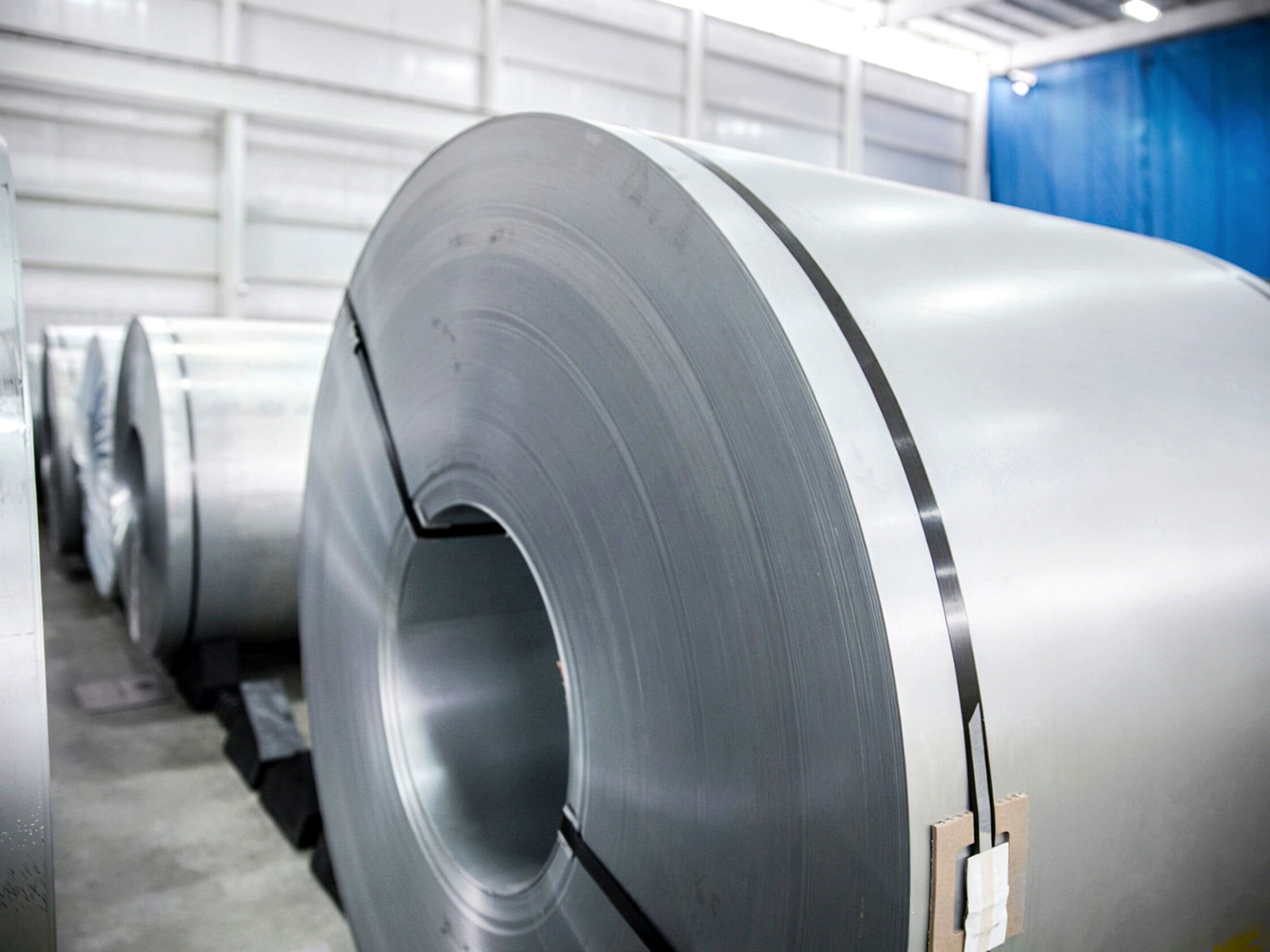
Direct engineering answer. Gr4 Titanium Foil should be evaluated against the finished component, product form, governing specification, downstream process and acceptance evidence. A general property value is an orientation tool; the released drawing, current certificate and inspection plan control the final decision.
Gr4 titanium foil (ASTM B265 Grade 4, UNS R50700) is the grade with the highest tensile strength class among industrially pure titanium foils. Per ASTM B265 annealed-room-temperature properties, its minimum tensile strength is 550 MPa and its minimum yield strength is 483 MPa, both higher than Gr1 and Gr2. Gr4 does not use “purity not less than 99%” as a guaranteed value; instead, the standard specifies titanium as the balance and achieves higher strength by controlling interstitial elements such as Fe and O, while retaining the corrosion resistance, non-magnetic properties, and low density of commercially pure titanium. This article reviews the material’s properties, specifications, process boundaries, and typical applications based on standard data and technical conditions.
1. Chemical Composition and Mechanical Properties
(1) Chemical Composition Range
The chemical composition range (mass fraction) specified in ASTM B265 Grade 4 is as follows:
Element | Requirement |
N | ≤0.05% |
C | ≤0.08% |
H | ≤0.015% |
Fe | ≤0.50% |
O | ≤0.40% |
Other elements, each | ≤0.10% |
Other elements, total | ≤0.40% |
Ti | Balance |
Therefore, Gr4 should not be simply described as “titanium purity not less than 99%.” Gr4 permits higher oxygen and iron contents, which give it higher strength than Gr1 and Gr2, but also mean its purity index is not the highest.
(2) Mechanical Properties
Table 1 lists the minimum or typical ranges of longitudinal properties at room temperature in the annealed condition per ASTM B265. The data mainly apply to sheet and strip. For ultra-thin foils at the 0.02 mm level, tensile specimen preparation, gripping, and strain measurement may all be affected by size effects; conventional tensile data should be treated as material-level reference and should not be used directly as design guaranteed values. The mechanical properties of ultra-thin foil may be determined by dedicated thin-strip test methods or as agreed between the supplier and buyer.
Grade | Tensile Strength, MPa | Yield Strength, MPa | Elongation, % |
Gr1 | ≥240 | 170–310 | ≥24 |
Gr2 | ≥345 | 275–450 | ≥20 |
Gr4 | ≥550 | 483–655 | ≥15 |
Note: Different editions of ASTM B265 generally specify only a minimum yield strength; the yield strength ranges in the table are common engineering reference values. Elongation is related to the thickness range and product form.
(3) Physical and Corrosion-Resistance Characteristics
Gr4 titanium foil has a density of approximately 4.51 g/cm³ and a melting point of approximately 1668℃. Its room-temperature electrical resistivity is approximately 42 μΩ·cm (0.42 μΩ·m) and its thermal conductivity is approximately 17 W/(m·K). Titanium has low electrical and thermal conductivity and cannot serve as an efficient substitute for copper or aluminum in electrical conduction or heat dissipation applications.
In terms of corrosion resistance, titanium can form a stable TiO₂ passive film in oxidizing media such as seawater, chloride solutions, and nitric acid, providing good corrosion resistance. However, in reducing media such as hydrochloric acid and dilute sulfuric acid, corrosion resistance depends on concentration, temperature, and impurity content. It is generally usable at low temperatures and low concentrations, while hot concentrated hydrochloric acid and sulfuric acid may cause significant corrosion or hydrogen embrittlement risk. Specific concentration, temperature, and flow-rate conditions should be provided during material selection.
(4) High-Temperature Service Boundary
The long-term service temperature of commercially pure titanium in air is limited by oxidation and strength retention. For oxidizing atmospheres with no load or light load, approximately 350℃ is commonly used as the engineering upper limit, but the specific value should be evaluated in combination with creep strength, oxidation weight gain, and structural safety factors and should not be cited directly as a universal temperature limit.
2. Comparison and Selection of Gr4 vs. Gr1/Gr2
Gr1, Gr2, and Gr4 are all commercially pure titanium; the differences are mainly in strength, formability, and deformation resistance.
Property | Gr1 | Gr2 | Gr4 |
Tensile Strength, MPa | ≥240 | ≥345 | ≥550 |
Yield Strength, MPa | 170–310 | 275–450 | 483–655 |
Elongation, % | ≥24 | ≥20 | ≥15 |
Formability | Excellent | Good | Moderate |
Deformation Resistance | Low | Medium | High |
Typical Application Directions | Deep-drawn corrugated sheet, complex curved-surface corrosion-resistant linings, low-load gaskets | Conventional corrosion-resistant vessel linings, heat exchanger sheets, general structural components | Load-bearing brackets, thin-walled structures in pressure chambers, high-strength gaskets, titanium anode substrate plates |
(1) Gr1: Priority on Formability
Gr1 titanium foil has higher elongation and low deformation resistance, making it suitable for deep drawing, complex curved-surface forming, and thin-walled structures requiring high bending precision. Its strength is relatively low and it is not suitable for structural components under moderate or higher loads.
(2) Gr2: A Balanced Choice for General Corrosion-Resistant Structural Components
Gr2 titanium foil offers a relatively balanced combination of strength and ductility and has a broad range of applications. For most chemical equipment linings, heat exchanger sheets, and general industrial applications, Gr2 is often the first-choice grade.
(3) Gr4: Strength-First Corrosion-Resistant Load-Bearing Components
Gr4 is approximately 60% stronger than Gr2 but remains fundamentally a commercially pure titanium and cannot replace titanium alloys such as Ti-6Al-4V in applications requiring higher specific strength or high-temperature service. When an application involves both moderate or higher mechanical loads and corrosive media, Gr4 can be selected as an upgrade from Gr2.
3. Dimensions, Tolerances, and Manufacturing Processes
(1) Dimension Range and Tolerances
Item | Standard Supply Range | Customization Notes |
Thickness | 0.02–1.0 mm | Thinnest available experimentally at approximately 0.005 mm; rolling feasibility must be confirmed |
Width | 15–680 mm | Can be slit per order |
Length | Coil strip or cut-to-length | Can be cut per drawings |
Surface Condition | Bright / matte finish | Surface roughness can be as agreed |
Delivery Condition | Annealed / cold-worked | Specified per order; not replaced by condition codes |
Thickness tolerance should not be generalized as a single value. For foil at the 0.02 mm level, ±0.001 mm is equivalent to ±5% and represents precision-rolling control; for strip of 0.1 mm and above, tolerances are usually executed per the standard tolerance tables or as agreed between the parties; for thin sheet above 0.5 mm, both ASTM B265 and GB/T 3621 provide corresponding thickness tolerance requirements. Nominal thickness, tolerance class, and width range should be clearly specified when requesting a quotation.
(2) Manufacturing Process
Gr4 titanium foil has the following main process flow:
Melting → forging/hot rolling breakdown → multi-pass cold rolling → ultrasonic cleaning → continuous annealing → temper rolling → slitting → inspection and packaging. Because Gr4 has higher strength and greater deformation resistance, the reduction per pass and intermediate annealing process must be controlled during cold rolling to avoid edge cracking, thickness variation, and surface damage. The main process control points include: surface color difference, thickness uniformity, annealed grain structure, slitting precision, and surface cleanliness.
(3) Inspection and Quality Data
For each batch, chemical composition, tensile properties, and dimension and appearance reports can typically be provided; hardness, grain size, and surface roughness data can be provided when necessary. For special applications such as aerospace and medical devices, inspection items and acceptance criteria can be separately agreed.
4. Main Application Scenarios
The following areas are relatively typical application directions for Gr4 titanium foil and do not mean the material is suitable for all service conditions. Actual selection should be evaluated in combination with load, temperature, media, and standards.
(1) Aerospace
Gr4 titanium foil can be used for lightweight honeycomb core materials, thin-walled sealing gaskets, and structural sandwich layers. Its specific strength is higher than that of stainless steel sheet, making it suitable for certain weight-reduction designs, but it should not be used to replace superalloys or titanium alloys such as Ti-6Al-4V in high-fatigue or high-temperature components.
(2) Chemical and Electrochemical Industries
In oxidizing media containing chlorides and nitric acid, Gr4 titanium foil can be used for corrosive structural linings, membrane support layers, and titanium substrates for titanium-based coated anodes. For electrolytic cell anodes, bare Gr4 titanium foil is generally not used directly as the anode; it should be used as the titanium substrate for DSA-coated anodes or after applying noble metal or metal oxide coatings.
(3) Marine Engineering
Gr4 titanium foil can be used for isolation plates in desalination modules, elastic components for marine sensors, and linings for pressure housings. Marine atmospheric salt spray corrosion and seawater immersion corrosion are different environments and should be evaluated separately during material selection; descriptions such as “deep-sea conditions” and “high salt spray” should not be used interchangeably.
(4) Electronics and Precision Instruments
Leveraging its non-magnetic and corrosion-resistant properties, Gr4 titanium foil can be used for structural components in magnetic-field-sensitive equipment, elastic elements in precision sensors, thermocouple protection sheets, and corrosion-resistant terminals. However, because titanium has low electrical and thermal conductivity, it is not recommended for applications such as high-efficiency electromagnetic shielding, heat dissipation structures, or battery current collector materials.
(5) Welding and Joining
For large structural components made of Gr4, using Gr4 titanium foil of the same grade as a welding strip helps improve the consistency of weld microstructure and mechanical properties and reduces the risk of galvanic corrosion at dissimilar-metal welds.
(6) Medical Devices and Precision Instruments
When it meets implant-grade commercially pure titanium standards such as ASTM F67 or ISO 5832-2, Grade 4 can be used for load-bearing implant components such as orthopedic implants, bone screws, and bone plates. The foil form is more commonly used for elastic sheets in surgical instruments and structural components of medical devices without implant requirements, and biocompatibility must be separately verified.
5. Performance Boundaries and Usage Precautions
- Limited electrical and thermal conductivity: Gr4 titanium foil has a room-temperature resistivity of approximately 42 μΩ·cm, far higher than copper (approximately 1.72 μΩ·cm) and aluminum (approximately 2.65 μΩ·cm); its thermal conductivity is also lower than copper and aluminum. Therefore, applications such as conductive current collectors, high-efficiency electromagnetic shielding, and heat dissipation structures should not be recommended directions.
- Corrosion resistance to reducing acids has boundaries: Titanium’s corrosion resistance in dilute sulfuric acid and hydrochloric acid is strongly affected by concentration and temperature. It is acceptable at low temperatures and low concentrations, but hot concentrated hydrochloric acid and sulfuric acid may cause corrosion or hydrogen embrittlement.
- High-temperature service is limited: The long-term service temperature in air is generally limited to approximately 350℃ as an engineering upper limit, but this must be evaluated in combination with load, oxidizing environment, and creep performance.
- Formability is lower than Gr1/Gr2: Gr4 has higher deformation resistance, and deep drawing and complex forming require proper annealing. When supplied in the cold-worked condition, residual stress, springback, and subsequent processing performance should be evaluated.
6. Conclusion
Gr4 titanium foil is a commercially pure titanium foil with higher strength than Gr1 and Gr2, suitable for thin-walled structures that require moderate load-bearing capacity, corrosion resistance, and lightweighting. Its electrical and thermal conductivity are low, and its resistance to reducing acids also has boundaries. Selection should be based on standard data such as ASTM B265 and GB/T 3621, evaluated in combination with thickness, tolerance, delivery condition, and actual service conditions, and should not be decided based on promotional descriptions alone.
FAQ
(1) Q1: What Advantages Does Gr4 Have Over Gr2?
Gr4’s main advantage is higher strength. Per ASTM B265 annealed-room-temperature minimums, Gr4 has a tensile strength ≥550 MPa while Gr2 is ≥345 MPa, so Gr4 is better suited for thin-walled structural components that bear moderate to high mechanical loads while also requiring corrosion resistance. The trade-off is reduced formability and greater cold-rolling deformation resistance.
(2) Q2: Can the Minimum Thickness Reach 0.005 mm?
Standard supply thickness typically starts at 0.02 mm. The 0.005 mm level is an experimental or small-batch custom product; rolling feasibility, thickness tolerance, and tensile test applicability must be separately confirmed and should not be cited as routine data.
(3) Q3: Which Standards Does Gr4 Titanium Foil Conform To?
Common references are ASTM B265 (United States), JIS H4600 (Japan), DIN 17850 Ti4 (Europe/Germany, W.Nr. 3.7065), and GB/T 3621 and GB/T 3622. The standard edition number, product form, thickness range, and delivery condition should be stated when purchasing.
(4) Q4: Can Gr4 Titanium Foil Be Used for Electrolytic Cell Anode Sheets?
Bare Gr4 titanium foil is usually used as a titanium substrate. If it is to be used as an anode, noble metal or metal oxide coatings are generally applied to the titanium substrate to form a DSA (dimensionally stable anode) before use. Uncoated bare Gr4 titanium foil may undergo passivation, corrosion, or insufficient electrical conductivity under electrolytic cell anode conditions and is not recommended for long-term use directly as an anode sheet. During material selection, the electrolyte, current density, temperature, and coating system should be clearly defined, and the thickness, surface condition, and acceptance criteria of the substrate titanium foil should be confirmed with the supplier.
Contact Us
Looking for a reliable manufacturer, supplier, or processing service provider for Gr4 titanium foil (ASTM B265 Grade 4, UNS R50700)? A professional titanium materials company with full-process capability from melting, forging/hot rolling breakdown, multi-pass cold rolling, ultrasonic cleaning, and continuous annealing through temper rolling and precision slitting can supply in accordance with ASTM B265, GB/T 3621, GB/T 3622, JIS H4600, DIN 17850 Ti4 (W.Nr. 3.7065), and other standards, with standard thicknesses of 0.02–1.0 mm and widths of 15–680 mm, with ultra-thin specifications at the 0.005 mm level available by special evaluation and customization, and offering annealed and cold-worked delivery conditions and surface treatments such as bright and matte finishes. Thickness tolerance is agreed by thickness range, with control to ±0.001 mm precision-rolling level achievable at the 0.02 mm level. Chemical composition, tensile properties, and dimension and appearance reports can be provided, along with supplementary data such as hardness, grain size, and surface roughness; for special applications in aerospace and medical devices, inspection items and acceptance criteria can be separately agreed. Please contact: sales@titaniumvalleys.com
References
- ASTM International. ASTM B265-25 Standard Specification for Titanium and Titanium Alloy Strip, Sheet, and Plate [S]. West Conshohocken, PA: ASTM International, 2025.
- ASTM International. ASTM F67-24 Standard Specification for Unalloyed Titanium, for Surgical Implant Applications [S]. West Conshohocken, PA: ASTM International, 2024.
- State Administration for Market Regulation, Standardization Administration of China. GB/T 3622-2023 Titanium and titanium alloy strip and foil [S]. Beijing: Standards Press of China, 2023.
- State Administration for Market Regulation, Standardization Administration of China. GB/T 3621-2022 Titanium and titanium alloy plates and sheets [S]. Beijing: Standards Press of China, 2022.
Engineering specification and verification framework
For Gr4 Titanium Foil, state grade, ordered product form, condition, nominal dimensions, tolerances, surface requirement, quantity and documentation in one controlled RFQ. The applicable product-form reference is ASTM B265, subject to the current edition and project-specific requirements. When tensile evidence is required, define the test method and sampling basis; ASTM E8/E8M or ISO 6892-1 may apply where consistent with the order.
| RFQ field | Required detail | Reason |
|---|---|---|
| Material identity | Grade, form, ASTM B265, condition | Prevents unintended substitution. |
| Geometry | Nominal size, tolerance, length or coil form | Defines production and inspection scope. |
| Process context | Forming, machining, joining, etching or assembly | Relates supply condition to actual manufacture. |
| Verification | Certificate, dimensional checks, lot identity | Creates a traceable acceptance plan. |
Risk review and incoming control
Common avoidable risks include tolerance stack-up, unclear condition, surface damage, undocumented substitution and loss of lot identity after cutting. At receipt, reconcile the purchase order, packing label and certificate before release to production. Define any supplementary testing, sampling and report format before quotation rather than after shipment.
Technical FAQ
Can catalogue values approve the material?
No. Final approval must use the ordered form, condition, standard, drawing, process route and service boundary.
What should an RFQ include?
Provide the drawing where available, grade and standard, dimensions, tolerance, condition, quantity, process context, service information and documentation requirement.
Product resources and technical quotation
Review the relevant titanium foil product category. For a drawing-based review, request a technical quotation with the full specification.
References and use note
- ASTM B265, applicable edition, for the ordered product form.
- ASTM E8/E8M or ISO 6892-1 where the project specifies tensile verification.
- Project drawing, purchase specification, certificate and agreed inspection plan.
This engineering note supports procurement specification. It does not replace component design validation or the governing contractual standard.