
What Are the Chemical Composition and Mechanical Properties of Nickel 200 Foil?
- Nickel 200 Foil
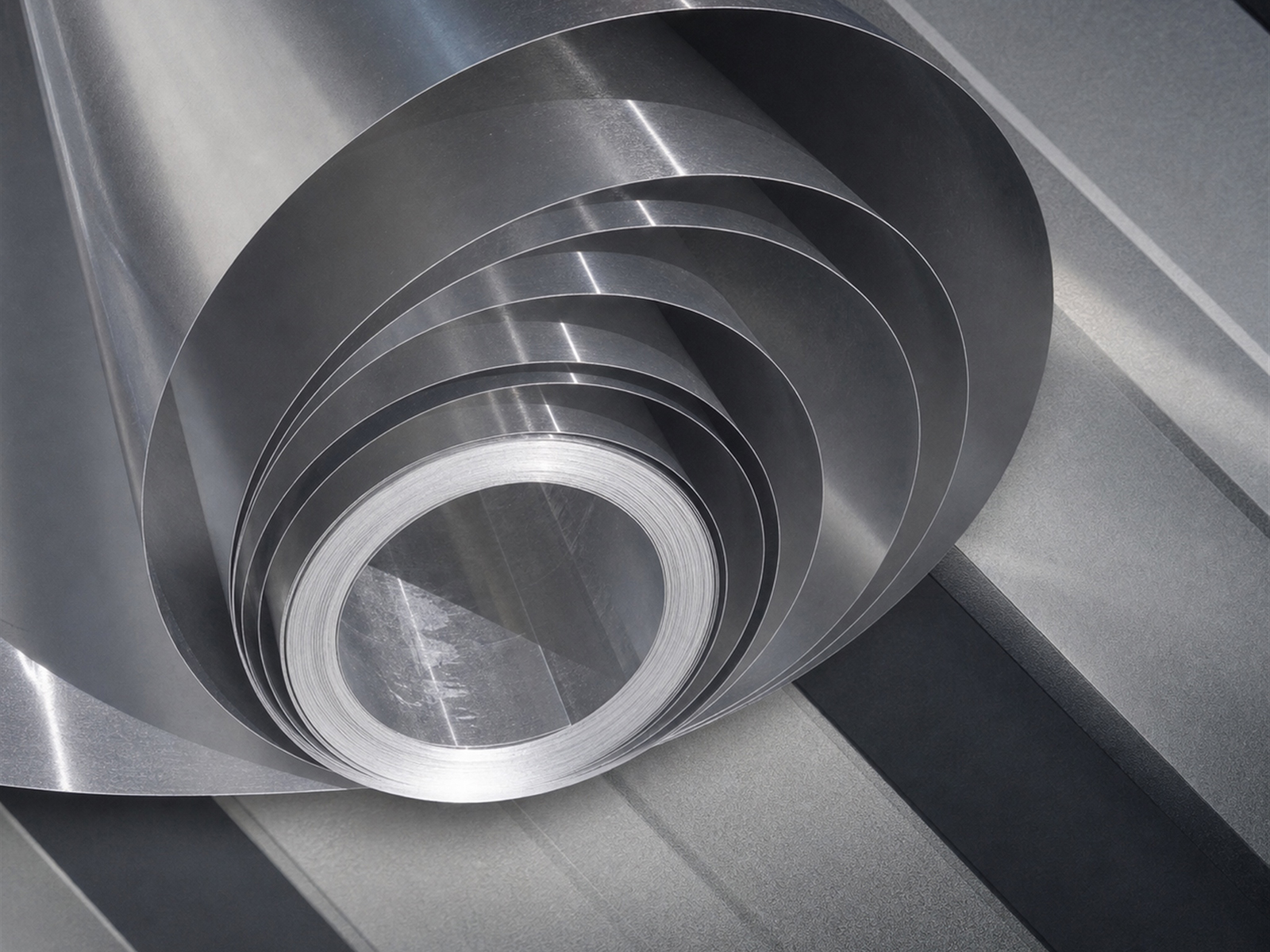
Direct engineering answer. Nickel 200 Foil should be evaluated against the finished component, product form, governing specification, downstream process and acceptance evidence. A general property value is an orientation tool; the released drawing, current certificate and inspection plan control the final decision.
Nickel 200 foil (UNS N02200) is an ultra-thin, wide-width metal material based on commercially pure nickel and produced through multiple passes of precision rolling. Under the basic requirements of ASTM B162 for UNS N02200, its nickel content should be no less than 99.0%; to suit ultra-thin rolling and precision conductive applications, Titanium Valley’s internal control specification further stabilizes the nickel content at no less than 99.6%.
This high purity delivers good electrical conductivity, alkali corrosion resistance, and ductile processing performance. Whether for new energy battery tabs, electrolytic electrodes, or electromagnetic shielding structural components, Nickel 200 foil has become a commonly used conductive functional material for engineers, owing to its stable chemical composition and reliable mechanical performance. This article analyzes the technical points of the material layer by layer, from composition to mechanical behavior, to help procurement engineers and R&D personnel make better-informed material selection decisions.
1. Chemical Composition of Nickel 200 Foil: Purity Determines the Performance Ceiling
(1) Principal Element Composition and Content Ranges
The composition of Nickel 200 foil must first satisfy the requirements of ASTM B162 for UNS N02200. At the same time, some companies adopt stricter internal control specifications for specific elements to accommodate the processing of ultra-thin foil. The table below lists both the standard requirements and the internal control values for the material covered in this article, to avoid conflating the two.
Element | ASTM B162 N02200 Requirements | Titanium Valley Internal Control Specification |
Ni | ≥ 99.0% | ≥ 99.6% |
C | ≤ 0.15% | ≤ 0.02% |
Cu | ≤ 0.25% | ≤ 0.25% |
Fe | ≤ 0.40% | ≤ 0.40% |
Mn | ≤ 0.35% | ≤ 0.35% |
Si | ≤ 0.35% | ≤ 0.35% |
S | ≤ 0.01% | ≤ 0.01% |
It should be particularly noted that ASTM B162 sets the carbon upper limit for N02200 at 0.15%; the internal control mentioned in this article limits carbon to ≤ 0.02% to fit a stricter rolling and annealing window, but this is not a standard requirement of ASTM B162 for N02200 and is not equivalent to the grade definition of Nickel 201 / UNS N02201.
(2) The Subtle Influence of Carbon Content on Material Performance
Although carbon content is low, it has an important influence on high-temperature annealing and long-term high-temperature service. In a pure nickel system, the primary risk of carbon is not the formation of typical chromium-sensitization-type intergranular corrosion; rather, when the carbon content is relatively high, carbon may precipitate at grain boundaries or in the matrix in the form of graphite, leading to graphitization embrittlement or reduced ductility. Controlling carbon at a low level helps reduce the tendency for graphite precipitation and maintain the toughness and processing stability of thin foil.
(3) The Rationale for Sulfur Control
Sulfur (S ≤ 0.01%) is one of the impurities that must be strictly controlled in nickel materials. Segregation of sulfur at nickel grain boundaries significantly reduces the hot ductility of the material, making hot working more prone to cracking. During the multi-pass cold rolling of ultra-thin foil, excessive sulfur content also intensifies the initiation of rolling cracks. Therefore, from raw material control to refining processes, the sulfur content must be stably controlled within the specification upper limit to ensure rolling continuity and batch-to-batch consistency.
2. Mechanical Properties of Nickel 200 Foil: Differences Between Annealed and Cold-Worked Conditions
Mechanical properties are among the most closely watched parameters of Nickel 200 foil in engineering material selection. Depending on the delivery condition, the material exhibits markedly different mechanical behavior, and engineers must match the condition to the application scenario.
(1) Performance Characteristics of the Annealed Condition
Annealed Nickel 200 foil, after continuous gas-protective annealing, recrystallizes to form uniform equiaxed grains and internal stress is relieved. Typical mechanical parameters are as follows:
Performance Parameter | Annealed | Cold-Worked |
Tensile strength | 380–420 MPa | 500–600 MPa |
Elongation | ≥ 35% | ≥ 8% |
The lower limit of annealed tensile strength is aligned with the minimum requirement of 55 ksi (approximately 379 MPa) for the annealed condition in ASTM B162. With elongation reaching above 35%, the material possesses good stamping and forming capability, suitable for applications requiring secondary processing such as battery tabs and precision connector strips.
(2) Strengthening Mechanism of the Cold-Worked Condition
Cold-worked Nickel 200 foil, by controlling the reduction in the final rolling passes and exploiting the work hardening effect, raises the tensile strength to 500–600 MPa. Calculated at the endpoints, this range represents an improvement of approximately 32%–43% over the annealed 380–420 MPa, with elongation remaining no lower than 8%. The cold-worked condition is suitable for scenarios requiring structural rigidity while still maintaining a certain level of ductility, such as precision conductive structural components in high-frequency vibration environments.
(3) Engineering Trade-off Between Hardness and Formability
In ultra-thin foil applications (e.g., 0.03 mm), excessively high hardness causes microcracks at blanking/shearing edges, affecting connection reliability. Production must therefore reasonably allocate cold rolling passes and intermediate annealing so that formability and strength are balanced, rather than simply pursuing high strength or high hardness.
3. The Correspondence Between Composition, Process, and Performance
(1) How High Purity Supports Electrical Conductivity
The electrical conductivity of pure nickel is about 25% IACS of copper, placing it at a moderately low level among metallic conductive materials; it is superior to materials such as stainless steel and titanium but markedly lower than copper and aluminum. The stable operation of Nickel 200 foil in electrode and electrical connection applications is closely related to its high purity. Impurity atoms such as iron and silicon, once incorporated into the lattice, act as electron scattering centers that increase resistivity. Controlling impurities at low levels helps maintain a regular lattice arrangement, thereby sustaining stable current transmission capability.
(2) The Synergistic Effect of Composition Purity and Corrosion Resistance
Nickel 200 foil exhibits outstanding corrosion resistance in alkaline and mildly reducing media. Low iron and silicon contents reduce the driving force for galvanic corrosion, while low sulfur content helps lower pitting susceptibility. In strong alkaline environments such as NaOH, a dense oxide film forms on the surface of pure nickel, blocking further penetration of the corrosive medium and thereby extending component service life.
(3) The Pathway by Which Annealing Affects the Microstructure
The continuous annealing process plays a decisive role in the final mechanical properties of Nickel 200 foil. If the annealing temperature is too low, recrystallization is incomplete and elongation is insufficient; if too high, grains grow excessively, strength decreases, and surface oxidation risk also increases. Through zoned temperature control and online monitoring, stably maintaining the annealing temperature within the process window helps ensure uniform microstructure from coil to coil, allowing the intrinsic properties conferred by the chemical composition to be fully realized.
4. Typical Application Scenarios and Material Selection Logic for Nickel 200 Foil
(1) New Energy Battery Industry: Prioritize Conductivity and Formability
When selecting materials for tabs and connector strips, battery manufacturers give primary consideration to contact resistance and welding reliability. With its high-purity nickel composition, Nickel 200 foil provides stable low-impedance contact, while the high elongation of the annealed condition (≥ 35%) supports automated spot welding and laser welding processes and reduces the risk of cold (poor) welds.
It should be clarified that current collectors in conventional lithium-ion batteries typically use copper foil or aluminum foil rather than pure nickel foil. In this field, pure nickel foil is more commonly used for conductive structural components such as tabs, connector strips, and protective elements, and should not be broadly classified as a current collector.
(2) Chemical and Electrolysis Industries: Prioritize Corrosion Resistance and Long Service Life
Application Scenario | Key Performance Requirements | Corresponding Advantages of Nickel 200 Foil |
Electrolytic electrodes | Alkali resistance, low dissolution rate | Ni ≥ 99.0% standard requirement, internal control ≥ 99.6%, stable in NaOH environments |
Corrosion protection components | Pitting resistance, stress corrosion resistance | Low S, low Fe, clean composition |
Precision stamped parts | High elongation, low springback | Annealed elongation ≥ 35% |
Electrolytic electrodes in chemical systems are immersed in strong alkaline media for long periods, and corrosion failure of the material often originates from localized corrosion induced by impurity elements. The composition control logic of Nickel 200 foil is highly consistent with this requirement.
(3) Precision Electronics and EMI Shielding: Prioritize Thickness Accuracy and Surface Cleanliness
In high-end precision electronics and battery industry applications, customers impose extremely strict requirements on thickness tolerance and surface condition. For 0.03–0.1 mm thin-gauge, narrow-width products, Titanium Valley’s 750 mm 20-high precision rolling mill can control thickness tolerance to ±0.001 mm; for thicker, wide-width specifications such as 0.8 mm thick and 670 mm wide, the thickness-width tolerance table applies, and the achievable tolerance range will differ. Ultrasonic cleaning and alkaline washing processes stabilize the surface wetting tension at 44 mN/m to ensure consistency of soldering wettability and conductive contact.
5. Batch Consistency: Verification from Composition to Performance
(1) Raw Material Purity Control and Batch Traceability
The quality reliability of Nickel 200 foil begins at the raw material stage. High-purity industrial nickel raw material must undergo chemical composition testing to ensure the Ni content meets the internal control starting requirement of ≥ 99.6%. Each batch of raw material is assigned a unique code, enabling traceability from melting and rolling through delivery, so that problem batches can be quickly located in the event of a quality dispute.
(2) Online Thickness Gauging and Flatness Control
The production line is equipped with an online laser thickness gauge and flatness inspection system that provides real-time feedback of thickness deviation data and dynamically adjusts rolling parameters. Work hardening accumulated during multi-pass precision cold rolling must be softened or eliminated through intermediate annealing to prevent excessive accumulation from affecting ultra-thin rolling stability and flatness.
(3) Surface Treatment and Final Inspection Standards
Each coil of Nickel 200 foil undergoes ultrasonic cleaning and alkaline washing before delivery to remove residual rolling oil and oxides from the surface, with the surface wetting tension stably maintained at 44 mN/m. Final inspection covers thickness, width, mechanical properties, surface appearance, and chemical composition, in compliance with ASTM B162 and contract specification requirements, and is accompanied by complete material reports and inspection certificates.
6. Conclusion
The high-performance characteristics of Nickel 200 foil are rooted in strictly controlled chemical composition and a process-optimized mechanical parameter system. The high-purity nickel composition underpins electrical conductivity, alkali corrosion resistance, and processing consistency; the differentiated delivery conditions of annealed and cold-worked states cover a range of engineering needs from flexible forming to high-strength connections. In material selection, the ASTM B162 standard requirements, internal control points, and actual service conditions should be correlated to maximize the engineering value of the material.
FAQ
(1) Q1: Which application scenarios are respectively suited to the annealed and cold-worked conditions of Nickel 200 foil?
The annealed condition, with elongation ≥ 35%, is suitable for scenarios requiring stamping and bending forming, such as battery tabs and connector strips; the cold-worked condition, with tensile strength reaching 500–600 MPa and elongation still no lower than 8%, is suitable for precision conductive components with structural strength requirements. Both conditions can be supplied on a custom basis as required.
(2) Q2: Why is the sulfur content in Nickel 200 foil strictly controlled below 0.01%?
Segregation of sulfur at nickel grain boundaries significantly reduces the hot ductility of the material and readily induces edge cracking and surface cracks during ultra-thin rolling. Controlling sulfur below 0.01% is a key measure for ensuring the continuity of multi-pass rolling, improving batch stability, and enhancing product surface quality.
(3) Q3: How is the thickness tolerance of Nickel 200 foil guaranteed? What is the minimum achievable thickness?
For 0.03–0.1 mm thin-gauge, narrow-width products, the 750 mm 20-high precision rolling mill can control thickness tolerance to ±0.001 mm; thicker or wide-width specifications are executed according to the thickness-width tolerance table. The standard specification thickness range is 0.03–0.8 mm; under narrow-width, small-batch custom conditions, the minimum achievable thickness after process evaluation is 0.005 mm, but must be separately confirmed for width and tolerance.
Contact Us
Looking for a reliable pure nickel foil manufacturer or supplier? Titanium Valley offers high-precision Nickel 200 foil in thicknesses from 0.03–0.8 mm and up to 670 mm in maximum width, with stable batch supply and customization support. Please contact: sales@titaniumvalleys.com
References
- National Technical Committee on Nonferrous Metals Standardization. GB/T 2072-2020 Nickel and nickel alloy strips and foils[S]. Beijing: China Standard Press, 2020.
- National Technical Committee on Nonferrous Metals Standardization. GB/T 5235-2008 Wrought nickel and nickel alloys — Chemical composition and forms of products[S]. Beijing: China Standard Press, 2008.
- Huang Boyun, Li Chenggong, Shi Likai, eds. China Materials Engineering Canon: Nonferrous Metal Materials Engineering[M]. Beijing: Chemical Industry Press, 2006.
- Cui Zhongqi, Qin Yaochun. Physical Metallurgy and Heat Treatment[M]. Beijing: China Machine Press, 2007.
Engineering specification and verification framework
For Nickel 200 Foil, state grade, ordered product form, condition, nominal dimensions, tolerances, surface requirement, quantity and documentation in one controlled RFQ. The applicable product-form reference is ASTM B162, subject to the current edition and project-specific requirements. When tensile evidence is required, define the test method and sampling basis; ASTM E8/E8M or ISO 6892-1 may apply where consistent with the order.
| RFQ field | Required detail | Reason |
|---|---|---|
| Material identity | Grade, form, ASTM B162, condition | Prevents unintended substitution. |
| Geometry | Nominal size, tolerance, length or coil form | Defines production and inspection scope. |
| Process context | Forming, machining, joining, etching or assembly | Relates supply condition to actual manufacture. |
| Verification | Certificate, dimensional checks, lot identity | Creates a traceable acceptance plan. |
Risk review and incoming control
Common avoidable risks include tolerance stack-up, unclear condition, surface damage, undocumented substitution and loss of lot identity after cutting. At receipt, reconcile the purchase order, packing label and certificate before release to production. Define any supplementary testing, sampling and report format before quotation rather than after shipment.
Technical FAQ
Can catalogue values approve the material?
No. Final approval must use the ordered form, condition, standard, drawing, process route and service boundary.
What should an RFQ include?
Provide the drawing where available, grade and standard, dimensions, tolerance, condition, quantity, process context, service information and documentation requirement.
Product resources and technical quotation
Review the relevant nickel product category. For a drawing-based review, request a technical quotation with the full specification.
References and use note
- ASTM B162, applicable edition, for the ordered product form.
- ASTM E8/E8M or ISO 6892-1 where the project specifies tensile verification.
- Project drawing, purchase specification, certificate and agreed inspection plan.
This engineering note supports procurement specification. It does not replace component design validation or the governing contractual standard.