
How Should Gr5 Titanium Bar Be Stored and Handled to Prevent Surface Damage?
- Gr5 Titanium Bar
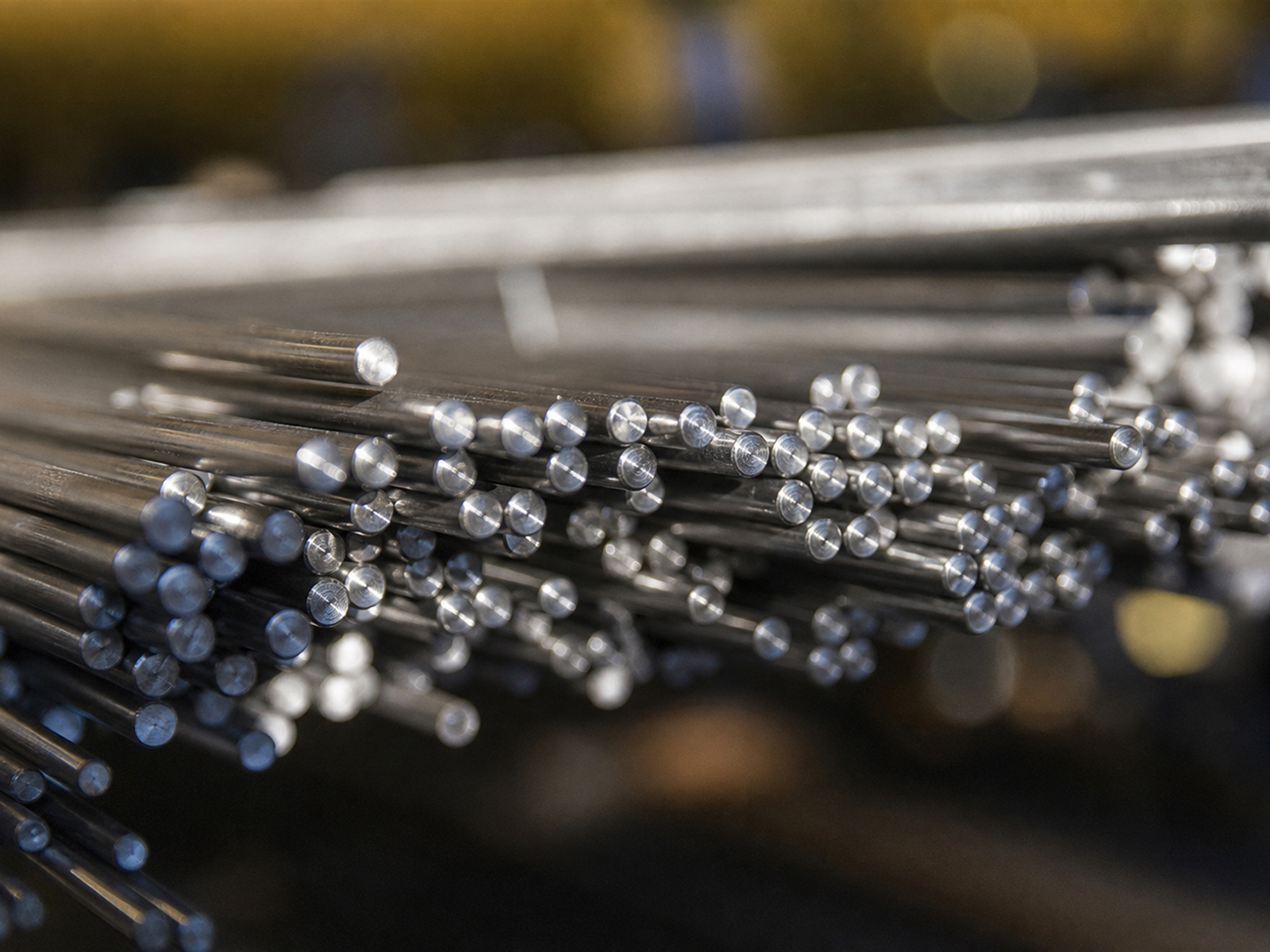
Direct engineering answer. Gr5 Titanium Bar should be evaluated against the finished component, product form, governing specification, downstream process and acceptance evidence. A general property value is an orientation tool; the released drawing, current certificate and inspection plan control the final decision.
Gr5 titanium bar (Ti-6Al-4V) is one of the most widely used titanium alloy materials in industry, offering high strength, light weight, and good corrosion resistance. However, defects such as surface scratches, indentations, and contamination during storage and handling can affect subsequent machining accuracy and can act as crack initiation sites in high-stress or corrosive environments. For applications such as aerospace and precision medical devices, surface integrity is directly related to part safety and regulatory compliance. Storage and handling management should be treated as part of quality control.
1. Surface Characteristics of Gr5 Titanium Bar and Protection-Related Factors
(1) Hardness and Scratch Sensitivity
The Brinell hardness of Gr5 titanium bar in the annealed condition commonly ranges from approximately 300 to 350 HBW, depending on heat treatment condition, bar diameter, and product standard. This is higher than that of commercially pure titanium, but the risk of surface scratching should not be overlooked. Under dry friction, high contact pressure, or poor lubrication, titanium is prone to galling and surface damage when rubbed against dissimilar metals. Performance varies considerably with surface condition, lubrication, and contact pressure; therefore, direct friction between steel tools, racks, and the bar surface should be avoided.
(2) The Dual Nature of the TiO₂ Passive Film
The naturally formed TiO₂ passive film on the surface of Gr5 titanium bar provides excellent corrosion resistance. This film is typically about 2–7 nm thick, extremely thin and dense, but its actual thickness varies with environment, temperature, and surface treatment condition. Impacts or abrasion during storage and handling can locally disrupt the passive film. It is capable of repassivation in dry, clean environments; however, in contaminated environments, or in the presence of iron ion residue or crevices, particular attention should be paid to preventing surface contamination, crevice corrosion, and hydrogen embrittlement risks. For critical components, any damage to the passive film should be recorded and evaluated.
(3) Different Protection Requirements for Different Surface Conditions
Surface Condition | Common Name | Roughness Reference | Protection Priority |
Forged/hot-rolled black surface | Black surface | Ra 12.5–25 μm | Medium (avoid scale breakage and mechanical damage) |
Peeled bar | Peeled rod | Ra 1.6–3.2 μm | Medium (prevent contact scratches) |
Turned and polished surface | Turned & polished | Ra ≤1.6 μm (depending on polishing operation) | High (surface easily marked) |
Ground and polished surface | Centerless ground | Ra ≤0.4 μm | Extremely high (any contact requires isolation) |
2. Storage Environment Management
(1) Temperature, Humidity, and Chemical Contamination Control
Gr5 titanium bar is less sensitive to humidity than some aluminum alloys, but prolonged exposure to high humidity or chloride-containing industrial atmospheres can still cause moisture absorption, dust accumulation, and localized contamination on the surface. Warehouses should be located away from areas where acids, alkalis, chlorides, and sulfur-containing chemicals are stored. Temperature and humidity control targets may reference corporate internal values or empirical values: temperature 10–35℃ and relative humidity ≤60%; specific values should be adjusted according to local climate, packaging condition, and inventory period, and should not be treated as universal mandatory requirements. The warehouse should be regularly ventilated to prevent the accumulation of corrosive gases such as ammonia and salt spray.
(2) Rack Design and Selection of Isolation Materials
Titanium bar should not be placed in direct contact with carbon steel or stainless steel racks. The primary risks are not galvanic corrosion of the titanium itself—titanium acts as the cathode in most galvanic couples, so its own corrosion risk is low—but scratching and iron ion contamination. Burrs, weld spatter, and hard particles on steel racks can directly damage the titanium bar surface, and iron contamination can have adverse effects on subsequent use. Recommended isolation measures are as follows:
Isolation Material | Applicable Scenario | Notes |
Polyethylene (PE) tube sleeves | Small-diameter bar (φ4–φ30 mm) | Avoid plasticized PVC to prevent chloride contamination |
Rubber pads | Rack contact points | Use sulfur-free rubber to reduce sulfur contamination risk |
Wooden separators | Stacked storage | Must be dry with controlled moisture content to prevent particles being pressed in and localized contact pressure concentration |
Nonwoven fabric wrapping | Bright/machined surface bar | Single-use; must not be reused in contact with other metals |
(3) Load-Bearing Logic for Vertical and Horizontal Storage
Large-diameter Gr5 forged bar (φ100–φ300 mm) has substantial dead weight, and when stacked horizontally the bottom bars are subjected to concentrated loads. For large-diameter bar, dedicated V-type cradles are recommended for horizontal storage; with two-point support, the support points should be positioned near the ends, approximately 1/5 to 1/4 of the bar length from each end, i.e., a support spacing of about 50%–60% of the bar length, to avoid excessive deflection and overhang of the ends. Small-diameter bar (φ4–φ30 mm) can be stored vertically in dedicated tube racks, primarily to prevent tipping, instability, and end-face impact damage.
3. Handling Procedures and Packaging Protection
(1) Equipment Selection and Operating Guidelines for Mechanical Handling
When moving titanium bar with a forklift, the forks must be fitted with rubber or polyurethane sleeves, and bare steel fork tines must never contact the titanium bar surface. When lifting large-diameter bar, nylon slings should be used instead of steel wire ropes. Sling width and load capacity should be verified against the bar weight; large-diameter, heavy bars require wider slings or dedicated lifting fixtures; the safety load factor should meet the requirements of the lifting equipment specification or the manufacturer, typically not less than 5: 1. Slings should be inspected before use for embedded metal debris, damage, or aging. Lifting should be kept vertical to avoid bar swinging and collision.
(2) Protection Details for Manual Handling
Operators should wear powder-free nitrile gloves or clean non-slip gloves; cotton gloves (which absorb moisture and pick up particles) and ordinary rubber gloves (which may contain sulfides) should not be used. When handling by hand, support points should be evenly distributed to avoid excessive overhang of the bar ends. For precision bar with a centerless ground finish, an additional wrap of chlorine-free, plasticizer-free bubble film can be applied, mainly to cushion contact forces and prevent impact and scratching; if bubble film is reused, it must be kept clean, and antistatic types should be selected when necessary.
(3) Packaging Design for Inter-Process Transfer
Transfer from the warehouse to the machining shop is a stage where surface damage is likely to occur. A two-layer protective structure of “soft inner wrapping + rigid outer support” is recommended: the inner layer uses nonwoven fabric or PE foam tightly wrapped around the bar, and the outer layer is fixed inside chlorine-free PE, PP, or rigid paper tubes, avoiding PVC tubes. Clean cushioning material can be filled inside the tube to reduce vibration transmission. During batch transfer, bars of different sizes should be stored in separate zones, and mixed loading with impact is strictly prohibited.
4. Enhanced Protection Strategies for Special Service Conditions
(1) Long-Term Storage in Marine and High-Humidity Environments
For marine engineering customers (e.g., desalination equipment, ship accessory parts), the warehouse can be equipped with industrial dehumidifiers to keep relative humidity below 45%. The bar surface can be protected with chlorine-free rust-preventive oil suitable for titanium alloys or a water-displacing rust-preventive solution, with an additional heat-shrink film seal on the outside. During long-term storage, whether treatment is needed should primarily be judged by the integrity of the outer packaging, desiccant condition, or humidity indicator cards to avoid frequent opening of the package and breaking the seal; open the package for confirmation only when necessary.
(2) Export Packaging Standards for Long-Distance Ocean Shipping
Export packaging of Gr5 titanium bar must meet ocean shipping requirements: wooden crates must have heat treatment (HT) phytosanitary certification; a moisture barrier lining (e.g., moisture-proof paper/PE film) should be used to reduce moisture and air exchange. If VCI vapor-phase corrosion-inhibiting paper is used, its function is to provide vapor-phase corrosion protection rather than a physical barrier; it should be a multi-metal compatible, chlorine-free type confirmed to be suitable for titanium alloys. Bars should be separated with PE foam, and strapping tension should be moderate to prevent loosening and friction caused by transport vibration. The outside of the crate should be marked with the warning “FRAGILE SURFACE – TITANIUM ALLOY”.
(3) Precautions for Handling in Low-Temperature Environments
When Gr5 titanium bar stored in a low-temperature environment is moved into a room-temperature shop, unpacking it directly may cause condensation. If air contaminants dissolve in the condensed water film, the risk of localized contamination may increase. The correct procedure is: keep the packaging unopened until the entire package has warmed up, and use a dew point meter or surface temperature measurement to confirm that the bar surface temperature is above the indoor air dew point before unpacking; alternatively, control the indoor dew point. A fixed time such as “waiting 30 minutes” should not be used as a universal criterion.
5. Damage Assessment and Disposition
(1) Classification Criteria for Surface Damage
Whether storage and handling damage is acceptable depends primarily on the subsequent machining allowance, final surface condition, and service conditions. The depth thresholds below are provided only as empirical references and should not be directly treated as universal acceptance criteria:
- Minor scratches (depth approximately <0.05 mm): If sufficient machining allowance remains, they can usually be removed by localized grinding; after grinding, the diameter must be re-measured and dimensional tolerance and surface quality confirmed.
- Moderate damage (depth approximately 0.05–0.2 mm): Evaluate in combination with the machining allowance, the criticality of the part, and surface integrity requirements; localized grinding and nondestructive testing may be required.
- Deep damage (>0.2 mm or evidence of cracking): Isolate immediately. Disposition measures include dimensional measurement, nondestructive testing, and engineering fitness-for-service assessment; the material must not be used directly for high-safety applications such as aerospace or medical without evaluation.
(2) Application of Nondestructive Testing (NDT) in Damage Confirmation
For suspect damage areas, penetrant testing (PT) can reveal surface-open discontinuities, and ultrasonic testing (UT) can be used to detect internal or deeper defects. However, PT cannot measure depth, and UT has limited ability to quantify the depth of very shallow surface scratches. Depth confirmation should preferably use profilometry, laser scanning, or microscopic cross-section methods. Whether Gr5 bar is subjected to PT/UT at the mill is typically determined by the order, product specification, or agreement between the supplier and buyer; ASTM B348 should not be interpreted as mandating PT/UT for all bar.
(3) Damage Records and Supply Chain Feedback Mechanism
Upon discovery of storage and handling damage, the location, morphology, and estimated depth of the damage should be photographed and recorded, along with the time of discovery and the responsible stage (before receipt/during storage/during transfer). Damage data should be summarized periodically to analyze high-frequency stages and optimize operating procedures accordingly. A quality feedback channel should also be established with suppliers to ensure traceability of surface integrity throughout the entire chain from production and delivery to machining and use.
6. Summary
Surface protection of Gr5 titanium bar is a systematic effort that runs through the entire process of storage, handling, transfer, and assessment. The selection of rack isolation materials, proper use of handling slings, and scientific assessment of damage should all be incorporated into quality control management. The goal of storage, handling, and surface protection is to ensure subsequent machining quality and service reliability and to reduce rework and quality risks caused by surface damage.
FAQ
(1) Q1: What are the practical risks of storing Gr5 titanium bar on ordinary steel racks?
Burrs and hard particles on the surface of steel racks can directly scratch the titanium bar surface and may leave iron ion contamination. Titanium acts as the cathode in most galvanic couples, so its own galvanic corrosion risk is low, but in humid environments, iron contamination and crevice conditions can increase the risk of localized corrosion. Rubber pads or PE sleeves are recommended for isolation.
(2) Q2: How should protective gloves and packaging be selected when handling centerless-ground Gr5 titanium bar?
Powder-free nitrile gloves or clean non-slip gloves are recommended; cotton gloves should be avoided because they absorb moisture and pick up particles. For bar with Ra ≤0.4 μm, a clean bubble film wrapping that is chlorine-free, plasticizer-free, and antistatic when necessary can also be applied, primarily to prevent impact and scratching.
(3) Q3: Can Gr5 titanium bar with minor surface scratches be used directly in aerospace structural components?
Direct use is not recommended. An engineering assessment should be performed in combination with the machining allowance, surface condition, and criticality of the part, using PT/UT or other methods to confirm the nature of the defect when necessary. PT can reveal surface-open discontinuities, and UT is applicable to internal defects, but both have limited ability to quantify the depth of very shallow scratches. Aerospace applications have extremely high surface integrity requirements, and any unevaluated damage can become a fatigue crack initiation site.
Contact Us
Looking for a reliable manufacturer, supplier, or processing service for Gr5 titanium bar (Ti-6Al-4V, UNS R56400)? A professional titanium materials company with full-process capability from vacuum arc remelting (VAR), forging breakdown, hot rolling/precision forging to annealing, straightening, pickling, and turning/grinding can support custom specifications per ASTM B348, GB/T 2965, and other standards, covering a diameter range of φ4–φ300 mm and offering multiple surface conditions including black forged surface, peeled surface, turned + polished surface, and centerless ground polished surface (Ra ≤0.4 μm). For applications with high surface integrity requirements such as aerospace and precision medical devices, chlorine-free PE sleeves, sulfur-free rubber pads, nonwoven fabric wrapping, and moisture-proof/VCI packaging solutions can be provided per GB/T 8180 and other standards, with dimensional, surface quality, and nondestructive testing data supplied in the mill inspection. Material test certificates (MTC), chemical composition and mechanical property reports, ultrasonic/eddy current inspection reports, and lot traceability documents are available, and supply can conform to AMS 4928 and other aerospace specifications. Please contact: sales@titaniumvalleys.com
References
- Standardization Administration of China. GB/T 2965-2007 Titanium and titanium alloy bars[S]. Beijing: China Standards Press, 2007.
- Standardization Administration of China. GB/T 3620.1-2016 Titanium and titanium alloy designations and chemical composition[S]. Beijing: China Standards Press, 2016.
- Standardization Administration of China. GB/T 8180-2007 Packaging, marking, transport and storage of titanium and titanium alloy wrought products[S]. Beijing: China Standards Press, 2007.
- Zhang Xiyan, Zhao Yongqing, Bai Chenguang, et al. Titanium alloys and applications[M]. Beijing: Chemical Industry Press, 2005.
- Wang Jinyou, Ge Zhiming, Zhou Yanbang. Titanium alloys for aerospace[M]. Shanghai: Shanghai Scientific & Technical Publishers, 1985.
Engineering specification and verification framework
For Gr5 Titanium Bar, state grade, ordered product form, condition, nominal dimensions, tolerances, surface requirement, quantity and documentation in one controlled RFQ. The applicable product-form reference is ASTM B348, subject to the current edition and project-specific requirements. When tensile evidence is required, define the test method and sampling basis; ASTM E8/E8M or ISO 6892-1 may apply where consistent with the order.
| RFQ field | Required detail | Reason |
|---|---|---|
| Material identity | Grade, form, ASTM B348, condition | Prevents unintended substitution. |
| Geometry | Nominal size, tolerance, length or coil form | Defines production and inspection scope. |
| Process context | Forming, machining, joining, etching or assembly | Relates supply condition to actual manufacture. |
| Verification | Certificate, dimensional checks, lot identity | Creates a traceable acceptance plan. |
Risk review and incoming control
Common avoidable risks include tolerance stack-up, unclear condition, surface damage, undocumented substitution and loss of lot identity after cutting. At receipt, reconcile the purchase order, packing label and certificate before release to production. Define any supplementary testing, sampling and report format before quotation rather than after shipment.
Technical FAQ
Can catalogue values approve the material?
No. Final approval must use the ordered form, condition, standard, drawing, process route and service boundary.
What should an RFQ include?
Provide the drawing where available, grade and standard, dimensions, tolerance, condition, quantity, process context, service information and documentation requirement.
Product resources and technical quotation
Review the relevant titanium bar or rod product category. For a drawing-based review, request a technical quotation with the full specification.
References and use note
- ASTM B348, applicable edition, for the ordered product form.
- ASTM E8/E8M or ISO 6892-1 where the project specifies tensile verification.
- Project drawing, purchase specification, certificate and agreed inspection plan.
This engineering note supports procurement specification. It does not replace component design validation or the governing contractual standard.