
How Do You Distinguish Between Nickel 200 Rod and Nickel 200 Bar?
- Nickel 200 Bar
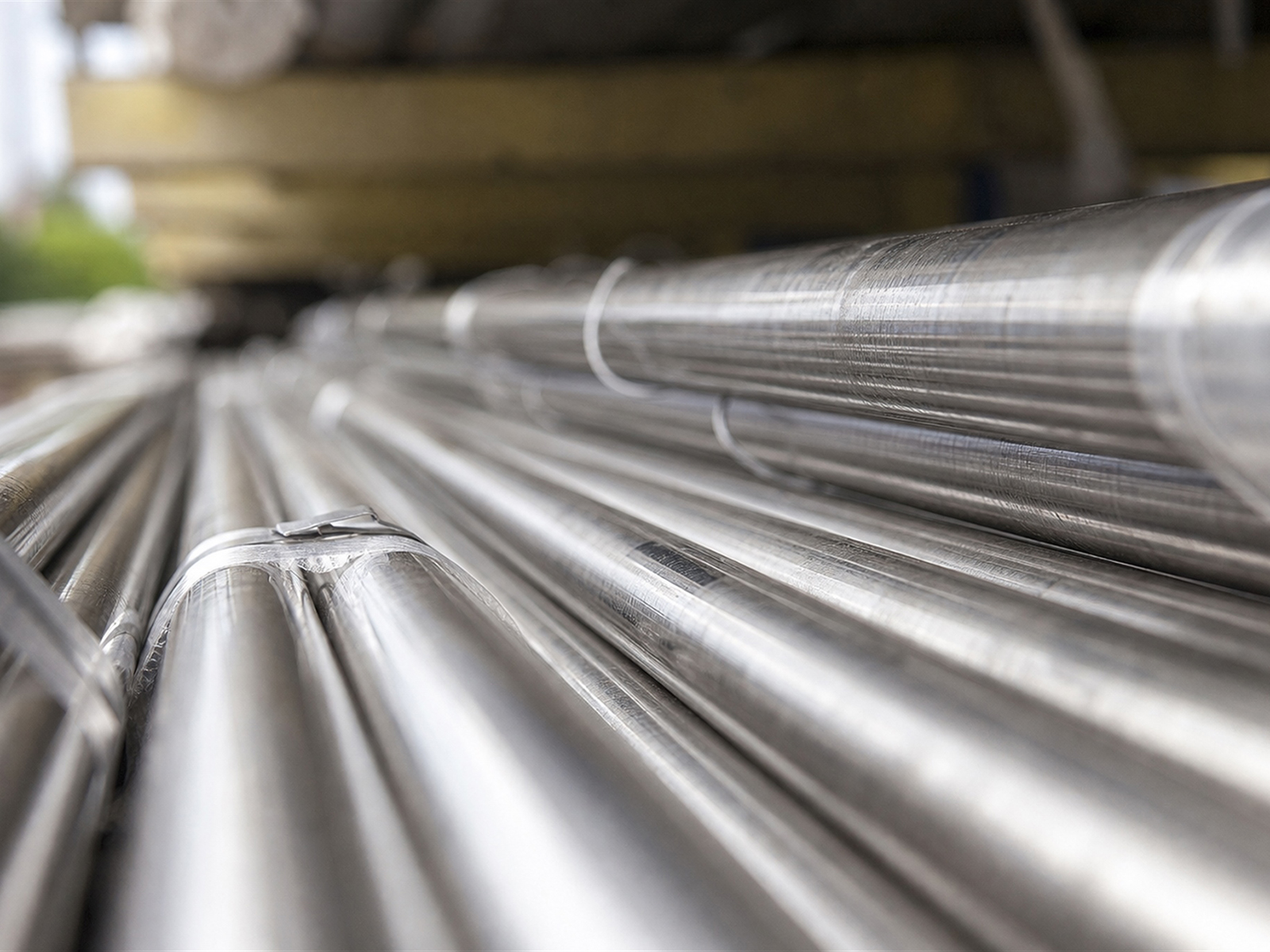
Direct engineering answer. Nickel 200 Bar should be evaluated against the finished component, product form, governing specification, downstream process and acceptance evidence. A general property value is an orientation tool; the released drawing, current certificate and inspection plan control the final decision.
When purchasing Ni200 pure nickel materials, “Rod” and “Bar” often appear on the same inquiry sheet, and many engineers and procurement professionals tend to treat the two as interchangeable. In fact, these two terms differ in cross-section geometry, supply form, processing route, and end-use application. In simple terms, Rod typically refers to a round-section product of continuous length that can be supplied in coil or as cut-to-length straight pieces; Bar generally refers to solid products with a fixed cross-section shape (round, square, hexagonal, etc.), most commonly supplied as cut-to-length straight bars. It should be noted that ASTM B160 does not impose a mandatory distinction between Rod and Bar at a specific diameter; procurement decisions should therefore be confirmed against the applicable standard, drawings, and delivery condition.
1. Rod vs Bar: Definitions, Cross-Sections, and Dimensional Boundaries
(1) Basic Positioning Under ASTM B160
Under the ASTM B160 standard system, “Nickel 200 Rod” generally refers to slender products with predominantly round cross-sections, suitable for supply in coils or as cut-to-length straight bars; “Nickel 200 Bar” encompasses a wider range of cross-section geometries, including round, square, and hexagonal bars, and is most commonly delivered as cut-to-length straight bars. Both can be supplied under ASTM B160, corresponding to UNS N02200, with the German material number typically given as W.Nr. 2.4066.
(2) Cross-Section Geometry and Common Supply Forms
Product Term | Typical Cross-Section | Common Supply Forms | Remarks |
Nickel 200 Rod | Round | Coil / cut-to-length straight bar | Commonly used for precision machining; tighter dimensional tolerances after cold drawing |
Nickel 200 Bar | Round, square, hexagonal, etc. | Predominantly cut-to-length straight bars | Commonly used for subsequent turning, milling, or direct machining of parts |
Nickel 200 Wire | Round | Coil / cut-to-length straight bar | Usually smaller in diameter; commonly supplied to wire standards or by mutual agreement |
(3) Common Misconceptions About Dimensional Boundaries
In actual trade practice, round-section products of smaller diameter may be referred to as Wire or Rod, while larger-diameter straight round bars may be called Bar, but these are only industry conventions, not mandatory boundaries defined by ASTM B160. Internal specifications vary among different manufacturers and customers. The correct approach is to specify in the technical specification the applicable standard, cross-section shape, diameter or across-flats dimension, tolerance class, length or coil weight, and delivery condition, rather than switching between Rod and Bar designations based solely on a diameter figure.
2. Manufacturing Processes and Delivery Conditions: Key Variables Affecting Performance
(1) Primary Processing Routes
Ni200 rod and bar products follow these common manufacturing process routes:
Process flow:
Raw material / electrode preparation → Melting (VAR is not mandatory under ASTM B160) → Ingot breakdown → Hot forging / hot rolling to shape → Cold drawing / cold rolling for finishing (common for Rod and small-section Bar) → Heat treatment (annealing / stress relieving, etc.) → Straightening / turning / grinding → Non-destructive testing → Inspection and dispatch
Rod-type products more frequently undergo cold drawing for finishing, resulting in high surface finish and tight dimensional tolerances; Bar-type products are predominantly produced by hot rolling or hot forging with larger cross-sections, with bright turning optionally applied afterward to improve surface quality.
(2) Performance Differences by Delivery Condition
Delivery Condition | Common ASTM Expression | Typical Characteristics | Applicable Scenarios |
Hot-finished | hot-finished | Relatively coarse grain; wide size range | Stock requiring secondary hot working or heavy turning |
Annealed | annealed | Uniform grains, good ductility, suitable for forming; pure nickel remains ferromagnetic at room temperature | Bending and forming, welded structural parts, alkali-resistant components |
Cold-drawn / cold-worked | cold-drawn / cold-worked | Higher strength; high dimensional accuracy and surface finish | High-strength shafts, wear-resistant parts |
Under the ASTM B160 framework, non-standard condition designations such as “M / R / Y” should not be used as formal delivery-condition expressions. Annealing does not convert commercially pure nickel into a low-permeability material; pure nickel remains ferromagnetic at room temperature.
(3) Chemical Composition and Melting Routes
ASTM B160 specifies the chemical composition requirements for UNS N02200 as Ni+Co ≥ 99.0%, C ≤ 0.15%, S ≤ 0.01%, and Fe ≤ 0.40%. Some commercial marketing claims may state “Ni ≥ 99.6%”, but procurement acceptance should be based on the minimum requirements of the standard, with the full composition table verified.
ASTM B160 does not mandate VAR vacuum arc remelting. Remelting routes such as VAR or “VIM + VAR/ESR” can improve compositional uniformity and structural density, but VAR has limited ability to remove low-melting-point harmful impurities such as sulfur and should not be promoted on its own as the core guarantee of purity. Suppliers should provide heat analysis and product analysis reports.
3. Performance Characteristics and Matching of Typical Application Scenarios
(1) Quick Overview of Ni200 Core Properties
Ni200 is widely used in the chemical, electronics, and food industries, but its performance boundaries should be accurately understood.
Property Dimension | Specific Behavior | Typical Benefiting Applications |
Alkali corrosion resistance | Good performance in strong alkalis such as NaOH and KOH | Chlor-alkali industry electrodes, evaporator components |
Electrical conductivity | Stable purity and structure give reproducible conductivity; resistivity higher than copper and aluminum | Electrodes, conductive components (design based on resistance and cross-section) |
Thermal conductivity | Relatively high thermal conductivity | Heat exchangers, heating tubes |
Magnetism | Ferromagnetic at room temperature; the annealed condition is still magnetic and cannot be treated as a low-permeability material | Components requiring magnetic permeability; not suitable for low-permeability / electromagnetic shielding applications |
Intermediate-temperature performance | Usable in sulfur-free atmospheres, but high-temperature strength is not outstanding and oxidation resistance is limited | Sulfur-free intermediate-temperature parts, heat treatment fixtures |
Low-temperature toughness | No significant cold brittleness at low temperatures | Low-temperature chemical piping components |
Weldability | Conventional fusion welding methods applicable | Welded assemblies for chemical equipment |
(2) Application Scenarios Favoring the Rod Form
Small-diameter Rod products, owing to the high surface finish and tight tolerances imparted by cold drawing, are naturally suited to precision machining applications: sensor spindles, precision instrument shafts, and non-standard shaft components for automated equipment. In the electronics industry, Ni200 Rod is also used for terminal connectors in nickel-hydrogen and nickel-cadmium batteries, as well as grid support members for vacuum electronic devices.
(3) Application Scenarios Favoring the Bar Form
Bar products with larger cross-sections are more commonly used for components that are directly machined by turning or milling: anode plate blanks and heating tube blanks for the chlor-alkali industry, alkali-resistant pump bodies and valve components in chemical processing, and pressing rollers and dies for the food/pharmaceutical industries. Hexagonal bar is frequently machined directly on CNC lathes to produce standard fasteners, which can reduce secondary breakdown processing.
It should be noted in particular that marine seawater-corrosion-resistant fasteners and pump shafts are not appropriate typical applications for Ni200 Bar. For seawater service, Monel 400 / K500 or copper-nickel alloys are normally preferred over pure nickel.
(4) Clear Boundaries of Non-Applicable Scenarios
Ni200 is not a universal material; the following scenarios require avoidance or reselection: severe corrosion occurs in high-temperature oxidizing acids (such as hot nitric acid); sulfur embrittlement risk exists in sulfur-bearing atmospheres above approximately 315℃; and localized corrosion may occur in high-temperature, highly oxidizing chloride systems. Whether Ni200 should be selected for strongly oxidizing chlorinated salt environments should be judged based on the specific medium concentration, temperature, pH, and redox conditions, and cannot be simplistically dismissed as “pure nickel is prone to pitting”.
4. Material Selection Decisions: How to Choose Precisely Based on Service Conditions
(1) Establishing a Material Selection Framework
Material selection should not rely solely on the product name but should be evaluated across dimensions such as cross-section geometry, dimensional precision, service medium, and downstream processing method:
- Coil supply, small diameter, high surface quality, and tight tolerances required → prioritize Rod (cold-drawn or annealed condition)
- Large cross-section, straight bars, and subsequent heavy machining required → prioritize Bar (hot-worked or annealed condition)
- Service involving strong alkalis or electrolytes → verify that Ni+Co ≥ 99.0% and C, S, etc. comply with ASTM B160
- Applications requiring low permeability or electromagnetic-sensitive environments → Ni200 should not be selected; choose genuine low-permeability nickel-based alloys or non-ferromagnetic materials instead
- Service involving high-strength shaft components → cold-drawn material may be selected, but work hardening and subsequent welding effects must be considered
(2) Key Elements of the Procurement Technical Specification
A complete Ni200 rod / bar procurement technical document should include at least the following:
- Applicable standard: ASTM B160 (Nickel Rod and Bar), UNS N02200, W.Nr. 2.4066
- Cross-section geometry: round / square / hexagonal bar, with diameter or across-flats dimension and tolerance class
- Delivery condition: annealed, hot-finished, cold-drawn, or stress-relieved
- Surface condition: hot-rolled, pickled, bright-turned, or cold-drawn bright finish
- Mechanical properties: minimum requirements for tensile strength, yield strength, and elongation
- Inspection requirements: chemical composition report (MTR), type of non-destructive testing (NDT)
- Packaging and marking requirements
5. Common Procurement Pitfalls and Key Points of Quality Acceptance
(1) Three High-Frequency Procurement Misconceptions
Misconception 1: Judging whether Rod and Wire are interchangeable solely by coil / straight-bar form.
Rod and Wire often differ in diameter range, processing condition, and mechanical properties, but Rod can also be supplied in coils, and Wire can be supplied as cut-to-length straight pieces. Interchangeability cannot be determined by packaging form alone; it should be judged based on the applicable standard, diameter, delivery condition, and end use.
Misconception 2: Failing to specify the delivery condition, or using non-ASTM condition codes such as “M / R / Y”.
Under the ASTM B160 framework, it is recommended to specify clearly as annealed, hot-finished, cold-drawn, etc. Otherwise, cold-worked material may be received, which has high strength but insufficient ductility, creating difficulties in bending, forming, or welding. For most chemical and electronics applications, the annealed condition should be the default choice, though it should be noted that pure nickel remains magnetic.
Misconception 3: Relying on quotations instead of composition verification.
Acceptance of Ni200 should be based on the Ni+Co ≥ 99.0% requirement and C, S, and other impurity limits in ASTM B160, not on marketing claims such as “high-purity Ni ≥ 99.6%”. Low-priced material may have excessive sulfur or carbon, increasing the risk of intergranular precipitation, localized corrosion, or embrittlement during electrolytic or high-temperature service.
(2) Core Inspection Items for Incoming Material Acceptance
Upon receipt of material, the following basic acceptance checks are recommended: verify the material test report (MTR) to confirm the chemical composition complies with ASTM B160; perform visual and dimensional sampling to verify cross-section dimensions, surface condition, and length or coil weight tolerances; and, where necessary, perform eddy current or ultrasonic non-destructive testing (NDT) to detect internal defects.
(3) Differences in Receiving Inspection Between Rod and Bar
For coiled Rod, priority should be given to continuous length, coil weight, number of joints, surface scratches, and localized ovality; for cut-to-length Bar, priority should be given to straightness, end cutting quality, length consistency, and surface turning allowance. Acceptance criteria should be matched to the different surface conditions, such as cold-drawn, hot-rolled, pickled, or bright-turned.
6. Conclusion
Ni200 pure nickel rod (Rod) and bar (Bar) are distinguished not by a fixed diameter boundary but by the systematic matching of cross-section geometry, supply form, processing route, dimensional tolerances, and application scenario. Procurement should be based on standard terminology and written technical specifications such as ASTM B160, avoiding inconsistent condition codes and unsubstantiated magnetic or purity claims, thereby reducing processing losses and material selection risks.
FAQ
(1) Q1: What is the difference between Nickel 200 Rod and Nickel 201 Rod, and can they be used interchangeably?
Ni200 has a carbon content ≤ 0.15%, while Ni201 has a carbon content ≤ 0.02%. In long-term service above approximately 315℃, Ni201, owing to its low carbon content, reduces the risk of carbon precipitation at grain boundaries and high-temperature embrittlement, offering better suitability for high-temperature service. The two should not be simply interchanged in high-temperature applications.
(2) Q2: Why is annealed Ni200 bar suitable for electrolytic cell components? Can it be used in low-magnetic precision electronics applications?
Annealed Ni200 undergoes recrystallization, producing uniform grains and relieving internal stress, with improved ductility and formability, making it suitable for alkali-resistant components such as electrolytic cells and welded structural parts. However, pure nickel is a ferromagnetic material at room temperature, and annealing does not reduce its permeability to extremely low levels. For precision electronics or electromagnetically sensitive equipment requiring avoidance of magnetic field interference, Ni200 should not be selected; instead, genuine low-permeability nickel-based alloys or non-ferromagnetic materials should be chosen.
(3) Q3: When purchasing Ni200 Bar, how can the authenticity and reliability of the supplier’s material purity be verified?
Require the supplier to provide a material test report (MTR) complying with ASTM B160, and verify key indicators such as Ni+Co ≥ 99.0% and S ≤ 0.01%. Where necessary, commission an independent laboratory to perform ICP spectral re-verification, and review melting / remelting process records and batch traceability documentation. “VAR” or “high-purity” marketing claims alone should not be used as a substitute for acceptance evidence.
Contact Us
Looking for a reliable manufacturer, supplier, or processing service provider for Nickel 200 rod or bar? A professional nickel materials company with end-to-end capability from raw material and electrode preparation, melting, ingot breakdown, hot forging/hot rolling through cold-drawn finishing, heat treatment, straightening, and turning/grinding can support custom supply to ASTM B160 (UNS N02200, W.Nr. 2.4066), covering round, square, and hexagonal bar cross-sections, offering hot-finished, annealed, cold-drawn/cold-worked, and stress-relieved conditions, and meeting different delivery requirements for coiled Rod and cut-to-length straight Bar. Material test reports (MTR) complying with ASTM B160 (including Ni+Co ≥99.0%, C, S, Fe, and other compositions), mechanical property reports, non-destructive testing reports, and batch traceability documents can be provided. Please contact: sales@titaniumvalleys.com
References
- ASTM International. Standard Specification for Nickel Rod and Bar: ASTM B160-05(2019)[S]. West Conshohocken, PA: ASTM International, 2019.
- Lu Shiying. Nickel-Based and Iron-Nickel-Based Corrosion-Resistant Alloys[M]. Beijing: Chemical Industry Press, 1995.
- Huang Boyun, Li Chenggong, Shi Likai, et al. China Materials Engineering Canon: Volume 4 Nonferrous Metal Materials Engineering[M]. Beijing: Chemical Industry Press, 2005.
- Chinese Society for Corrosion and Protection. Corrosion and Protection Handbook: Corrosion-Resistant Materials and Protection Technology[M]. Beijing: Chemical Industry Press, 1997.
Engineering specification and verification framework
For Nickel 200 Bar, state grade, ordered product form, condition, nominal dimensions, tolerances, surface requirement, quantity and documentation in one controlled RFQ. The applicable product-form reference is ASTM B160, subject to the current edition and project-specific requirements. When tensile evidence is required, define the test method and sampling basis; ASTM E8/E8M or ISO 6892-1 may apply where consistent with the order.
| RFQ field | Required detail | Reason |
|---|---|---|
| Material identity | Grade, form, ASTM B160, condition | Prevents unintended substitution. |
| Geometry | Nominal size, tolerance, length or coil form | Defines production and inspection scope. |
| Process context | Forming, machining, joining, etching or assembly | Relates supply condition to actual manufacture. |
| Verification | Certificate, dimensional checks, lot identity | Creates a traceable acceptance plan. |
Risk review and incoming control
Common avoidable risks include tolerance stack-up, unclear condition, surface damage, undocumented substitution and loss of lot identity after cutting. At receipt, reconcile the purchase order, packing label and certificate before release to production. Define any supplementary testing, sampling and report format before quotation rather than after shipment.
Technical FAQ
Can catalogue values approve the material?
No. Final approval must use the ordered form, condition, standard, drawing, process route and service boundary.
What should an RFQ include?
Provide the drawing where available, grade and standard, dimensions, tolerance, condition, quantity, process context, service information and documentation requirement.
Product resources and technical quotation
Review the relevant nickel product category. For a drawing-based review, request a technical quotation with the full specification.
References and use note
- ASTM B160, applicable edition, for the ordered product form.
- ASTM E8/E8M or ISO 6892-1 where the project specifies tensile verification.
- Project drawing, purchase specification, certificate and agreed inspection plan.
This engineering note supports procurement specification. It does not replace component design validation or the governing contractual standard.